For professional commercial kitchen cleaning, hood systems are the most overlooked fire hazard in every commercial kitchen we walk into. We degrease hoods across Sydney every week, and the number of operators running kitchens with grease-saturated canopies that violate AS 1851-2012 is staggering. One spark near a clogged hood and you are looking at a catastrophic kitchen fire, an insurance claim that may not pay out, and a closure that could last months.
Why Hood Cleaning Is Non-Negotiable
Why Hood Cleaning Is Non-Negotiable covers specific protocols that we tailor to each facility based on its layout, traffic, and compliance requirements. A commercial kitchen hood does far more than vent steam out of the room. It captures airborne grease before it spreads across every surface in the kitchen, removes cooking fumes that affect staff health, and maintains the extraction airflow rates mandated by AS 1668.1. When any part of that system fails, the consequences stack up fast.
Fire Safety: We have pulled baffle filters from restaurants in Haymarket and Surry Hills where carbonised grease measured over 6mm thick—well past the 2mm single-point maximum under AS 1851-2012. At that level of loading, the grease is a fuel source sitting directly above open flame. Industry data shows roughly 61 percent of commercial kitchen fires in Australia involve unclean cooking equipment, and grease-laden hood systems are a primary ignition pathway.
Ventilation Performance: AS 1668.1 sets minimum extraction airflow based on cooking equipment type and kitchen volume. Grease-clogged hood filters choke that airflow. We have tested systems in Parramatta running at barely 35 percent of rated capacity because nobody had cleaned the filters in five months. That is a direct regulatory breach and a WHS exposure issue for every person working in that kitchen.
Equipment Protection: Grease that passes through a saturated filter migrates into ductwork, coats fan impellers, and penetrates motor bearings. Replacing an extraction fan motor in Sydney currently runs $2,500 to $4,000 installed. Professional hood cleaning costs a fraction of that per year and prevents the damage entirely.
Staff Wellbeing: WorkCover NSW imposes duty-of-care obligations on employers regarding workplace air quality under the Work Health and Safety Act 2011. Kitchen staff working under hoods with restricted extraction breathe in grease particulate and cooking fumes every shift. Council officers in western Sydney have issued improvement notices to kitchens where extraction underperformance was obvious during peak service.
Energy Costs: Extraction fans labouring against restricted airflow draw significantly more current. We routinely measure 15 to 20 percent drops in fan motor energy consumption within the first month after restoring hood cleanliness. For a kitchen running extraction 14 hours a day, that translates to a real reduction on your electricity bill.
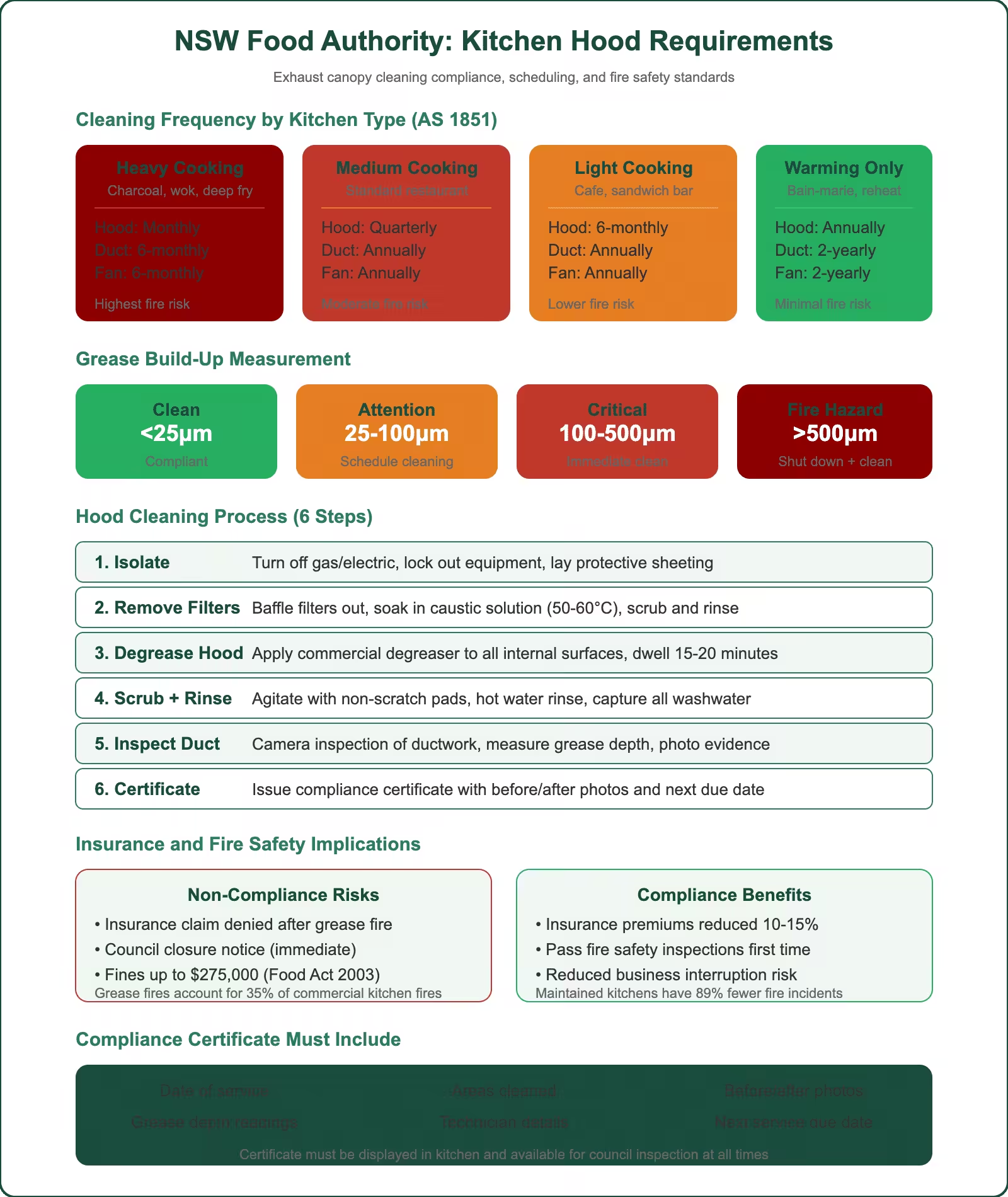
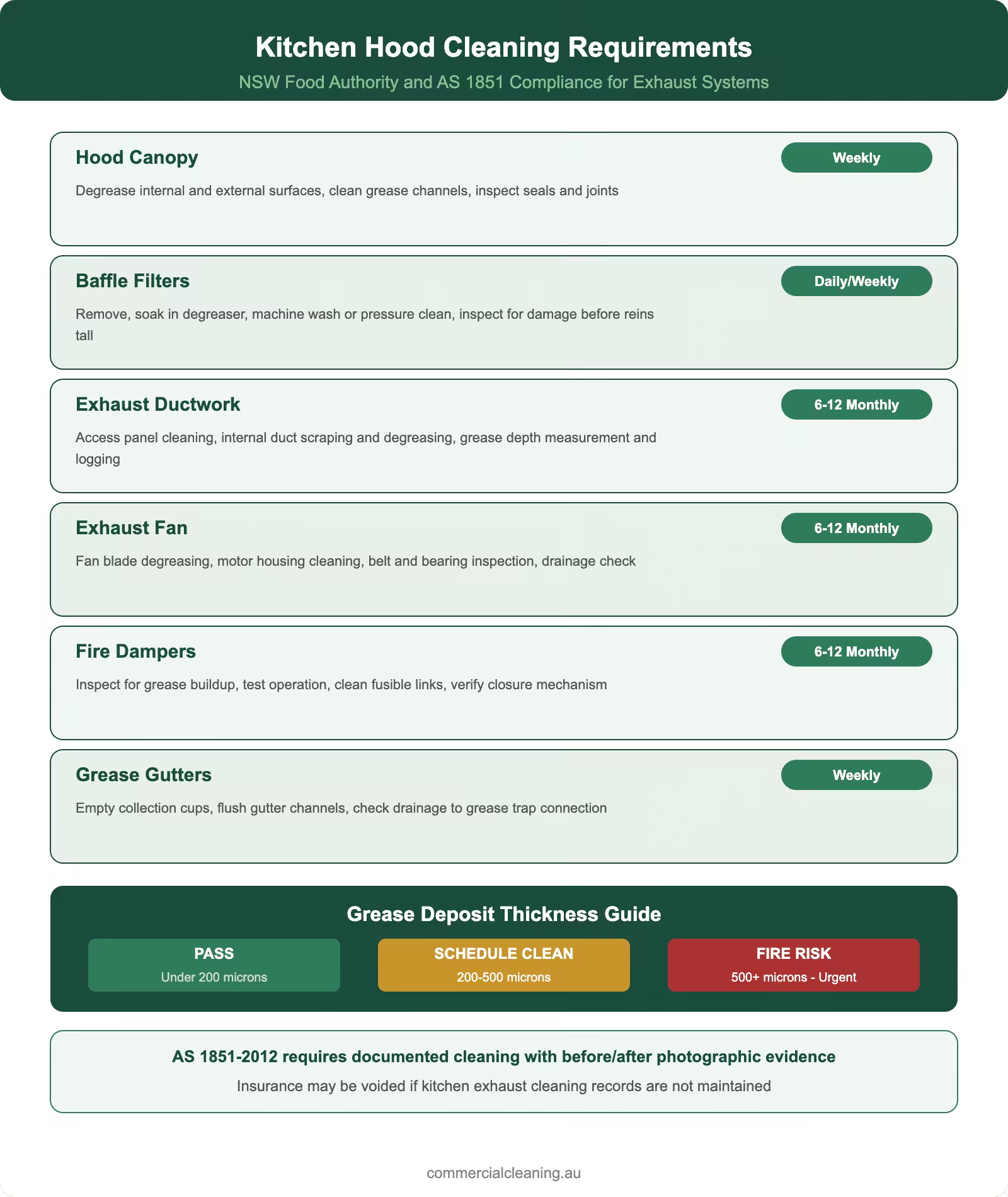
NSW Food Authority kitchen hood requirements showing cleaning frequency by kitchen type, grease measurement scale, six-step process, and compliance certificate detailsKitchen hood cleaning requirements infographic showing six component cleaning schedules with grease thickness guide and compliance notes
NSW Food Authority Requirements for Kitchen Hoods
The NSW Food Authority enforces kitchen hygiene standards through unannounced inspections under the Food Act 2003. Officers treat hood and canopy condition as a proxy indicator for overall kitchen management—a visibly greasy hood sets the tone for the entire assessment before the inspector even opens a coolroom door.
Inspectors specifically examine visible grease on canopy surfaces, filter loading and grease saturation levels, drip evidence on cooking surfaces below the hood, and whether documented cleaning records exist and are current. All equipment, including extraction systems, must be maintained in clean and hygienic condition, and the Food Authority interprets this broadly.
We provide every client with timestamped service certificates after each hood clean that include pre-clean and post-clean photographs, grease thickness measurements at multiple points, and airflow readings before and after service. These records satisfy Food Authority requirements without your team maintaining separate paperwork.
Enforcement actions range from written warnings and improvement notices to penalty infringement notices carrying fines of $880 per offence under the Food Regulation 2015, and in serious cases, prohibition orders requiring immediate closure until the issue is rectified.
Office Area Cleaning Frequency Guide
Area
Daily
Weekly
Monthly
Quarterly
Reception & Lobby
Vacuum, mop, wipe
Glass doors, furniture
Deep carpet clean
Window wash
Workstations
Surface wipe, bins
Monitor & keyboard
Drawer clean-out
Chair shampoo
Kitchen/Breakroom
Bench, sink, floor
Fridge, microwave
Deep degrease
Exhaust fan clean
Bathrooms
Full sanitise + restock
Grout scrub
Descale fixtures
Vent clean
Meeting Rooms
Table wipe, vacuum
AV equipment dust
Upholstery clean
Carpet extraction
HACCP Prerequisites and Hood Maintenance
Office Area Cleaning Frequency Guide requires specific protocols that we tailor to each facility based on its layout, traffic, and compliance requirements. HACCP systems depend on controlled environmental conditions at every critical control point, and several of those controls connect directly to how well your hood extraction performs.
HACCP Prerequisites and Hood Maintenance includes specific protocols that we tailor to each facility based on its layout, traffic, and compliance requirements. Air quality over preparation surfaces must remain free from airborne grease particles and cooking residue that could settle on uncovered food items. When hood extraction fails to capture cooking aerosols, grease film accumulates on benches, pass shelves, and plating areas that should remain sanitised between service periods. Staff working under inadequate extraction in excessive heat and smoke lose concentration during extended service, and hygiene compliance deteriorates.
Our cleaning protocols align with each client’s HACCP documentation. After every service, we provide ATP bioluminescence swab results from canopy and filter surfaces, verifying post-clean contamination levels fall below 100 RLU—the threshold your food safety auditor needs for extraction system hygiene verification.
AS 3660 Pest Control and Hood Cleanliness
AS 3660 governs pest management in food premises, and the link between hood cleanliness and pest control is direct. Grease residue inside canopy interiors and ductwork provides a concentrated food source that draws cockroaches, rodents, and drain flies into ceiling and wall cavities above the kitchen.
Poorly sealed canopy-to-duct junctions and deteriorated filter gaskets create entry points where pests access the warm, dark, grease-rich environment inside the exhaust system. The AIRAH 2022 guideline specifically recommends sealed junctions and documented cleaning intervals as baseline pest exclusion measures.
We have opened hood canopies in Bankstown and Cabramatta kitchens and found established cockroach colonies living at ductwork entry points where accumulated grease provided everything the insects needed. A single professional clean and reseal eliminated the infestation at its source—no pesticide required.
Types of Kitchen Hood Systems
Types of Kitchen Hood Systems targets specific protocols that we tailor to each facility based on its layout, traffic, and compliance requirements. Different hood configurations require matched cleaning approaches. Using the wrong method or chemical on the wrong system causes damage and shortens component life.
Wall-Mounted Canopy Hoods: The most common configuration in Sydney commercial kitchens. Mounted against the wall above cooking equipment with extraction ducting running up through the ceiling. These capture grease effectively when filters are maintained but lose efficiency rapidly as grease loading increases. We service these on weekly to fortnightly cycles depending on cooking intensity.
Island Canopy Hoods: Suspended from the ceiling above cooking stations not positioned against walls. These require higher extraction rates because grease-laden air can escape from all four sides. Kitchens in the CBD and Eastwood using island canopies over central wok stations need aggressive filter maintenance—weekly at minimum for high-output operations.
Ventilation Ceiling Systems: Found in large-scale commercial operations like hotel kitchens and function centres. The entire ceiling section above the cooking area acts as the extraction plenum. These systems have larger filter arrays but are more complex to clean. Monthly professional service with full filter removal and caustic degreasing is standard for high-volume environments.
Recirculating Hoods: Used in converted retail spaces and food courts where external ducting to the roof is not feasible. These pass air through charcoal or carbon filters to absorb odours and grease particulate before recirculating into the kitchen. The filters cannot be cleaned—they must be replaced entirely when saturated, typically monthly in heavy kitchens or quarterly in light-use applications. Replacement cost runs $80 to $150 per filter unit.
Developing a Hood Cleaning Schedule
Developing a Hood Cleaning Schedule focuses on specific protocols that we tailor to each facility based on its layout, traffic, and compliance requirements. The right cleaning frequency depends on cooking intensity, cuisine type, and daily operating hours. A hotel breakfast buffet and a late-night charcoal grill restaurant produce fundamentally different grease loads.
Heavy-Use Kitchens (wok cooking, deep frying, chargrilling, 12+ hours daily): Weekly hood and filter cleaning with monthly full canopy and ductwork degreasing. Most high-volume Asian restaurants we service across Haymarket and Eastwood fall into this category. These kitchens can saturate baffle filters within 3 to 5 days.
Medium-Use Kitchens (standard restaurant, bistro, cafe with cooked meals, 8 to 12 hours daily): Fortnightly filter cleaning with quarterly canopy and duct service. This covers the majority of sit-down restaurants across Sydney.
Light-Use Kitchens (sandwich preparation, reheating, salad bars, under 8 hours daily): Monthly filter cleaning with six-monthly canopy service. Lower grease output extends maintenance intervals, but do not skip the six-monthly system clean—AS 1851-2012 still applies regardless of usage intensity.
We assess every kitchen individually during our first visit using grease thickness measurement, airflow testing, and a review of cooking equipment and operating hours. A Thai restaurant in Newtown running three high-output wok burners needs a completely different programme from a Mosman cafe doing toast and sandwiches.
Fire Safety Priorities for Hood Systems
Fire Safety Priorities for Hood Systems covers specific protocols that we tailor to each facility based on its layout, traffic, and compliance requirements. AS 1851-2012 sets the trigger point for mandatory cleaning: when grease deposits exceed 0.2mm averaged across the system, or 2mm at any single measurement point, the system must be cleaned immediately. We routinely measure 4 to 6mm of carbonised grease on baffle filters in kitchens that have skipped just two quarterly cleans.
Grease fires inside extraction systems are among the most dangerous incidents in commercial kitchens because the fire travels through ductwork into ceiling spaces and wall cavities where it spreads beyond the reach of kitchen suppression systems. The NSW Fire and Rescue attendance data shows commercial kitchen extraction fires cause average damage exceeding $500,000 when building structure is involved.
Insurance assessors specifically examine hood maintenance records after any kitchen fire claim. Multiple Sydney restaurant operators have had fire claims denied or significantly reduced because they could not produce documented evidence of regular professional hood cleaning. The cost of maintaining compliant records through professional cleaning is negligible compared to an uninsured loss.
Cost-Benefit Analysis of Professional Hood Cleaning
Professional hood cleaning is an operating cost that returns multiples of its investment when measured against the alternatives it prevents.
Fire Prevention: A commercial kitchen fire in Sydney can generate $500,000 or more in combined damage, business interruption, and rebuilding costs. Professional hood cleaning for a typical multi-hood system runs $800 to $1,500 per service visit. An annual programme of four quarterly cleans costs less than a single insurance excess payment.
Equipment Life Extension: Extraction fan motors, drive belts, and bearing assemblies last significantly longer when hoods prevent grease migration into mechanical components. A single fan motor replacement costs $2,500 to $4,000—equivalent to two to three years of professional hood cleaning.
Energy Savings: Our measurement data consistently shows 15 to 20 percent reductions in extraction fan energy consumption after restoring hood and ductwork cleanliness. For a kitchen running extraction 14 hours daily at commercial electricity rates, that represents a quarterly saving that partially offsets the cleaning cost itself.
Compliance Documentation: A single professional service visit generates compliance evidence across AS 1668.1, AS 1851-2012, FSANZ 3.2.2, and NSW Food Authority requirements simultaneously. That documentation efficiency is impossible to replicate with in-house cleaning.
Key Indicators Requiring Immediate Hood Cleaning
Key Indicators Requiring Immediate Hood Cleaning requires specific protocols that we tailor to each facility based on its layout, traffic, and compliance requirements. Do not wait for your next scheduled service if any of these signs appear between regular cleaning visits.
Grease dripping from hood edges or canopy lips onto cooking surfaces below indicates filter saturation past the point of effective capture—grease is migrating past the filtration medium entirely.
Smoke lingering at cooking station level instead of being drawn upward into the canopy means extraction airflow has dropped below effective capture velocity, which AS 1668.1 defines as the minimum airspeed at the canopy face needed to contain cooking effluent.
Extraction fans running noticeably louder or vibrating more than normal indicates the fan is labouring against higher static pressure caused by restricted airflow through clogged filters and greased ductwork.
Visible grease film on the underside of the canopy extending beyond the filter frame boundaries means the system has failed and contamination is entering areas it should never reach.
Kitchen temperatures rising during service beyond normal operating levels is a direct indicator that heat extraction capacity has been compromised.
Staff reporting eye irritation, headaches, or respiratory discomfort during cooking service are symptoms of inadequate air exchange and potential WHS exposure that triggers WorkCover NSW obligations.
If you notice any of these in your kitchen, call for professional assessment immediately. For a broader look at keeping your entire commercial kitchen maintained to standard, read our guide on kitchen cleaning services in Sydney.
Frequently Asked Questions About Hood Cleaning
About Clean Group
Clean Group is a Sydney-based commercial cleaning company with over 25 years of industry experience. Founded by Suji Siv, our team of 50+ trained professionals services offices, warehouses, medical centres, schools, childcare facilities, retail stores, gyms, and strata properties across Sydney, Melbourne, and Brisbane.
We are active members of ISSA and the Building Service Contractors Association of Australia (BSCAA). Our operations align with ISO 9001 (Quality Management), ISO 14001 (Environmental Management), and ISO 45001 (Workplace Health and Safety) standards. We hold membership with the Green Building Council of Australia and use eco-friendly, TGA-registered cleaning products wherever possible.
Every Clean Group cleaner is police-checked, fully insured, and trained in safe work procedures under SafeWork NSW guidelines. We operate 7 days a week, including after-hours and weekend services, to minimise disruption to your business.
Conclusion
Hood cleaning is not optional in commercial food service. It is an needed component of fire safety, ventilation system performance, and food safety management. Professional hood cleaning maintains AS 1668.1 ventilation standards, satisfies NSW Food Authority fire safety requirements, supports FSANZ 3.2.2 compliance, and removes pest attractants required by AS 3660 standards.
Professional hood cleaning should be scheduled based on your kitchen’s cooking volume, performed by experienced contractors, and documented for health inspections. The investment in regular professional hood cleaning is trivial compared to fire safety benefits, operational efficiency gains, and regulatory compliance it ensures. For any food service business in Sydney, professional hood cleaning is a non-negotiable operational requirement.
Conclusion
Conclusion targets specific protocols that we tailor to each facility based on its layout, traffic, and compliance requirements. Hood cleaning is a legal obligation under AS 1668.1 and AS 1851-2012, a food safety requirement under FSANZ 3.2.2, and a fire prevention measure that your insurer explicitly expects you to document. It is not a discretionary line item that operators can defer when budgets tighten.
We have built hood maintenance programmes for hundreds of commercial kitchens across Sydney—from wok-heavy restaurants in Haymarket producing kilograms of airborne grease per shift, to European-style bistros in Surry Hills with moderate but consistent grease output, to large hotel kitchens in the CBD running 18-hour service windows. The pattern is always the same: kitchens with structured professional hood maintenance avoid fires, pass inspections, keep their insurance valid, and spend less on equipment replacement over the life of their extraction systems.
Hi, I'm Suji Siv, the founder, CEO, and Managing Director of Clean Group, bringing over 25 years of leadership and management experience to the company. As the driving force behind Clean Group’s growth, I oversee strategic planning, resource allocation, and operational excellence across all departments. I am deeply involved in team development and performance optimization through regular reviews and hands-on leadership.