Every commercial kitchen in Sydney operates under a web of overlapping regulations that all point to the same requirement: keep the space clean to professional standards or face the consequences. As restaurant cleaners sydney operators trust with their kitchens, we see firsthand how quickly a well-run kitchen falls behind when cleaning protocols slip—and how fast inspectors notice.
The Regulatory Framework Behind Kitchen Cleaning Standards
Commercial kitchen operators in NSW must satisfy multiple regulatory frameworks simultaneously. These are not optional guidelines—they carry enforcement mechanisms ranging from fines to immediate closure orders.
NSW Food Authority Requirements: The Food Act 2003 gives inspectors broad powers to assess kitchen condition during unannounced visits. Officers evaluate everything from bench surfaces to rangehood canopies, and a single area of neglect can trigger an improvement notice that must be addressed within days. We clean kitchens across Parramatta, Liverpool, and the CBD that maintain spotless inspection records because the cleaning programme covers every assessable surface on a documented schedule.
FSANZ 3.2.2 Standards: This is the national baseline. Clause 24 requires all fixtures and fittings to be maintained in a condition that permits effective cleaning. Clause 6 mandates ventilation systems that control fumes, smoke, and moisture. Clause 25 requires immediate correction of any equipment deficiency affecting food safety. When we audit a new client’s kitchen for the first time, FSANZ 3.2.2 is the framework we assess against—it catches the most common compliance gaps.
HACCP Systems: Hazard Analysis and Critical Control Points systems depend on controlled environmental conditions. Contaminated surfaces, inadequate extraction, and poor staff facilities all undermine HACCP verification at critical control points. Our cleaning schedules integrate directly with each client’s HACCP plan so that deep-clean frequency, chemical concentrations, and verification swab testing all align with documented critical control points.
AS 1668.1 Ventilation Standards: This Australian Standard governs extraction system design and ongoing performance. Grease-clogged filters and ductwork reduce airflow below mandated minimums—we have tested systems in western Sydney running at barely 40 percent of rated capacity after six months without professional cleaning.
AS 3660 Pest Management: Grease residue, food debris, and moisture create pest harbourage conditions. We have found cockroach colonies inside rangehood canopies in Bankstown and Cabramatta kitchens where accumulated grease provided shelter and food. Professional cleaning eliminates these attractants at their source.
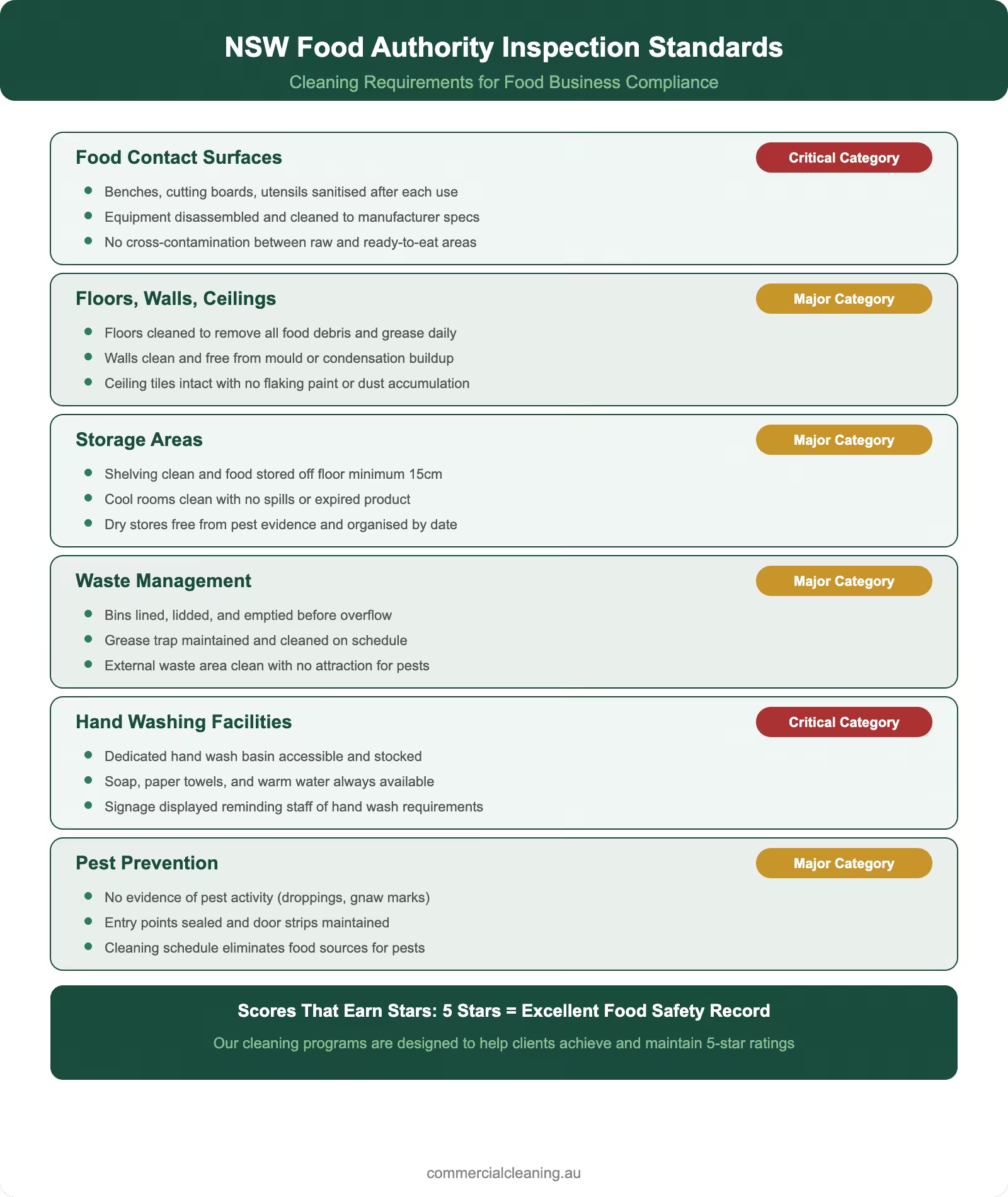
NSW Food Authority inspection standards infographic showing six cleaning categories with critical and major scoring classifications
NSW Food Authority Inspection Standards
NSW Food Authority inspectors base their assessment on what they observe the moment they walk through your kitchen door. They do not schedule visits in advance, and they check everything visible—including areas most operators forget about.
Floor surfaces and coving joints get examined for trapped grease or debris. Wall tiles and ceiling panels are checked for accumulated grime or mould growth. Rangehood filters and visible ductwork are assessed for grease loading. Equipment surfaces are inspected underneath, behind, and between units where residue accumulates invisibly during daily service. Handwash stations must have soap, paper towels, and warm water supply at all times.
Kitchens we service consistently score better during these inspections because the cleaning is systematic. Our schedules cover the spots most in-house teams overlook—behind bain-maries, under lowboy fridges, inside ice machine drains, and the 50 to 100mm gaps behind equipment that accumulate months of debris.
Enforcement ranges from written warnings to penalty infringement notices at $880 per offence under the Food Regulation 2015, to prohibition orders requiring immediate closure. The difference between a pass and a closure notice usually comes down to consistency.
Commercial Kitchen Cleaning Zone Guide
Zone
Clean Frequency
Method
Compliance
Penalty Risk
Cooking Line
After each service
Degrease + sanitise
Food Standards 3.2.2
Up to $275,000
Cold Storage
Weekly deep clean
Strip, clean, temp log
Food Standards 3.2.2
Closure risk
Exhaust Hood & Filters
Monthly
Chemical soak + pressure
AS 1851 (fire safety)
Insurance void
Dining Floor
After each service
Sweep, mop, spot treat
WHS Reg 2017
Slip injury claim
Grease Trap
Quarterly pump-out
Licensed contractor
EPA Protection Act
Up to $1M fine
FSANZ 3.2.2 Compliance in Practice
Commercial Kitchen Cleaning Zone Guide requires specific protocols that we tailor to each facility based on its layout, traffic, and compliance requirements. FSANZ 3.2.2 reads as straightforward requirements, but the practical implications for daily kitchen operations are significant. Clause 24 alone means that any fitting or surface that cannot be effectively cleaned must be replaced—not just wiped harder. Aluminium mesh rangehood filters that have distorted from heat or permanently absorbed grease fall squarely into this category after 12 to 18 months of commercial use.
FSANZ 3.2.2 Compliance in Practice includes specific protocols that we tailor to each facility based on its layout, traffic, and compliance requirements. Clause 6 is a performance standard, not an installation checkbox. Your ventilation system must actually control fumes and moisture during peak service, not just exist above the cooking equipment. We have seen kitchens pass their initial council sign-off with clean extraction systems, then fail Food Authority inspections within a year because nobody maintained the filters and airflow dropped below effective levels.
FSANZ 3.2.3 introduces additional requirements for documented food safety management systems. Restaurants handling raw proteins and high-risk foods must demonstrate systematic hazard controls that include environmental monitoring—both air quality and surface contamination are directly affected by how well the extraction system performs and how thoroughly surfaces are cleaned.
HACCP Integration With Cleaning Protocols
HACCP Integration With Cleaning Protocols addresses specific protocols that we tailor to each facility based on its layout, traffic, and compliance requirements. HACCP identifies where contamination can enter your food chain and puts controls at each of those points. Without clean equipment and surfaces, those controls fall apart.
Receiving and storage areas need contamination-free shelving—dirty racks introduce bacteria before cooking even starts. Preparation surfaces must prevent cross-contamination between raw proteins and ready-to-eat items. Cooking equipment carrying residues from previous service affects the next batch. Cold storage with condensation and spills creates microbial breeding grounds on shelving, walls, and evaporator coils.
We integrate our cleaning schedules directly with each client’s HACCP plan. The deep-clean frequency, the chemical concentrations, and the verification swab testing all align with each kitchen’s documented critical control points. After every service, ATP bioluminescence swab results verify that post-clean contamination levels fall below 100 RLU on critical surfaces.
AS 1668.1 Ventilation Maintenance Standards
AS 1668.1 Ventilation Maintenance Standards targets specific protocols that we tailor to each facility based on its layout, traffic, and compliance requirements. AS 1668.1 sets minimum air exchange rates based on kitchen volume and equipment heat output. When grease builds up in filters and ductwork, extraction efficiency drops below these mandated minimums—and the consequences extend beyond regulatory breach into genuine safety territory.
We have measured airflow on extraction systems clogged with six months of accumulated cooking oil in kitchens across Parramatta and Haymarket. Some were operating at barely 35 to 40 percent of rated capacity. That is not just a comfort issue—it is a fire risk under AS 1851-2012 and a WorkCover compliance issue under the Work Health and Safety Act 2011.
Extraction fans working against restricted airflow draw significantly more current, increasing energy costs by 15 to 20 percent in kitchens we have measured before and after professional filter cleaning. For a kitchen running extraction 14 hours daily, that translates to a measurable quarterly saving on your electricity bill.
Council fire safety officers and Food Authority inspectors both check extraction systems during their respective visits. A clean system with documented service records passes both assessments without question.
AS 3660 Pest Management Through Professional Cleaning
AS 3660 governs pest management in food premises, and the connection between professional cleaning and effective pest control is direct. Every restaurant we clean in Sydney gets a post-clean waste audit as standard—food scraps left under benches, grease residue behind stoves, and crumbs trapped in wall joins all attract cockroaches and rodents.
Grease accumulation inside rangehood canopies and ductwork provides a concentrated food source that draws pests into ceiling and wall cavities above the kitchen. Poorly sealed canopy-to-duct junctions create dark, warm harbourage points where pest colonies establish themselves out of sight. The AIRAH 2022 guideline recommends sealed junctions and documented cleaning intervals as baseline pest exclusion measures.
Removing these attractants through systematic professional cleaning is the single most effective pest prevention measure any kitchen can take—more effective than reactive pesticide treatment, which addresses symptoms rather than causes.
Specialised Areas Requiring Professional Attention
Specialised Areas Requiring Professional Attention covers specific protocols that we tailor to each facility based on its layout, traffic, and compliance requirements. Some kitchen zones need specialised cleaning beyond standard daily wiping.
Rangehoods and Extraction Ducting: Grease loads inside canopies and ducting must be professionally degreased on a quarterly cycle at minimum. We use TGA-registered alkaline degreasing agents that meet SafeWork NSW chemical handling requirements, applied at 50 to 60 degrees Celsius for aluminium mesh and 60 to 70 degrees for stainless steel baffle systems.
Floor Coving and Grout Lines: The junction between floor tiles and wall bases traps moisture, food particles, and bacteria that standard mopping cannot reach. We steam-clean these joints with 150-degree equipment that penetrates biofilm buildup in porous grout.
Walk-in Coolrooms and Freezers: Temperature swings during door openings cause condensation that mixes with food residues, creating biofilm on shelving, walls, and evaporator coils. Monthly deep cleaning prevents microbial colonisation that compromises stored food safety.
Food Contact Surfaces: Stainless steel benchtops, cutting boards, and slicer blades require two-stage protocols—alkaline clean first to break down organic residue, then food-safe quaternary ammonium sanitiser to achieve microbial reduction targets.
Equipment Gaps: The 50 to 100mm spaces behind and beneath commercial equipment are invisible during daily service but accumulate months of debris. We pull equipment out on castors to access these dead zones during every scheduled deep clean.
The Business Case for Professional Kitchen Cleaning
The Business Case for Professional Kitchen Cleaning involves specific protocols that we tailor to each facility based on its layout, traffic, and compliance requirements. Some operators try handling everything in-house, but there are practical limits to what kitchen staff can achieve during closing shifts when they are already fatigued from service.
Regulatory Knowledge: Our team tracks changes to NSW Food Authority requirements and FSANZ codes so your kitchen stays ahead of compliance shifts, not scrambling after an inspection notice.
Purpose-Built Equipment: Commercial degreasers, steam cleaners rated at 150 degrees, and industrial pressure washers deliver results that mops, buckets, and domestic spray bottles cannot replicate. The difference is visible to inspectors.
Fire Risk Reduction: Scheduled extraction system cleaning eliminates the grease loading that causes kitchen fires. Insurance assessors specifically examine documented maintenance records after any fire claim—multiple Sydney operators have had claims denied for lacking these records.
Staff Productivity: When your chefs and kitchen hands spend the last hour of every shift scrubbing, you are paying skilled labour rates for unskilled work. Outsourcing cleaning returns that hour to prep and service.
Audit-Ready Records: We provide timestamped cleaning logs with photographs, grease measurements, and airflow readings that satisfy Food Authority and council auditors without your team maintaining separate paperwork.
Long-Term Savings: Regular professional maintenance prevents grease corrosion on stainless steel, protects floor finishes from chemical damage, and extends equipment life by years. A single extraction fan motor replacement at $2,500 to $4,000 covers two to three years of professional cleaning costs.
Building an Effective Cleaning Schedule
Building an Effective Cleaning Schedule requires specific protocols that we tailor to each facility based on its layout, traffic, and compliance requirements. A practical cleaning programme runs on three frequencies stacked together, and each layer prevents the next from becoming an overwhelming backlog.
Daily: Wipe and sanitise all food contact surfaces between service periods. Sweep and mop floor areas. Empty grease traps and collection trays. Clean handwash stations and restock supplies. These tasks maintain baseline hygiene between professional visits.
Weekly: Degrease equipment exteriors, wall tiles behind cooking stations, and high-traffic door handles. Deep-clean coolroom interiors and check door seals for deterioration. Clean rangehood filters in heavy-use kitchens running wok or chargrilling operations.
Monthly: Strip and degrease extraction filters and visible ductwork access points. Pull equipment from walls to clean behind and beneath. Descale dishwashers and ice machines. Inspect and treat floor grout with antimicrobial solution.
We build custom schedules for every kitchen based on cooking intensity, cuisine type, and operating hours. A Thai restaurant in Newtown running three wok burners 14 hours daily needs a completely different programme from a Surry Hills cafe doing sandwiches and coffee.
Maintaining Inspection Readiness
Maintaining Inspection Readiness includes specific protocols that we tailor to each facility based on its layout, traffic, and compliance requirements. NSW Food Authority inspectors do not announce visits. They check floor surfaces for pooled water and grease trails, walls and ceilings for grease film and mould, rangehood canopies for grease accumulation, equipment interiors and rear surfaces for residue, coolroom shelving and door seals, and handwash basins for soap and warm water supply.
Restaurants that use scheduled professional cleaning maintain a baseline standard that means inspections become routine rather than stressful. The operators who pass consistently are the ones with documented cleaning programmes that cover every assessable surface—not just the visible ones.
Frequently Asked Questions About Cleaning Standards
About Clean Group
Clean Group is a Sydney-based commercial cleaning company with over 25 years of industry experience. Founded by Suji Siv, our team of 50+ trained professionals services offices, warehouses, medical centres, schools, childcare facilities, retail stores, gyms, and strata properties across Sydney, Melbourne, and Brisbane.
We are active members of ISSA and the Building Service Contractors Association of Australia (BSCAA). Our operations align with ISO 9001 (Quality Management), ISO 14001 (Environmental Management), and ISO 45001 (Workplace Health and Safety) standards. We hold membership with the Green Building Council of Australia and use eco-friendly, TGA-registered cleaning products wherever possible.
Every Clean Group cleaner is police-checked, fully insured, and trained in safe work procedures under SafeWork NSW guidelines. We operate 7 days a week, including after-hours and weekend services, to minimise disruption to your business.
Conclusion
Commercial kitchen cleaning standards establish detailed requirements ensuring food service operations maintain safe, compliant facilities. Professional cleaning must satisfy NSW Food Authority requirements, FSANZ 3.2.2 standards, HACCP prerequisites, AS 1668.1 ventilation standards, and AS 3660 pest management compliance.
Understanding and implementing these standards through professional cleaning services protects food safety, maintains regulatory compliance, prevents fire hazards, and supports sustainable food service operations. Every food service business should prioritise understanding and implementing these standards as fundamental to safe, compliant food service operations.
Conclusion
Conclusion focuses on specific protocols that we tailor to each facility based on its layout, traffic, and compliance requirements. Kitchen cleanliness is a legal obligation under FSANZ 3.2.2, a fire safety requirement under AS 1668.1 and AS 1851-2012, and a business survival issue when NSW Food Authority inspectors turn up without warning. Treating it as an optional expense is a risk no operator in Sydney should take.
We have cleaned hundreds of commercial kitchens across Sydney—from fine dining in the CBD to high-volume food courts in Parramatta, from wok kitchens in Haymarket to neighbourhood cafes in Newtown. The operators who invest in structured professional cleaning programmes consistently achieve better inspection outcomes, lower equipment replacement costs, and safer working environments for their teams.
Hi, I'm Suji Siv, the founder, CEO, and Managing Director of Clean Group, bringing over 25 years of leadership and management experience to the company. As the driving force behind Clean Group’s growth, I oversee strategic planning, resource allocation, and operational excellence across all departments. I am deeply involved in team development and performance optimization through regular reviews and hands-on leadership.