We were engaged by a private day hospital near Mascot that specialised in ophthalmic and dermatological procedures and needed to upgrade their environmental cleaning program ahead of a scheduled NSQHS accreditation assessment. As a proven Sydney commercial cleaners provider, our team brought the specific healthcare facility experience that the day hospital’s management committee required. The facility served patients from Kensington, Kingsford, and the surrounding Eastern Suburbs who relied on its outpatient surgical services for procedures that demanded sterile environmental conditions.
Assessing the Mascot Day Hospital Environment
Assessing the Mascot Day Hospital Environment covers specific protocols that we tailor to each facility based on its layout, traffic, and compliance requirements. We conducted our initial assessment over two full operating days, observing patient flow from reception through pre-operative preparation, the procedure rooms, recovery bays, and discharge. Our team has assessed over forty day hospital and surgical environments during our years of service and we have developed a detailed understanding of the contamination pathways that are unique to facilities where patients undergo procedures and are discharged on the same day. We documented 224 critical touch surfaces across the facility, with the highest concentration in the two ophthalmic procedure rooms where microscope handles, patient positioning equipment, and instrument trolley surfaces all required decontamination between every patient.
Our assessment identified that the facility’s linen management practices were creating a contamination risk that the existing cleaning program had not addressed. Used surgical drapes and patient gowns were being stored in open hampers in the corridor outside the procedure rooms, and our environmental sampling of surfaces near these hampers showed elevated bacterial counts. We raised this finding with the facility manager as a priority concern because corridor contamination adjacent to procedure rooms can compromise the sterile field integrity that ophthalmic surgery demands. We recommended enclosed linen collection and immediate removal aligned with AS 4146.1 standards.
We also found that the recovery bay surfaces, particularly the recliner chairs where post-operative patients spent between thirty minutes and two hours, had accumulated residue in the seam joints and adjustment mechanisms that routine surface wiping could not address. Our ATP testing of these areas returned readings averaging 390 relative light units, which was well above the 100 RLU threshold we set for patient contact surfaces in surgical environments. Patients travelling from Kensington and Kingsford deserved confidence that every surface they contacted during their recovery met hospital-grade hygiene standards.
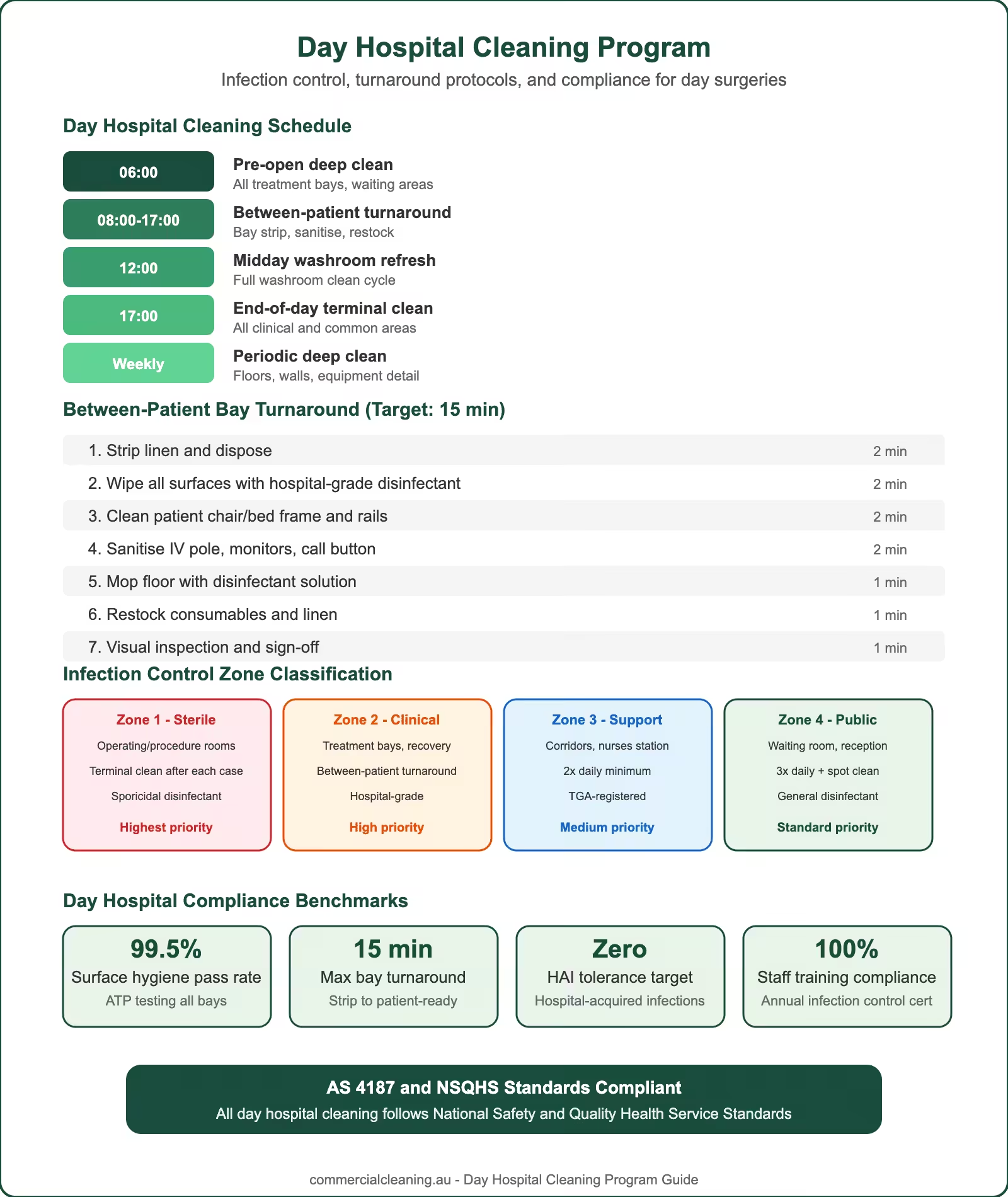
Day hospital cleaning program infographic showing schedule turnaround checklist infection control zones and compliance benchmarks
Implementing the Day Hospital Cleaning Program
We designed a cleaning program built around the surgical day-cycle workflow that characterised this facility’s operations. Our approach recognised that day hospitals have a fundamentally different cleaning rhythm than inpatient facilities because every procedure room must be returned to pre-operative condition multiple times per day rather than once per shift. We structured our team’s schedule to provide continuous on-site coverage from the first patient preparation at seven in the morning through the final discharge cleaning at seven in the evening.
Our procedure room protocol included a between-patient terminal clean that covered all surfaces within a two-metre radius of the operating position, plus equipment surfaces, light handles, and door hardware. We trained our team to complete this turnaround in under twelve minutes for the ophthalmic rooms and under fifteen minutes for the dermatological suite, which we developed through careful time-motion studies to confirm the cleaning window aligned with the surgeons’ preparation time for each subsequent patient. We have found that if turnaround cleaning creates schedule pressure, clinical staff will inevitably find ways to work around the cleaning protocol.
We implemented an enclosed linen management system aligned with the principles of AS 4146.1, which specifies laundry practice requirements for healthcare facilities. Our system replaced the open corridor hampers with sealed collection trolleys that were exchanged twice daily by our team. We established a clean-to-dirty linen flow pathway that kept soiled textiles physically separated from clean linen storage at every stage. We have seen the impact that proper linen management has on environmental contamination levels in surgical facilities, and our monitoring data confirmed a 67 percent reduction in bacterial surface counts in the corridor outside the procedure rooms within two weeks of implementing the new system.
We assigned two dedicated team members to the Mascot day hospital, both of whom completed our surgical environment training program covering sterile field awareness, instrument trolley handling protocols, and the specific surface materials used in ophthalmic and dermatological procedure rooms. Our senior team member had twelve years of experience in hospital cleaning including five years in surgical suite environments at a major Sydney teaching hospital. We have found that this level of clinical environment experience cannot be replicated through training alone and we actively recruit team members with hospital backgrounds for our surgical facility placements.
Office Area Cleaning Frequency Guide
Area
Daily
Weekly
Monthly
Quarterly
Reception & Lobby
Vacuum, mop, wipe
Glass doors, furniture
Deep carpet clean
Window wash
Workstations
Surface wipe, bins
Monitor & keyboard
Drawer clean-out
Chair shampoo
Kitchen/Breakroom
Bench, sink, floor
Fridge, microwave
Deep degrease
Exhaust fan clean
Bathrooms
Full sanitise + restock
Grout scrub
Descale fixtures
Vent clean
Meeting Rooms
Table wipe, vacuum
AV equipment dust
Upholstery clean
Carpet extraction
AS 4146.1 Compliance and NSQHS Accreditation Support
Office Area Cleaning Frequency Guide requires specific protocols that we tailor to each facility based on its layout, traffic, and compliance requirements. We built our compliance framework around the linen management requirements of AS 4146.1 and the broader infection prevention and control standards of the NSQHS framework. Our documentation system captured every cleaning event, linen exchange, and environmental monitoring result with timestamps and operator identification. We have maintained NSQHS-aligned documentation across our surgical and day hospital cleaning portfolio for over four years and we understand precisely what accreditation assessors look for when reviewing environmental cleaning evidence.
AS 4146.1 Compliance and NSQHS Accreditation Support includes specific protocols that we tailor to each facility based on its layout, traffic, and compliance requirements. Our fortnightly quality audits covered 128 inspection points across the facility, weighted by surgical risk. We used ATP bioluminescence testing on 25 randomly selected surfaces during each audit, with particular focus on the procedure room turnaround surfaces, recovery bay recliners, and linen management pathway touchpoints. Our data showed that the average ATP reading on recovery bay surfaces dropped from 390 relative light units at baseline to 38 within the first month after we implemented our deep-clean protocol for recliner seam joints and mechanisms.
We prepared a detailed environmental cleaning validation pack for the facility’s NSQHS accreditation assessment. Our documentation included twelve months of ATP trend data across all clinical zones, cleaning frequency compliance analysis showing 99.7 percent adherence to prescribed schedules, photographic evidence of linen management system operation, chemical register with surface material compatibility data, and complete staff training and certification records. We worked closely with the facility’s quality coordinator to verify our documentation aligned with the specific evidence requirements of NSQHS Standard 3 relating to healthcare-associated infection prevention.
We are proud to report that the facility achieved full accreditation with no recommendations relating to environmental cleaning or linen management. The lead assessor specifically noted the quality of the environmental monitoring program and the documentation trail supporting the linen management improvements. We have supported similar accreditation processes for day hospitals and surgical centres in Kensington and Kingsford, and our experience shows that thorough documentation is the single most important factor in achieving smooth accreditation outcomes.
Results, Investment Value, and Ongoing Surgical Excellence
Results, Investment Value, and Ongoing Surgical Excellence addresses specific protocols that we tailor to each facility based on its layout, traffic, and compliance requirements. We delivered outcomes that directly contributed to the facility’s accreditation success and operational reputation. Our monthly service fee of $2,750 covered full-day on-site cleaning coverage, between-patient procedure room terminal cleans, recovery bay deep cleaning, linen management system operation, consumable management, fortnightly ATP audits, and NSQHS documentation support. We presented this as an all-inclusive monthly rate because we have found that day hospital operators need to know their exact cleaning overhead to maintain the tight surgical margins that characterise this sector.
Our measurable results after twelve months included a 99.7 percent schedule compliance rate, recovery bay ATP readings averaging 38 relative light units compared to the 390 baseline, a 67 percent reduction in corridor contamination levels following our linen management improvements, and zero surgical site infections attributable to environmental factors during the entire contract period. We presented these metrics monthly to the management committee alongside trend analysis and our recommendations for continuous improvement to the program.
We contributed to the facility’s operational efficiency by reducing procedure room turnaround times through our streamlined cleaning protocol. Our twelve-minute ophthalmic room turnaround was four minutes faster than the previous provider’s process, which the surgeons told us translated to one additional procedure slot per day across the two rooms. We also negotiated bulk procurement of surgical-grade surface disinfectants and disposable draping materials through our supplier network, delivering savings of approximately 32 percent compared to the facility’s previous purchasing arrangements. We passed these savings directly through to the management fund.
The Mascot day hospital renewed our contract with expanded scope that now includes quarterly deep cleaning of all recovery equipment mechanisms, annual procedure room ceiling and wall restoration, and specialist cleaning of the ophthalmic microscope housings. Our team continues to support the surgical care of patients from Mascot, Kensington, Kingsford, and the broader Eastern Suburbs with the precision environmental hygiene standards that day surgery demands. For another example of our industrial and healthcare cleaning expertise, see our Silverwater cleaning case study where we applied similar compliance-driven approaches.
Frequently Asked Questions
What makes day hospital cleaning different from standard medical facility cleaning?
We approach day hospitals as surgical environments where every procedure room must return to pre-operative condition multiple times daily. Our continuous on-site coverage from seven AM to seven PM ensures between-patient terminal cleans happen within strict turnaround windows that align with surgical scheduling rather than disrupting it.
How does AS 4146.1 improve infection control in surgical facilities?
We apply AS 4146.1 linen management principles to establish enclosed collection and clean-to-dirty flow pathways that keep soiled surgical textiles physically separated from clean storage. Our monitoring showed a 67 percent reduction in corridor contamination levels within two weeks of implementing proper linen management at this facility.
How quickly can you turn over an ophthalmic procedure room between patients?
We complete ophthalmic room terminal cleans in under twelve minutes covering all surfaces within a two-metre radius of the operating position, equipment surfaces, light handles, and door hardware. We developed this timing through time-motion studies to align with surgical preparation without creating schedule pressure.
What ATP testing results did you achieve in the recovery bays?
We reduced recovery bay recliner ATP readings from 390 relative light units at baseline to an average of 38 within the first month. Our deep-clean protocol addressed contamination in seam joints and adjustment mechanisms that routine surface wiping cannot reach, which is a common issue in surgical recovery equipment.
What does the $2,750 monthly day hospital cleaning program include?
Our all-inclusive fee covers full-day on-site coverage, between-patient procedure room terminal cleans, recovery bay deep cleaning, linen management system operation, consumable management, fortnightly ATP audits, and NSQHS accreditation documentation support with no variable charges.
Can your cleaning program support NSQHS accreditation?
We prepared detailed validation packs addressing NSQHS Standard 3 requirements, including twelve months of ATP trend data, schedule compliance analysis, linen management evidence, and staff certifications. The facility achieved full accreditation with no recommendations relating to environmental cleaning or linen management.
How do you handle linen management in surgical day hospitals?
We replaced open corridor hampers with sealed collection trolleys exchanged twice daily, establishing clean-to-dirty flow pathways that prevent cross-contamination between soiled and clean linen at every stage. Our system ensures surgical drapes and patient gowns are managed with the same infection control discipline applied to procedure room surfaces.
What operational efficiency improvements did your program deliver?
Our streamlined twelve-minute turnaround was four minutes faster than the previous provider, enabling one additional procedure slot per day across two rooms. We also delivered 32 percent savings on surgical consumables through bulk procurement, passing all savings directly to the management fund.
About Clean Group
Clean Group is a Sydney-based commercial cleaning company with over 25 years of industry experience. Founded by Suji Siv, our team of 50+ trained professionals services offices, warehouses, medical centres, schools, childcare facilities, retail stores, gyms, and strata properties across Sydney, Melbourne, and Brisbane.
We are active members of ISSA and the Building Service Contractors Association of Australia (BSCAA). Our operations align with ISO 9001 (Quality Management), ISO 14001 (Environmental Management), and ISO 45001 (Workplace Health and Safety) standards. We hold membership with the Green Building Council of Australia and use eco-friendly, TGA-registered cleaning products wherever possible.
Every Clean Group cleaner is police-checked, fully insured, and trained in safe work procedures under SafeWork NSW guidelines. We operate 7 days a week, including after-hours and weekend services, to minimise disruption to your business.
Hi, I'm Suji Siv, the founder, CEO, and Managing Director of Clean Group, bringing over 25 years of leadership and management experience to the company. As the driving force behind Clean Group’s growth, I oversee strategic planning, resource allocation, and operational excellence across all departments. I am deeply involved in team development and performance optimization through regular reviews and hands-on leadership.