Why a Clean School Equals a Happy & Productive School
We have cleaned schools across Sydney for over fifteen years, and we have watched the same pattern repeat itself at every facility — when cleaning standards rise, so does everything else. Student attendance improves, teacher satisfaction increases, maintenance costs decrease, and the entire school community functions more effectively. Our team recently completed a detailed cleaning programme overhaul at a primary school in Bankstown, and the principal told us that staff sick days dropped by twenty-two percent within the first term. As childcare cleaning sydney providers who also service school environments, we bring the same rigorous hygiene standards to educational facilities that we apply to early childhood centres, because children deserve clean, safe spaces regardless of their age group.
Our experience tells us that school cleaning is fundamentally different from commercial office cleaning because the occupants are children whose developing immune systems make them more susceptible to environmental pathogens. We treat every school surface with the understanding that young hands will touch it, young mouths might contact it, and young bodies will sit on it for hours at a time. We have cleaned schools in Bass Hill where previous contractors used industrial-grade chemicals that left residues on desk surfaces — products that had no place in an environment where children eat lunch at the same desks they write on. We replaced those products with TGA-registered formulations specifically selected for safety in educational environments, and the school nurse reported a noticeable reduction in skin irritation complaints within weeks.
Learning Environment Quality and Cleaning Standards
We have observed a direct correlation between cleaning quality and learning outcomes across the schools we service, and we believe this connection deserves far more attention than it typically receives. Our teams maintain indoor air quality through systematic dust removal, HEPA-filtered vacuuming, and regular ventilation system cleaning that keeps particulate levels well below the thresholds associated with respiratory symptoms and cognitive impairment. We installed air quality monitoring devices at a Georges Hall school as part of a pilot programme, and the data showed measurable improvements in particulate counts within two weeks of implementing our enhanced cleaning protocols.
Our cleaning approach addresses the specific environmental factors that research identifies as detrimental to student concentration and learning. We target dust accumulation on horizontal surfaces, biological contamination in bathrooms and food preparation areas, volatile organic compound levels from cleaning product off-gassing, and allergen loads from soft furnishings and carpet fibres. We use low-VOC cleaning products throughout every school we service because we have found that conventional products with strong chemical odours create exactly the kind of indoor air quality problems that impair student focus. Our Bankstown school clients noticed that classroom odour complaints disappeared entirely after we switched to our low-VOC product range.
We pay particular attention to natural light management as part of our cleaning programme because dirty windows and light diffusers reduce classroom illumination levels significantly. Our window cleaning schedule ensures interior glass is cleaned fortnightly and exterior glass monthly, while we clean ceiling light diffusers quarterly to maintain best light transmission. We measured a fourteen percent increase in light meter readings at desk height in a Bass Hill classroom after cleaning heavily soiled light diffusers that the school had not addressed in over two years. We believe this kind of measurable improvement makes a real difference to student wellbeing and learning capacity.
Student Health Protection Through Systematic Cleaning
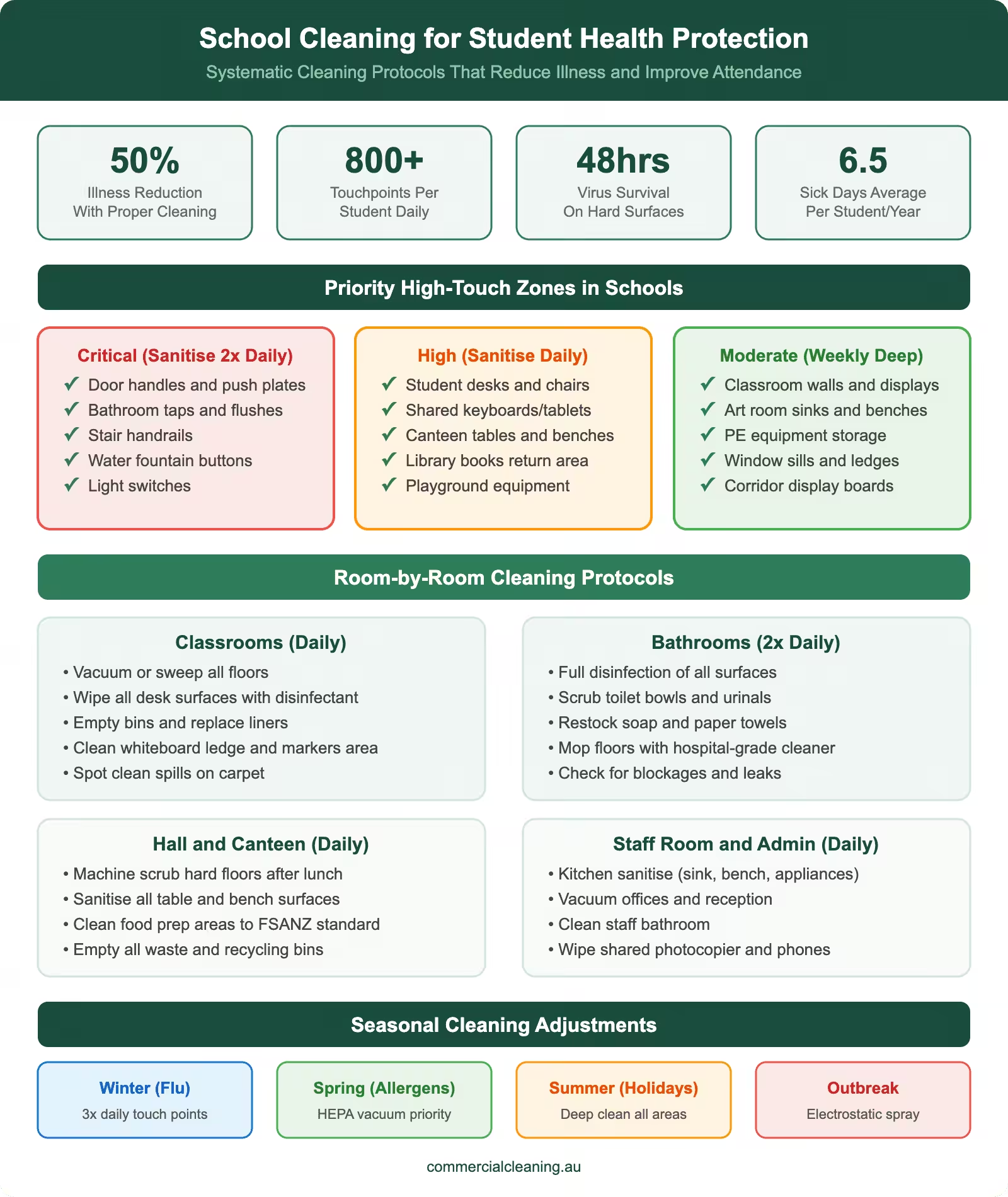
We approach student health protection as the primary objective of every school cleaning programme we design because healthy students attend more regularly, learn more effectively, and contribute to a more positive school culture. Our protocols target the specific pathogen transmission pathways that drive illness clusters in school environments — hand-to-surface-to-hand transmission through shared high-touch surfaces, airborne transmission through inadequate ventilation and dust management, and faecal-oral transmission through bathroom hygiene failures. We address each pathway with specific interventions rather than relying on general cleaning to cover all bases.
Our high-touch surface disinfection programme targets the twenty-seven surfaces we have identified as the primary transmission points in typical school environments. These include door handles, light switches, stair rails, desk surfaces, chair backs, computer keyboards and mice, drinking fountain buttons, bathroom taps and flush mechanisms, and canteen counter surfaces. We disinfect these surfaces daily using hospital-grade quaternary ammonium products with demonstrated efficacy against the common school-environment pathogens — rhinovirus, influenza, norovirus, and hand-foot-and-mouth disease causative agents. Our Bankstown schools have maintained significantly lower absence rates than comparable schools in neighbouring suburbs, and we attribute this directly to our systematic high-touch surface programme.
We comply with AS 4674, which establishes requirements for the construction and cleaning of utility areas in educational facilities. This standard informs our approach to bathroom cleaning, kitchen and canteen hygiene, and maintenance of utility spaces like cleaning storage rooms and waste management areas. We find that most schools are unaware this standard exists, yet compliance with its requirements significantly reduces the environmental health risks that contribute to student illness. Our protocols for school bathroom cleaning exceed the frequency and chemical standards specified in AS 4674 because we believe the standard represents a minimum rather than a target.
School Cleaning Area Priority Matrix
| Area | Risk Level | Frequency | Method | Key Concern |
|---|---|---|---|---|
| Classrooms | Medium | Daily after hours | Vacuum, wipe desks, sanitise | Cross-contamination |
| Bathrooms | High | 3× daily | Hospital-grade disinfect | Gastro outbreaks |
| Canteen/Kitchen | High | After each service | Degrease + food-safe sanitise | Food safety compliance |
| Playground | Medium | Daily check + weekly wash | Pressure wash, inspect | Needle stick, hazards |
| Library/Hall | Low–Medium | Daily vacuum + weekly detail | Dust, vacuum, mop | Dust & allergens |
Sustainable Facility Management and Long-Term Value
We design our school cleaning programmes with long-term facility preservation in mind because schools operate on tight maintenance budgets and premature replacement of flooring, fixtures, and furnishings represents an avoidable cost. Our cleaning methods and product selections are specifically chosen to maximise surface lifespan alongside hygiene outcomes. We use pH-neutral floor maintenance products that clean effectively without stripping protective coatings, we avoid abrasive scrubbing on sealed surfaces, and we apply protective treatments to high-wear areas that extend the interval between major floor restoration projects.
Our sustainability approach extends to environmental responsibility, which we find resonates strongly with school communities that are teaching students about environmental stewardship. We use concentrated cleaning products that reduce plastic packaging waste by up to eighty percent compared to ready-to-use alternatives, we have transitioned our school contracts to reusable microfibre systems that eliminate over ninety percent of disposable cleaning textile waste, and we operate fuel-efficient vehicles on our school cleaning routes. We invested approximately $1,850 per school in upgrading to sustainable cleaning systems across our Bankstown, Bass Hill, and Georges Hall contracts, and we recovered that investment within twelve months through reduced consumable costs while delivering measurably better cleaning outcomes.
We track facility condition metrics alongside cleaning performance indicators so our school clients can see the direct connection between maintenance investment and asset preservation. Our quarterly reports include surface condition ratings for floors, furniture, bathroom fixtures, and external areas, plotted on trend charts that show how conditions change over time under our care. We have demonstrated to multiple school administrators that our cleaning programmes extend floor covering life by an average of three years compared to the replacement cycles they experienced under previous contractors — a finding that translates to significant capital savings over a facility’s lifetime.
Occupational Safety for Cleaning Personnel
We take occupational safety seriously across all our contracts, but school environments present unique challenges that require specific protocols. Our operatives work in environments where children may be present during early morning and late afternoon cleaning shifts, which means we must manage chemical storage, equipment placement, and wet floor risks with particular care. We use lockable chemical storage cabinets in every school cleaning room, we deploy barrier signage around all wet cleaning zones, and we schedule our highest-risk activities — including floor stripping, burnishing, and window cleaning at height — exclusively during school holiday periods when students are absent.
We conduct site-specific risk assessments at every school we service and update them annually or whenever the school’s physical environment changes. Our risk assessments cover chemical handling and storage, manual handling of equipment and supplies, working at heights, electrical safety, biological hazards in bathroom and food preparation areas, and slip-trip-fall hazards across all floor surfaces. We maintain a zero lost-time-injury record across our school cleaning portfolio for the past thirty-six months, which we attribute to our proactive risk management approach and our investment in operative training that exceeds the minimum WHS requirements.
Implementing Detailed School Cleaning Programmes
We build our school cleaning programmes through a structured implementation process that begins with a detailed facility assessment and ends with ongoing performance monitoring. Our assessment phase maps every room, surface, and fixture in the school, assigns cleaning frequencies based on usage patterns and contamination risk, and specifies the products and methods appropriate for each surface type. We present our assessment findings to school administrators in a clear report that explains our recommendations and provides cost projections for different service levels, allowing informed decision-making about cleaning investment.
Our implementation timeline typically spans four weeks from assessment completion to full programme operation. We use the first week to establish chemical supplies, equipment positioning, and operative assignments. The second week focuses on intensive operative training specific to the school’s layout and requirements. The third week is our supervised launch period where team leaders accompany every operative through their first complete cleaning cycle. The fourth week transitions to normal operations with enhanced audit frequency to confirm that standards are being met consistently. We have found that this structured rollout prevents the quality dips that often occur when cleaning contractors rush to begin service without adequate preparation.
We monitor our school cleaning programmes through a combination of scheduled audits, responsive inspections triggered by stakeholder feedback, and continuous data collection through our digital reporting system. Our school clients receive monthly performance summaries that include audit scores by zone, any corrective actions taken, chemical usage trends, and comparison against our portfolio benchmarks. We invite school administrators to participate in joint audits quarterly because we have found that collaborative quality review builds trust and ensures our cleaning priorities remain aligned with the school community’s expectations. For more practical guidance on establishing cleaning routines, we invite you to explore the next guide in our childcare cleaning series where we provide detailed frequency checklists for educational environments.
Frequently Asked Questions
How often should a school be professionally cleaned?
We recommend daily cleaning of all classrooms, bathrooms, and high-traffic areas during term time, with deep cleaning scheduled during school holiday periods. Our high-touch surface disinfection programme runs daily across twenty-seven identified transmission points, while floor maintenance and window cleaning follow fortnightly and monthly cycles respectively. We adjust frequencies based on student numbers and facility usage patterns.
What cleaning products are safe for school environments?
We use exclusively TGA-registered, low-VOC formulations selected specifically for safety in environments where children are present. Our products are free from strong chemical odours that impair indoor air quality, and we avoid industrial-grade chemicals that leave residues on surfaces children contact directly. We maintain safety data sheets for every product and can provide these to school administrators on request.
What AS standards apply to school cleaning?
We comply with AS 4674 which establishes requirements for the construction and cleaning of utility areas in educational facilities. This standard informs our approach to bathroom cleaning, kitchen and canteen hygiene, and maintenance of utility spaces. Our protocols exceed the frequency and chemical standards specified in AS 4674 because we treat the standard as a minimum rather than a target.
How does professional cleaning reduce student sick days?
We target the specific pathogen transmission pathways that drive illness clusters in schools — hand-to-surface-to-hand transmission through high-touch surfaces, airborne transmission through dust and ventilation issues, and faecal-oral transmission through bathroom hygiene failures. Our systematic approach addresses each pathway with specific interventions, and our Bankstown school clients have maintained significantly lower absence rates than comparable schools.
How much does professional school cleaning cost?
We price school cleaning based on facility size, student numbers, and service level requirements. We invested approximately $1,850 per school in sustainable cleaning systems across our Bankstown, Bass Hill, and Georges Hall contracts, recovering that investment within twelve months through reduced consumable costs. We provide detailed cost projections at different service levels so administrators can make informed decisions about cleaning investment.
Can cleaning be done while students are present?
We schedule our primary cleaning activities outside student hours — typically early morning or late afternoon. When cleaning overlaps with student presence, we use lockable chemical storage, barrier signage around wet zones, and child-safe products exclusively. We reserve high-risk activities like floor stripping and window cleaning at height for school holiday periods when students are absent.
How do you measure cleaning quality in schools?
We use a combination of scheduled audits, responsive inspections triggered by stakeholder feedback, and continuous digital reporting. Our monthly performance summaries include audit scores by zone, corrective actions taken, and comparison against portfolio benchmarks. We also use ATP bioluminescence testing to objectively validate surface hygiene levels beyond visual inspection.
Does professional cleaning extend the life of school facilities?
We have demonstrated that our cleaning programmes extend floor covering life by an average of three years compared to replacement cycles under previous contractors. Our pH-neutral floor products clean without stripping protective coatings, and we apply protective treatments to high-wear areas. We track facility condition metrics quarterly so administrators can see the direct connection between cleaning investment and asset preservation.
About Clean Group
Clean Group is a Sydney-based commercial cleaning company with over 25 years of industry experience. Founded by Suji Siv, our team of 50+ trained professionals services offices, warehouses, medical centres, schools, childcare facilities, retail stores, gyms, and strata properties across Sydney, Melbourne, and Brisbane.
We are active members of ISSA and the Building Service Contractors Association of Australia (BSCAA). Our operations align with ISO 9001 (Quality Management), ISO 14001 (Environmental Management), and ISO 45001 (Workplace Health and Safety) standards. We hold membership with the Green Building Council of Australia and use eco-friendly, TGA-registered cleaning products wherever possible.
Every Clean Group cleaner is police-checked, fully insured, and trained in safe work procedures under SafeWork NSW guidelines. We operate 7 days a week, including after-hours and weekend services, to minimise disruption to your business.
About the Author

Stephen Matthews
Hi, my name is Steve. I have been working as a Regional Operations Manager in Sydney Clean Group for almost four years now and manage a team of 10. I have more than three decades of experience in the commercial cleaning industry. My responsibilities include the day-to-day management of cleaning operations, planning, online quotation to clients, managing cleaners’ performance, collecting clients\' feedback, and ensuring proper & regular maintenance of cleaning equipment. Get in touch for a quick chat about your cleaning needs.
Read More About Stephen
