Quick Tips: Carpet and Tile Cleaning
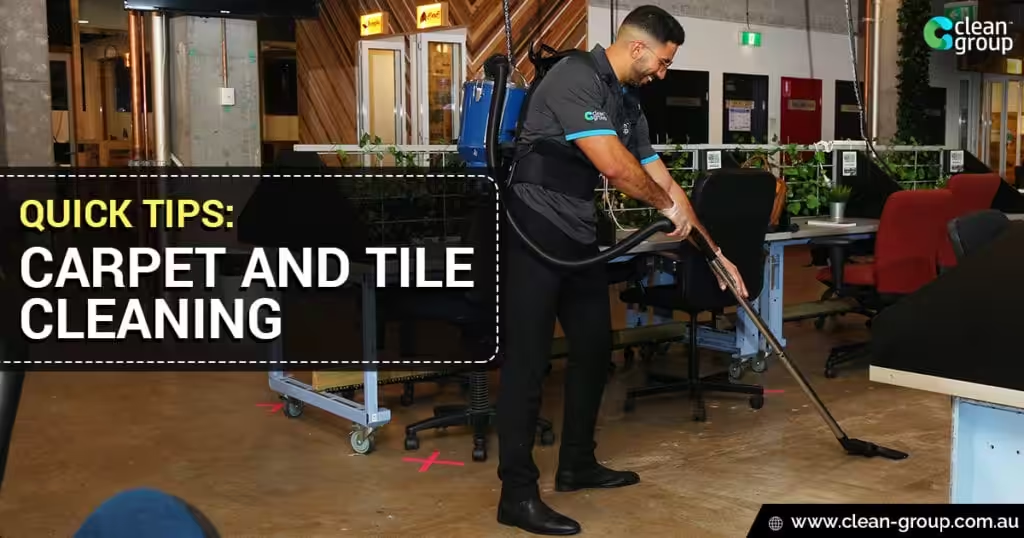
We have cleaned more carpet and tile combinations in Sydney commercial buildings than we can count, and the one thing that surprises us every time is how many facility managers treat these two surfaces as if they need the same approach. They do not. Our Sydney carpet cleaners have spent years refining separate protocols for textile and hard floor surfaces because the chemistry, equipment, and techniques that work brilliantly on one can damage the other. We service offices across Neutral Bay, Cremorne, and Mosman where carpet transitions to tile multiple times per floor, and getting the junction zones right is where most cleaning companies fall short.
We wrote this guide because we were tired of seeing the same preventable mistakes at every new client site we assessed. Carpet that had been over-wet by tile cleaning crews. Tile grout that had been stained by carpet pre-spray overspray. Transition strips that trapped moisture and grew mould because nobody thought to lift them during cleaning. Our team addresses all of these issues as part of our standard service, and we want to share the practical knowledge that makes the difference between a clean-looking floor and a genuinely hygienic one.
For more insights, see our guide on carpet cleaning costs.
Carpet Maintenance Tips That Actually Work in Commercial Settings
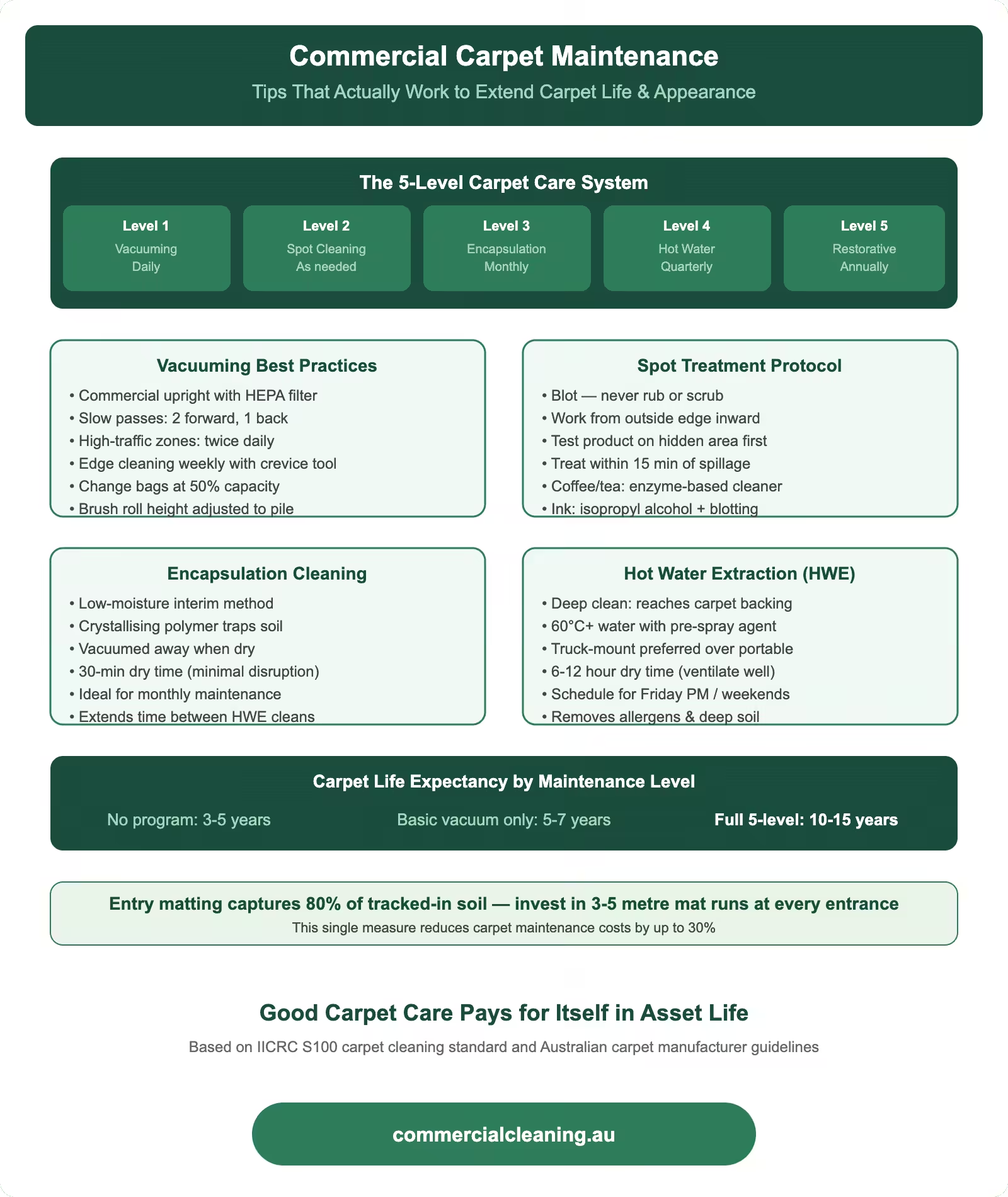
Carpet Maintenance Tips That Actually Work in Commercial Settings covers specific protocols that we tailor to each facility based on its layout, traffic, and compliance requirements. We have found that the single most impactful carpet maintenance practice is proper vacuuming — not the quick once-over that most in-house cleaners perform, but systematic passes that follow traffic patterns and overlap by at least fifty percent. Our team tested soil removal rates across different vacuum techniques and found that a structured approach removes up to forty percent more dry soil per session than random-direction vacuuming. We train every new team member on this technique because it forms the foundation of everything else we do.
We also recommend immediate spot treatment for any spill on commercial carpet. Our team supplies spot treatment kits to our Neutral Bay and lower North Shore clients because we have learned that a stain addressed within the first five minutes has a ninety percent chance of complete removal, while that figure drops to below fifty percent after thirty minutes. The key is blotting rather than rubbing, using a neutral pH spotter, and working from the outside of the stain inward to prevent spreading. We have seen well-meaning office staff turn a small coffee spill into a dinner-plate-sized stain by scrubbing aggressively with the wrong product.
Our approach to carpet maintenance follows moisture management principles consistent with AS 4459.7, which addresses moisture testing in floor coverings. We apply this thinking because excess moisture in carpet systems leads to adhesive failure, mould growth, and accelerated fibre degradation. Every cleaning method we use is calibrated to minimise moisture introduction while maximising soil removal, and we measure residual moisture after every extraction clean to confirm we have met our drying targets.
Tile and Grout Cleaning Techniques We Use on Commercial Floors
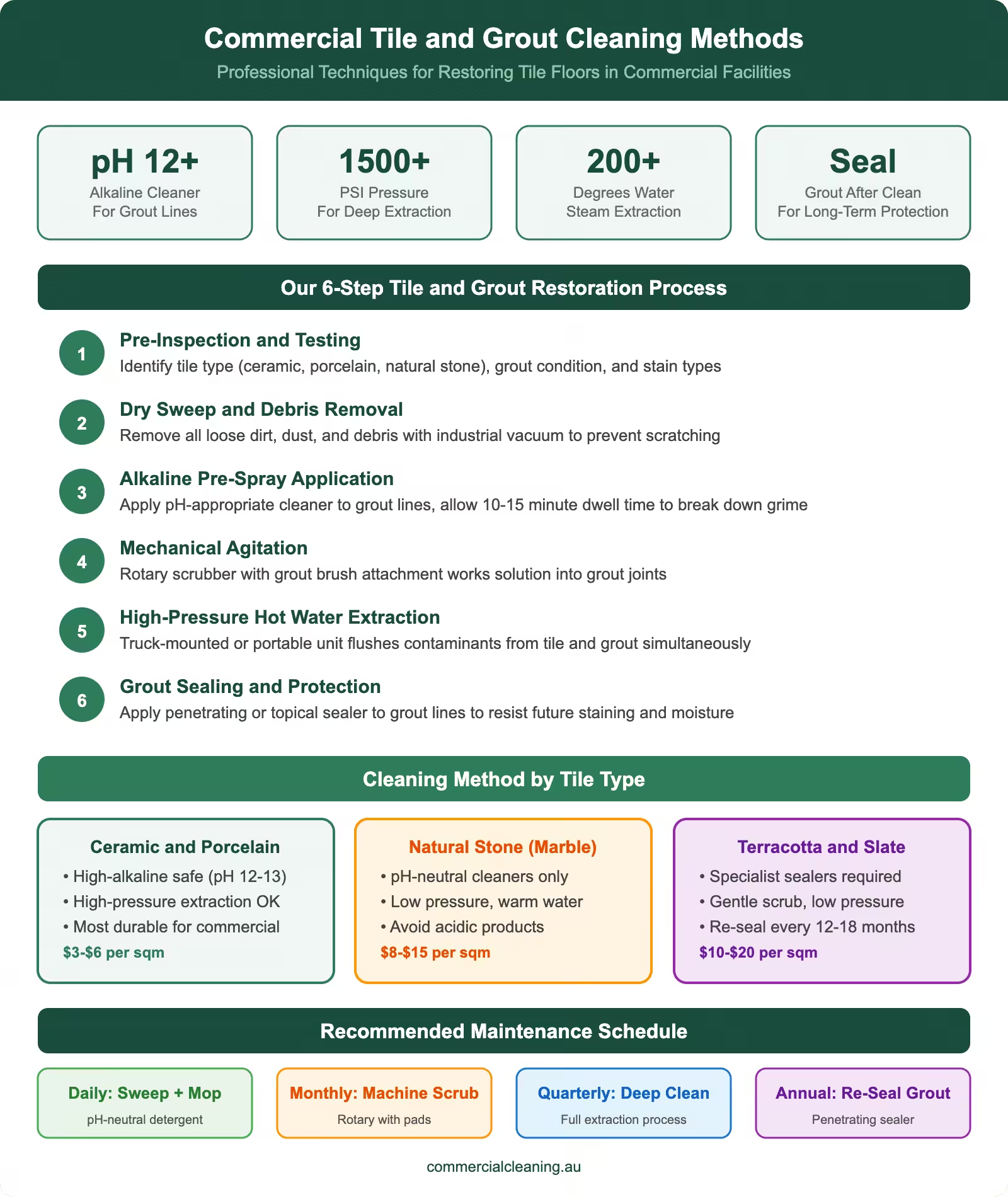
We treat tile cleaning as a two-stage process: the tile surface itself and the grout lines between them. Most cleaning companies mop tiles and call the job done, but our team has pulled up tiles in Cremorne offices and found grout lines harbouring bacterial colonies that mopping never touches. We use a rotary scrubber with grout-specific brush attachments that generate the mechanical friction needed to dislodge embedded soil from porous grout surfaces. We follow this with a targeted alkaline cleaner that penetrates the grout matrix and lifts staining from within.
We have also learned that tile type dictates chemical selection more than most people realise. Porcelain tiles in our Mosman commercial clients can handle alkaline cleaners without issue, but natural stone tiles like marble and travertine require neutral or mildly acidic products because alkaline solutions etch the surface over time. Our team once inherited a heritage building in Neutral Bay where the previous cleaner had used a standard degreaser on limestone floor tiles for two years. The surface had lost its polish entirely and required professional grinding to restore. We now test chemical compatibility on every new tile surface before committing to a cleaning program.
We pay particular attention to grout sealing as part of our tile maintenance program. Our team applies a penetrating silicone-based sealer after every deep grout clean because sealed grout resists staining and moisture penetration for up to twelve months. We have compared maintenance costs between sealed and unsealed grout over three-year periods and found that sealing reduces the frequency of deep cleans by roughly forty percent, which translates to significant cost savings for our clients across the lower North Shore.
Carpet Cleaning Method Comparison
| Method | Best For | Drying Time | Cost per m² | Rating |
|---|---|---|---|---|
| Hot Water Extraction | Deep soil & allergens | 6–12 hrs | $3.50–$5.50 | ★★★★★ |
| Dry Compound | Low-moisture zones | 30–60 min | $2.80–$4.20 | ★★★ |
| Encapsulation | Maintenance cleans | 20–45 min | $2.00–$3.50 | ★★★★ |
| Bonnet Cleaning | Surface refresh | 1–2 hrs | $1.80–$3.00 | ★★ |
| Shampooing | Heavy staining | 8–24 hrs | $3.00–$4.80 | ★★★ |
Managing Carpet-to-Tile Transition Zones
Carpet Cleaning Method Comparison requires specific protocols that we tailor to each facility based on its layout, traffic, and compliance requirements. We consider transition zones the most neglected areas in multi-surface commercial floors. Our team has found soil accumulation at carpet-tile junctions that exceeded anything we measured in the middle of either surface. The reason is mechanical — foot traffic pushes loose soil toward edges and transitions where vacuum cleaners and mops cannot reach effectively. We use crevice tools and edge-cleaning attachments specifically designed for these zones, and we lift transition strips quarterly to clean beneath them.
We have also found that moisture migration at transition zones causes more damage than most facility managers realise. Water used for tile mopping wicks into adjacent carpet edges through capillary action, and over time this creates a permanent damp zone that attracts soil and supports microbial growth. Our team manages this by establishing a dry buffer zone — we stop wet mopping at least fifteen centimetres from any carpet edge and use a damp cloth for the final approach. A detailed carpet and tile maintenance program for a standard commercial floor in the Cremorne area typically costs around $1,410 per quarterly deep clean. For more detail on carpet cleaning costs and what to budget, read our next guide in our carpet cleaning series.
Frequently Asked Questions
Can you clean carpet and tile in the same visit?
We clean both surfaces in a single visit for most of our commercial clients. Our team carries separate equipment and chemicals for each surface type, which allows us to work efficiently without risk of cross-contamination between textile and hard floor cleaning products.
How often should commercial tile grout be cleaned?
We recommend quarterly deep grout cleaning for high-traffic areas and biannual cleaning for lower-traffic zones. Our team has found that sealed grout maintains appearance for longer, but even sealed surfaces need periodic deep cleaning to remove soil that penetrates the sealer over time.
What is the best way to maintain carpet between professional cleans?
We advise daily vacuuming with a commercial-grade upright vacuum using overlapping passes. Our team also recommends immediate spot treatment of spills and placement of quality walk-off mats at all entry points to reduce soil tracked onto carpet surfaces.
Does tile cleaning damage grout?
We use grout-safe chemicals and controlled pressure to avoid damage. Our team has seen grout erosion caused by high-pressure cleaning and acidic products, which is why we test every surface before committing to a method. Proper technique preserves grout integrity while achieving thorough cleaning.
How do you prevent carpet edges from getting wet during tile cleaning?
We maintain a fifteen-centimetre dry buffer zone at every carpet-tile transition. Our team uses damp cloths rather than wet mops near carpet edges and positions absorbent barriers to prevent moisture migration through capillary action into adjacent carpet fibres.
What does commercial carpet and tile cleaning cost?
We charge approximately $1,410 for a detailed quarterly deep clean covering both carpet and tile surfaces on a standard commercial floor in the lower North Shore area. Our pricing includes grout treatment, transition zone detailing, and post-clean moisture verification.
Can you remove old stains from tile grout?
We successfully remove the majority of grout stains using alkaline cleaners and mechanical agitation. Our team has restored grout in buildings where previous cleaners gave up, though we are transparent with clients that some staining from years of neglect may require grout recolouring rather than cleaning alone.
Do you seal grout after cleaning?
We apply a penetrating silicone-based grout sealer after every deep clean as standard practice. Our team has measured the performance difference and found that sealed grout resists staining for up to twelve months, reducing the frequency and cost of deep cleaning cycles significantly.
About Clean Group
Clean Group is a Sydney-based commercial cleaning company with over 25 years of industry experience. Founded by Suji Siv, our team of 50+ trained professionals services offices, warehouses, medical centres, schools, childcare facilities, retail stores, gyms, and strata properties across Sydney, Melbourne, and Brisbane.
We are active members of ISSA and the Building Service Contractors Association of Australia (BSCAA). Our operations align with ISO 9001 (Quality Management), ISO 14001 (Environmental Management), and ISO 45001 (Workplace Health and Safety) standards. We hold membership with the Green Building Council of Australia and use eco-friendly, TGA-registered cleaning products wherever possible.
Every Clean Group cleaner is police-checked, fully insured, and trained in safe work procedures under SafeWork NSW guidelines. We operate 7 days a week, including after-hours and weekend services, to minimise disruption to your business.
About the Author

Stephen Matthews
Hi, my name is Steve. I have been working as a Regional Operations Manager in Sydney Clean Group for almost four years now and manage a team of 10. I have more than three decades of experience in the commercial cleaning industry. My responsibilities include the day-to-day management of cleaning operations, planning, online quotation to clients, managing cleaners’ performance, collecting clients\' feedback, and ensuring proper & regular maintenance of cleaning equipment. Get in touch for a quick chat about your cleaning needs.
Read More About Stephen
