5 Areas Your Strata Cleaners Should be Paying Attention To
After cleaning strata properties across Sydney for over a decade, our crew has developed a sharp eye for the five areas that make or break a building’s common-area presentation. We service everything from six-unit walk-ups in Marrickville to 200-apartment towers in Parramatta, and the same five zones consistently determine whether residents feel proud of their building or start looking for somewhere else to live. Our strata cleaners prioritise these areas because they have the highest foot traffic, the fastest re-soiling rates, and the most direct impact on property valuations and body corporate satisfaction scores.
Entrances and Foyers: The First Impression That Sets the Standard
Entrances and Foyers: The First Impression That Sets the Standard covers specific protocols that we tailor to each facility based on its layout, traffic, and compliance requirements. The front entrance is where every resident, visitor, delivery driver, and prospective buyer forms their opinion of the building. We have seen strata schemes in Chatswood lose $15,000 to $20,000 per unit in sale-price perception because the foyer tiles were dull, the letterboxes were dusty, and the glass entry doors had fingerprint smears that nobody had addressed in weeks. Our entrance cleaning protocol runs daily for buildings above 20 units and three times weekly for smaller schemes. It covers glass cleaning with a squeegee and deionised water system that leaves zero streaking, tile or stone floor mopping with a pH-neutral detergent rated to AS 4586 slip-resistance standards, and letterbox and intercom panel wipe-downs.
We also clean the entry matting — the first line of defence against soil transfer from the street. Well-maintained entry mats capture up to 80 percent of incoming dirt particles before they reach interior surfaces. Our team lifts and pressure-cleans barrier mats fortnightly, and we have found that buildings in Bankstown and Liverpool with high external dust loads benefit from weekly mat cleaning to prevent the matting itself becoming a dirt source rather than a dirt trap.
Stairwells: The Neglected Corridor Between Floors
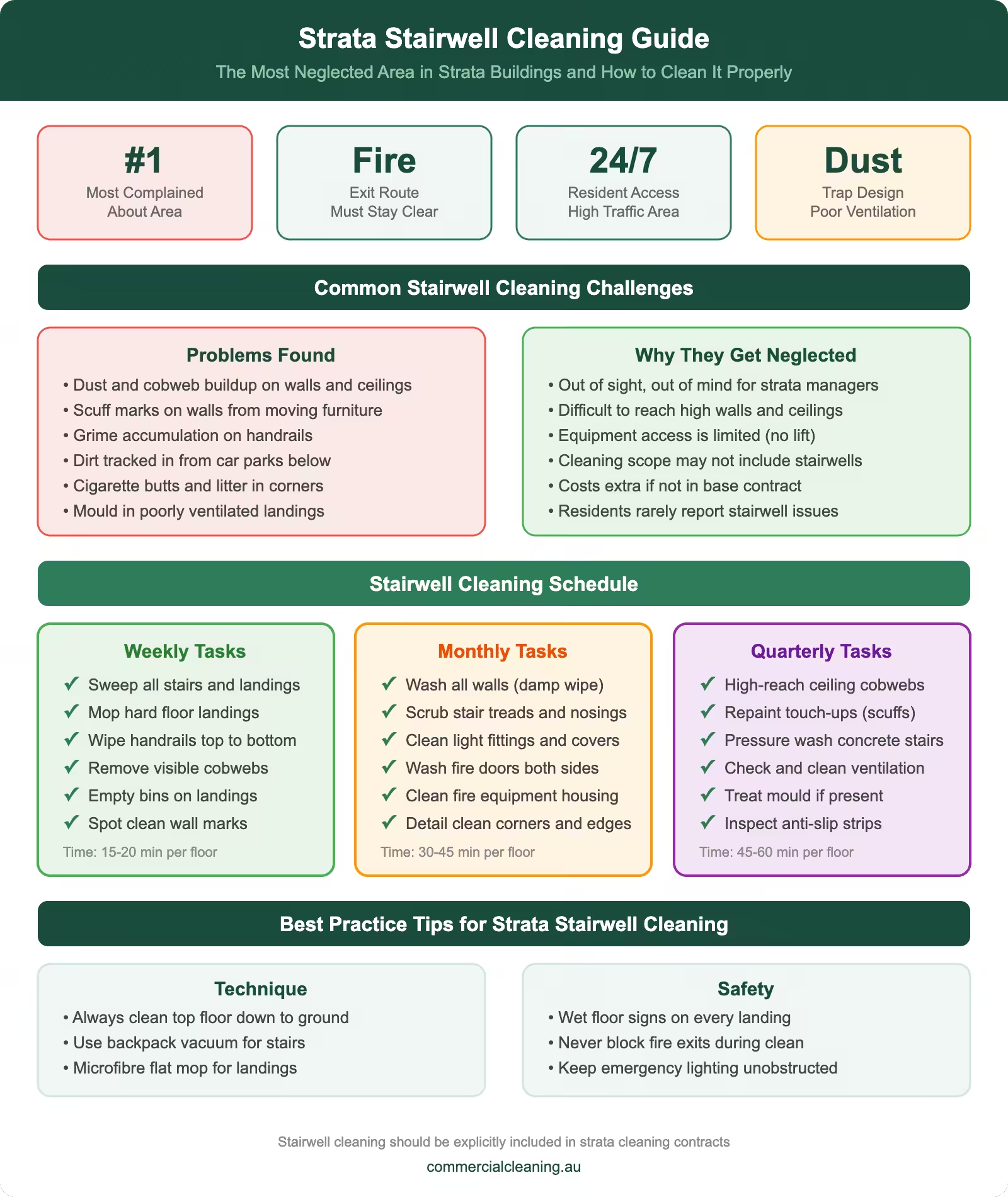
Stairwells: The Neglected Corridor Between Floors involves specific protocols that we tailor to each facility based on its layout, traffic, and compliance requirements. Stairwells are where cleaning quality drops off in most strata buildings because they sit outside the high-visibility zones. But fire-safety regulations under the Environmental Planning and Assessment Regulation 2000 require stairwells to be kept clear and clean as designated evacuation routes. We have audited buildings in Homebush and Eastwood where stairwell handrails had not been wiped in months and step edges were obscured by accumulated dust and debris — a genuine trip hazard that creates liability exposure for the owners corporation under the Civil Liability Act 2002.
Our stairwell protocol covers mopping every tread and landing with an alkaline floor cleaner, wiping all handrails and balustrades with a sanitiser, clearing cobwebs from corners and light fittings, and checking that fire-exit signage is visible and unobstructed. We service stairwells weekly in buildings above four storeys and fortnightly in low-rise schemes. The cost difference between clean and neglected stairwells showed up clearly in a Surry Hills building we took over in 2023 — the previous cleaner had been skipping stairwells entirely, and within six weeks of our schedule the strata committee received zero complaints about common-area cleanliness for the first time in two years.
Strata Common Area Maintenance Schedule
| Area | Daily | Weekly | Monthly | Annual |
|---|---|---|---|---|
| Lobby & Foyer | Sweep, mop, glass | Deep mop, dust lights | Floor machine scrub | Strip & reseal |
| Lifts & Doors | Wipe panels + buttons | Full interior detail | Track & rail degrease | Deep restoration |
| Car Park | Litter patrol | Sweep + line check | Pressure wash bays | Full pressure + repaint |
| Pool/Gym | Sanitise surfaces | Deep clean equipment | Grout scrub | Full tile restoration |
| Bin Room | Hose down, deodorise | Deep scrub walls | Pest treatment | Full sanitise + repaint |
Lifts: High-Touch Surfaces in an Enclosed Space
Lifts: High-Touch Surfaces in an Enclosed Space includes specific protocols that we tailor to each facility based on its layout, traffic, and compliance requirements. Lift interiors are the highest-touch common area in any multi-storey strata building. Every resident touches the same call button, the same floor buttons, and the same handrail multiple times per day. We have measured ATP readings above 600 RLU on lift buttons in Newtown and CBD apartment buildings — six times the 100 RLU threshold we use as a cleanliness benchmark from AS 4187. Our lift cleaning protocol includes daily button-panel sanitisation with a quaternary ammonium wipe, daily floor mopping, weekly wall-panel cleaning (stainless steel gets a specialised polish to remove fingerprints without scratching), and monthly ceiling and light-diffuser dusting.
Lift doors and tracks are the most commonly overlooked element. Debris accumulating in door tracks causes the doors to hesitate or jam, triggering maintenance call-outs that cost the owners corporation $180 to $350 per visit depending on the lift company. We vacuum lift tracks weekly as a preventative measure, and our Penrith and western Sydney strata clients have reported a 40 percent reduction in lift maintenance call-outs since we added track cleaning to the scope. That saving alone typically covers the cost of the additional cleaning time.
Driveways and Car Parks: Where Weather Meets Traffic
Driveways and basement car parks accumulate tyre marks, oil drips, leaf litter, and stormwater sediment that degrade concrete surfaces over time. We pressure-clean strata driveways on a quarterly cycle using equipment rated to AS 1210 at 3,000 to 4,000 psi, with a surface cleaner attachment that provides even coverage without the striping that handheld lances produce. For basement car parks, we add a degreasing pre-treatment to oil-stained bays using a biodegradable alkaline degreaser at 5 percent concentration, followed by pressure washing and wet-vacuuming to prevent wash water entering the stormwater system in breach of the Protection of the Environment Operations Act 1997.
Car park line marking visibility is something we check on every quarterly clean. Faded line marking creates disputes between residents over bay allocation and presents a safety risk in shared traffic zones. We flag any bays where marking has degraded below 50 percent visibility to the strata manager with a re-marking recommendation. In a 120-bay complex in Cabramatta, implementing our quarterly pressure-clean and line-marking monitoring program reduced car park-related resident complaints from an average of eight per quarter to fewer than two.
Gardens and External Areas: The Boundary Between Cleaning and Landscaping
Garden maintenance sits at the intersection of cleaning and landscaping, and our crew handles the cleaning side — clearing leaf litter from pathways, pressure-washing garden edging and retaining walls, cleaning outdoor furniture and BBQ areas, and removing cobwebs from external light fittings and building facades within reach. We have found that strata buildings in Haymarket and the CBD with courtyards and rooftop gardens need weekly pathway cleaning because foot traffic combined with potting-mix runoff creates a slip hazard on tiled or paved surfaces.
Bin bay cleaning is part of this scope and is arguably the most impactful task for resident satisfaction. A clean, odour-free bin area signals that the building is well managed. We clean bin bays weekly using a chlorinated detergent at 55°C, pressure-wash the floor and walls monthly, and apply a residual deodoriser that lasts between cleans. For strata schemes looking at how maintenance costs break down across all these areas, our guide on cleaning tender tips covers what to include when briefing a new strata cleaning provider.
Frequently Asked Questions
How frequently should lobby and entrance areas be cleaned?
Lobby areas require daily cleaning to maintain presentation standards and prevent dirt migration into interior common areas. High-traffic residential buildings may benefit from multiple daily cleaning passes during peak arrival and departure times.
What safety standards apply to stairwell cleaning?
Stairwells must comply with Australian Standard AS 4586 for slip resistance. The Strata Schemes Management Act 2015 requires owners corporations to maintain stairs in safe condition, and the Environmental Planning and Assessment Regulation 2021 specifies fire safety requirements for stairwell cleanliness and accessibility.
Why are lifts such a priority for professional cleaning?
Lifts represent high-touch zones receiving contact from hundreds of users daily. Button panels, handrails, and door frames accumulate microbial contamination that spreads pathogens. Daily sanitisation using TGA-approved disinfectants is necessary for resident health and wellbeing.
How does driveway cleaning affect property values?
Prospective residents and buyers assess driveways as key amenity indicators. Clean, well-maintained driveways create positive first impressions and demonstrate professional property management. Studies consistently show that properties with well-maintained common areas achieve premium valuations.
What is the annual maintenance cost for strata gardens?
Garden maintenance typically costs between $40 to $80 per hour or $200 to $500 per visit, depending on garden size, plant complexity, and location. Fortnightly maintenance during growing seasons and monthly maintenance through winter establishes typical scheduling patterns for Sydney strata properties.
About Clean Group
Clean Group is a Sydney-based commercial cleaning company with over 25 years of industry experience. Founded by Suji Siv, our team of 50+ trained professionals services offices, warehouses, medical centres, schools, childcare facilities, retail stores, gyms, and strata properties across Sydney, Melbourne, and Brisbane.
We are active members of ISSA and the Building Service Contractors Association of Australia (BSCAA). Our operations align with ISO 9001 (Quality Management), ISO 14001 (Environmental Management), and ISO 45001 (Workplace Health and Safety) standards. We hold membership with the Green Building Council of Australia and use eco-friendly, TGA-registered cleaning products wherever possible.
Every Clean Group cleaner is police-checked, fully insured, and trained in safe work procedures under SafeWork NSW guidelines. We operate 7 days a week, including after-hours and weekend services, to minimise disruption to your business.
About the Author

Stephen Matthews
Hi, my name is Steve. I have been working as a Regional Operations Manager in Sydney Clean Group for almost four years now and manage a team of 10. I have more than three decades of experience in the commercial cleaning industry. My responsibilities include the day-to-day management of cleaning operations, planning, online quotation to clients, managing cleaners’ performance, collecting clients\' feedback, and ensuring proper & regular maintenance of cleaning equipment. Get in touch for a quick chat about your cleaning needs.
Read More About Stephen
