We received a referral from one of our existing hospital clients to take over medical cleaning operations at a large specialist medical tower in Camellia, near the Rosehill precinct. As a Sydney commercial cleaning company with extensive healthcare experience, our team was well prepared for the complexity of this engagement. The tower housed a dental surgery on the ground floor, three dermatology practices, a pathology collection centre, and a physiotherapy clinic, with patients drawn from Rosehill, South Granville, and surrounding Western Sydney suburbs.
Evaluating the Camellia Medical Tower
Evaluating the Camellia Medical Tower covers specific protocols that we tailor to each facility based on its layout, traffic, and compliance requirements. We conducted our initial walkthrough on a Thursday afternoon when all practices were operating at peak capacity. Our assessors have learned over many years that observing a medical facility under real load conditions reveals cleaning gaps that morning inspections simply cannot detect. We counted foot traffic through the main lobby averaging 340 people between midday and five o’clock, which was significantly higher than what the building management had estimated. We documented every touch surface in the common areas and found 89 high-frequency contact points that needed disinfection multiple times daily.
Our inspection of the dental surgery revealed that the previous cleaning team had been using general-purpose surface spray rather than TGA-registered disinfectants on bracket table surfaces and suction unit housings. We raised this immediately with the principal dentist because these surfaces come into close proximity with open wound sites during procedures. We have encountered this problem in other dental practices where the cleaning provider lacked specific training in dental environment requirements. The contamination risk was compounded by the practice’s location adjacent to the shared lobby, creating a direct pathway for pathogens from the high-traffic common area into the clinical space.
We also assessed the pathology collection centre, which processed an average of 85 blood draws per day. Our ATP surface testing of the collection chairs and arm rests showed readings averaging 520 relative light units, which was more than five times our acceptable threshold for patient contact surfaces. We documented these results photographically and included them in our proposal to demonstrate the urgency of implementing a proper healthcare-grade cleaning program. Patients from South Granville and Rosehill who relied on this collection centre deserved confidence that the surfaces they contacted were properly disinfected.
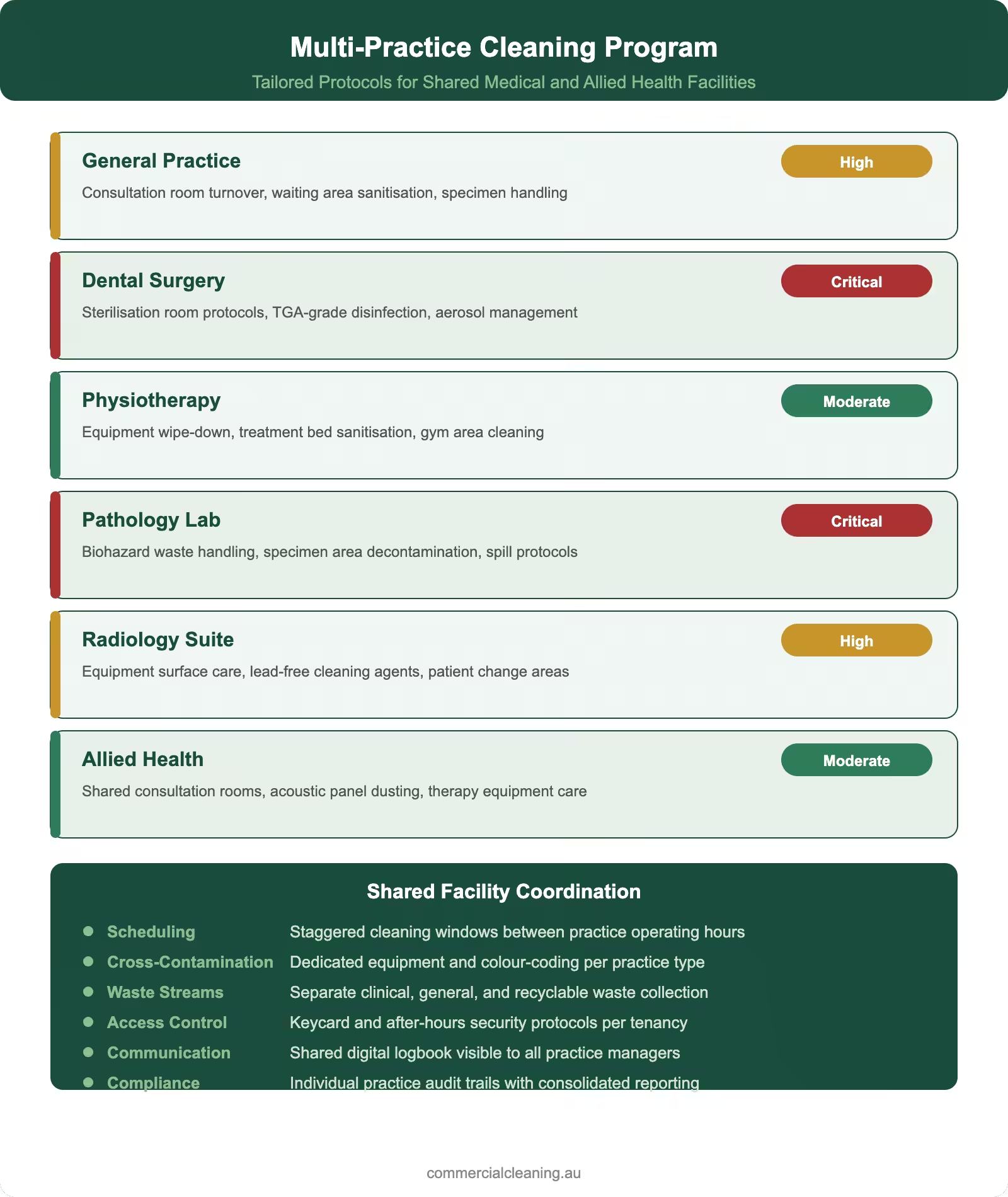
Multi-practice cleaning program infographic showing tailored protocols for six practice types with shared facility coordination framework
Designing the Multi-Practice Cleaning Program
We built a custom cleaning program that addressed the distinct clinical needs of each practice in the tower. Our approach segmented the building into five operational zones, each with its own protocol manual, product set, and audit checklist. We have operated multi-tenancy medical buildings for over a decade and we know that the biggest mistake cleaning providers make is treating diverse clinical environments as a single homogeneous space. The dental surgery alone required twelve separate protocol steps that did not apply to any other tenancy in the building.
Our dental surgery protocol was built around the requirements of AS 4187.8, which addresses the cleaning of reusable medical device transport containers and the environmental standards for areas where these containers are stored and processed. We extended these principles to cover all instrument staging areas, autoclave benches, and the surgery’s decontamination room. We implemented a terminal cleaning cycle after the last patient of each day that included hydrogen peroxide surface fogging, which we have found to be particularly effective in dental environments where aerosol-generating procedures create widespread surface contamination throughout the treatment room.
We assigned three dedicated team members to the Camellia tower, with our senior cleaner holding a Certificate III in Health Services Assistance with a cleaning specialisation. We have invested heavily in training our medical cleaning teams because we believe it is the single most important factor in delivering consistently high outcomes. Our team completed a two-week induction that covered the specific workflows, risk profiles, and compliance requirements of each practice before commencing unsupervised work. We also established a buddy system where new team members worked alongside experienced staff for their first month on site.
We introduced between-patient turnaround protocols for both the dental surgery and the pathology collection centre. Our dental turnaround covered bracket tables, handpiece holders, suction units, light handles, patient chair surfaces, and the immediate bench area, all completed within six minutes. Our pathology turnaround focused on collection chairs, arm rests, tourniquet storage areas, and adjacent bench surfaces, completed within three minutes. We timed these protocols meticulously because we have found that if turnaround cleaning creates appointment delays, practitioners will eventually pressure staff to skip steps.
Strata Common Area Maintenance Schedule
Area
Daily
Weekly
Monthly
Annual
Lobby & Foyer
Sweep, mop, glass
Deep mop, dust lights
Floor machine scrub
Strip & reseal
Lifts & Doors
Wipe panels + buttons
Full interior detail
Track & rail degrease
Deep restoration
Car Park
Litter patrol
Sweep + line check
Pressure wash bays
Full pressure + repaint
Pool/Gym
Sanitise surfaces
Deep clean equipment
Grout scrub
Full tile restoration
Bin Room
Hose down, deodorise
Deep scrub walls
Pest treatment
Full sanitise + repaint
Compliance Framework and AS 4187.8 Implementation
Strata Common Area Maintenance Schedule requires specific protocols that we tailor to each facility based on its layout, traffic, and compliance requirements. We built our compliance documentation around the environmental provisions of AS 4187.8 and supplemented them with guidelines from the Dental Board of Australia and the Australian Dental Association infection control standards. Our framework mapped 18 specific compliance requirements to operational cleaning tasks, and we tracked adherence to each one through our digital audit platform. We have refined this mapping approach over many contracts and consider it necessary for demonstrating to accreditation bodies that every cleaning activity has a documented standards basis.
Compliance Framework and AS 4187.8 Implementation includes specific protocols that we tailor to each facility based on its layout, traffic, and compliance requirements. Our fortnightly quality audits covered 112 inspection points across all five zones, with each point weighted by contamination risk. We used both visual inspection and ATP bioluminescence testing, rotating the ATP test locations to confirm detailed coverage over each quarterly cycle. Our data showed that clinical surface pass rates improved from 54 percent at baseline to 98 percent within the first three months. We shared these results with every practice principal through a secure online portal that allowed them to drill down into zone-specific and surface-specific data.
We maintained chemical registers on each floor, listing every product used along with its concentration, contact time, material compatibility notes, and TGA registration details. Our operations manager reviewed these registers quarterly and conducted spot checks to verify that on-site product usage matched documented protocols. We have found that this level of chemical management discipline is particularly important in buildings with dental practices, where certain disinfectants can damage composite bonding materials and impression compounds if used incorrectly on adjacent surfaces.
We supported the dental surgery through its ADA infection control compliance audit during our first year of service. Our team prepared a detailed cleaning validation report that included six months of ATP trend data, photographic evidence of daily cleaning standards, product compatibility assessments for all dental-specific surfaces, and our staff training and certification records. The principal dentist told us that the auditor specifically commented on the quality of our environmental cleaning documentation, which we took as strong endorsement of our systematic approach to compliance management.
Results, Pricing Transparency, and Long-Term Value
Results, Pricing Transparency, and Long-Term Value addresses specific protocols that we tailor to each facility based on its layout, traffic, and compliance requirements. We structured our pricing to give the building management committee complete visibility over their cleaning investment. Our monthly service fee of $2,720 covered all five-zone routine cleaning, between-patient turnaround protocols for the dental and pathology practices, consumable management, fortnightly ATP audits, chemical register maintenance, and emergency response availability. We presented this as a fixed monthly rate with no hidden surcharges because we have learned that medical facility managers need predictable operating costs to manage their budgets effectively.
Our measurable outcomes over the first twelve months were compelling. Clinical surface ATP pass rates reached 98 percent, up from 54 percent at baseline. Patient satisfaction scores across all practices improved by an average of 2.8 points on a 10-point scale. Cleaning-related complaints dropped to zero in seven of the twelve months, and averaged fewer than one per month across the remaining five. We tracked all metrics in real time and presented quarterly summaries to the building management committee alongside trend analysis and recommendations for continuous improvement.
We delivered additional value by identifying $18,500 in preventable maintenance costs during our routine cleaning operations. Our team flagged a persistent water leak behind the dental surgery’s autoclave bench, spotted early-stage mould growth in the pathology centre’s ventilation ducting, and detected a cracked floor tile in the dermatology suite that posed a patient trip hazard. We reported each finding through our digital maintenance notification system within two hours of discovery. We have built this proactive observation capability into our team culture because we believe that cleaning staff who are in the building every day are uniquely positioned to notice problems before they escalate.
The Camellia medical tower renewed our contract for a second year with an expanded scope that now includes quarterly window cleaning, annual carpet deep extraction, and weekend deep cleaning of the dental surgery. Our team continues to serve practitioners and patients from Camellia, Rosehill, South Granville, and the broader Parramatta region with the healthcare-grade hygiene standards that we established from our very first day on site. To see how we approach healthcare cleaning in another context, read our Sydney healthcare facility cleaning case study.
Frequently Asked Questions
Why did the Camellia medical tower need a specialist cleaning provider?
We found during our assessment that the previous cleaning team was using general-purpose products on dental bracket tables and pathology collection surfaces. Our ATP testing showed contamination levels five times above acceptable thresholds on patient contact surfaces, demonstrating a clear need for healthcare-specific cleaning expertise across all practices in the building.
How does AS 4187.8 apply to dental surgery environmental cleaning?
We apply AS 4187.8 environmental provisions to all instrument staging areas, autoclave benches, and decontamination rooms in dental practices. Our protocols extend beyond basic surface cleaning to address the aerosol contamination patterns created by dental procedures, using hydrogen peroxide fogging as part of our terminal cleaning cycle after each day’s final patient.
What is included in your between-patient turnaround cleaning for dental practices?
Our dental turnaround covers bracket tables, handpiece holders, suction units, light handles, patient chair surfaces, and adjacent bench areas, all completed within six minutes. We designed this protocol to integrate with appointment schedules so that infection control never creates delays that might pressure staff to skip cleaning steps.
How do you manage cleaning across multiple different medical practices in one building?
We segment multi-tenancy medical buildings into distinct operational zones, each with its own protocol manual, product set, and audit checklist. Our five-zone framework at Camellia recognised that the dental surgery needed twelve protocol steps that did not apply to any other practice, while the pathology centre and dermatology suites each had their own unique requirements.
What does the $2,720 monthly cleaning program include?
Our fee covers five-zone routine cleaning, between-patient turnarounds for dental and pathology practices, consumable management, fortnightly ATP audits, chemical register maintenance, and emergency response availability. We present this as a fixed monthly rate with no hidden surcharges to give building managers predictable operating costs.
How do you verify dental-specific cleaning products are compatible with dental materials?
We maintain detailed chemical registers that include material compatibility notes for every product used near dental surfaces. Our operations manager conducts quarterly reviews because certain disinfectants can damage composite bonding materials and impression compounds if used on adjacent surfaces without proper product selection.
What measurable improvements did you achieve at the Camellia medical tower?
We improved clinical surface ATP pass rates from 54 percent to 98 percent, lifted patient satisfaction scores by an average of 2.8 points across all practices, and reduced cleaning complaints to zero in seven of twelve months. We also identified $18,500 in preventable maintenance costs through proactive observation during routine cleaning rounds.
Can your team support dental practice infection control audits?
We prepared a detailed validation report for the ADA infection control compliance audit including six months of ATP trend data, photographic evidence, product compatibility assessments, and staff certification records. The auditor specifically commended the quality of our environmental cleaning documentation during the review.
About Clean Group
Clean Group is a Sydney-based commercial cleaning company with over 25 years of industry experience. Founded by Suji Siv, our team of 50+ trained professionals services offices, warehouses, medical centres, schools, childcare facilities, retail stores, gyms, and strata properties across Sydney, Melbourne, and Brisbane.
We are active members of ISSA and the Building Service Contractors Association of Australia (BSCAA). Our operations align with ISO 9001 (Quality Management), ISO 14001 (Environmental Management), and ISO 45001 (Workplace Health and Safety) standards. We hold membership with the Green Building Council of Australia and use eco-friendly, TGA-registered cleaning products wherever possible.
Every Clean Group cleaner is police-checked, fully insured, and trained in safe work procedures under SafeWork NSW guidelines. We operate 7 days a week, including after-hours and weekend services, to minimise disruption to your business.
Hi, I'm Suji Siv, the founder, CEO, and Managing Director of Clean Group, bringing over 25 years of leadership and management experience to the company. As the driving force behind Clean Group’s growth, I oversee strategic planning, resource allocation, and operational excellence across all departments. I am deeply involved in team development and performance optimization through regular reviews and hands-on leadership.