We were engaged by a large multi-specialty medical centre in the Bella Vista health precinct after their practice manager attended one of our infection control seminars in late 2022. As a dedicated Sydney office cleaning company, our team was invited to conduct a no-obligation site assessment that ultimately uncovered significant gaps in the facility’s existing cleaning protocols. The centre housed fourteen consulting suites, a day surgery unit, and a diagnostic imaging department serving patients from Norwest, Kellyville Ridge, and the broader Hills District community.
The Bella Vista Medical Precinct Challenge
The Bella Vista Medical Precinct Challenge covers specific protocols that we tailor to each facility based on its layout, traffic, and compliance requirements. We walked through the entire facility over two consecutive mornings, timing our visits to observe both the early-morning pre-patient preparation and the mid-afternoon peak patient flow periods. Our team has conducted hundreds of these assessments over the past decade, and we have developed an eye for the subtle indicators that distinguish adequate cleaning from genuinely effective infection prevention. We counted 211 high-touch surfaces across the facility, including 38 in the day surgery recovery area alone that required disinfection between each patient use.
Our assessment revealed that the existing cleaning team was covering all visible surfaces but missing critical areas behind equipment, under procedure beds, and inside storage cupboards where dust and biological material had accumulated over months. We documented these findings with UV fluorescent marker testing, which showed that 43 percent of marked surfaces in clinical areas were not being adequately cleaned during routine shifts. We have seen similar results in many healthcare facilities where cleaning staff lack specific medical environment training.
We also identified that the day surgery unit’s instrument reprocessing area was not receiving the level of environmental cleaning required to support sterile workflow. The bench surfaces showed residue buildup around the ultrasonic cleaner and the autoclave loading zone. We raised this with the practice manager as a priority concern because environmental contamination in reprocessing areas can compromise the sterility chain even when instrument reprocessing protocols themselves are being followed correctly. Patients travelling from Norwest and Kellyville Ridge for day procedures deserved better assurance than what we observed.
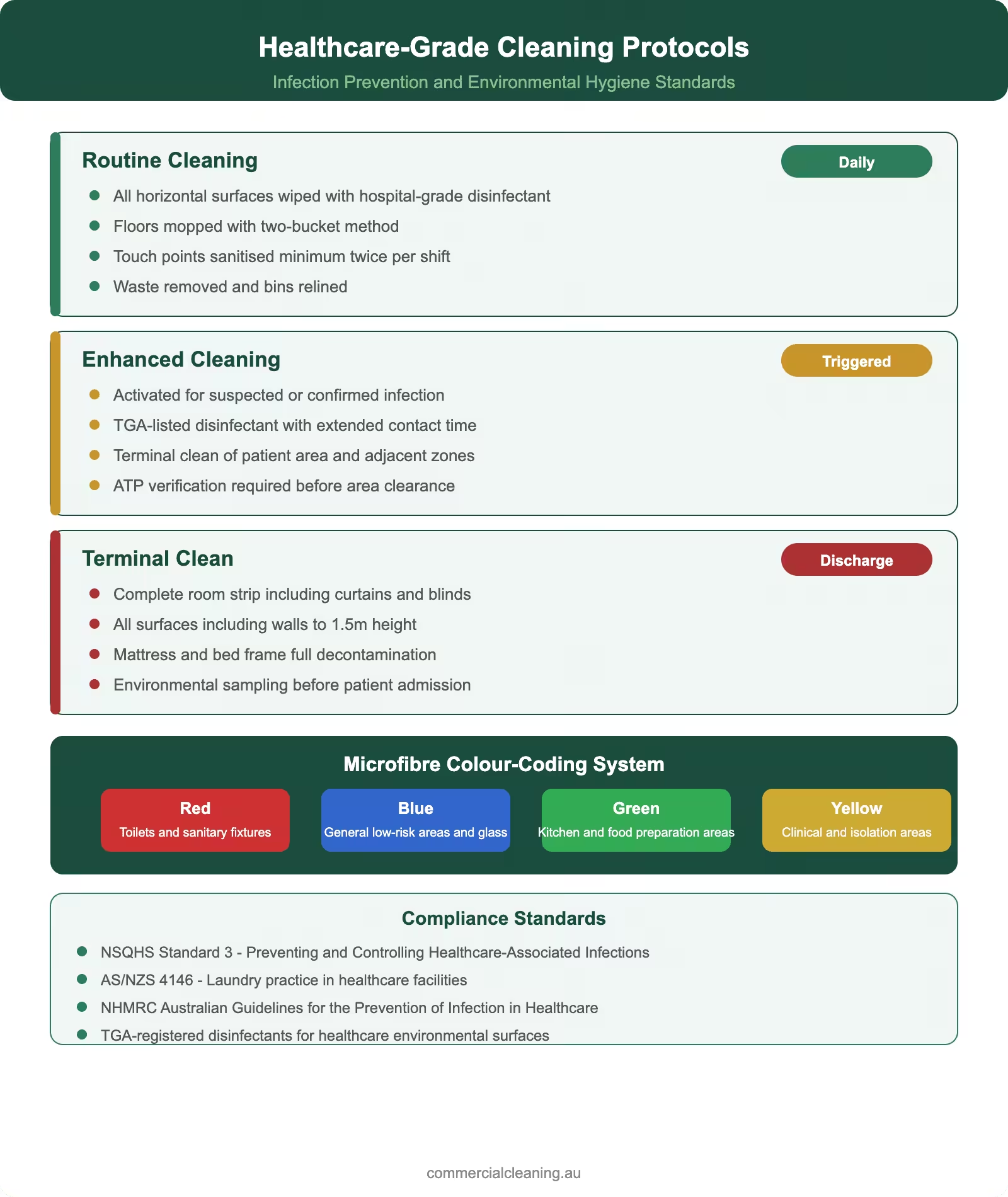
Healthcare-grade cleaning protocols infographic showing routine enhanced and terminal cleaning tiers with colour-coding system and compliance standards
Implementing Healthcare-Grade Cleaning Protocols
Implementing Healthcare-Grade Cleaning Protocols involves specific protocols that we tailor to each facility based on its layout, traffic, and compliance requirements. We developed a four-zone cleaning framework for the Bella Vista centre that assigned dedicated teams and product sets to each risk category. Our highest-risk zone covered the day surgery unit and reprocessing area, where we implemented terminal cleaning protocols aligned with AS 4187.4, which specifies requirements for cleaning and high-level disinfection of flexible endoscopes and the environments where they are processed. We applied these same environmental standards to the entire surgical suite because we have found that maintaining consistent protocols across connected spaces eliminates the contamination gradient that often develops at zone boundaries.
Our second zone covered the fourteen consulting suites, where we implemented a between-patient wipe-down protocol for examination beds, doorhandles, light switches, and computer peripherals. We trained our team to complete this turnover clean in under four minutes per room, which we have refined through years of practice to confirm it integrates seamlessly with appointment schedules. Our third zone addressed the diagnostic imaging department, where we worked with the radiographers to establish cleaning protocols that protected sensitive equipment while maintaining infection control standards. We used alcohol-free disinfectant wipes on imaging panels and screens to avoid damage while still achieving bactericidal efficacy.
We assigned four dedicated team members to the Bella Vista facility, rotating in pairs across morning and evening shifts. Our recruitment process for medical cleaning positions includes a mandatory practical assessment where candidates demonstrate their understanding of infection control principles before we consider them for placement. We have rejected candidates with years of commercial cleaning experience because they could not demonstrate the clinical awareness that healthcare environments demand. Our team members at this site completed an additional 16 hours of facility-specific training before their first unsupervised shift.
We also introduced an automated consumable management system that tracked usage of hand sanitiser, surface disinfectant, paper towels, and clinical waste bags across every dispenser in the building. Our system generated alerts when any dispenser dropped below 25 percent capacity, which meant our team could replenish supplies proactively rather than waiting for complaints. We have deployed this system across eleven of our medical cleaning contracts and it has virtually eliminated the patient experience issue of finding empty dispensers in clinical waiting areas.
Healthcare Cleaning Risk Zone Comparison
Zone
Risk Level
Frequency
Disinfectant Grade
PPE Required
Operating Theatre
Critical
Between every case
Hospital-grade TGA
Full gown, gloves, mask
Patient Ward
High
2× daily + discharge
Hospital-grade TGA
Gloves, apron
Waiting Room
Medium
3× daily
Commercial-grade
Gloves
Admin Office
Low
Daily
General purpose
Gloves
Bathroom/Amenities
High
4× daily minimum
Hospital-grade TGA
Gloves, apron, eyewear
AS 4187.4 Compliance and Quality Documentation
Healthcare Cleaning Risk Zone Comparison requires specific protocols that we tailor to each facility based on its layout, traffic, and compliance requirements. We structured our entire compliance program around the environmental cleaning requirements embedded within AS 4187.4. While this standard primarily addresses the reprocessing of flexible endoscopes, we applied its environmental provisions to every procedure room and adjacent corridor in the facility. Our rationale was straightforward: we have seen too many facilities where excellent instrument reprocessing is undermined by inadequate environmental hygiene in surrounding areas. We mapped 14 specific clauses from the standard to operational tasks in our cleaning schedule and documented compliance against each one.
AS 4187.4 Compliance and Quality Documentation includes specific protocols that we tailor to each facility based on its layout, traffic, and compliance requirements. Our quality assurance program included weekly ATP bioluminescence testing across 30 randomly selected surfaces, with results tracked in a rolling database that allowed us to identify trends and intervene before contamination levels became problematic. We set our pass threshold at 100 relative light units for clinical surfaces and 250 for non-clinical common areas. Our data over the first six months showed that clinical surfaces achieved an average reading of 28 relative light units, well below our threshold and significantly better than the 340 average we recorded during our initial assessment.
We provided every specialist practice in the building with a monthly compliance certificate that summarised cleaning frequencies, ATP results, product usage, and any corrective actions taken during the period. Our certificates were formatted specifically to meet the documentation requirements of RACGP, ACHS, and NSQHS accreditation frameworks because we have learned that providing audit-ready documentation saves our clients significant time and stress during their accreditation cycles. Three practices used our certificates as primary evidence during accreditation inspections within the first year.
We also established a formal incident reporting protocol for any cleaning-related event that could affect patient safety. This included spillage responses, product substitution requests, equipment malfunctions, and any observation by our team of facility maintenance issues. We logged 23 maintenance observations in the first year, including a cracked floor tile in the day surgery corridor that posed a trip hazard and a malfunctioning hand dryer in the patient bathroom that was creating standing water. We reported each finding within two hours through our digital notification system, and the facility manager acknowledged that our vigilance had prevented several potential insurance claims.
Measurable Outcomes and Investment Value
We delivered measurable results that justified the centre’s investment in our program from the very first quarter. Our monthly service fee of $2,580 covered all routine cleaning across four zones, consumable management, ATP testing, weekly quality audits, incident reporting, and emergency response availability. We presented this as an all-inclusive figure because we have found that healthcare facility managers need budget certainty and resent discovering hidden charges months into a contract. We also guaranteed that any additional deep-cleaning requirements identified during our audits would be included at no extra cost for the first twelve months.
Our headline results after twelve months included a 96 percent surface hygiene pass rate across clinical areas compared to the 57 percent baseline we recorded during our initial assessment. Patient complaints related to cleanliness dropped from an average of seven per month to fewer than one. Our consumable management system eliminated dispenser stockouts entirely, which the practice managers told us had been a persistent source of patient frustration under the previous arrangement. We tracked all these metrics in a live dashboard that authorised staff could access at any time.
We also contributed to a 22 percent reduction in the centre’s overall facility operating costs by consolidating cleaning product procurement, eliminating waste from overstocking, and identifying maintenance issues early. Our bulk purchasing arrangements through our supplier network delivered hospital-grade products at prices that were consistently 25 to 35 percent below what the individual practices had been paying through their own suppliers. We passed all savings through to the building management fund because we believe that transparent financial partnerships build stronger long-term relationships.
The Bella Vista medical centre extended our contract into a second year with expanded scope covering quarterly hard floor maintenance, annual carpet deep extraction, and bi-annual window cleaning. Our team continues to serve patients and practitioners from Bella Vista, Norwest, Kellyville Ridge, and the wider Hills District with the clinical-grade environmental hygiene standards that we established from the outset. We consider this engagement one of our most detailed medical cleaning programs and a strong reference for facilities considering a similar approach. For another example of our healthcare cleaning expertise, see our Bankstown cleaning case study.
Frequently Asked Questions
What prompted the Bella Vista medical centre to change cleaning providers?
We were invited after their practice manager attended our infection control seminar. Our subsequent site assessment using UV fluorescent marker testing revealed that 43 percent of clinical surfaces were not being adequately cleaned, which demonstrated a clear need for a healthcare-specific cleaning approach rather than general commercial cleaning.
How does AS 4187.4 apply to medical centre environmental cleaning?
We apply the environmental cleaning provisions of AS 4187.4 to all procedure rooms and adjacent corridors, not just endoscope reprocessing areas. Our experience shows that maintaining consistent protocols across connected spaces prevents the contamination gradient that develops when different standards are applied to adjoining rooms.
What is the four-zone cleaning framework you use in medical centres?
We assign dedicated teams and product sets to four risk categories: surgical and reprocessing areas receive terminal cleaning protocols, consulting suites get between-patient turnover cleans, diagnostic imaging areas use equipment-safe disinfection methods, and common areas receive enhanced-frequency routine cleaning throughout the day.
How quickly can your team turn over a consulting room between patients?
We have refined our between-patient consulting room protocol to under four minutes, covering examination beds, door handles, light switches, and computer peripherals. We developed this timing through years of practice to verify it integrates seamlessly with appointment scheduling without creating delays.
What does the $2,580 monthly cleaning fee include?
Our all-inclusive fee covers routine cleaning across all four zones, consumable management with automated tracking, weekly ATP surface testing, quality audits, digital incident reporting, and emergency response availability. We guarantee no hidden charges and include any additional deep cleaning identified during audits at no extra cost for the first twelve months.
How do you track and report cleaning quality to medical practices?
We provide monthly compliance certificates summarising cleaning frequencies, ATP results, product usage, and corrective actions. Our certificates are formatted to meet RACGP, ACHS, and NSQHS accreditation documentation requirements, and three practices at this facility used them as primary evidence during accreditation inspections.
What consumable management system do you use?
We deploy an automated tracking system that monitors dispenser levels for hand sanitiser, surface disinfectant, paper towels, and clinical waste bags. Our system alerts our team when any dispenser drops below 25 percent capacity, enabling proactive replenishment that has virtually eliminated the patient experience issue of empty dispensers.
Can your cleaning team identify facility maintenance issues?
We logged 23 maintenance observations in the first year at Bella Vista, including trip hazards and equipment malfunctions. Our digital notification system reports findings within two hours, and the facility manager acknowledged our vigilance prevented several potential insurance claims during the contract period.
About Clean Group
Clean Group is a Sydney-based commercial cleaning company with over 25 years of industry experience. Founded by Suji Siv, our team of 50+ trained professionals services offices, warehouses, medical centres, schools, childcare facilities, retail stores, gyms, and strata properties across Sydney, Melbourne, and Brisbane.
We are active members of ISSA and the Building Service Contractors Association of Australia (BSCAA). Our operations align with ISO 9001 (Quality Management), ISO 14001 (Environmental Management), and ISO 45001 (Workplace Health and Safety) standards. We hold membership with the Green Building Council of Australia and use eco-friendly, TGA-registered cleaning products wherever possible.
Every Clean Group cleaner is police-checked, fully insured, and trained in safe work procedures under SafeWork NSW guidelines. We operate 7 days a week, including after-hours and weekend services, to minimise disruption to your business.
Hi, I'm Suji Siv, the founder, CEO, and Managing Director of Clean Group, bringing over 25 years of leadership and management experience to the company. As the driving force behind Clean Group’s growth, I oversee strategic planning, resource allocation, and operational excellence across all departments. I am deeply involved in team development and performance optimization through regular reviews and hands-on leadership.