Sleep Room and Cot Cleaning for Childcare: Safe Sanitisation Practices
Childcare centre cleaning demands specialised knowledge with sleep room and cot sanitisation. At Clean Group, we’ve managed sleep environments across Sydney childcare facilities for over 25 years, working with educators and directors to meet National Quality Standards (NQS Quality Area 2) and Education and Care Services National Regulations 2011 (Regulation 81). Sleep and rest areas are high-touch zones where infants and toddlers spend critical hours, making sanitisation protocols non-negotiable. This guide walks through the standards, procedures, and products our team applies to keep sleep rooms safe.
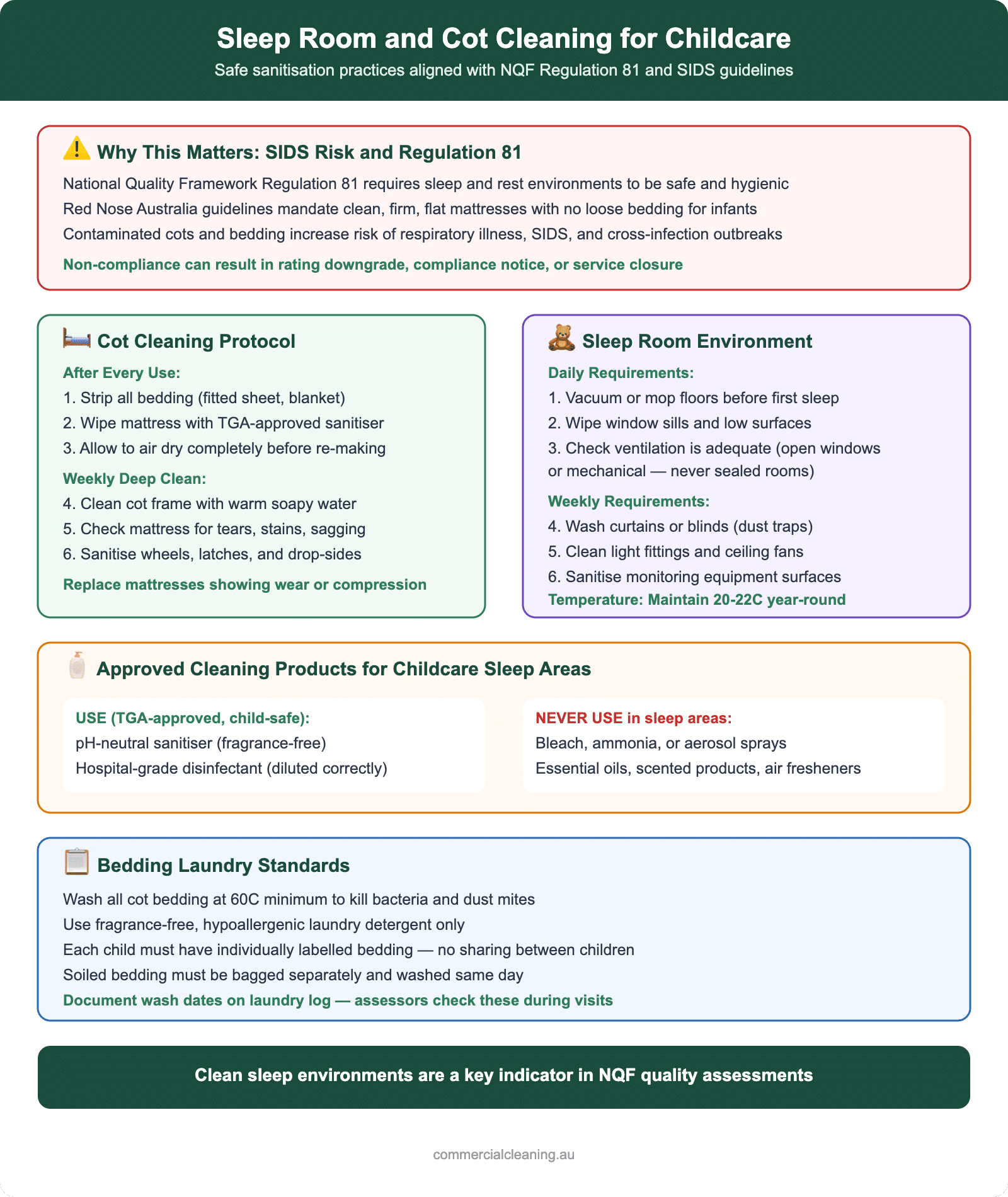
Childcare sleep room and cot cleaning guide showing SIDS prevention, cot sanitisation protocol, approved products, and bedding laundry standards
Why Sleep Room Cleaning Matters: SIDS Risk and Regulation 81
Why Sleep Room Cleaning Matters covers specific protocols that we tailor to each facility based on its layout, traffic, and compliance requirements. Sudden Infant Death Syndrome (SIDS) remains a concern for childcare operators, and the regulatory framework reflects this. Regulation 81 — Sleep and Rest under the Education and Care Services National Regulations 2011 requires safe sleep practices, while Red Nose (formerly SIDS and Kids) and ACECQA provide guidance that extends to environmental cleanliness. Our team recognises that a well-maintained sleep room reduces pathogenic contamination, supports correct humidity and air quality, and demonstrates duty of care to parents and the regulator.
Beyond SIDS prevention, clean cots and sleep furniture prevent skin infections, respiratory issues, and allergy triggers common in shared environments. We’ve trained staff at centres in Chatswood, Parramatta, and Castle Hill to understand that sleep room hygiene is part of infection control, not an afterthought. The Australian Framework for NHMRC Staying Healthy guidance aligns with these principles, emphasising environmental management as one pillar of health and safety.
Australian Standards for Cots and Sleep Equipment (AS/NZS 2172)
Childcare centres must source cots compliant with AS/NZS 2172 (Cots for household use) and AS/NZS 8811.1 (Sleep furniture for use in childcare services), standards that outline structural, safety, and maintenance specifications. These standards mandate regular cleaning and inspection; our cleaners understand the difference between acceptable wear and failure points. We don’t use corrosive cleaners on cot frames that would compromise structural integrity or expose splinters and rough edges.
We assess cot condition during cleaning runs: checking bolts and joints, spotting rust or corrosion, and flagging damage to centre management. Many centres we serve in Hornsby, Epping, and Bella Vista appreciate this proactive approach, which prevents regulatory non-compliance before inspections. AS/NZS 8811.1 specifically addresses cleaning and maintenance schedules, and we align our protocols to these technical requirements, ensuring every cot is safe for its intended use and age group.
Daily Cot Cleaning Procedures: Step-by-Step
Daily Cot Cleaning Procedures requires specific protocols that we tailor to each facility based on its layout, traffic, and compliance requirements. Each cot should be spot-cleaned daily when a child leaves it. Our procedure is simple and compliant with WHS Act 2011 and SafeWork NSW guidelines:
Removal and inspection: Strip all bedding, mattress protectors, and fitted sheets. Inspect the mattress and cot frame for visible soiling, stains, or damage.
Cot frame and base: Wipe down with a damp microfibre cloth (diluted with water only) to remove dust. If spills or bodily fluids are present, use a TGA-approved disinfectant spray (outlined below).
Mattress surface: Use a fresh microfibre cloth dampened with a quaternary ammonium compound (quat) solution at manufacturer’s recommended dilution. Wipe thoroughly and allow to air dry for 10 minutes before re-dressing.
Mattress protector: Check for stains or moisture penetration. If soiled, remove and wash immediately; do not re-dress without a clean protector underneath the fitted sheet.
Fitted sheet and sleeping bag: Place in a clearly labelled wash bag. Never reuse without laundering, even if a child was in the cot for less than 20 minutes.
Re-dress the cot: Use only clean fitted sheets, a breathable, PVC-free mattress protector, and a clean sleeping bag (if used). Follow Safe Sleep guidelines: no pillows, bumpers, or loose blankets.
We’ve trained centre staff at Ryde and Bankstown facilities on this workflow. The entire process takes 3–5 minutes per cot. Consistency in daily spot-cleaning prevents the need for emergency deep cleans and reduces the pathogen load that infants are exposed to.
Weekly and Monthly Deep Cleaning Protocols
Beyond daily spot-cleaning, sleep rooms require scheduled deep cleaning. Our team undertakes weekly sanitisation tasks and monthly heavy-duty protocols:
Frequency
Task
Product/Method
Weekly
Cot frames, rails, and bases
Diluted quat or Viraclean; spray and wipe
Weekly
Mattress surfaces
Quat solution or hydrogen peroxide 3%; air dry
Weekly
Sleep room floors and touch surfaces
pH-neutral disinfectant; mop or microfibre
Monthly
Mattress flip and inspect
Rotate or flip if reversible; vacuum base
Monthly
Walls, skirting boards, light switches
Microfibre cloths and diluted quat
Monthly
Air vents and HEPA filters (if present)
Inspect and vacuum; replace H13 filters as needed
In our experience at Epping and Bella Vista centres, this schedule prevents microbial growth and odour issues while remaining practical for busy operators. Centres that adopt a monthly deep clean report fewer staff and child absences due to colds and gastro, a benefit we’ve documented in our client feedback.
Safe Cleaning Products for Sleep Rooms: TGA-Approved Options
Safe Cleaning Products for Sleep Rooms addresses specific protocols that we tailor to each facility based on its layout, traffic, and compliance requirements. Not all disinfectants are safe for sleep environments. Childcare operators must avoid harsh ammonia, bleach-based products, and volatile organic compounds (VOCs) that irritate infant respiratory systems. Our team uses TGA-registered disinfectants and follows the NHMRC Staying Healthy recommendations for product selection.
Quaternary ammonium compounds (quats): Effective against bacteria, viruses, and fungi. We dilute according to manufacturer specifications (typically 1:10 with water) and allow contact time of 2–5 minutes before wiping. Low toxicity to humans and safe for mattress surfaces and cot frames.
Hydrogen peroxide 3% (food-grade): Non-toxic alternative for mattress sanitisation. It breaks down to water and oxygen, leaving no residue. Ideal for sensitive sleep rooms. We use it on mattresses monthly or after known soiling.
Viraclean: A TGA-listed disinfectant effective against enveloped viruses including SARS-CoV-2, rhinovirus, and influenza. We apply it to cot frames, handles, and high-touch sleep room surfaces. Contact time is typically 10 minutes; we make sure adequate ventilation during application.
Avoid: Bleach, phenolic compounds, aromatic oil-based “natural” cleaners (which can off-gas and trigger allergies), and quaternary ammonia at high concentrations. These pose respiratory, skin, and systemic risks to infants and toddlers. SafeWork NSW guidance on hazardous substances reinforces this approach.
We maintain an approved product list that our team carries across Sydney childcare sites, from Hornsby to Bankstown, ensuring consistency and regulatory alignment.
Bedding, Mattress Protectors and Linen Handling Under 12 Months
Infants under 12 months spend more time in cots than older children, so bedding and mattress standards are stricter. Red Nose and Safe Sleep guidelines specify that sleep surfaces must be firm, flat, and free from soft furnishings. Our responsibility extends to the cleanliness and integrity of these items.
Mattress protectors: We recommend PVC-free, breathable protectors that meet AS/NZS standards. PVC can off-gas and is unnecessary if protectors are changed and laundered regularly. A breathable protector reduces moisture accumulation, lowering the risk of mould growth.
Fitted sheets: Must be washed in a commercial laundry (if the centre uses one) or a machine set to at least 60°C with a TGA-approved detergent. Never air-dry without washing; moisture and bodily fluid can harbour pathogens. We encourage centres to maintain a 1:1 clean-to-dirty ratio so cots are always re-dressed with fresh linen.
Sleeping bags: An alternative to sheets, sleeping bags reduce the risk of loose coverings. They should be washed weekly at 60°C. Centres in Chatswood and Castle Hill that use sleeping bags report fewer incidents of children overheating or tangling in loose bedding.
Mattress hygiene: Mattresses for infants should be inspected for damage to seams, covers, or filling, as these can harbour dust mites, allergens, and pathogens. We recommend replacing cot mattresses every 3–5 years, even if they appear clean. If a child has been unwell or has had a toileting incident, the mattress must be professionally cleaned or replaced to minimise cross-contamination risk.
Ventilation, Air Quality and Humidity in Sleep Rooms (AS 1668.2)
Ventilation, Air Quality and Humidity in Sleep Rooms (AS 1668.2) focuses on specific protocols that we tailor to each facility based on its layout, traffic, and compliance requirements. Sleep rooms are often poorly ventilated, creating ideal conditions for respiratory virus transmission and mould growth. AS 1668.2 (Ventilation and air-conditioning – Safety and health performance of buildings) sets minimum standards for air change rates. We’ve found that many facilities across Sydney lack adequate fresh air circulation, particularly in portable classrooms. We assess and advise centres on ventilation improvements as part of our cleaning consultation.
Carbon dioxide levels: A well-ventilated sleep room maintains CO₂ below 1000 ppm, ideally 800–1000 ppm. High CO₂ correlates with virus transmission, drowsiness, and poor cognitive function in children. We recommend centres invest in a simple CO₂ monitor and make surefresh air intake during sleep time.
HEPA filtration: If a centre uses air purification, HEPA H13 filters remove 99.95% of particles down to 0.3 microns, including respiratory viruses and allergens. We inspect and replace H13 filters monthly in high-use sleep rooms to maintain effectiveness.
Relative humidity: Sleep rooms should maintain 40–60% relative humidity. Below 40%, infant airways dry out and viral transmission increases; above 60%, mould and dust mites proliferate. Centres in Sydney’s varied climate (humid near the coast, dry inland) should monitor humidity and adjust with a dehumidifier or humidifier as needed.
Our team at Clean Group has upgraded ventilation and air quality systems at several childcare facilities in Epping, Bella Vista, and Ryde, working with building managers to make surecompliance with AS 1668.2. Better air quality directly reduces respiratory illness in children and staff.
Frequently Asked Questions
How often should cot mattresses be professionally cleaned?
Cot mattresses should be professionally cleaned annually if they show no visible stains or known soiling. If a child has been unwell (vomiting, diarrhoea) or has had a toileting accident, the mattress should be cleaned or replaced immediately. For mattresses in heavy use (e.g., in centres with high turnover or multiple age groups), semi-annual professional cleaning is recommended. Spot-cleaning with hydrogen peroxide 3% can extend the life between professional cleans.
Can we use necessary oil-based cleaners in sleep rooms?
No. Aromatic oils, even diluted, can off-gas and irritate infant airways, potentially triggering asthma or allergic reactions. NHMRC Staying Healthy and Red Nose guidance advise against aromatic or scent-based products in childcare sleep environments. Stick to unscented, TGA-approved disinfectants like quaternary ammonium compounds or hydrogen peroxide.
What is the correct way to wash and dry cot sheets and sleeping bags?
Wash at 60°C or higher using a standard laundry detergent in a commercial or home machine. Dry in a dryer on a medium heat setting or line-dry outdoors if possible (sunlight is a natural disinfectant). Never store damp or partially dry linen; moisture promotes mould growth. We recommend centres establish a rotation system with at least two clean sets per cot to make suredried linen is ready before the next sleep session.
How do we balance thorough sanitisation with avoiding harsh chemicals around sleeping babies?
Use low-toxicity, TGA-approved products at manufacturer-recommended dilutions. Quaternary ammonium compounds, hydrogen peroxide 3%, and Viraclean are effective and safe when applied correctly and allowed to dry or air-evaporate. Always make sureadequate ventilation (open windows or activate mechanical ventilation) during and for 15 minutes after product application. Our team leaves sleep rooms well-ventilated so children are not exposed to wet product residues.
Do we need separate cleaning equipment for sleep rooms?
Yes, ideally. Dedicated microfibre cloths, mop heads, and spray bottles reduce the risk of cross-contamination from other areas (e.g., bathrooms or kitchens). Colour-code sleep room equipment (e.g., blue microfibre cloths) to prevent accidental mix-up. At minimum, use fresh cloths and mop heads each session and launder them separately at 60°C.
Childcare centres across Sydney — from Chatswood to Bankstown — face similar sleep room cleaning challenges. We work with directors and educators to customise solutions that meet regulatory requirements, protect child health, and remain feasible within operational schedules. Our team brings practical knowledge from years of hands-on work in childcare environments, combined with understanding of ACECQA standards and NQS Quality Area 2 expectations.
If your centre needs help designing or executing a sleep room and cot cleaning programme, or if you want to understand cleaning costs for childcare centres, reach out to our team for a free consultation and customiseed quote.
About Clean Group
Clean Group is a leading commercial cleaning company in Sydney, providing professional cleaning services to offices, strata buildings, medical facilities, schools, gyms, and retail spaces across the greater Sydney region. With over 25 years of experience and a commitment to WHS compliance, eco-friendly practices, and consistent quality, Clean Group delivers customiseed cleaning solutions backed by a 100% satisfaction guarantee.
Hi, I'm Suji Siv, the founder, CEO, and Managing Director of Clean Group, bringing over 25 years of leadership and management experience to the company. As the driving force behind Clean Group’s growth, I oversee strategic planning, resource allocation, and operational excellence across all departments. I am deeply involved in team development and performance optimization through regular reviews and hands-on leadership.