Place of Worship Maintenance Guide – Keeping Your Sacred Space Pristine
We have cleaned churches, mosques, temples, and synagogues across Sydney for over twenty years, and our team understands that a place of worship demands a level of care that goes well beyond what a standard commercial cleaning contract covers. Our church cleaning services in Sydney were shaped by decades of hands-on experience inside heritage-listed sanctuaries, modern multi-purpose halls, and everything in between, and we wrote this guide because we believe every faith community deserves practical, field-tested advice on keeping their sacred space clean, safe, and welcoming for congregants.
Why Places of Worship Present Unique Cleaning Challenges
Why Places of Worship Present Unique Cleaning Challenges covers specific protocols that we tailor to each facility based on its layout, traffic, and compliance requirements. We have learned through thousands of site visits that worship spaces combine features rarely found together in other commercial buildings. Our crews regularly encounter polished stone floors, antique timber pews, stained-glass panels, brass fittings, fabric banners, and carpeted aisles — all within the same room. Each surface requires a different chemical, a different tool, and a different technique, and we have seen well-meaning volunteer cleaning teams cause irreversible damage by using a single all-purpose spray across the lot. A Strathfield Anglican church we took over in 2018 had etched marble flooring where someone had repeatedly mopped with an acidic bathroom cleaner, and the restoration cost the parish more than three years of professional cleaning fees would have.
Our team also deals with the occupancy pattern unique to religious facilities. A Sunday service can bring 400 people through the doors in a two-hour window, generating foot traffic spikes that rival a retail store on Boxing Day. We have measured grit accumulation on foyer tiles at a Burwood Catholic church before and after a single weekend mass, and the difference was staggering — enough abrasive particulate to visibly dull the floor finish within a few months if left unmanaged. We factor these usage surges into every maintenance plan we design because treating a church like a Monday-to-Friday office building leads to rapid deterioration of high-traffic surfaces.
Flooring Care for Heritage and Modern Worship Spaces
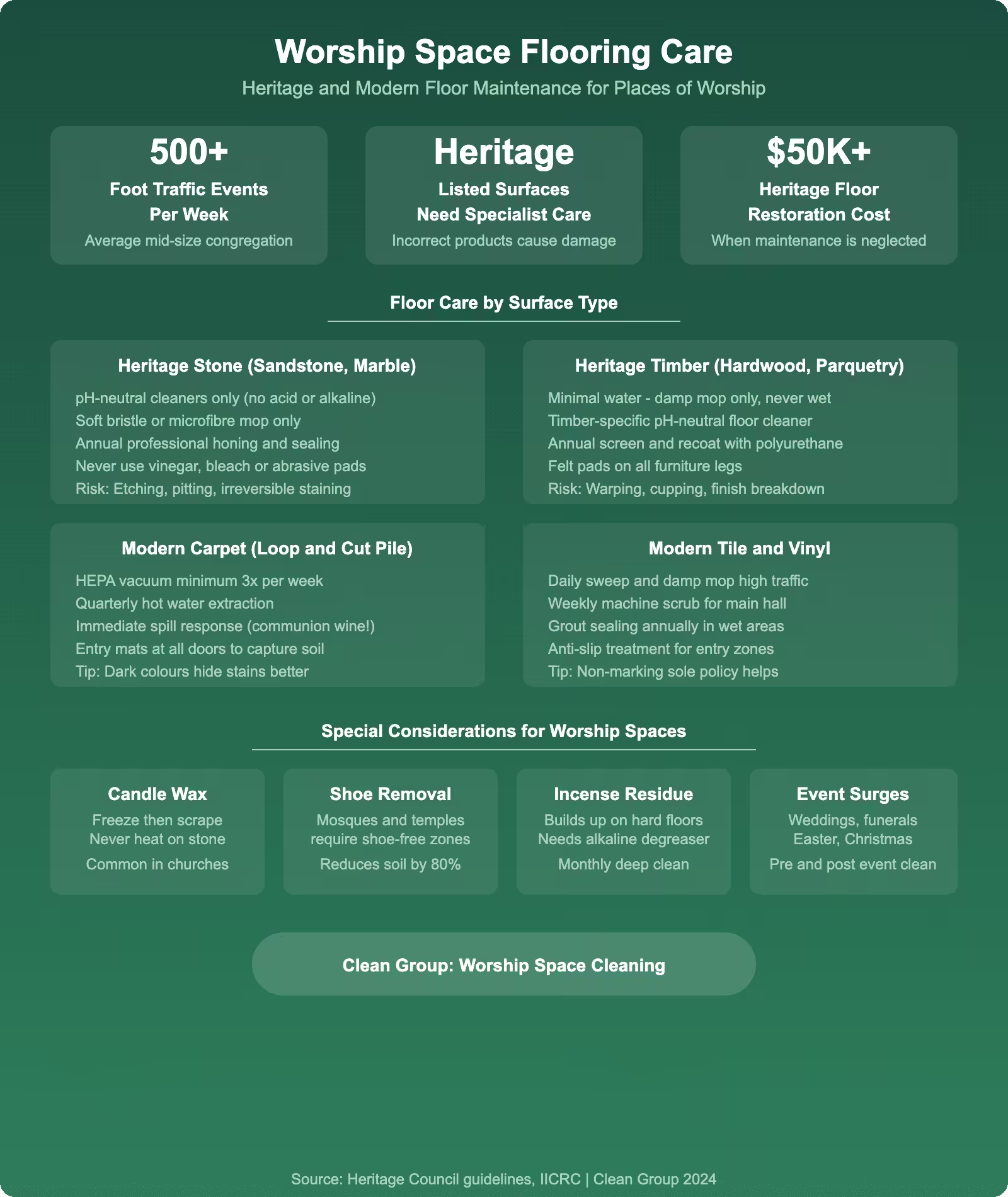
Flooring Care for Heritage and Modern Worship Spaces involves specific protocols that we tailor to each facility based on its layout, traffic, and compliance requirements. We pay particular attention to flooring because it absorbs the most punishment and represents the largest visual surface in any worship hall. Our team references AS 4586.3 when assessing slip resistance on stone, tile, and polished-concrete floors in places of worship, because this standard governs friction measurement methods that directly affect congregant safety — especially for elderly parishioners and families with young children. We tested the slip coefficient on a Croydon Uniting Church sandstone floor last year and found it had fallen below the minimum threshold after years of wax build-up, so we stripped the old coatings, applied a penetrating sealer, and restored the reading to a safe range within a single visit.
Our approach to carpet in worship halls is equally methodical. We pre-vacuum with HEPA-filtered uprights to remove dry soil before any wet extraction, because we have found that skipping the dry pass drives particulate deeper into carpet fibres and shortens pile life by years. We schedule deep extraction after major events — Easter, Christmas, Eid, Diwali — when foot traffic peaks and stain risk is highest. We have serviced the same Strathfield mosque carpet for over a decade using this protocol, and the pile still looks close to original condition because we never let soil accumulate past the point of easy removal.
Strata Common Area Maintenance Schedule
| Area | Daily | Weekly | Monthly | Annual |
|---|---|---|---|---|
| Lobby & Foyer | Sweep, mop, glass | Deep mop, dust lights | Floor machine scrub | Strip & reseal |
| Lifts & Doors | Wipe panels + buttons | Full interior detail | Track & rail degrease | Deep restoration |
| Car Park | Litter patrol | Sweep + line check | Pressure wash bays | Full pressure + repaint |
| Pool/Gym | Sanitise surfaces | Deep clean equipment | Grout scrub | Full tile restoration |
| Bin Room | Hose down, deodorise | Deep scrub walls | Pest treatment | Full sanitise + repaint |
Pew, Furniture, and Fixture Cleaning Techniques We Have Refined Over Two Decades
Strata Common Area Maintenance Schedule requires specific protocols that we tailor to each facility based on its layout, traffic, and compliance requirements. We treat timber pews as heritage assets even when they are not formally listed, because our team has learned that replacement costs for solid hardwood seating can run into tens of thousands of dollars. Our standard protocol for oiled or lacquered pews is a damp microfibre wipe with a pH-neutral timber cleaner followed by a light buff with a dry cloth — we never use silicone-based polishes because they build up a sticky film that attracts dust and eventually darkens the grain. At a Burwood Presbyterian church we service, the original 1920s blackbutt pews still carry a warm lustre because we have maintained them with this method fortnightly for the past twelve years.
Pew, Furniture, and Fixture Cleaning Techniques We Have Refined Over Two Decades includes specific protocols that we tailor to each facility based on its layout, traffic, and compliance requirements. Brass and bronze fittings — candelabras, lectern plates, door handles — require their own care regime. We use a non-abrasive metal polish applied sparingly with a cotton cloth, and we always mask adjacent surfaces with painter’s tape to prevent polish residue from staining timber or stonework. Our crew discovered that shortcut the hard way at a Croydon Greek Orthodox church years ago when polish overspray left a haze on a freshly sealed marble step. We absorbed the cost of re-polishing that marble ourselves, and the lesson has stayed with every technician we have trained since.
Washroom, Kitchen, and Community Hall Hygiene Standards
We find that the ancillary spaces in a place of worship — toilets, commercial kitchens, parish halls, crèche rooms — often receive less attention than the main sanctuary, but they are where hygiene risks concentrate. Our teams apply hospital-grade disinfectants to all washroom touch points and food-preparation surfaces, and we follow the same two-stage clean-then-disinfect protocol we use in healthcare facilities. A Strathfield Sikh temple we service hosts weekly communal meals for over 200 people, and our post-event kitchen deep-clean includes grease-trap flushing, exhaust-hood degreasing, and floor scrubbing with a chlorinated alkaline detergent that meets NSW Food Authority standards.
Community halls attached to churches often double as childcare spaces, polling stations, and function venues, which means the flooring and furniture take a beating from diverse uses. We schedule a restorative scrub after every high-impact event and maintain a standing weekly service for general upkeep. Our experience across dozens of multi-use halls in Burwood, Strathfield, and Croydon has taught us that a reactive approach — cleaning only when dirt becomes visible — always costs more in the long run because surface damage compounds faster than most facility managers realise.
Budgeting for Professional Place-of-Worship Cleaning in Sydney
Budgeting for Professional Place-of-Worship Cleaning in Sydney targets specific protocols that we tailor to each facility based on its layout, traffic, and compliance requirements. We understand that faith communities operate on tight budgets, and our pricing philosophy reflects that reality. Our average annual maintenance contract for a mid-size Sydney church or temple sits around $3,710 per quarter, covering weekly sanctuary upkeep, fortnightly deep-clean of ancillary spaces, and post-event surge cleans four times a year. We have structured packages that start well below that figure for smaller congregations, and we always offer a free on-site assessment so the committee or board can see exactly what they are paying for before committing a dollar.
We have noticed that many worship communities try to save money by relying entirely on volunteer cleaning rosters, and while we respect that spirit of service, our experience shows it often leads to inconsistent results and hidden costs. Volunteers rarely have access to commercial-grade equipment, they may not know which chemicals are safe for heritage surfaces, and the physical demands of scrubbing a large sanctuary can cause injuries. We suggest a hybrid model where our professional team handles the technical tasks — floor restoration, high-level dusting, washroom disinfection — while volunteers manage light daily tidying between our visits.
Creating a Sustainable Cleaning Schedule for Your Worship Community
We recommend that every place of worship formalise its cleaning expectations in a written schedule that maps tasks to frequencies — daily, weekly, monthly, quarterly, and annually. Our team helps clients build these documents during the onboarding process, and we update them whenever usage patterns shift, such as when a church adds a mid-week youth service or a mosque extends Ramadan prayer hours. A well-designed schedule prevents the “everything at once” panic clean that wastes time and money, and it gives volunteer coordinators a clear framework they can follow without guessing.
We have written a dedicated guide on exactly how to structure that kind of schedule, including task checklists, product recommendations, and seasonal adjustments that we have refined through years of real-world application. We encourage facility managers and church wardens to read our detailed walkthrough on how to create a church cleaning schedule that works, which covers the practical steps we follow when setting up a new worship client in Sydney.
Frequently Asked Questions
How often should a church be professionally cleaned?
We recommend weekly professional cleaning for active churches with regular Sunday services, plus a deep-clean after major events like Easter and Christmas. Smaller congregations meeting fortnightly may only need a professional visit every two weeks with volunteer tidying in between.
Can you clean heritage-listed church interiors without causing damage?
We specialise in heritage-sensitive cleaning and use pH-neutral, non-abrasive products on stone, timber, and metal surfaces. Our team has maintained heritage-listed properties across Strathfield and Burwood for over a decade without a single damage claim.
Do you clean mosques, temples, and synagogues as well as churches?
We service all places of worship regardless of denomination. Our team adapts protocols to respect cultural practices — for example, we remove footwear in prayer halls and schedule around Jummah, Shabbat, or puja times as required.
What products do you use on polished stone floors in churches?
We use pH-neutral stone-safe detergents for routine cleaning and diamond-impregnated pads for periodic restoration. We never use acidic or alkaline products on marble, limestone, or terrazzo because they etch the surface irreversibly.
How do you handle carpet cleaning in large worship halls?
We pre-vacuum with HEPA-filtered uprights, then perform hot-water extraction using truck-mounted equipment. We schedule extraction after peak-traffic events and maintain a regular rotation to prevent soil build-up from shortening carpet life.
Can volunteers handle some of the cleaning between professional visits?
We encourage a hybrid model where volunteers manage light daily tasks — emptying bins, wiping benches, spot-mopping spills — while our professional team handles technical work like floor restoration, high-level dusting, and washroom disinfection.
Do you provide cleaning for church events and functions?
We offer pre-event and post-event cleaning packages for weddings, funerals, fetes, and community gatherings. Our crew can set up the evening before and return the morning after to restore the space to its regular condition.
How do you price church cleaning contracts?
We price on a square-metre basis adjusted for surface types, usage frequency, and heritage sensitivity. We provide a free on-site assessment and written quote so the church committee can review costs before making any commitment.
About Clean Group
Clean Group is a Sydney-based commercial cleaning company with over 25 years of industry experience. Founded by Suji Siv, our team of 50+ trained professionals services offices, warehouses, medical centres, schools, childcare facilities, retail stores, gyms, and strata properties across Sydney, Melbourne, and Brisbane.
We are active members of ISSA and the Building Service Contractors Association of Australia (BSCAA). Our operations align with ISO 9001 (Quality Management), ISO 14001 (Environmental Management), and ISO 45001 (Workplace Health and Safety) standards. We hold membership with the Green Building Council of Australia and use eco-friendly, TGA-registered cleaning products wherever possible.
Every Clean Group cleaner is police-checked, fully insured, and trained in safe work procedures under SafeWork NSW guidelines. We operate 7 days a week, including after-hours and weekend services, to minimise disruption to your business.
About the Author

Stephen Matthews
Hi, my name is Steve. I have been working as a Regional Operations Manager in Sydney Clean Group for almost four years now and manage a team of 10. I have more than three decades of experience in the commercial cleaning industry. My responsibilities include the day-to-day management of cleaning operations, planning, online quotation to clients, managing cleaners’ performance, collecting clients\' feedback, and ensuring proper & regular maintenance of cleaning equipment. Get in touch for a quick chat about your cleaning needs.
Read More About Stephen
