We have helped dozens of churches, mosques, and temples across Sydney build cleaning schedules that actually stick, and our team has learned that the difference between a schedule that gathers dust in a drawer and one that keeps a facility spotless comes down to practical design rooted in real-world usage patterns. Our church cleaning services in Sydney include a complimentary scheduling consultation because we believe that even congregations managing their own upkeep deserve a framework built on professional experience rather than guesswork.
Why Most Church Cleaning Schedules Fail and How We Fix Them
We have audited cleaning programs at places of worship across Bankstown, Bass Hill, and Yagoona, and the same failure patterns keep appearing. The most common issue we see is a schedule built around a single weekly clean that treats every surface identically — the same mop, the same product, the same frequency for the marble foyer, the carpeted nave, the tiled washrooms, and the commercial kitchen. Our team knows from two decades of fieldwork that each of those zones degrades at a different rate and responds to different cleaning methods, so a one-size-fits-all schedule inevitably leaves some areas over-serviced and others neglected.
The second failure pattern we encounter is the volunteer-only model with no written accountability. We respect the generosity of congregation members who give their time, but without a documented task list, a sign-off sheet, and a product guide, the quality of each clean varies wildly depending on who shows up. Our team helped a Bankstown Baptist church transition from an informal volunteer roster to a structured hybrid model, and within three months the facility manager told us the complaints about dirty washrooms had dropped to zero for the first time in years.
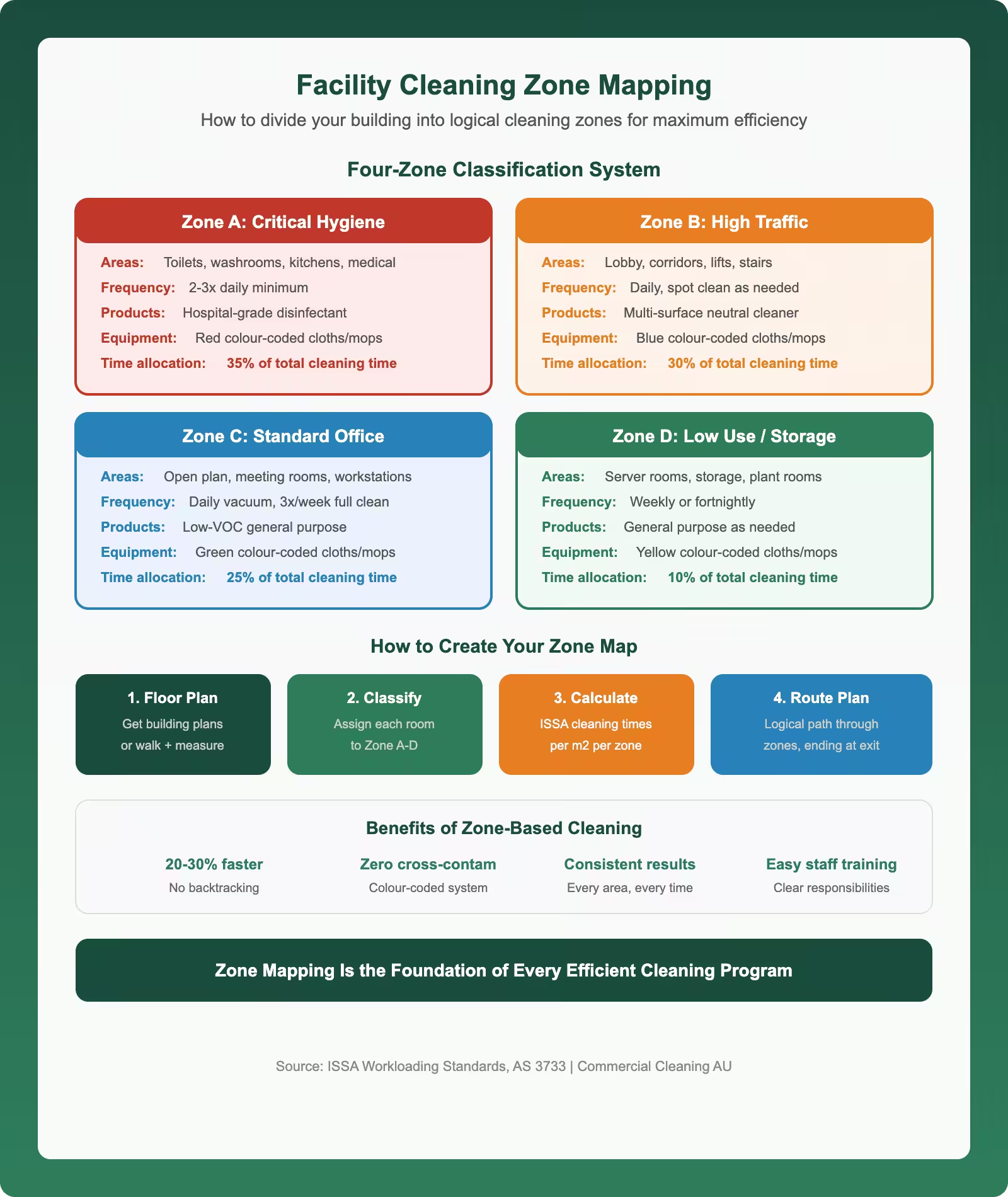
Facility cleaning zone mapping infographic showing four-zone classification system from critical hygiene to low use with colour coding time allocation and zone creation process
Mapping Your Facility Into Cleaning Zones
We start every scheduling project by walking the building with the client and dividing it into distinct cleaning zones based on surface type, traffic volume, and hygiene risk. A typical church layout might include the main worship hall, a foyer or narthex, washrooms, a kitchen or servery, offices, a crèche or Sunday-school room, and an outdoor car park or courtyard. We label each zone, estimate its square metreage, and assign a risk rating from one to three — zone three being the highest priority, which always includes washrooms and food-preparation areas.
Our zoning approach ensures that high-risk areas receive daily attention while lower-risk zones like storage rooms or bell towers get scheduled on a monthly or quarterly rotation. We developed this methodology after years of watching churches waste labour hours polishing brass in the vestry while the public toilets went unattended for days. Our team at a Bass Hill Anglican parish implemented this zoning system and cut the total weekly cleaning hours by 20 percent while simultaneously improving the hygiene scores we measured with ATP swabs on washroom surfaces.
Strata Common Area Maintenance Schedule
Area
Daily
Weekly
Monthly
Annual
Lobby & Foyer
Sweep, mop, glass
Deep mop, dust lights
Floor machine scrub
Strip & reseal
Lifts & Doors
Wipe panels + buttons
Full interior detail
Track & rail degrease
Deep restoration
Car Park
Litter patrol
Sweep + line check
Pressure wash bays
Full pressure + repaint
Pool/Gym
Sanitise surfaces
Deep clean equipment
Grout scrub
Full tile restoration
Bin Room
Hose down, deodorise
Deep scrub walls
Pest treatment
Full sanitise + repaint
Assigning Task Frequencies That Reflect Real Usage Patterns
Strata Common Area Maintenance Schedule requires specific protocols that we tailor to each facility based on its layout, traffic, and compliance requirements. We break every cleaning task into one of five frequency bands: daily, post-event, weekly, monthly, and quarterly. Daily tasks in our schedules include emptying bins, wiping washroom touch points, and spot-mopping spills in high-traffic corridors. Post-event tasks kick in after Sunday services, weddings, funerals, and community meals — our crews focus on carpet vacuuming, pew wipe-downs, and kitchen deep-cleans within 12 hours of the event ending. We have found that delaying post-event cleaning by even a day allows stains to set and odours to develop, which is why we build tight turnaround windows into every schedule we design.
Assigning Task Frequencies That Reflect Real Usage Patterns includes specific protocols that we tailor to each facility based on its layout, traffic, and compliance requirements. Weekly tasks cover the mid-range maintenance that prevents cumulative soil build-up — mopping hard floors, dusting surfaces above head height, cleaning glass doors and windows, and restocking washroom consumables. Monthly tasks include floor machine scrubbing, grout cleaning in tiled areas, and inspection of less-visible zones like roof cavities and under-pew spaces where pest activity can go unnoticed. Our quarterly deep-clean addresses seasonal restoration — carpet extraction, high-pressure external washing, and gutter clearance. We refined these bands through trial and error at dozens of Bankstown and Yagoona worship sites, and they now form the backbone of every schedule template we issue.
Waterproofing and Wet-Area Maintenance in Church Washrooms
Waterproofing and Wet-Area Maintenance in Church Washrooms addresses specific protocols that we tailor to each facility based on its layout, traffic, and compliance requirements. We pay special attention to washroom maintenance in places of worship because these high-moisture zones are prone to mould, grout deterioration, and waterproofing failure if not managed proactively. Our team references AS 3740.2 when advising churches on wet-area design and maintenance standards, particularly for facilities that were built or renovated without modern waterproofing membranes. We have inspected church washrooms in Yagoona where water had been seeping through cracked grout joints for years, saturating the substrate beneath the tiles and creating a mould colony that no amount of surface cleaning could resolve.
Our cleaning schedule includes a monthly grout inspection and a quarterly sealant check for every church washroom we manage. We document the condition of silicone joints around shower recesses, floor wastes, and wall-floor junctions, and we flag any deterioration to the church property committee before it becomes a structural issue. We learned to build this inspection step into our schedules after a Bass Hill church discovered a major waterproofing failure behind their baptistry wall — the repair cost more than $15,000, and our team is convinced that a simple quarterly visual check would have caught the early signs years earlier.
Budgeting Your Church Cleaning Schedule for the Year Ahead
Budgeting Your Church Cleaning Schedule for the Year Ahead targets specific protocols that we tailor to each facility based on its layout, traffic, and compliance requirements. We encourage every church committee to set an annual cleaning budget rather than approving expenditure on an ad-hoc basis, because predictable spending allows for better planning and eliminates the sticker shock that comes with emergency call-outs. Our average professionally managed church cleaning schedule in Sydney runs around $3,730 per quarter for a mid-size facility, and that figure covers weekly maintenance visits, four seasonal deep-cleans, and unlimited post-event surge cleans tied to the church calendar. We have structured entry-level packages at roughly half that cost for smaller congregations with simpler facilities.
We also help churches reduce costs by identifying tasks that trained volunteers can safely handle between professional visits. Our team creates a volunteer task card with step-by-step instructions, approved product lists, and safety notes — we have seen this approach cut professional service hours by up to 30 percent at Bankstown and Yagoona parishes without any drop in overall cleanliness standards. The key is ensuring volunteers handle only low-risk tasks like bin emptying, bench wiping, and light vacuuming while our crew manages the technical work that requires commercial equipment and chemical expertise.
Putting Your Schedule Into Practice and Keeping It Current
Putting Your Schedule Into Practice and Keeping It Current focuses on specific protocols that we tailor to each facility based on its layout, traffic, and compliance requirements. We recommend printing the finalised schedule and mounting it in the cleaner’s cupboard alongside a product inventory sheet and a sign-off log. Our team uses a digital version that syncs with the facility manager’s phone so they receive a notification whenever a task is completed or missed. We review every schedule with the client every six months, or sooner if there is a significant change in usage — a new mid-week service, a building extension, a shift from carpet to hard flooring. We have found that schedules left unrevised for more than 12 months inevitably drift out of alignment with reality.
We have also compiled a broader resource that covers every aspect of maintaining a religious facility beyond just the cleaning schedule — from heritage surface care to community-hall hygiene and volunteer management. We encourage church wardens and mosque committee members to explore our complete cleaning guide for worship places, which draws on the same field experience our team brings to every engagement across Sydney.
Frequently Asked Questions
How do I decide which tasks should be daily versus weekly? We assign daily status to any task that addresses a health or safety risk if delayed — washroom touch-point disinfection, bin emptying, and spill response. Weekly tasks cover maintenance that prevents cumulative soil build-up, such as floor mopping and dusting.
Should volunteers follow the same schedule as professional cleaners? We design a simplified volunteer card that covers low-risk daily tasks only. Professional cleaners handle technical work like floor machine scrubbing, chemical disinfection, and high-level dusting that requires commercial equipment and training.
How often should church carpets be deep-cleaned? We recommend quarterly hot-water extraction for high-traffic worship halls and twice-yearly for lower-traffic areas. We also schedule an extra extraction after major events like Easter and Christmas when foot traffic peaks significantly.
What should a church cleaning sign-off log include? We include the date, the cleaner’s name, a checklist of tasks completed, any issues noted, and a supervisor countersignature. Our digital version adds time stamps and photo evidence for accountability.
How do you handle seasonal adjustments to the cleaning schedule? We review the schedule with the client before each major liturgical season or cultural festival. We add extra post-event cleans, adjust washroom consumable stock levels, and increase floor-care frequency to match anticipated traffic surges.
Can you help us set up a schedule even if we do not use your cleaning services? We offer standalone scheduling consultations for churches that manage their own cleaning. Our team conducts an on-site walkthrough, builds a customised schedule document, and provides product and equipment recommendations at a one-off fee.
What cleaning products should a church keep on hand? We recommend a pH-neutral floor cleaner, a hospital-grade washroom disinfectant, a glass cleaner, a timber-safe furniture polish, and microfibre cloths in colour-coded sets to prevent cross-contamination between zones.
How do we know if our current cleaning schedule is working? We use ATP swab testing on high-touch surfaces to measure microbial cleanliness objectively. If readings consistently exceed 100 RLU, we recommend adjusting the schedule frequency, changing products, or upgrading the cleaning method for that zone.
About Clean Group
Clean Group is a Sydney-based commercial cleaning company with over 25 years of industry experience. Founded by Suji Siv, our team of 50+ trained professionals services offices, warehouses, medical centres, schools, childcare facilities, retail stores, gyms, and strata properties across Sydney, Melbourne, and Brisbane.
We are active members of ISSA and the Building Service Contractors Association of Australia (BSCAA). Our operations align with ISO 9001 (Quality Management), ISO 14001 (Environmental Management), and ISO 45001 (Workplace Health and Safety) standards. We hold membership with the Green Building Council of Australia and use eco-friendly, TGA-registered cleaning products wherever possible.
Every Clean Group cleaner is police-checked, fully insured, and trained in safe work procedures under SafeWork NSW guidelines. We operate 7 days a week, including after-hours and weekend services, to minimise disruption to your business.
Hi, I'm Suji Siv, the founder, CEO, and Managing Director of Clean Group, bringing over 25 years of leadership and management experience to the company. As the driving force behind Clean Group’s growth, I oversee strategic planning, resource allocation, and operational excellence across all departments. I am deeply involved in team development and performance optimization through regular reviews and hands-on leadership.