We have evaluated hundreds of cleaning proposals over the past two decades, and we know that the difference between a contract that works and one that falls apart usually comes down to the due diligence done before signing. Our team put this evaluation framework together from real contract failures we have witnessed across Sydney, so facility managers hiring commercial cleaners sydney can avoid the mistakes that cost businesses thousands of dollars every year.
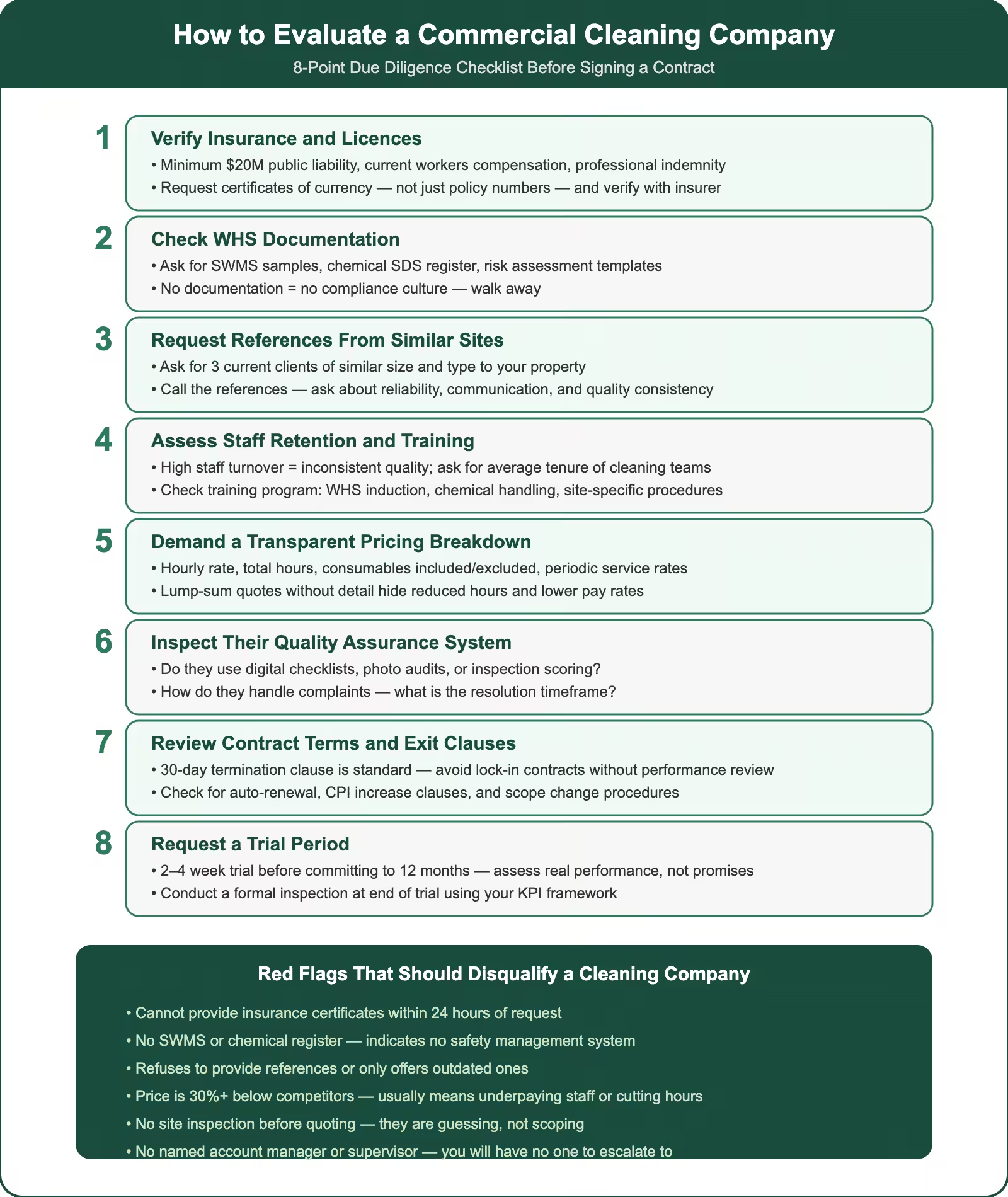
How to evaluate a commercial cleaning company with 8-point due diligence checklist covering insurance, WHS, references, pricing, quality assurance, and red flags
Verify Insurance Before Anything Else
Verify Insurance Before Anything Else covers specific protocols that we tailor to each facility based on its layout, traffic, and compliance requirements. We make insurance verification our first step on every engagement because we have seen what happens when it is skipped. Our standard requires public liability insurance at twenty million dollars minimum, professional indemnity cover, and workers compensation under the NSW Workers Compensation Act 1987. We carry all three ourselves and we provide certificates of currency to every client without being asked. Our experience across facilities in the CBD, Parramatta, and North Sydney tells us that roughly one in five operators cannot produce valid insurance documentation when challenged. We have taken over contracts in Chatswood where the previous cleaner caused water damage to server equipment and had zero coverage, leaving the building owner with a fourteen-thousand-dollar remediation bill.
Demand a Site Walk Before Accepting Any Quote
Demand a Site Walk Before Accepting Any Quote involves specific protocols that we tailor to each facility based on its layout, traffic, and compliance requirements. We never quote a job without physically walking the premises first, and we advise our clients to reject any company that prices based on floor plans alone. Our estimators measure total cleanable area, count fixtures including toilets, basins, and kitchen appliances, photograph floor surfaces to assess appropriate cleaning methods, and note any access restrictions. We produce itemised quotes breaking down labour at the Fair Work MA000022 award rate, chemical costs per square metre, equipment charges, and supervisor overhead separately. We have found that companies quoting without an onsite inspection consistently underestimate scope, which leads to shortcuts within the first month.
Office Area Cleaning Frequency Guide
Area
Daily
Weekly
Monthly
Quarterly
Reception & Lobby
Vacuum, mop, wipe
Glass doors, furniture
Deep carpet clean
Window wash
Workstations
Surface wipe, bins
Monitor & keyboard
Drawer clean-out
Chair shampoo
Kitchen/Breakroom
Bench, sink, floor
Fridge, microwave
Deep degrease
Exhaust fan clean
Bathrooms
Full sanitise + restock
Grout scrub
Descale fixtures
Vent clean
Meeting Rooms
Table wipe, vacuum
AV equipment dust
Upholstery clean
Carpet extraction
Run a Trial Clean Before Committing to a Term
Office Area Cleaning Frequency Guide requires specific protocols that we tailor to each facility based on its layout, traffic, and compliance requirements. We offer every prospective client a three-visit trial period because we learned early that demonstrations speak louder than tender documents. Our trial structure covers a detailed walkthrough on visit one, a full-scope clean on visit two, and a joint review meeting on visit three where we walk the site together and discuss any adjustments. We document results against our forty-two-point checklist and share the inspection report with the client before discussing contract terms. We have found that companies refusing to offer trials are typically hiding operational weaknesses they know will surface under scrutiny.
Examine the Contract for These Specific Clauses
Run a Trial Clean Before Committing to a Term includes specific protocols that we tailor to each facility based on its layout, traffic, and compliance requirements. We include five critical clauses in every contract we write and we recommend our clients demand the same from any provider. First, a maximum thirty-day termination notice period with no financial penalty. Second, a clearly defined scope of work listing every task, frequency, and method. Third, a documented escalation process for complaints with specific response timeframes. Fourth, annual price review terms referencing Fair Work award increases rather than arbitrary percentage lifts. Fifth, a data security clause covering how the cleaner handles access to sensitive areas. We have reviewed competitor contracts from operators in Bankstown, Macquarie Park, and Surry Hills that contained six-month lock-in periods and automatic renewal clauses designed to trap clients.
Check WHS Compliance and Chemical Handling Procedures
Examine the Contract for These Specific Clauses addresses specific protocols that we tailor to each facility based on its layout, traffic, and compliance requirements. We hold a clean SafeWork NSW compliance record with zero improvement notices across our entire history, and we expect any operator we recommend to demonstrate the same. Our WHS management system includes site-specific risk assessments, safe work method statements for every high-risk task, and quarterly refresher training for all operatives. We use only chemicals registered on the Australian Industrial Chemicals Introduction Scheme with current Safety Data Sheets compliant with the GHS standard under WHS Regulation 2017. We recommend asking any prospective cleaner to show you their SDS folder on site and explain their spill response procedure. We have found that companies unable to answer basic chemical safety questions tend to have systemic compliance gaps that extend well beyond handling procedures.
Call Their References — and Ask the Right Questions
Check WHS Compliance and Chemical Handling Procedures targets specific protocols that we tailor to each facility based on its layout, traffic, and compliance requirements. We provide references matched to every prospective client’s property type because we know generic references are meaningless. Our standard practice is to offer three contacts from similar facilities, whether that is offices in the CBD, medical centres in Liverpool, or strata buildings in Homebush. We recommend calling each reference and asking two specific questions: did the cleaner resolve complaints within twenty-four hours, and did they maintain the same team on your site for at least six months? We have tracked these two metrics across our own contracts and they predict ongoing satisfaction more reliably than any other indicator. We also suggest asking references what they would change about the service, because that question reveals operational weaknesses that star ratings hide.
Assess Their Quality Assurance System
Call Their References — and Ask the Right Questions focuses on specific protocols that we tailor to each facility based on its layout, traffic, and compliance requirements. We run a three-tier QA system across every contract: daily supervisor walkthroughs, weekly forty-two-point inspections, and monthly ATP bioluminescence testing on high-touch surfaces. We publish all results through a real-time client dashboard showing scores, photos, and corrective actions. We introduced this system four years ago and our complaint rate dropped by sixty-two percent within twelve months. We advise our clients to ask prospective cleaners three questions about QA: what do you measure, how often do you measure it, and how do you share results with me? We have found that companies without documented QA processes let standards drift within the first ninety days of a contract, which is exactly when most client dissatisfaction begins.
Understand What’s Included — and What Costs Extra
Assess Their Quality Assurance System covers specific protocols that we tailor to each facility based on its layout, traffic, and compliance requirements. We itemise every element of our quotes because we have seen too many clients stung by hidden extras. Our standard office cleaning includes daily vacuuming, mopping of hard floors, kitchen and bathroom sanitisation, bin emptying, and desk surface wiping. We list separately any items outside the routine scope including window cleaning, carpet steam extraction, high-dusting above three metres, and periodic strip-and-seal of vinyl floors. Our rates for standard office cleaning in Sydney range from thirty-five to sixty-five dollars per hour depending on scope and frequency. We always flag any task that incurs additional charges before performing it. We have taken over contracts in Eastwood and Penrith where the previous operator was billing extras monthly for tasks the client believed were included in the base price.
Red Flags That Should End the Conversation
Understand What’s Included — and What Costs Extra involves specific protocols that we tailor to each facility based on its layout, traffic, and compliance requirements. We have compiled a list of deal-breakers from twenty years of industry experience. Our top five red flags are: quoting below the Fair Work minimum of twenty-six dollars fifty per hour at Level 1, refusing to provide an onsite estimate, offering only verbal agreements without written contracts, being unable to produce current insurance certificates on request, and high staff turnover indicated by different cleaners every visit. We have seen each of these lead directly to contract failure across sites from Lane Cove to Barangaroo. We also watch for companies that promise everything and document nothing, because in our experience the gap between verbal commitments and written obligations is where most service failures originate.
We have built this evaluation framework from real outcomes across hundreds of Sydney facilities, and we stand behind every recommendation because we apply the same standards to our own operations. If you want to understand how a well-run cleaning provider is actually structured behind the scenes, our detailed breakdown of how a cleaning company operates will give you the operational context to ask sharper questions during your evaluation.
Frequently Asked Questions
What is the first thing to check when evaluating a cleaning company?
We always verify insurance first. Our minimum requirement is public liability at twenty million dollars, professional indemnity, and workers compensation. We have seen too many operators without adequate cover leave building owners exposed to significant financial risk after incidents.
Should I always request a trial clean before signing?
We strongly recommend it. Our three-visit trial structure lets both parties assess the fit without long-term commitment. We have found that companies refusing to offer trials are typically concealing operational weaknesses that become apparent within the first month of service.
What contract clauses should I insist on?
We advise demanding a thirty-day termination clause with no penalty, a detailed scope of work listing every task and frequency, documented complaint escalation procedures, annual price review terms linked to Fair Work award movements, and data security provisions for sensitive areas.
How much should commercial cleaning cost in Sydney?
Our rates range from thirty-five to sixty-five dollars per hour for standard office cleaning. We advise caution with quotes below the Fair Work minimum of twenty-six dollars fifty per hour, as this pricing cannot mathematically cover wages, superannuation, insurance, and chemical supply.
What quality assurance should a cleaning company demonstrate?
We recommend looking for documented inspection checklists, measurable quality metrics such as ATP testing, and a client-facing reporting system. Our own system includes weekly forty-two-point inspections and monthly ATP testing published through a real-time dashboard, which reduced our complaint rate by sixty-two percent.
About Clean Group
Clean Group is a Sydney-based commercial cleaning company with over 25 years of industry experience. Founded by Suji Siv, our team of 50+ trained professionals services offices, warehouses, medical centres, schools, childcare facilities, retail stores, gyms, and strata properties across Sydney, Melbourne, and Brisbane.
We are active members of ISSA and the Building Service Contractors Association of Australia (BSCAA). Our operations align with ISO 9001 (Quality Management), ISO 14001 (Environmental Management), and ISO 45001 (Workplace Health and Safety) standards. We hold membership with the Green Building Council of Australia and use eco-friendly, TGA-registered cleaning products wherever possible.
Every Clean Group cleaner is police-checked, fully insured, and trained in safe work procedures under SafeWork NSW guidelines. We operate 7 days a week, including after-hours and weekend services, to minimise disruption to your business.
Hi, I'm Suji Siv, the founder, CEO, and Managing Director of Clean Group, bringing over 25 years of leadership and management experience to the company. As the driving force behind Clean Group’s growth, I oversee strategic planning, resource allocation, and operational excellence across all departments. I am deeply involved in team development and performance optimization through regular reviews and hands-on leadership.