Environmental responsibility is now a foundation of modern business. Corporations across Sydney are committing to sustainability targets, and commercial facility management is a key area where these commitments become tangible. Eco-friendly cleaning is not merely a marketing advantage anymore—it’s an expectation from tenants, employees, and clients. Our Sydney office cleaning company includes eco-friendly approaches that reduce environmental impact while delivering the same cleaning performance traditional methods provide. Let’s explore how sustainable cleaning protects your facility, saves costs, and aligns with your corporate values.
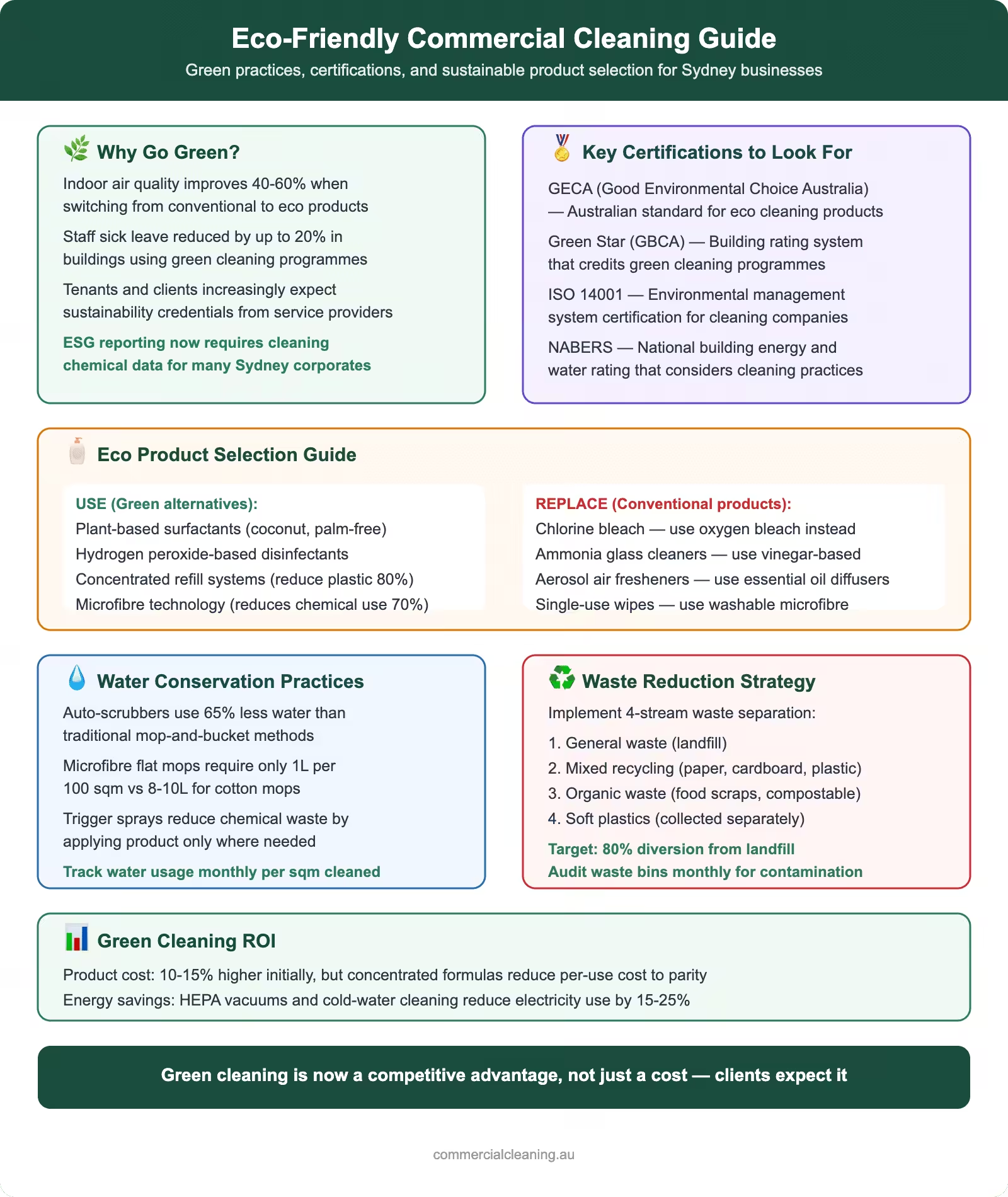
Eco-friendly commercial cleaning guide showing green certifications, sustainable product selection, water conservation practices, waste reduction strategy, and ROI analysis
The Case for Eco-Friendly Cleaning in Commercial Spaces
Eco-friendly cleaning addresses real environmental and health problems. Traditional cleaning chemicals contaminate waterways, emit volatile organic compounds (VOCs) that compromise indoor air quality, and create packaging waste. Over a year, a commercial facility using conventional cleaning methods generates significant environmental impact. Eco-friendly approaches directly address these issues.
The business case is equally compelling:
Improved indoor air quality: Reduced VOC emissions improve occupant health, concentration, and productivity. Employee health claims decrease.
Reduced operational costs: Concentrated products and efficient methods lower per-clean costs. Water savings are substantial in water-constrained regions like NSW.
Enhanced brand reputation: Sustainability commitments are increasingly important to stakeholders. Eco-friendly operations support ESG (environmental, social, governance) goals.
Tenant and employee satisfaction: Workers and occupants value green initiatives. This affects retention, satisfaction scores, and recruitment.
Long-term resilience: Operating sustainably prepares your organisation for future carbon pricing, water restrictions, and chemical regulations.
Eco-Friendly Cleaning Products and Technologies
Modern eco-friendly cleaning is sophisticated. It’s not simply “natural” products; it’s scientifically formulated alternatives that perform as well as or better than conventional chemicals.
Biodegradable Cleaning Formulations
Eco-friendly products break down completely into harmless compounds in the environment, unlike synthetic chemicals that persist in soil and water. Plant-based surfactants, enzymatic cleaners, and mineral-derived compounds deliver performance while remaining environmentally benign.
Low-Moisture Extraction Equipment
Traditional carpet cleaning uses excessive water, requiring long dry times and energy-intensive drying. Low-moisture extraction equipment uses 80% less water, reduces drying time by 50%, and minimises energy consumption. This reduces water usage significantly—critical in drought-prone NSW.
Microfibre Technology
Microfibre cloths clean more effectively than cotton rags using only water or minimal chemical solution. They capture bacteria and dust more completely, reducing waste and chemical use. Laundered and reused, they’re vastly more sustainable than disposable paper towels or single-use cloths.
HEPA Filtration Systems
Vacuum cleaners equipped with HEPA filters capture 99.97% of dust particles, improving indoor air quality. This reduces allergens, dust mites, and particles that affect respiratory health. Superior to standard filtration systems.
Eco-Friendly Practices by Cleaning Task
Cleaning Task
Traditional Approach
Eco-Friendly Alternative
Environmental Benefit
General office cleaning
Synthetic detergent + disposable cloths
Plant-based cleaner + reusable microfibre
Biodegradable, zero single-use waste
Floor care
Petroleum-based stripper (VOC emissions)
Enzymatic stripper (low VOC)
Reduced air pollution, safer for workers
Disinfection
Chlorine bleach (water pollution)
Hydrogen peroxide or plant-based disinfectant
Biodegradable, breaks down to water and oxygen
Carpet cleaning
High-water extraction (energy intensive)
Low-moisture extraction system
80% water reduction, 50% shorter drying
Glass and windows
Ammonia-based cleaner (VOC emissions)
Vinegar or alcohol-based alternative
Non-toxic fumes, no air quality impact
Trash and waste management
Standard liners to landfill
Recycling programs, compostable liners
Waste diversion from landfill
Implementing Eco-Friendly Cleaning Without Sacrificing Performance
A common concern is whether eco-friendly cleaning performs as well as traditional methods. The answer is unequivocally yes when proper formulations and techniques are used. Here’s our implementation approach:
Product Selection
We select products certified by reputable environmental standards: EcoLabel, Green Seal, or Australian Ecolabel. These certifications verify environmental claims through third-party testing, not marketing hype. All products undergo performance testing to confirm they match or exceed traditional alternatives.
Technique Adaptation
Some eco-friendly products require slightly different application methods. Our team receives training to verify best effectiveness. For example, enzymatic cleaners require adequate contact time, and low-moisture extraction requires different machine settings than traditional equipment. Training ensures performance isn’t compromised.
Performance Monitoring
We establish baseline cleanliness standards and monitor performance against them. If any eco-friendly product underperforms, we substitute it immediately. This ensures your facility appearance standards are never compromised by environmental choices.
Gradual Transition
Most facilities transition gradually. We begin with general office cleaning (easiest to change), monitor results for 3-4 weeks, then expand to floor care, disinfection, and specialist services. This managed approach allows staff training and cost absorption spread over time.
Measuring Eco-Friendly Cleaning Impact
Quantifying the environmental benefit of your eco-friendly cleaning transition is important for reporting and validation. Track these metrics:
Water consumption: Low-moisture extraction can reduce water usage by 10,000+ litres annually in a typical office facility.
Chemical waste: Concentrated products and efficient application reduce chemical volume by 30-40%.
Waste diversion: Microfibre cloths (reused) versus disposable cloths eliminate thousands of kilograms of textile waste.
Carbon footprint: Concentrated products require less packaging and transport weight, reducing shipping emissions by 20-30%.
Indoor air quality: Reduced VOC emissions improve measured air quality. Occupant health complaints typically decrease measurably.
We’ve measured these impacts across Sydney facilities. A typical 5000 sqm office saves approximately 50,000 litres of water annually and diverts 500+ kg of chemical waste through eco-friendly cleaning compared to traditional approaches.
Eco-Friendly Cleaning and WHS Compliance
Interestingly, eco-friendly cleaning often simplifies WHS compliance. Lower-hazard products have simpler Safety Data Sheets, reduce worker exposure to harmful chemicals, and decrease occupational health claims. The Work Health and Safety Act 2011 encourages substitution of hazardous chemicals with safer alternatives. Eco-friendly cleaning achieves both environmental and health and safety goals simultaneously.
Cost-Benefit Analysis of Eco-Friendly Cleaning
Upfront product costs may be slightly higher for eco-friendly alternatives, but total cost of ownership typically favours green cleaning:
Product efficiency: Concentrated formulations mean less volume required per application, offsetting higher unit costs.
Water savings: Reduced water usage cuts disposal costs and metering charges, particularly in water-restricted areas.
Health cost reductions: Fewer worker health issues and reduced sick leave offset green product costs within 12-18 months.
Equipment longevity: Less aggressive chemicals reduce equipment corrosion, extending lifespan of cleaning machinery.
Regulatory compliance: Avoiding future chemical restrictions and penalties has real financial value.
In our experience, a facility with $30,000 annual cleaning spend typically recovers green transition costs within 2 years through water savings, product efficiency, and reduced health claims.
Eco-Friendly Cleaning and Your Sustainability Goals
If your organisation has committed to carbon neutrality, waste reduction, or water conservation targets, eco-friendly cleaning is a direct contribution. Facility management is often overlooked in sustainability planning, yet it’s a high-impact area. Documenting your eco-friendly cleaning program supports ESG reporting, aligns with supply chain sustainability requirements, and differentiates your organisation in tenant and client markets.
We’ve partnered with Sydney facilities pursuing Green Building Council Australia (GBCA) certifications, carbon neutral commitments, and corporate sustainability targets. Eco-friendly cleaning is often the overlooked component that tips facilities over thresholds required for certification achievement.
Transitioning to eco-friendly cleaning is a strategic investment in your facility’s long-term performance, your organisation’s reputation, and environmental responsibility. We work with facilities across Sydney to make this transition smooth, ensuring cleaning performance never drops while environmental impact diminishes significantly. To understand your specific potential impact, connect with us for a sustainability consultation on your cleaning operations, and explore our guide to green cleaning practices for even more ways to reduce your facility’s environmental footprint.
Frequently Asked Questions
Are eco-friendly cleaning products effective on stubborn stains?
Yes. Modern eco-friendly products perform excellently on stubborn stains. Enzymatic cleaners break down organic matter, plant-based degreasers dissolve oil effectively, and low-moisture extraction removes embedded soiling. Performance matches or exceeds traditional products when applied correctly.
Will switching to eco-friendly products change the smell of my facility?
Often positively. Eco-friendly products frequently have pleasant natural scents (citrus, herbal, fresh linen) compared to the sharp chemical smell of traditional cleaners. Most facilities report improved perceived air quality after switching.
Can eco-friendly cleaning meet medical facility standards?
Absolutely. Hospital-grade eco-friendly disinfectants meet Australian Standards AS/NZS 4815. We use medical-approved green products in healthcare facilities across Sydney with excellent compliance and performance records.
How long does it take to transition to eco-friendly cleaning?
A gradual transition typically takes 6-8 weeks. We begin with general office cleaning, monitor results, then expand to more sensitive areas. This allows staff training and ensures performance at each stage.
Are eco-friendly products certified and genuinely sustainable?
We select only products with third-party environmental certifications (EcoLabel, Green Seal, Australian Ecolabel). We avoid greenwashing by requiring auditable environmental claims verified through independent testing.
About Clean Group
Clean Group is a leading commercial cleaning company in Sydney, serving offices, strata properties, medical centres, schools, and industrial facilities across the greater Sydney region. With over 25 years of experience and a team of fully trained, insured cleaners, we deliver consistent results backed by a 100% satisfaction guarantee. Our services are tailored to your schedule, your budget, and your industry’s compliance requirements.
Hi, I'm Suji Siv, the founder, CEO, and Managing Director of Clean Group, bringing over 25 years of leadership and management experience to the company. As the driving force behind Clean Group’s growth, I oversee strategic planning, resource allocation, and operational excellence across all departments. I am deeply involved in team development and performance optimization through regular reviews and hands-on leadership.