We have fielded this question from facility managers more times than we can count, and after twenty-plus years of servicing commercial properties across Sydney, our team still encounters widespread confusion about where cleaning ends and disinfecting begins. Our commercial cleaning company Sydney was built on the principle that both processes serve distinct purposes, and understanding that distinction is the first step toward a genuinely hygienic workplace rather than one that merely looks tidy on the surface.
What Cleaning Actually Achieves on Commercial Surfaces
What Cleaning Actually Achieves on Commercial Surfaces covers specific protocols that we tailor to each facility based on its layout, traffic, and compliance requirements. We define cleaning as the physical removal of visible soil, dust, grease, and organic matter from a surface using detergent and mechanical action. Our crews perform this step first on every engagement because we have learned — sometimes the hard way — that disinfectant chemicals cannot penetrate a layer of built-up grime. When we audited surface hygiene at a Canterbury food court last year, we found that tables wiped with disinfectant alone still returned elevated ATP readings because the biofilm underneath had never been broken down by a proper detergent clean first.
Our technicians in the field describe cleaning as “clearing the path” for the disinfectant to do its job. We use pH-neutral detergents on most hard surfaces and alkaline degreasers on kitchen and industrial substrates. We have tested dozens of formulations over the years, and we always select products that are compatible with the disinfectant we plan to apply in the second stage — some detergent residues can neutralise quaternary ammonium compounds, and our team learned that lesson early in our career when a Campsie medical clinic reported persistent microbial counts despite our disinfection protocol.
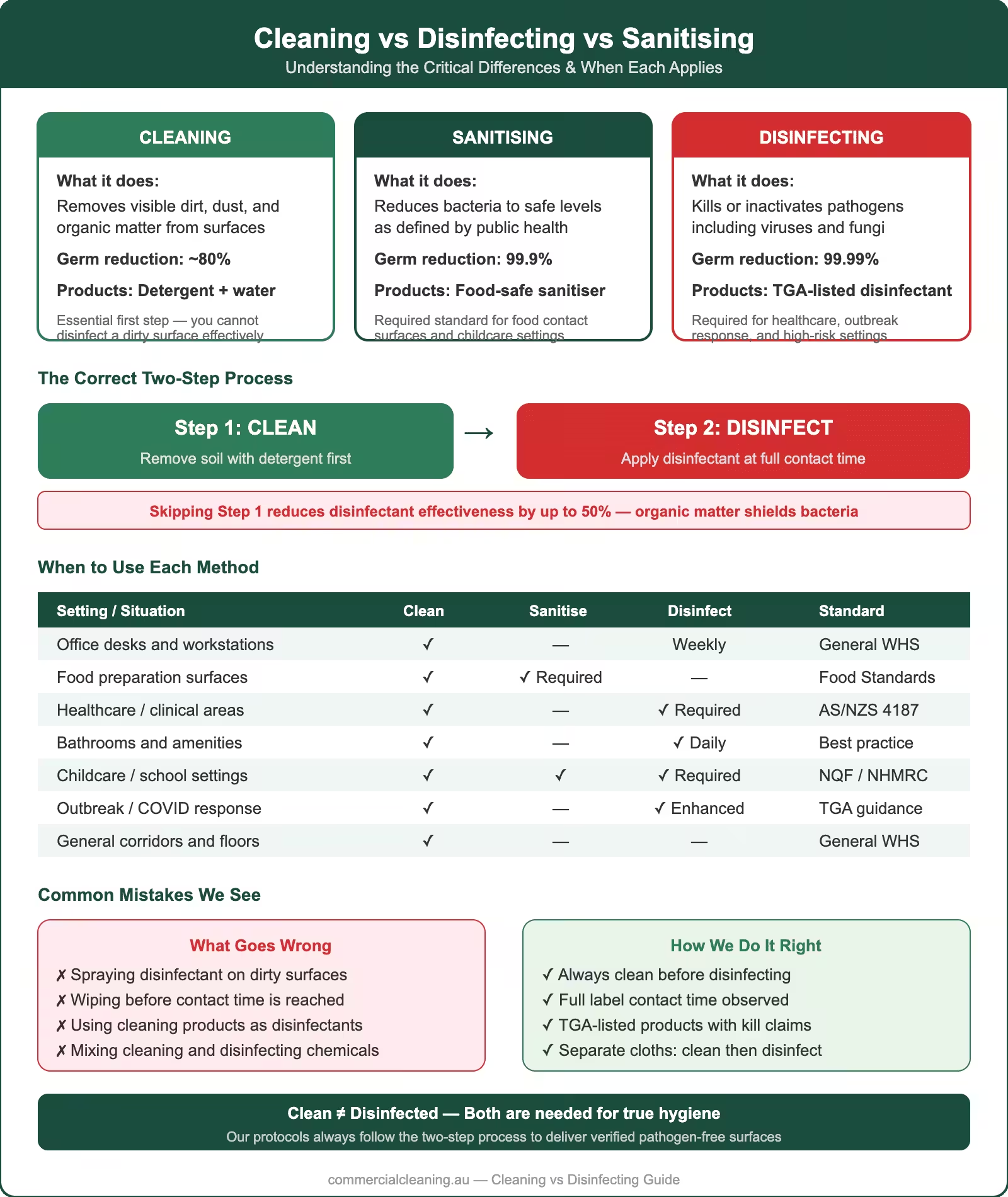
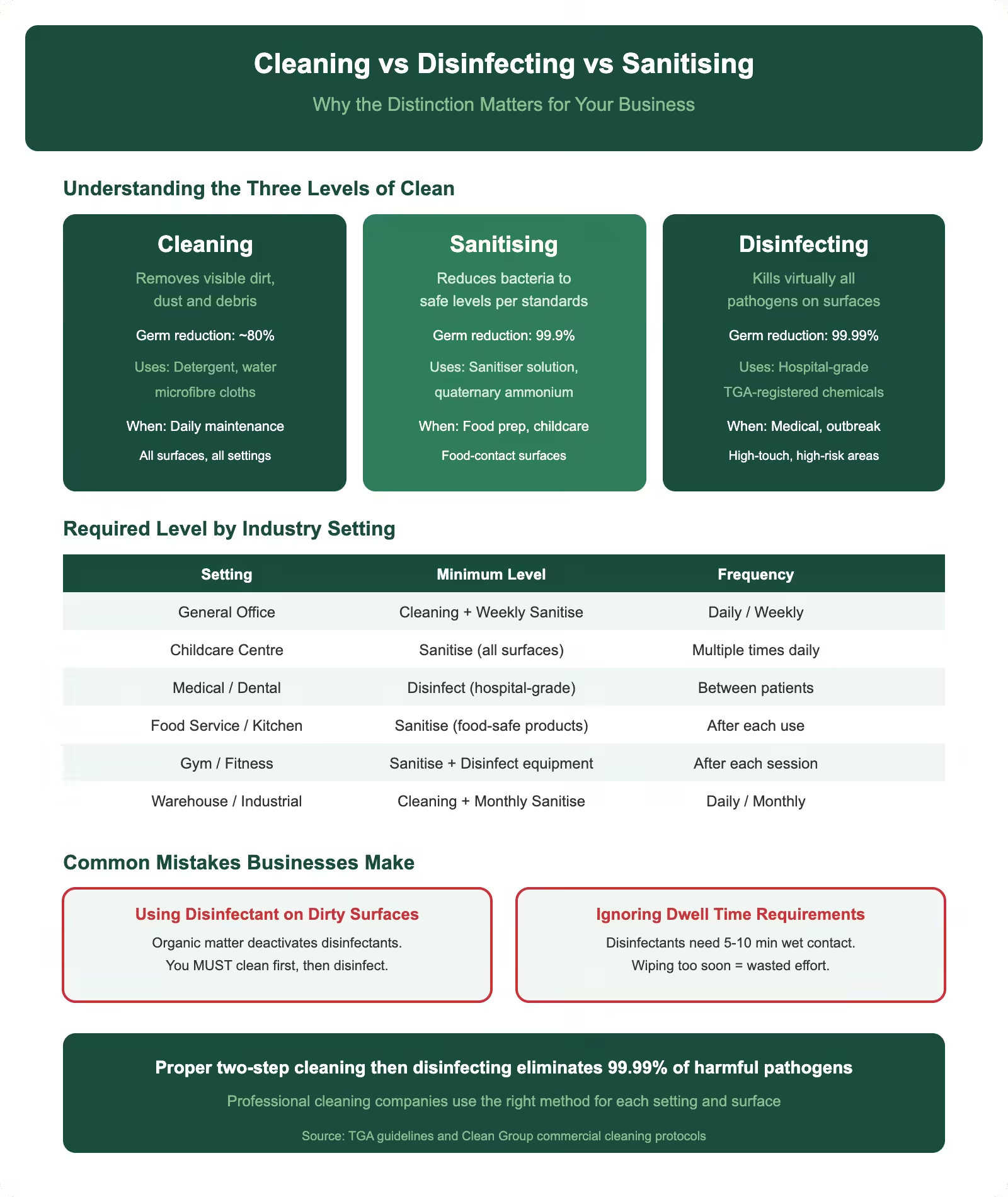
Cleaning versus disinfecting versus sanitising comparison showing definitions, two-step process, when to use each method by setting, and common mistakesCleaning versus disinfecting versus sanitising infographic showing three levels of clean required industry settings common mistakes and germ reduction rates
How Disinfecting Differs and Why the Distinction Matters
How Disinfecting Differs and Why the Distinction Matters involves specific protocols that we tailor to each facility based on its layout, traffic, and compliance requirements. Disinfecting is the chemical destruction or inactivation of pathogenic micro-organisms on a surface that has already been cleaned. We use TGA-registered hospital-grade disinfectants exclusively because anything less does not meet the efficacy thresholds we consider acceptable for commercial environments. Our team has witnessed competing providers market “sanitising sprays” as disinfection services, and the microbial kill rates those products deliver are orders of magnitude lower than what a genuine hospital-grade formulation achieves under controlled contact-time conditions.
We tell our clients that disinfecting without cleaning first is like painting over rust — the surface looks treated, but the underlying problem remains. Conversely, cleaning without disinfecting leaves viable pathogens in place even though the surface appears spotless. Our two-stage protocol at every site we service in Lakemba, Canterbury, and across greater Sydney ensures that both functions are performed in the correct sequence, with the correct chemicals, at the correct dwell times. We have documented the difference in ATP scores between one-stage and two-stage approaches, and the gap is consistently dramatic.
Disinfection Method Effectiveness Comparison
Method
Kill Rate
Coverage
Dwell Time
Best For
Electrostatic Spray
99.99%
360 wrap
10 min
Large open areas
ULV Fogging
99.9%
Airborne + surface
30–60 min + ventilate
Whole-room treatment
Manual Wipe-Down
99.9%
Direct contact only
Per product label
High-touch points
UV-C Light
99.9%
Line of sight only
15–30 min
Unoccupied rooms
Ozone Generator
99.99%
Full room penetration
2–4 hrs + ventilate
Severe contamination
Australian Standards That Define Environmental Cleaning and Disinfection
Disinfection Method Effectiveness Comparison requires specific protocols that we tailor to each facility based on its layout, traffic, and compliance requirements. We reference AS 4815.3 whenever we scope work for office-based healthcare environments, aged-care administration wings, and allied-health clinics across Sydney. This standard addresses environmental cleaning requirements for office-based health care facilities and sets out the minimum expectations for surface preparation, chemical selection, and validation testing that our teams follow on every relevant engagement. We have used AS 4815.3 as the backbone of our cleaning-versus-disinfecting training module since we first adopted it, and our supervisors quiz new technicians on its key provisions during their induction week.
Australian Standards That Define Environmental Cleaning and Disinfection includes specific protocols that we tailor to each facility based on its layout, traffic, and compliance requirements. Our compliance framework also draws on Safe Work Australia’s guidance for workplace chemical management and the TGA’s ARTG listing requirements for disinfectant products. We keep a live register of every chemical we carry, cross-referenced to its TGA registration number and approved contact time, and we update that register quarterly. When a Canterbury strata manager asked us to prove our disinfectant was compliant last month, we had the documentation on-screen within minutes — that level of traceability is something we built deliberately because we have seen how quickly regulatory audits can escalate when records are incomplete.
Real-World Scenarios Where the Cleaning-Disinfecting Distinction Saved Our Clients
Real-World Scenarios Where the Cleaning-Disinfecting Distinction Saved Our Clients addresses specific protocols that we tailor to each facility based on its layout, traffic, and compliance requirements. We recall a 2022 engagement at a Campsie childcare centre where the existing cleaning contractor had been using a single all-purpose spray for both cleaning and disinfecting. Our pre-service ATP swabs on nappy-change surfaces returned readings above 500 RLU — well beyond the 100 RLU threshold we consider acceptable. Once we implemented our two-stage protocol with a dedicated detergent clean followed by a hospital-grade disinfectant at the manufacturer’s four-minute contact time, readings dropped below 40 RLU within the first week. The centre director told us the gastro-related absenteeism among toddlers fell noticeably in the following month.
We had a similar experience at a Lakemba medical practice where the reception desk and EFTPOS terminal were being wiped with a household-grade surface spray that carried no TGA disinfectant registration. Our team introduced a pre-clean with a pH-neutral wipe followed by a quaternary ammonium disinfectant, and the practice manager reported zero staff sick days linked to surface transmission over the next quarter. These are not isolated stories — we see the same pattern every time we transition a site from a single-step approach to our two-stage methodology.
How We Price Combined Cleaning and Disinfection Packages
How We Price Combined Cleaning and Disinfection Packages targets specific protocols that we tailor to each facility based on its layout, traffic, and compliance requirements. We structure our pricing to reflect the genuine two-stage effort involved rather than bundling everything into a single misleading line item. Our average combined cleaning-plus-disinfection package for a mid-size commercial office in Sydney sits around $3,690 per quarterly cycle, and that figure includes hospital-grade chemicals, ATP verification testing, digital compliance reports, and waste disposal. We have found that clients who previously paid less for a single-step “clean and disinfect” service were actually getting neither function performed properly, so our higher price point delivers substantially better hygiene outcomes per dollar spent.
We also offer standalone disinfection-only services for sites that already have a competent cleaning contractor handling the first stage. Our team collaborates with existing crews across Canterbury, Campsie, and Lakemba to coordinate schedules so the disinfection pass happens immediately after the general clean while surfaces are still free of re-deposited soil. We bill those standalone engagements at a reduced rate because the labour component is lower, and we pass that saving through to the client transparently.
Building a Cleaning and Disinfection Protocol That Actually Works Long-Term
Building a Cleaning and Disinfection Protocol That Actually Works Long-Term focuses on specific protocols that we tailor to each facility based on its layout, traffic, and compliance requirements. We advise every new client to start with a baseline hygiene audit so we can measure where their facility stands before we change anything. Our team documents ATP readings, photographs surface conditions, and interviews on-site staff about current practices. We have conducted these audits at hundreds of sites over the years, and the data we collect forms the foundation of a customised cleaning-and-disinfection schedule that accounts for foot traffic patterns, seasonal infection peaks, and occupant vulnerability profiles.
We always recommend that facility managers educate their own staff on the cleaning-versus-disinfecting distinction as well, because awareness drives compliance between our scheduled visits. Our team has developed a one-page reference card that we laminate and mount in cleaner cupboards at every site we service. For a deeper look at the technology side of modern disinfection and how it applies to surface hygiene in workplaces, we encourage you to read our detailed explanation of what sanitising means in practice and why your facility needs a documented programme.
Frequently Asked Questions
Can I just use one product for both cleaning and disinfecting? We strongly advise against it. All-in-one products compromise on both functions because the detergent component dilutes the disinfectant concentration. Our two-stage approach with dedicated products consistently delivers superior ATP readings compared to any single-step alternative we have tested.
How do I know if a product is a genuine disinfectant? We check the TGA’s Australian Register of Therapeutic Goods for every product we use. A legitimate disinfectant carries an AUST R or AUST L number, and our team verifies registration status quarterly to confirm nothing has lapsed.
What surfaces need disinfecting versus just cleaning? We recommend disinfecting all high-touch surfaces including door handles, light switches, shared desks, kitchen taps, and bathroom fixtures. Low-touch surfaces like walls and ceilings typically only need a detergent clean unless there has been a known contamination event.
How often should a workplace be disinfected? We tailor frequency to the site’s risk profile. High-traffic offices and healthcare waiting rooms in Canterbury and Lakemba often need weekly disinfection, while low-density corporate suites may only require fortnightly or monthly treatment.
Does cleaning before disinfecting really make that much difference? We have measured the difference repeatedly, and it is significant. Pre-cleaning typically improves disinfectant kill rates by 30 to 50 percent because organic soil physically shields micro-organisms from chemical contact.
What is ATP testing and why do you use it? ATP luminometry measures adenosine triphosphate residue on surfaces, which indicates the presence of organic matter and microbial activity. We use it as an objective validation tool because visual inspection alone cannot detect microscopic contamination.
Are your disinfection chemicals safe around children and pets? We select formulations with low toxicity profiles for occupied environments and observe manufacturer-specified ventilation and re-entry times. Our team carries Safety Data Sheets for every product and shares them with site managers on request.
Do you provide documentation for compliance audits? We issue time-stamped digital reports after every visit that include chemical batch numbers, dilution ratios, ATP readings, and technician sign-off. Our Campsie and Canterbury strata clients use these reports directly in their body-corporate compliance files.
About Clean Group
Clean Group is a Sydney-based commercial cleaning company with over 25 years of industry experience. Founded by Suji Siv, our team of 50+ trained professionals services offices, warehouses, medical centres, schools, childcare facilities, retail stores, gyms, and strata properties across Sydney, Melbourne, and Brisbane.
We are active members of ISSA and the Building Service Contractors Association of Australia (BSCAA). Our operations align with ISO 9001 (Quality Management), ISO 14001 (Environmental Management), and ISO 45001 (Workplace Health and Safety) standards. We hold membership with the Green Building Council of Australia and use eco-friendly, TGA-registered cleaning products wherever possible.
Every Clean Group cleaner is police-checked, fully insured, and trained in safe work procedures under SafeWork NSW guidelines. We operate 7 days a week, including after-hours and weekend services, to minimise disruption to your business.
Hi, I'm Suji Siv, the founder, CEO, and Managing Director of Clean Group, bringing over 25 years of leadership and management experience to the company. As the driving force behind Clean Group’s growth, I oversee strategic planning, resource allocation, and operational excellence across all departments. I am deeply involved in team development and performance optimization through regular reviews and hands-on leadership.