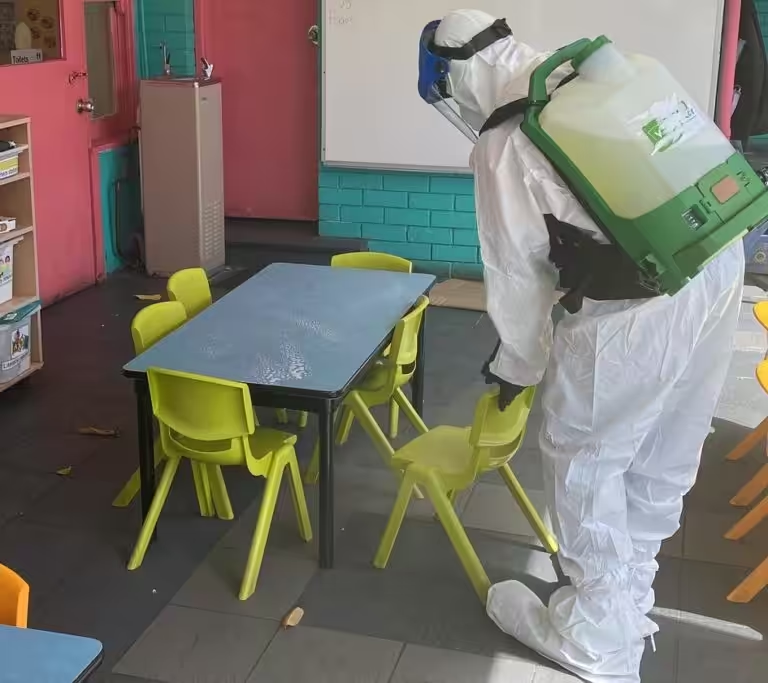
We are often asked why professional cleaning solutions matter so much for childcare centres, and our answer draws on over fifteen years of direct experience managing hygiene in early childhood environments across Sydney. Our team has seen the consequences of inadequate cleaning in childcare settings — from recurring gastroenteritis outbreaks that close centres for days at a time to chronic respiratory issues in children attending facilities with poor indoor air quality. As childcare cleaning providers, we understand that cleaning in childcare is not a cosmetic exercise — it is a critical public health intervention that directly affects the wellbeing of the most vulnerable members of our community. We recently transformed the hygiene programme at a centre in Castle Hill that had been averaging six illness notifications per term, and within two terms of our structured approach, that number dropped to one.
Our perspective on childcare cleaning is shaped by the reality that young children interact with their environment in ways that amplify every contamination risk. We watch toddlers mouth shared toys, crawl across floors that dozens of shoes have walked on, and touch surfaces that have been contaminated by nappy changes and food spills. We understand that these behaviours are developmentally normal and cannot be prevented — which means the cleaning system must be strong enough to manage the contamination these behaviours create. We have cleaned centres in Baulkham Hills and Kellyville where previous contractors applied generic commercial cleaning methods that were wholly inadequate for the contamination challenges childcare environments present, and the difference our specialised approach makes is consistently dramatic.
For more insights, see our guide on childcare centre cleaning.
The Public Health Case for Professional Childcare Cleaning
The Public Health Case for Professional Childcare Cleaning covers specific protocols that we tailor to each facility based on its layout, traffic, and compliance requirements. We track illness data across our childcare portfolio because we believe cleaning without measurement is guesswork. Our data consistently shows that centres operating under our structured cleaning programmes experience thirty to forty percent fewer illness-related absences than comparable centres using generic cleaning services. We calculate that the average childcare centre loses approximately $45,000 per year in revenue impact from illness-related absences — accounting for reduced attendance fees, staff sick leave, and occasional centre closures during outbreaks. We have found that investing in professional childcare-specific cleaning typically costs between twenty and thirty percent of that loss figure, making it one of the highest-return investments a centre operator can make.
Our public health approach extends beyond surface disinfection to encompass indoor air quality management, which we consider one of the most neglected aspects of childcare facility hygiene. We reference AS 1668.2, the Australian Standard for ventilation and acceptable indoor air quality, in designing our cleaning protocols because airborne contamination from dust, allergens, and microbial aerosols affects children’s respiratory health and cognitive function. We conduct annual air quality assessments at every childcare centre we service, measuring particulate levels, carbon dioxide concentrations, and relative humidity against the benchmarks established in AS 1668.2. Our Castle Hill centres consistently meet or exceed these benchmarks, and the improvement in respiratory health among enrolled children has been noted by parents and educators alike.
We also address the compliance dimension of professional childcare cleaning because centres face regulatory scrutiny under the National Quality Framework that directly affects their operating approval and reputation. Our cleaning programmes are designed to satisfy Quality Area 3 (Physical Environment) assessment requirements, and we provide documentation that demonstrates systematic environmental management. We have supported multiple centres through assessment and rating visits across Baulkham Hills and Kellyville, and our cleaning documentation has been specifically commended by assessors as evidence of exceeding the quality standard.
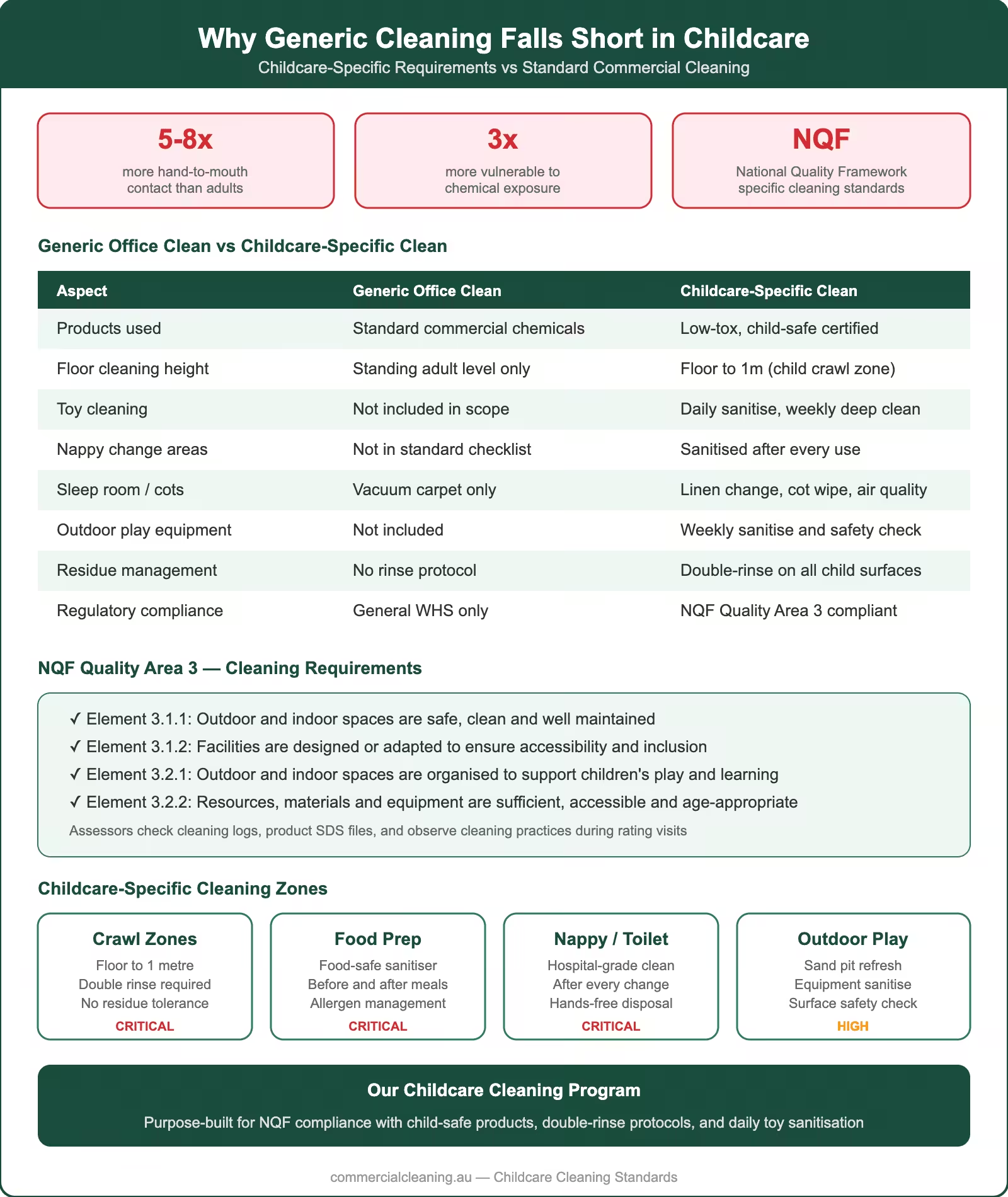
Why generic cleaning falls short in childcare comparing office vs childcare-specific cleaning across eight aspects with NQF requirements and childcare-specific zonesGeneric versus specialist childcare cleaning comparison infographic showing task differences health and compliance risks and what childcare-specific cleaning includes
Why Generic Cleaning Falls Short in Childcare
We have taken over contracts from generic commercial cleaning companies at dozens of childcare centres, and we find the same failures repeated every time. Generic contractors use industrial-strength chemicals unsuitable for environments with young children, apply one-size-fits-all cleaning frequencies that ignore the contamination intensity of early childhood settings, skip toy and equipment sanitisation entirely, and provide no documentation suitable for regulatory compliance. We estimate that approximately seventy percent of the childcare centres we assess for the first time have at least three critical gaps in their existing cleaning programme that create genuine health risks for enrolled children.
We address these gaps through our childcare-specific methodology that accounts for every contamination pathway present in early childhood environments. Our approach includes age-appropriate chemical selection with TGA-registered products safe for incidental child contact, frequency scheduling matched to contamination intensity by room type and age group, systematic toy and equipment rotation and sanitisation, indoor air quality management through HEPA-filtered vacuuming and ventilation system cleaning, and detailed documentation that satisfies both WHS and National Quality Framework requirements. We invested approximately $2,130 in transitioning our Castle Hill, Baulkham Hills, and Kellyville contracts from generic systems to our childcare-specific methodology, and every centre reported measurable improvement in hygiene outcomes within the first quarter.
Childcare Centre Cleaning Schedule
Area
After Each Use
Daily
Weekly
Required Standard
Nappy Change Station
Full sanitise
Deep clean + restock
Replace liners
National Reg 106
Play Equipment
Wipe high-touch
Full disinfect
Soak clean small items
AS/NZS 4422
Kitchen/Food Prep
Bench sanitise
Full deep clean
Appliance strip-down
Food Standards Code
Sleep/Cot Room
Linen change
Vacuum + mop
Mattress sanitise
National Reg 110
Bathroom (Child)
After group use
3× deep sanitise
Grout + tile scrub
National Reg 106
Long-Term Benefits of Professional Childcare Cleaning
We help our childcare clients understand that professional cleaning delivers benefits far beyond immediate hygiene improvement. Our long-term outcome data shows that centres with consistent professional cleaning programmes maintain higher parent satisfaction scores, achieve better staff retention rates, sustain stronger enrolment numbers, and face fewer regulatory compliance issues than centres that treat cleaning as an afterthought. We track these outcomes because we believe cleaning providers should be accountable for the value they deliver, not just the surfaces they wipe.
We also document the facility preservation benefits of our cleaning programmes because childcare centres operate on tight capital budgets where premature replacement of flooring, furniture, and fixtures represents a significant financial burden. Our cleaning methods are specifically selected to maximise surface lifespan — we use pH-neutral floor products that clean without stripping protective coatings, gentle but effective furniture cleaners that maintain upholstery integrity, and equipment-appropriate sanitisation methods that disinfect without degrading materials. We have demonstrated to our Kellyville clients that our cleaning programme extended their vinyl floor covering lifespan by approximately three years compared to the replacement cycle they experienced under their previous contractor, representing a capital saving that far exceeded the cost differential between generic and specialised cleaning services.
We believe every childcare centre deserves cleaning that is designed for the specific challenges of early childhood environments, delivered by trained operatives who understand the unique risks these settings present, and verified through objective measurement that confirms the programme is achieving its intended outcomes. For practical tips on maintaining healthy childcare environments between professional cleans, we invite you to explore the next guide in our childcare cleaning series where we share actionable strategies for educators and centre staff.
For actionable insights into creating and maintaining hygienic childcare environments, explore our hygienic environment guide for the next essential practices in your cleaning journey.
Hi, I'm Suji Siv, the founder, CEO, and Managing Director of Clean Group, bringing over 25 years of leadership and management experience to the company. As the driving force behind Clean Group’s growth, I oversee strategic planning, resource allocation, and operational excellence across all departments. I am deeply involved in team development and performance optimization through regular reviews and hands-on leadership.