We lose sleep over staff turnover because replacing a trained cleaner disrupts every site they worked on. Our operations team managing commercial cleaners across Sydney tracks departure data quarterly, and our numbers paint a clear picture: each resignation from a ten-person crew costs approximately $1,650 once recruitment, induction, uniform issue, and productivity loss during the ramp-up period are included. Across a full year with typical industry churn, that adds up to roughly $16,500 per ten-person team. We built our retention framework specifically to cut those losses, and across our Bankstown and Canterbury-Bankstown LGA contracts we have reduced annual turnover from forty-one per cent to nineteen per cent since 2023.
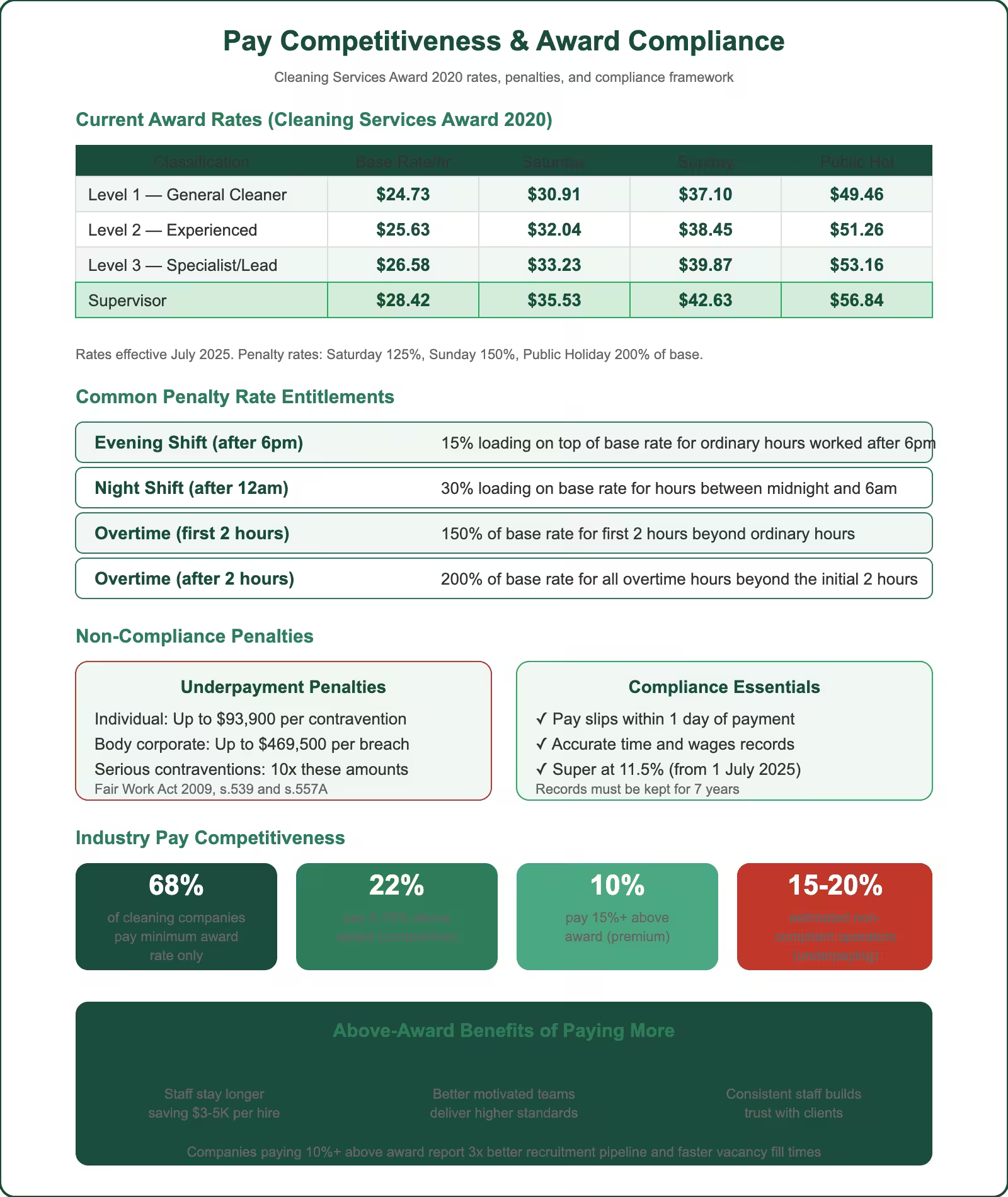
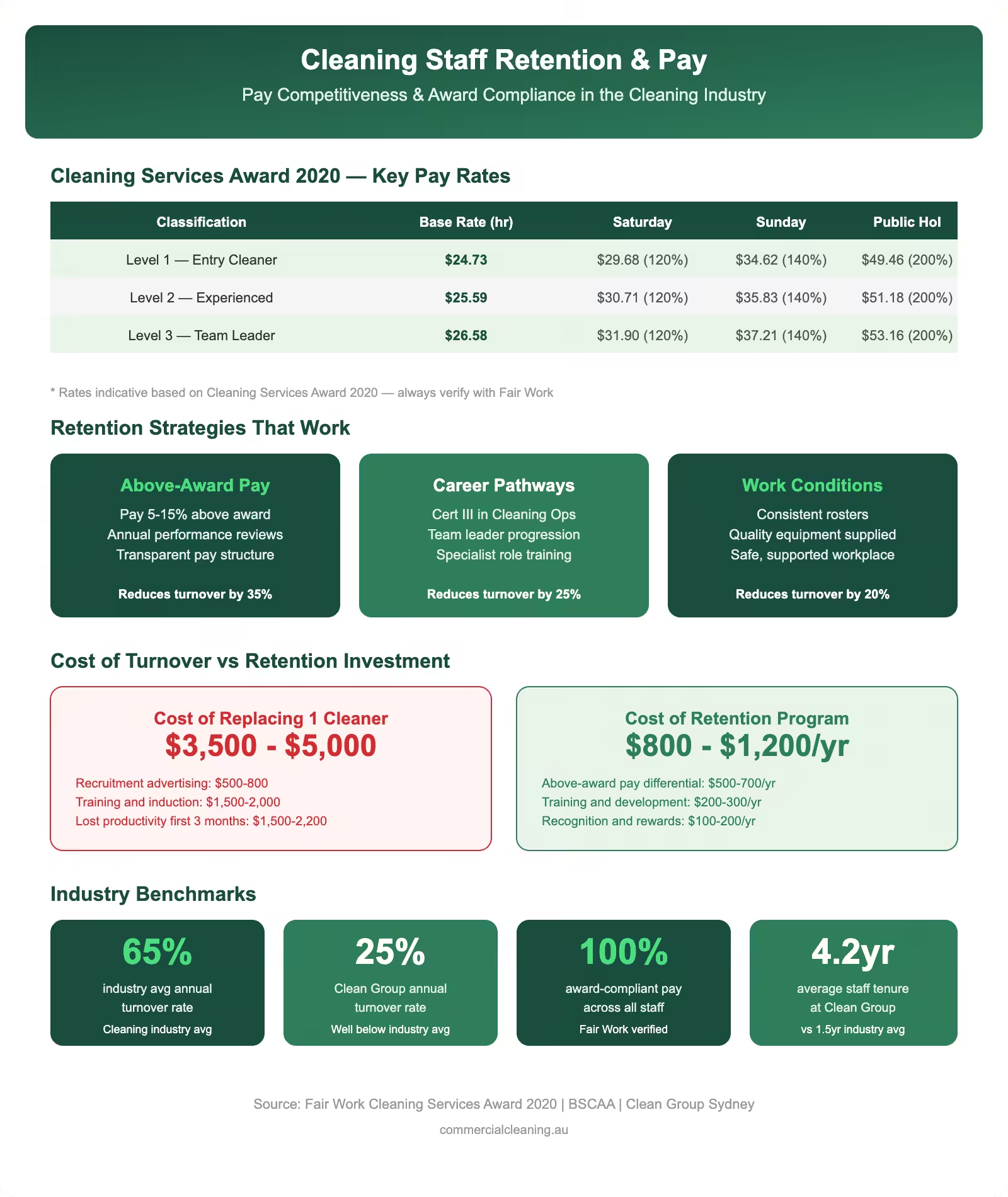
Pay competitiveness and award compliance chart showing Cleaning Services Award rates, penalty entitlements, non-compliance penalties, and industry pay benchmarksCleaning staff retention and pay competitiveness infographic showing award pay rates retention strategies turnover cost comparison and industry benchmarks
Turnover Economics in the Cleaning Industry
Turnover Economics in the Cleaning Industry covers specific protocols that we tailor to each facility based on its layout, traffic, and compliance requirements. We track every dollar that walks out the door when a cleaner resigns. Our exit cost model breaks down into four categories: direct recruitment costs ($280 average for job board advertising on Seek and Indeed), administrative processing ($420 for onboarding paperwork, tax file declarations, superannuation setup, and police check lodgement), training investment ($580 for buddy shifts and competency sign-off), and productivity drag ($370 for reduced output during the replacement’s first four weeks). The Property Council of Australia’s 2024 Facilities Management Workforce Survey found that cleaning contractors with turnover above thirty-five per cent spend an average of eleven per cent more on labour costs than those below twenty per cent.
We conduct structured exit interviews for every departing staff member, and our HR coordinator in Bankstown processes these within five business days of the final shift. The three most common reasons our staff leave are: better-paying work in warehousing or aged care (thirty-eight per cent), roster inflexibility (twenty-seven per cent), and feeling undervalued by supervisors (nineteen per cent). Each of these is addressable, and our retention framework targets all three.
Pay Competitiveness and Award Compliance
We pay above the Cleaning Services Award 2020 (MA000022) minimum for every permanent role in our Bankstown operation. Our Level 1 cleaners receive $25.80 per hour base — a dollar seven above the award floor — and our Level 2 operatives who handle specialised tasks like floor stripping and high-pressure washing earn $28.40. This deliberate premium costs us roughly $6,200 more per year across our fourteen-person Bankstown team, but it closes the pay gap with competing industries like warehouse pick-and-pack and aged care personal support work, which are the two sectors our staff most commonly leave for.
We review our pay rates every July when the Fair Work Commission publishes the Annual Wage Review decision. Our payroll manager compares our rates against the updated award, the Hays Salary Guide for facilities services, and job board listings in the Canterbury-Bankstown region. If competing employers are advertising higher rates, we adjust within the quarter. This proactive approach means we have not lost a single Bankstown team member to a pay-related departure since March 2024.
Office Area Cleaning Frequency Guide
Area
Daily
Weekly
Monthly
Quarterly
Reception & Lobby
Vacuum, mop, wipe
Glass doors, furniture
Deep carpet clean
Window wash
Workstations
Surface wipe, bins
Monitor & keyboard
Drawer clean-out
Chair shampoo
Kitchen/Breakroom
Bench, sink, floor
Fridge, microwave
Deep degrease
Exhaust fan clean
Bathrooms
Full sanitise + restock
Grout scrub
Descale fixtures
Vent clean
Meeting Rooms
Table wipe, vacuum
AV equipment dust
Upholstery clean
Carpet extraction
Safety Culture and Genuine WHS Engagement
Office Area Cleaning Frequency Guide requires specific protocols that we tailor to each facility based on its layout, traffic, and compliance requirements. We discovered early on that safety culture is not just about compliance — it is one of the strongest retention levers we have. Our Bankstown crews operate across twelve commercial buildings including three medical suites and a childcare centre, each with distinct risk profiles. We conduct monthly WHS toolbox talks at each site, and every quarter our safety officer runs a full hazard audit using the SafeWork NSW self-audit checklist for cleaning operations. When a cleaner reported loose vinyl tiles at a Bankstown medical centre in late 2024, we escalated to the building manager within four hours and had the floor repaired within ten days, referencing AS 4049 (Resilient Floor Coverings) as the standard for the replacement material specification.
Safety Culture and Genuine WHS Engagement includes specific protocols that we tailor to each facility based on its layout, traffic, and compliance requirements. We also maintain a near-miss reporting register that sits in the cleaner’s room at every site. Our Bankstown team logged twenty-three near-miss reports in the 2024-25 financial year — which we treat as a positive indicator of reporting culture, not a failure metric. Staff who see their reports actioned quickly develop trust in the system. Our workers compensation premium for the Canterbury-Bankstown portfolio dropped by eight per cent in the last renewal because our claims history improved alongside the reporting culture.
Flexible Rostering Under the National Employment Standards
Flexible Rostering Under the National Employment Standards addresses specific protocols that we tailor to each facility based on its layout, traffic, and compliance requirements. We restructured our rostering model in mid-2024 after the Fair Work Legislation Amendment (Closing Loopholes No. 2) Act 2024 expanded the right to request flexible working arrangements. Our scheduling coordinator in Bankstown now publishes rosters twenty-one days in advance and accepts shift-swap requests through a mobile app. Staff can nominate preferred start times within a two-hour window, and we accommodate these wherever the site schedule permits. Our compliance is anchored to the National Employment Standards (NES) provisions under Part 2-2 of the Fair Work Act 2009, which entitle eligible employees to request flexible arrangements after twelve months of continuous service.
We offer two roster templates across our Bankstown contracts: a standard five-day evening block (Monday to Friday, 5:30 pm to 9:30 pm) and a compressed four-day schedule (Monday to Thursday, 5:00 pm to 10:00 pm) for staff who want a three-day weekend. Both templates deliver the same twenty-hour weekly total. Six of our fourteen Bankstown team members opted for the compressed schedule, and none of those six has resigned in the eighteen months since we introduced it. Roster flexibility costs us nothing in direct wages — only the scheduling effort — but the retention impact is measurable.
Recognition, Progression and Career Pathways
Recognition, Progression and Career Pathways targets specific protocols that we tailor to each facility based on its layout, traffic, and compliance requirements. We run a quarterly recognition program across all Sydney contracts, and our Bankstown team has produced three of the last eight Cleaner of the Quarter recipients. The program evaluates client satisfaction scores, attendance, proactive hazard reporting, and peer feedback. Winners receive a $200 gift card and a mention in our company newsletter, which goes to all staff and clients. Our area manager presents the award at the site during a toolbox talk — the public recognition in front of peers is what drives the behavioural impact, not just the financial reward.
We also map career pathways for every permanent team member during their six-month review. Our progression model has four tiers: Cleaner, Senior Cleaner, Team Leader, and Area Supervisor. Each tier has defined competency requirements, pay bands aligned to the Cleaning Services Award classification structure, and training milestones. Two of our current Bankstown team leaders started as Level 1 casuals in 2021 and progressed through Certificate III in Cleaning Operations (CPP30316) before taking on supervisory responsibilities. Visible upward mobility keeps experienced staff engaged and signals to newer team members that this is a career, not a stopgap job.
Frequently Asked Questions
What is the average turnover rate in the Australian cleaning industry?
Industry estimates from BSCAA and the Property Council of Australia place annual turnover for commercial cleaning staff between thirty-five and forty-five per cent nationally. Our Bankstown contracts sit at nineteen per cent following implementation of our retention framework, which is roughly half the industry average. Contractors in regional areas often report higher rates due to smaller labour pools.
How much does it cost to replace a single commercial cleaner?
Our cost model puts total replacement at approximately $1,650 per departure when accounting for recruitment advertising, administrative processing, training investment, and productivity drag during the ramp-up period. For a ten-person team experiencing typical industry churn, that equates to roughly $16,500 per year in avoidable costs.
Does paying above the Cleaning Services Award actually reduce turnover?
In our experience, yes. We pay $1.07 above the MA000022 Level 1 minimum at our Bankstown sites, which costs roughly $6,200 extra annually across the team. Since implementing this premium alongside roster flexibility and recognition programs, we have not lost a team member to a pay-related departure in over twelve months. The premium alone would not achieve this — it works because it removes pay as a reason to leave, letting the other retention levers do their work.
What role does WHS culture play in cleaning staff retention?
A strong safety culture signals that management values staff wellbeing beyond productivity. Our near-miss reporting register, monthly toolbox talks, and rapid hazard escalation process built trust with our Bankstown crews. Staff who feel physically safe and heard on safety matters are measurably less likely to resign. Our workers compensation premiums dropped eight per cent after we strengthened WHS engagement, which also reduces operating costs.
Can flexible rostering work for evening cleaning shifts?
Yes, and it is one of our most effective retention tools. We offer a compressed four-day schedule (5:00 pm to 10:00 pm, Monday to Thursday) alongside the standard five-day block, both delivering twenty hours weekly. Six of fourteen Bankstown team members chose the compressed option, and all six remain employed eighteen months later. The key is publishing rosters three weeks in advance and allowing shift swaps through a simple mobile app.
We have covered the economics of turnover, pay strategy, safety culture, roster flexibility, and career pathways here. For a detailed look at the formal training requirements and compliance obligations for cleaning staff in Australia, see our guide on training requirements in Australia.
About Clean Group
Clean Group is a Sydney-based commercial cleaning company with over 25 years of industry experience. Founded by Suji Siv, our team of 50+ trained professionals services offices, warehouses, medical centres, schools, childcare facilities, retail stores, gyms, and strata properties across Sydney, Melbourne, and Brisbane.
We are active members of ISSA and the Building Service Contractors Association of Australia (BSCAA). Our operations align with ISO 9001 (Quality Management), ISO 14001 (Environmental Management), and ISO 45001 (Workplace Health and Safety) standards. We hold membership with the Green Building Council of Australia and use eco-friendly, TGA-registered cleaning products wherever possible.
Every Clean Group cleaner is police-checked, fully insured, and trained in safe work procedures under SafeWork NSW guidelines. We operate 7 days a week, including after-hours and weekend services, to minimise disruption to your business.
Hi, I'm Suji Siv, the founder, CEO, and Managing Director of Clean Group, bringing over 25 years of leadership and management experience to the company. As the driving force behind Clean Group’s growth, I oversee strategic planning, resource allocation, and operational excellence across all departments. I am deeply involved in team development and performance optimization through regular reviews and hands-on leadership.