Supermarkets operate under intense food safety scrutiny because they handle, display, and sell perishable products at scale—often with in-store delis, bakeries, and hot food counters that function as commercial kitchens within a retail environment. As a restaurant cleaning company that also services supermarket food preparation areas across Sydney, we see the same compliance gaps repeat in every chain: deli slicer residue left overnight, coolroom condensation creating biofilm on shelving, and extraction systems above hot food stations running at half capacity because nobody services the filters.
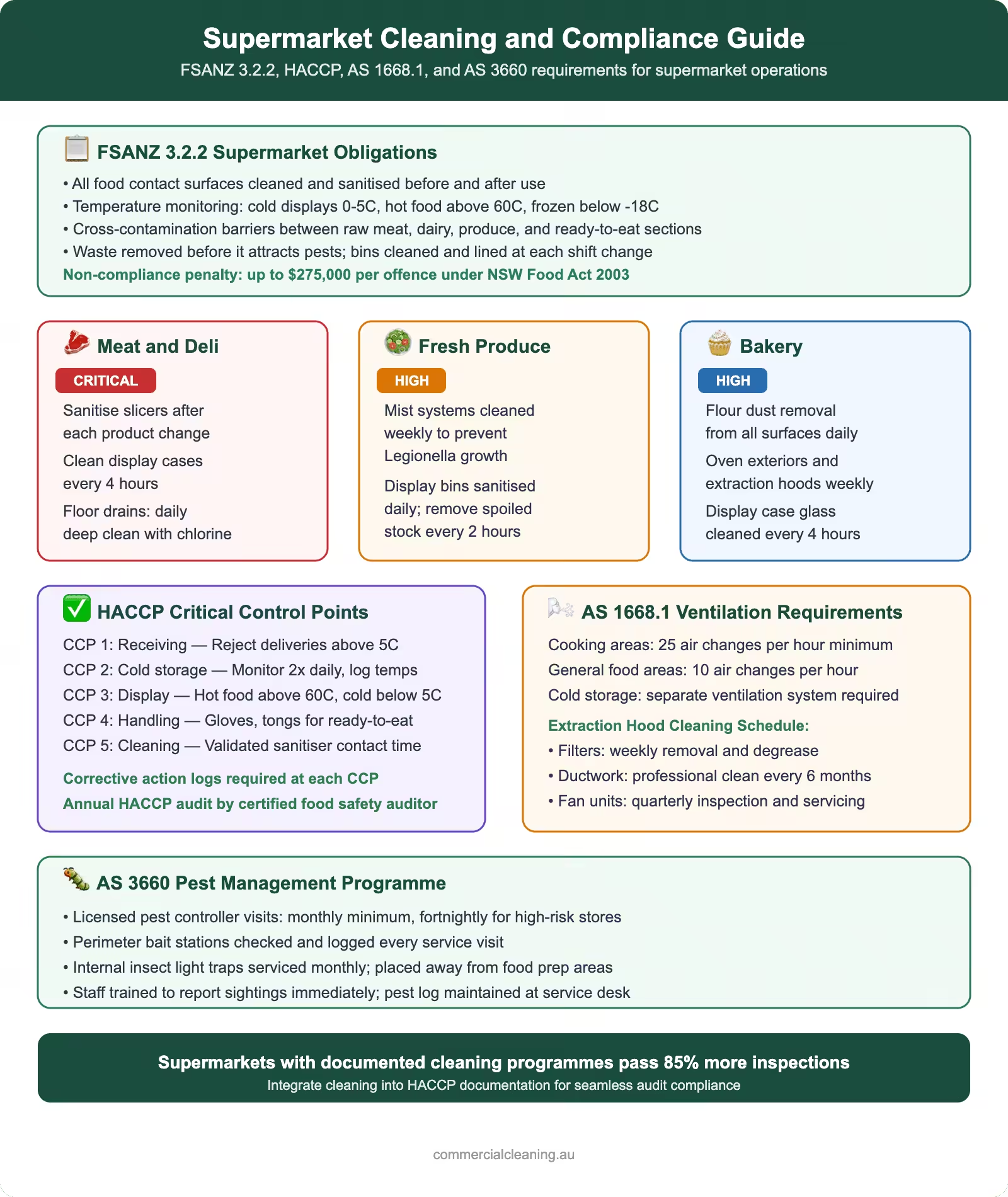
Supermarket cleaning and food safety compliance guide showing FSANZ requirements, HACCP critical control points, ventilation standards, and pest management
Supermarkets are not standard retail environments from a cleaning perspective. They combine food storage, food preparation, food display, and high-volume public foot traffic in a single premises—each zone carrying its own regulatory requirements.
Fresh produce sections require temperature-controlled display cases that accumulate condensation and organic debris. Deli and bakery areas operate as miniature commercial kitchens with slicers, ovens, and hot holding equipment that generate grease and food residue. Refrigerated aisles need floor cleaning protocols that prevent slip hazards from condensation without introducing chemical contamination risks near open food displays.
We clean supermarket food service areas across Parramatta, Liverpool, and western Sydney where the combination of high foot traffic and continuous food handling creates cleaning demands that standard retail cleaning contracts simply cannot address.
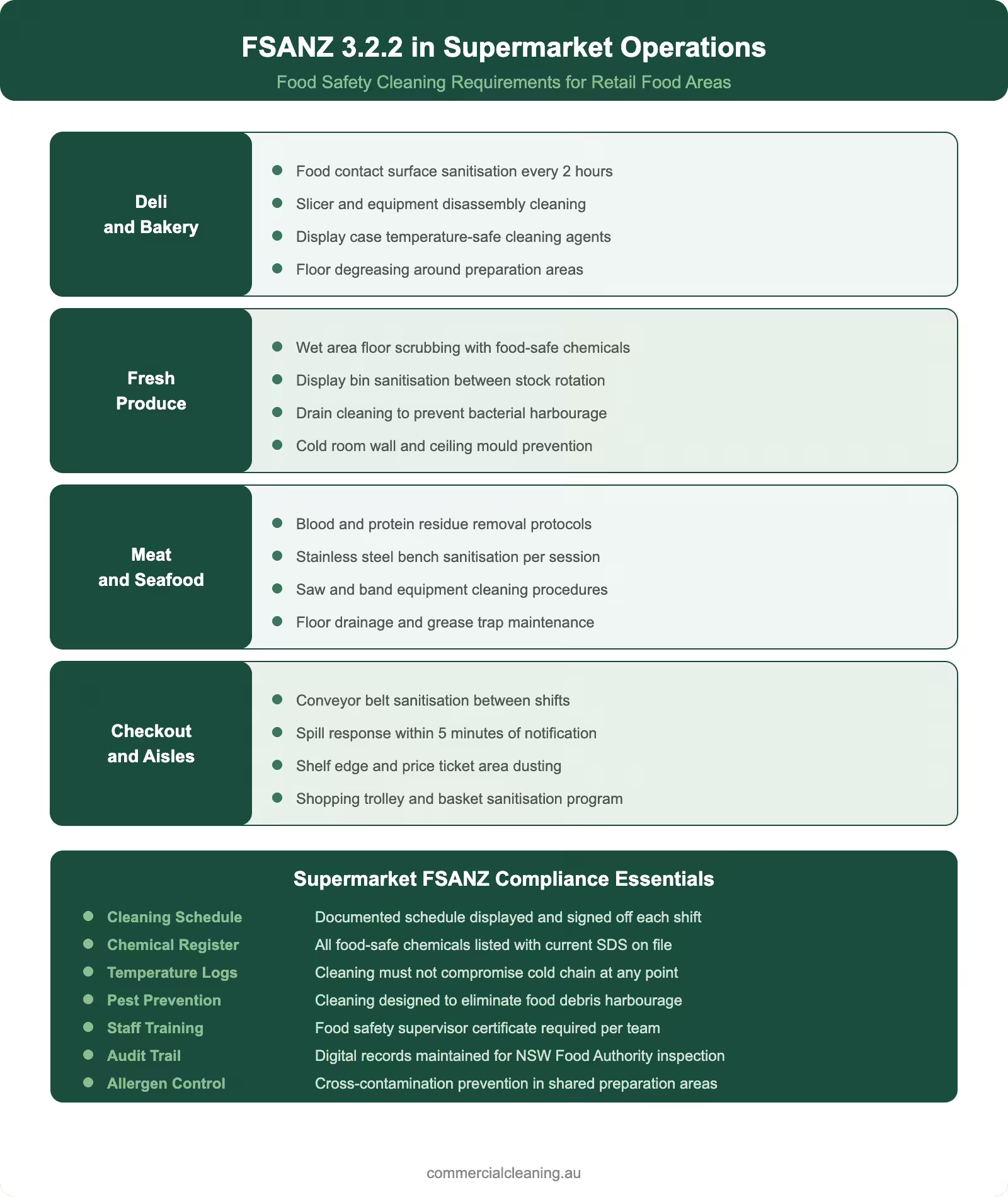
FSANZ 3.2.2 supermarket operations infographic showing cleaning requirements for deli bakery produce meat and checkout zones with compliance essentials
FSANZ 3.2.2 Requirements in Supermarket Operations
FSANZ Standard 3.2.2 applies to every supermarket that handles, displays, or sells unpackaged food. The requirements extend well beyond the deli counter.
Clause 24 requires all food contact surfaces, fittings, and equipment to be maintained in a condition that permits effective cleaning and prevents contamination. In a supermarket context, that includes deli slicers, bakery display cases, self-serve salad bar equipment, hot food bain-maries, and fresh produce shelving—every surface where unpackaged food contacts the fixture.
Clause 6 mandates ventilation systems that control odours, fumes, smoke, and moisture in food preparation areas. Supermarket hot food counters and bakery sections generate significant heat and steam that must be extracted effectively. We have tested extraction systems above supermarket deli stations in Eastwood and Chatswood operating at barely 40 percent of rated capacity because the filters had never been professionally cleaned.
Clause 25 requires immediate correction of any equipment deficiency affecting food safety. A malfunctioning coolroom, a broken display case seal, or an extraction system operating below rated capacity all trigger this clause and must be addressed without delay.
Commercial Kitchen Cleaning Zone Guide
Zone
Clean Frequency
Method
Compliance
Penalty Risk
Cooking Line
After each service
Degrease + sanitise
Food Standards 3.2.2
Up to $275,000
Cold Storage
Weekly deep clean
Strip, clean, temp log
Food Standards 3.2.2
Closure risk
Exhaust Hood & Filters
Monthly
Chemical soak + pressure
AS 1851 (fire safety)
Insurance void
Dining Floor
After each service
Sweep, mop, spot treat
WHS Reg 2017
Slip injury claim
Grease Trap
Quarterly pump-out
Licensed contractor
EPA Protection Act
Up to $1M fine
NSW Food Authority Compliance for Supermarkets
Commercial Kitchen Cleaning Zone Guide requires specific protocols that we tailor to each facility based on its layout, traffic, and compliance requirements. The NSW Food Authority conducts unannounced inspections of supermarket food service areas under the Food Act 2003. Officers assess deli counters, bakery sections, hot food displays, fresh produce areas, and all associated preparation and storage facilities.
NSW Food Authority Compliance for Supermarkets includes specific protocols that we tailor to each facility based on its layout, traffic, and compliance requirements. Inspectors specifically examine food contact surface cleanliness on slicers, scales, and display equipment. They check coolroom and display case temperatures against mandated thresholds. Floor surfaces in food preparation areas are assessed for pooled water, grease trails, and residue buildup. Pest control documentation must be current and available. Staff hygiene facilities—handwash stations with soap, warm water, and paper towels—must be functional and showing evidence of regular use.
We provide timestamped cleaning certificates after every supermarket service visit that include photographs, surface swab results, and equipment condition notes. These records satisfy Food Authority inspectors without store management maintaining separate compliance paperwork.
Enforcement actions for supermarket violations range from improvement notices to penalty infringement notices at $880 per offence, and in serious cases, prohibition orders requiring immediate closure of affected food service areas.
HACCP Systems in Supermarket Food Service
HACCP systems in supermarkets must cover every stage of food handling—from receiving deliveries at the loading dock through storage, preparation, display, and sale to the customer.
Receiving and storage: Contaminated shelving in coolrooms and dry stores introduces bacteria to incoming stock before any preparation begins. We clean coolroom shelving, walls, and evaporator coils monthly to prevent biofilm colonisation that compromises stored product safety.
Preparation surfaces: Cross-contamination between raw proteins and ready-to-eat items is the highest-risk HACCP failure point in supermarket delis. Our two-stage cleaning protocol—alkaline clean followed by food-safe quaternary ammonium sanitiser—reduces surface microbial counts below 100 RLU on ATP bioluminescence testing.
Display equipment: Hot holding bain-maries, refrigerated display cases, and self-serve stations must maintain temperature compliance while remaining free from food residue that supports bacterial growth.
Our cleaning schedules integrate with each supermarket’s HACCP plan so that cleaning frequencies, chemical concentrations, and verification testing align with documented critical control points.
AS 1668.1 Ventilation in Supermarket Food Areas
AS 1668.1 applies to supermarket food preparation areas that generate cooking fumes, steam, or heat—deli kitchens, bakery ovens, rotisserie stations, and hot food counters all fall under its requirements.
Extraction systems must maintain rated airflow capacity, and filters must be cleaned frequently enough to prevent grease accumulation from restricting that airflow. Supermarket operators often overlook this requirement because the extraction systems above deli counters are smaller and less visible than full commercial kitchen canopies—but the regulatory obligation is identical.
We have measured extraction systems above supermarket rotisserie stations in Bankstown and Penrith running at 30 to 35 percent of rated capacity because filters had not been professionally cleaned since installation. Restoring those systems to full capacity reduced ambient kitchen temperatures, eliminated grease dripping onto food display areas, and cut extraction fan energy consumption by approximately 18 percent.
AS 3660 Pest Management in Supermarket Environments
AS 3660 pest management requirements are especially critical in supermarkets where high foot traffic, continuous food handling, and multiple entry points create elevated pest pressure compared to standalone restaurants.
Supermarkets attract pests through loading dock areas where deliveries create temporary openings, fresh produce sections where organic waste accumulates, deli and bakery areas where grease and food residue collect in equipment gaps, and storage areas where cardboard packaging provides harbourage material.
We conduct post-clean waste audits in every supermarket food service area we maintain. Food scraps under deli counters, grease residue behind rotisserie equipment, and crumbs trapped in display case tracks all attract cockroaches and rodents. Systematic removal of these attractants is more effective than reactive pesticide treatment.
Professional cleaning of extraction system interiors is particularly important in supermarkets—grease accumulation inside canopies above deli kitchens provides concentrated food sources that draw pests into ceiling spaces where they are invisible to store staff but actively contaminating the environment above open food displays.
Specialised Cleaning Zones in Supermarkets
Specialised Cleaning Zones in Supermarkets covers specific protocols that we tailor to each facility based on its layout, traffic, and compliance requirements. Each supermarket food zone presents distinct cleaning requirements that standard retail cleaning cannot address.
Deli Counters and Slicers: Commercial meat slicers accumulate protein residue in blade guards, carriage tracks, and thickness adjustment mechanisms. We disassemble slicers for cleaning—wiping the exterior is cosmetic, not compliant. FSANZ 3.2.2 requires surfaces to be cleaned to a standard that prevents contamination, which means full disassembly on a documented schedule.
Bakery Sections: Flour dust combines with moisture and heat to create stubborn residue on equipment, walls, and extraction systems. Bakery extraction filters clog with a mixture of flour particulate and cooking fat that requires specialised degreasing at controlled temperatures to remove without damaging filter media.
Coolrooms and Freezers: Temperature cycling during door openings creates condensation that mixes with food residues on shelving, walls, and floor surfaces. Evaporator coils accumulate organic matter that reduces cooling efficiency and creates microbial reservoirs. Monthly deep cleaning prevents the biofilm colonisation that compromises stored food safety.
Fresh Produce Areas: Display case drainage systems collect organic debris that decomposes and generates odours if not cleared regularly. Floor surfaces around produce displays accumulate moisture from misting systems and produce runoff, creating slip hazards and bacterial growth conditions.
Hot Food Displays: Bain-maries and heated cabinets generate splatter residue on surrounding surfaces. Drip trays and water baths require daily draining and sanitising to prevent bacterial multiplication in warm, moist conditions.
Building a Supermarket Cleaning Programme
Effective supermarket cleaning operates on layered frequencies matched to each zone’s contamination rate.
Daily: Sanitise all food contact surfaces between service periods. Clean and sanitise deli slicers at end of service. Drain and sanitise hot food display equipment. Sweep and mop food preparation floors. Empty waste bins in all food areas. Clean handwash stations and restock supplies.
Weekly: Degrease extraction filters above deli and bakery areas. Deep-clean display case interiors and shelving. Steam-clean floor grout in food preparation zones. Clean coolroom door seals and check temperatures.
Monthly: Professional extraction system degreasing including canopy interiors and accessible ductwork. Full coolroom deep clean including evaporator coils and drainage. Equipment pull-out cleaning behind and beneath all fixed units. Floor stripping and resealing in high-traffic food areas.
We tailor these frequencies based on each supermarket’s trading hours, foot traffic volume, and food service intensity. A supermarket in Haymarket with a high-volume hot food counter needs more aggressive deli extraction cleaning than a quieter suburban store in Penrith with a standard cold deli only.
Frequently Asked Questions About Supermarket Cleaning
About Clean Group
Clean Group is a Sydney-based commercial cleaning company with over 25 years of industry experience. Founded by Suji Siv, our team of 50+ trained professionals services offices, warehouses, medical centres, schools, childcare facilities, retail stores, gyms, and strata properties across Sydney, Melbourne, and Brisbane.
We are active members of ISSA and the Building Service Contractors Association of Australia (BSCAA). Our operations align with ISO 9001 (Quality Management), ISO 14001 (Environmental Management), and ISO 45001 (Workplace Health and Safety) standards. We hold membership with the Green Building Council of Australia and use eco-friendly, TGA-registered cleaning products wherever possible.
Every Clean Group cleaner is police-checked, fully insured, and trained in safe work procedures under SafeWork NSW guidelines. We operate 7 days a week, including after-hours and weekend services, to minimise disruption to your business.
Conclusion
Supermarket cleaning is a specialised discipline requiring expertise in multi-area food service operations, retail contamination prevention, and regulatory compliance. Professional supermarket cleaning ensures compliance with FSANZ 3.2.2, NSW Food Authority standards, HACCP prerequisites, AS 1668.1 ventilation requirements, and AS 3660 pest management standards.
The investment in professional supermarket cleaning protects customers, maintains regulatory compliance, extends equipment life, and supports sustainable supermarket operations. Every supermarket should prioritise professional cleaning as a core operational function necessary to safe, compliant, and customer-trusted food service operations.
Conclusion
Conclusion addresses specific protocols that we tailor to each facility based on its layout, traffic, and compliance requirements. Supermarket food safety compliance demands cleaning standards that address multiple regulatory frameworks simultaneously—FSANZ 3.2.2, NSW Food Authority enforcement, HACCP prerequisites, AS 1668.1 ventilation maintenance, and AS 3660 pest management all apply to supermarket food service areas.
We have built cleaning programmes for supermarket food service operations across Sydney—from high-volume Asian supermarkets in Eastwood and Cabramatta with extensive hot food counters, to chain supermarkets in the CBD with deli, bakery, and fresh produce sections operating 14 hours daily. The stores that maintain structured professional cleaning programmes pass Food Authority inspections consistently, keep pest issues under control, and protect their customers from contamination risks that reactive cleaning simply cannot address.
Hi, I'm Suji Siv, the founder, CEO, and Managing Director of Clean Group, bringing over 25 years of leadership and management experience to the company. As the driving force behind Clean Group’s growth, I oversee strategic planning, resource allocation, and operational excellence across all departments. I am deeply involved in team development and performance optimization through regular reviews and hands-on leadership.