Real-world cleaning challenges are often more complex than generic checklists suggest. We recently completed a thorough cleaning and sanitisation project for a mid-size financial services office in Sydney’s CBD, and the experience illustrates how a professional Sydney commercial cleaners services team diagnoses problems, develops solutions, and delivers measurable improvements. This case study reveals the practical realities of commercial cleaning in modern workplaces.
The Client and Initial Challenge
The Client and Initial Challenge covers specific protocols that we tailor to each facility based on its layout, traffic, and compliance requirements. The client operated a 1,200 square-metre office across two floors in a premium CBD building. The organisation employed 45 staff and had been using the same day-time cleaning contractor for five years. While the cleaning looked visually acceptable, several factors prompted a review:
Increasing staff complaints about air quality and dust sensitivity
High sick leave rates, particularly respiratory illness during winter
Concerns from management about cleanliness standards not matching the professional image they wanted to project
Questions about whether cleaning frequency matched WHS Act 2011 obligations
The previous contractor was performing basic daily cleaning but no deep cleaning, high-touch surface sanitisation was inconsistent, and there was no documented process for quality verification. The organisation wasn’t sure whether they were getting value for money or meeting their workplace safety obligations.
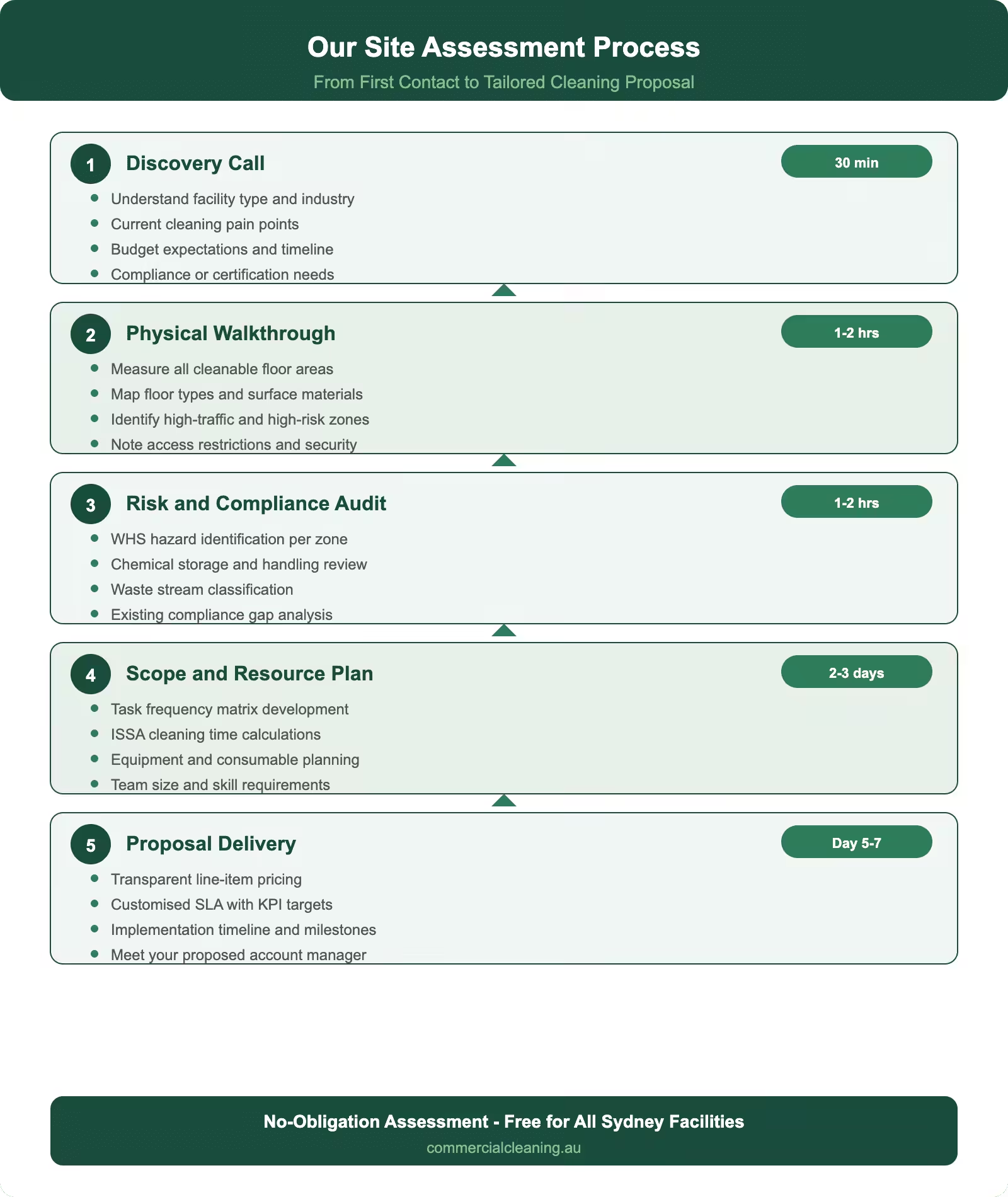
Site assessment process infographic showing five phases from discovery call to proposal delivery with timelines
Our Assessment Process
Our Assessment Process involves specific protocols that we tailor to each facility based on its layout, traffic, and compliance requirements. We conducted a complete facility audit, which is the critical first step for any new commercial cleaning engagement. This involved:
Physical Inspection and Environmental Assessment
We walked every area of the office and identified several problems the previous contractor had missed or overlooked. Carpet in both office zones showed significant dust accumulation in pile bases, particularly around high-traffic areas near lifts and doorways. We found food residue and grease buildup inside the microwave and on kitchen appliances that hadn’t been properly cleaned in months. Air vents and HVAC intake grilles were clogged with dust, which directly contributed to poor indoor air quality.
Light fittings contained dead insects and dust accumulation. Carpet stains from what appeared to be old beverage spills were visible in meeting rooms. The office plants were covered in dust and looked neglected. Lift buttons and high-touch surfaces showed visible grime when tested with standard cleaning cloths.
ATP Testing and Microbial Assessment
We used ATP (adenosine triphosphate) testing to objectively measure surface cleanliness on high-touch areas: lift buttons, door handles, light switches, and kitchen equipment. Results indicated significantly elevated contamination levels compared to benchmark standards for commercial offices. Kitchen surfaces in particular showed ATP readings suggesting inadequate sanitation protocols.
The combination of visual findings and ATP data made clear why staff were experiencing health issues. Poor indoor air quality (caused by dust-clogged vents), inconsistent high-touch surface sanitisation, and neglected kitchen hygiene created an unhealthy environment.
WHS Compliance Audit
We reviewed the existing cleaning protocols against WHS Act 2011 requirements. The previous contractor had no documented cleaning procedures, no chemical safety data sheets accessible on-site, no staff training records, and no quality verification system. From a compliance perspective, the organisation was exposed: if an incident occurred (chemical exposure, slip/fall injury, illness outbreak), they couldn’t demonstrate that reasonable precautions had been taken.
Assessment Area
Finding
Risk Level
Solution Implemented
Indoor Air Quality
HVAC vents clogged with dust
High
Vent cleaning, improved air circulation, dust filtration monitoring
High-Touch Surfaces
ATP readings 3x benchmark levels
High
Daily sanitisation with hospital-grade disinfectant, documented logs
Deep clean of all equipment, twice-daily sanitisation, staff education
Carpet Condition
Dust accumulation, visible stains, odours
Medium
Professional hot-water extraction cleaning, weekly vacuuming protocol
WHS Documentation
No procedures, training, or chemical records
High
Full procedures manual, staff training, daily checklists, incident log
Light Fittings
Dead insects, dust accumulation
Low-Medium
Professional light cleaning, quarterly maintenance schedule
Solutions Implemented
Initial Deep Clean Phase (Week 1)
Solutions Implemented requires specific protocols that we tailor to each facility based on its layout, traffic, and compliance requirements. We conducted an extensive deep clean targeting all identified problem areas. This included professional carpet extraction cleaning in both office zones, complete kitchen equipment sanitisation (inside microwave, oven, refrigerator, dishwasher), HVAC vent and grille cleaning, light fitting cleaning and dead insect removal, plant care and dusting, and treatment of carpet stains with specialist spot-cleaning solutions.
This phase took one evening plus an early morning follow-up and cost approximately $2,400. The client approved the spend because the assessment had clearly quantified the problems.
Operational Cleaning Protocol (Ongoing)
We transitioned the client to an after-hours cleaning model (5:30-7:00 pm daily) with the following protocols:
High-touch surface sanitisation daily using hospital-grade quaternary ammonium disinfectant, with 30-second dwell time (documented time-stamped logs)
Kitchen equipment sanitisation twice daily (morning briefing and evening cleaning)
Vacuuming of all carpet areas daily using HEPA-filter equipment
Dusting of all surfaces, light fittings, and air vents weekly
Spot cleaning of new stains within 24 hours of reporting
Weekly floor care (burnishing or appropriate maintenance based on floor type)
Monthly deep-clean rotating focus areas (one section per week)
WHS Compliance Framework
We provided the client with a detailed cleaning procedures manual aligned to WHS Act 2011 requirements, including:
Chemical safety data sheets (SDS) for all cleaning products, stored in an accessible on-site folder
Staff training records for all cleaners (CPR, First Aid, chemical safety)
Daily cleaning checklists signed off by the supervisor after each session
Incident log and contact procedures for emergencies
Quarterly ATP testing to verify that cleaning protocols are maintaining safe microbial levels
Monthly quality reports provided to management with photographic documentation
This documentation framework means the client can now demonstrate due diligence to regulators and insurers, and has clear evidence of cleaning standards should any workplace health or safety incidents arise.
Results and Outcomes
Results and Outcomes includes specific protocols that we tailor to each facility based on its layout, traffic, and compliance requirements. Six weeks after implementation of the new cleaning programme, measurable improvements were evident:
ATP testing showed contamination levels had dropped to benchmark standards on all high-touch surfaces (lift buttons, door handles, light switches)
Staff feedback was overwhelmingly positive. Complaints about air quality and dust sensitivity virtually disappeared within three weeks
Kitchen area appearance and hygiene standards improved dramatically—staff morale noticeably improved, as the kitchen now felt clean and well-maintained
Winter sick leave rates (typically the highest time of year for this client) dropped by 23% compared to the previous year
The professional appearance of the office was noticeably upgraded, which matters for client meetings and staff recruitment
The cost of the enhanced after-hours cleaning programme was approximately 35% higher than the previous daytime cleaning contract, but the client saw clear ROI from reduced sick leave alone. Beyond that, the peace of mind from WHS compliance, improved staff morale, and professional appearance justified the investment.
Key Lessons from This Project
Key Lessons from This Project addresses specific protocols that we tailor to each facility based on its layout, traffic, and compliance requirements. This engagement reinforced several critical insights about commercial office cleaning in Australia:
First, visual cleanliness and actual cleanliness are different things. An office may look clean but harbour significant contamination risks. ATP testing, HVAC inspection, and professional assessment are necessary for understanding true standards.
Second, after-hours cleaning consistently outperforms daytime cleaning. Staff appreciate working in a clean environment without disruption, and our team can work methodically rather than rushing between occupied zones.
Third, WHS compliance is not optional. Documentation, procedures, and training protect both the organisation and the cleaning provider. Gaps in these areas create liability exposure.
Fourth, kitchen and break room hygiene is critical. These areas are contamination hotspots that significantly impact staff health and morale. Investing in proper protocols here yields measurable returns.
Finally, communication and measurement matter. Monthly quality reports, ATP testing, and open channels for staff feedback confirm that both the client and the cleaning provider understand standards and can continuously improve. Read the Penrith cleaning case study for another example of how we deliver measurable results for Sydney workplaces.
Frequently Asked Questions
How much did the deep clean cost?
The initial deep clean phase cost approximately $2,400 for a 1,200 square-metre office across two floors. This included professional carpet extraction, kitchen equipment sanitisation, HVAC vent cleaning, and targeted spot cleaning. Costs vary based on facility size, condition, and specific issues identified during the assessment.
How much did the ongoing cleaning programme increase the budget?
The enhanced after-hours cleaning programme was approximately 35% more expensive than the previous daytime contract. However, the client recouped this cost through reduced sick leave (23% decrease) within the first year, plus additional benefits in staff morale and professional appearance.
How often should ATP testing be conducted?
For ongoing monitoring of cleaning effectiveness, we recommend quarterly ATP testing (every three months) for most commercial offices. This frequency is sufficient to verify that protocols are working and identify any drift from standards before it becomes a problem.
Can you address compliance issues in an existing office?
Yes. Our assessment process identifies gaps in procedures, training, and documentation. We provide a compliance framework including procedures manuals, staff training, and ongoing quality monitoring. Most organisations can transition to full compliance within 2-4 weeks of engagement.
What’s the best scheduling model: daytime, early morning, or evening cleaning?
Our experience shows after-hours cleaning (either early morning or evening) consistently outperforms daytime cleaning. Staff appreciate uninterrupted work environments, cleaning teams work more thoroughly, and operational disruption is eliminated. Most Sydney offices benefit from switching to after-hours models if budget allows.
About Clean Group
Clean Group is a leading commercial cleaning company in Sydney, serving offices, strata properties, medical centres, schools, and industrial facilities across the greater Sydney region. With over 25 years of experience and a team of fully trained, insured cleaners, we deliver consistent results backed by a 100% satisfaction guarantee. Our services are tailored to your schedule, your budget, and your industry’s compliance requirements.
Hi, I'm Suji Siv, the founder, CEO, and Managing Director of Clean Group, bringing over 25 years of leadership and management experience to the company. As the driving force behind Clean Group’s growth, I oversee strategic planning, resource allocation, and operational excellence across all departments. I am deeply involved in team development and performance optimization through regular reviews and hands-on leadership.