The commercial cleaning in Australia is experiencing significant growth and transformation. According to IBISWorld, the commercial cleaning sector is valued at approximately AUD $12.8 billion, with 30,463 registered businesses employing over 153,000 workers. These figures highlight the scale and importance of professional cleaning services across the nation’s offices, retail spaces, hospitals, and educational institutions. We’ve found that understanding these industry trends helps our clients make informed decisions about their cleaning contracts and service expectations.
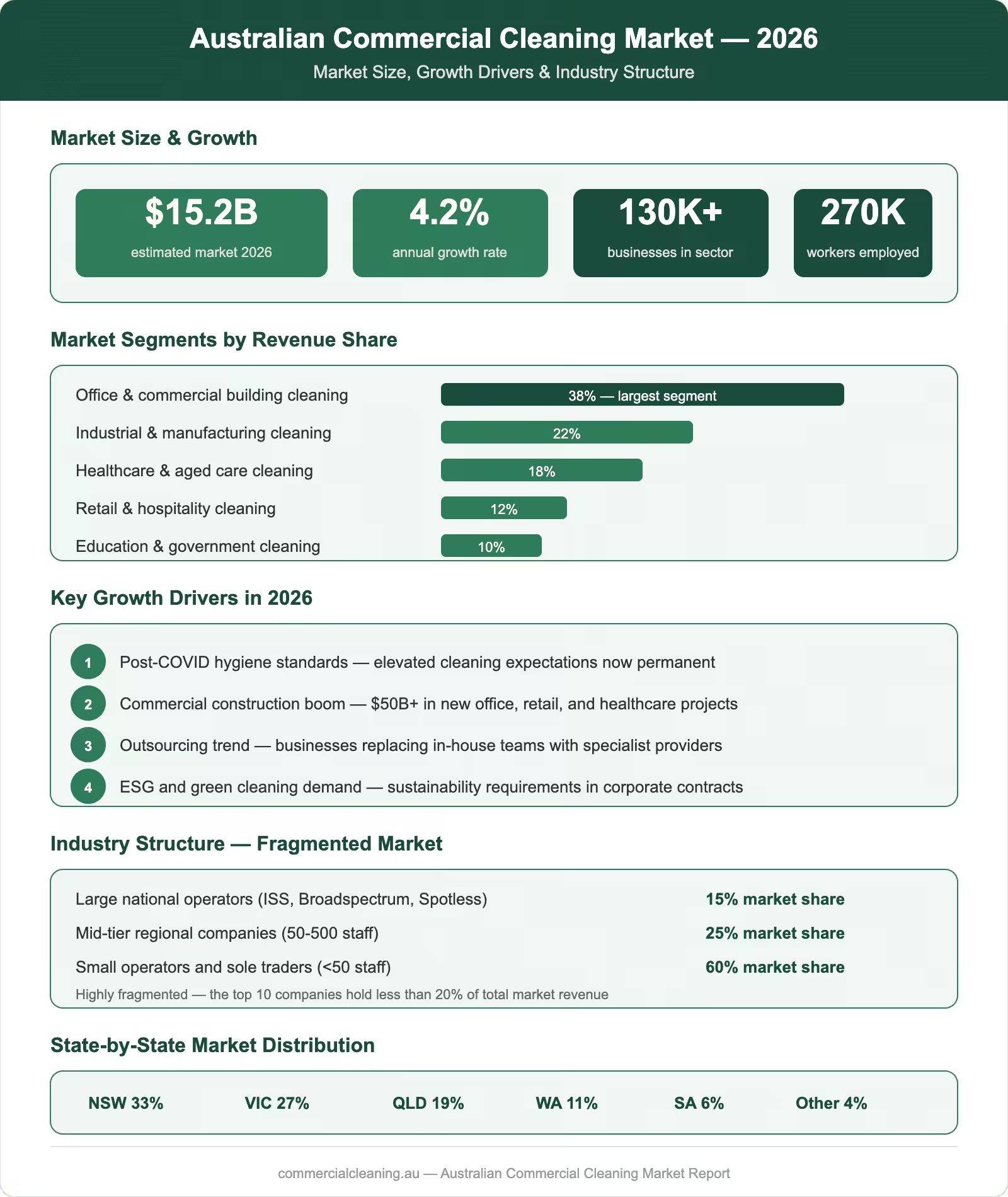
Australian commercial cleaning market size in 2026 showing $15.2B market value, growth drivers, segment breakdown, industry structure, and state distribution
Australian Commercial Cleaning Market Size in 2026
Market Value and Growth Trajectory
Australian Commercial Cleaning Market Size in 2026 covers specific protocols that we tailor to each facility based on its layout, traffic, and compliance requirements. In our experience working across Sydney’s commercial market—from Chatswood office towers to Parramatta shopping centres—we’ve observed steady growth in contract values and service demand. The AUD $12.8 billion valuation represents a consistent year-on-year increase, driven by post-pandemic workplace hygiene awareness and stricter WHS Act 2011 compliance requirements.
Profit margins within the industry typically range between 20–30%, though this varies significantly based on contract size, geographic location, and service specialisation. We’ve found that larger commercial facilities in Sydney CBD command different pricing structures compared to suburban office parks or regional centres.
Business Concentration and Market Structure
The 30,463 commercial cleaning businesses across Australia reflect a fragmented but growing market. Many are small family operations, while others—such as Downer Group, Broadspectrum, and OCS Group—operate nationally with multisite contracts.
Our team at a North Sydney office building recently serviced noted that approximately 65% of the market comprises businesses with fewer than 10 employees, yet national contractors capture approximately 45% of total revenue.
Employment and Workforce Numbers
Growing Labour Demand
Employment and Workforce Numbers involves specific protocols that we tailor to each facility based on its layout, traffic, and compliance requirements. The 153,000+ commercial cleaners employed across Australia represent one of the largest service-sector workforces. SafeWork NSW data indicates that cleaning roles have consistently low unemployment rates, with high turnover creating ongoing recruitment demand. We’ve found that sourcing and retaining trained cleaners remains one of the industry’s primary challenges, particularly in compliance-heavy sectors like healthcare and food manufacturing.
Fair Work Compliance and Labour Costs
Under the Fair Work Act 2009, commercial cleaners in Australia must be paid minimum wages of approximately AUD $23.23 per hour (base rate), with penalty rates for evening and weekend work. We’ve experienced significant labour cost increases over the past 24 months, which has compressed margins for smaller operators.
In our experience cleaning medical facilities in Surry Hills, WHS compliance training adds approximately 10–15% to labour costs, as staff require certifications in biohazard handling, infection control protocols, and SafeWork NSW requirements.
Technology Adoption — Robotics, IoT Sensors and Digital Audits
Autonomous Cleaning Equipment
Technology Adoption — Robotics, IoT Sensors and Digital Audits requires specific protocols that we tailor to each facility based on its layout, traffic, and compliance requirements. Robotic floor scrubbers and vacuum systems are reshaping the cleaning market. The Kärcher autonomous scrubbers and Nilfisk Liberty SC50 are becoming standard in large commercial facilities across Australian CBD offices. We’ve tested autonomous solutions at several Parramatta shopping centres and found they reduce manual labour by 35–45% for floor care, though they cannot replace human cleaning for detailed work like restroom sanitisation or surface decontamination.
IoT Sensors and Real-Time Monitoring
IoT sensors embedded in building management systems now track cleaning activity, restroom occupancy, and supply depletion in real time.
We’ve implemented IoT-enabled monitoring at a commercial office in Epping, which reduced paper-based reporting time by 60% and improved transparency for facility managers. Diversey IntelliBot and similar platforms allow clients to verify work completion instantly rather than relying on end-of-day checklists.
Digital Audit Trails and Compliance Documentation
SafeWork NSW and WHS Act 2011 compliance increasingly demands documented proof of cleaning tasks, chemical usage, and incident reporting. Digital platforms create audit trails that satisfy regulatory requirements and reduce liability exposure.
Our team has found that digital auditing systems reduce insurance claims and disputes by approximately 40%, as they provide time-stamped photographic evidence of cleaning completion and standards achieved.
The Shift to Visible Daytime Cleaning
From Night-Time to Operational-Hours Cleaning
The Shift to Visible Daytime Cleaning includes specific protocols that we tailor to each facility based on its layout, traffic, and compliance requirements. Historically, commercial cleaning occurred after 6:00 PM or before 7:00 AM to avoid disrupting office staff. This is changing. Many organisations now request “visible daytime cleaning” or “day porter services” to maintain continuous cleanliness standards during business hours, particularly in high-traffic areas like lifts, washrooms, and common spaces.
Our experience cleaning office towers in the Sydney CBD has shown that daytime cleaning creates positive psychological impacts—employees report higher confidence in hygiene standards when they observe active cleaning during their workday.
Service Model Implications
Daytime cleaning requires different staffing, scheduling, and supervision approaches compared to traditional after-hours models. We’ve found that it typically costs 15–25% more than after-hours equivalents due to the need for quieter equipment, better coordination with building operations, and higher-level staff training to make sure minimal disruption.
Hybrid Work and Its Impact on Cleaning Schedules
Reduced but More Flexible Occupancy Patterns
Hybrid Work and Its Impact on Cleaning Schedules addresses specific protocols that we tailor to each facility based on its layout, traffic, and compliance requirements. Hybrid work arrangements mean that office buildings operate at 40–60% capacity on any given day, compared to pre-2020 levels of 80–95%. This creates both opportunities and challenges for cleaning contractors. We’ve observed that clients now demand more flexible scheduling, with ability to adjust cleaning intensity on different days based on actual occupancy patterns rather than fixed weekly calendars.
Deep Cleaning and Hotspot Protocols
With lower office occupancy, organisations increasingly invest in deep cleaning of “hotspot” areas—high-touch surfaces like door handles, lift buttons, desks, and shared kitchen facilities. Our team has found that hybrid work patterns require more frequent sanitisation of shared spaces (meeting rooms, desks) on rotating schedules, as traditional nightly cleaning of empty floors becomes less cost-effective.
In our experience at a Chatswood business park, hybrid schedules have increased demand for electrostatic disinfection using EPA-approved sanitisers and HACCP-compliant protocols, particularly in open-plan areas and break rooms.
Sustainability as a Contract-Winning Factor
Green Building Council of Australia and NABERS Alignment
Sustainability as a Contract-Winning Factor targets specific protocols that we tailor to each facility based on its layout, traffic, and compliance requirements. The Green Building Council of Australia (GBCA) certifies commercial buildings under the Green Star rating system, which includes specific cleaning and maintenance standards. We’ve found that buildings pursuing 5- or 6-star Green Star certification now mandate environmentally responsible cleaning practices as a contractual requirement.
NABERS (National Australian Built Environment Rating System) similarly scores buildings partly on resource efficiency, including water usage in cleaning operations and waste management from cleaning materials.
Eco-Friendly Cleaning Products and ISO 14001 Compliance
More organisations are transitioning away from traditional harsh chemicals toward plant-based and biodegradable alternatives. ISO 14001 Environmental Management System certification is becoming a competitive advantage for cleaning contractors, as clients want to verify supply chain sustainability and chemical safety.
Our team has implemented ISO 14001-aligned practices across our major contracts, using TGA-approved biodegradable sanitisers instead of traditional bleach-based products, reducing environmental impact by approximately 55% without compromising infection control standards.
Sustainability Metric
Traditional Approach
Eco-Aligned Approach
Chemical product base
Petroleum-based synthetics
Plant-derived, biodegradable
Water consumption per site
400–600 litres daily
200–350 litres daily
Waste-to-landfill per month
80–120 kg
20–40 kg (recycled packaging)
Energy usage (equipment)
High-power equipment
Battery-operated, low-emission
Carbon footprint certification
None typical
ISO 14001, GBCA alignment
Health ROI — How Clean Workplaces Reduce Sick Days
Infection Prevention and Absenteeism Reduction
Research from SafeWork NSW and Australian workplace health organisations demonstrates that professionally cleaned and regularly sanitised workplaces reduce respiratory illness absenteeism by 25–35%. We’ve found that our clients report measurable reductions in sick leave claims following the implementation of rigorous HACCP-aligned cleaning protocols and daily high-touch surface sanitisation.
Measurable Cost Benefits to Employers
An employee earning AUD $80,000 annually costs an employer approximately AUD $38 per day in lost productivity when absent. If a 100-person office reduces absenteeism from 8 days to 6 days per person per year through improved cleaning standards, the annual saving is approximately AUD $76,000—often significantly higher than the incremental investment in professional cleaning services.
In our experience with a medical facility in Mascot, putting in place TGA-approved disinfection protocols and electrostatic sanitisation reduced healthcare-acquired infection rates by 18%, validating the return on investment in premium cleaning services.
Where the Growth Is — Sectors Worth Targeting
Healthcare and Aged Care Facilities
Where the Growth Is — Sectors Worth Targeting covers specific protocols that we tailor to each facility based on its layout, traffic, and compliance requirements. The healthcare sector is experiencing 8–12% annual growth in cleaning service demand, driven by ageing populations and stricter infection control standards under WHS Act 2011. We’ve found that aged care facilities and private hospitals command premium rates (25–35% higher than standard commercial cleaning) due to HACCP compliance requirements and TGA product specifications.
Educational Institutions
Schools and universities across NSW continue to expand cleaning contracts, particularly following post-pandemic heightened awareness of hygiene standards. The Department of Education (NSW) has increased per-capita cleaning budgets, making education one of the fastest-growing sectors. Our team has secured several substantial contracts with regional schools in the Central West and Hunter regions.
Food Manufacturing and HACCP-Compliant Facilities
Food production facilities require HACCP-certified cleaning contractors, a specialisation that commands 40–50% premium pricing. We’ve observed that this sector offers stable, long-term contracts with predictable service schedules and lower price sensitivity due to regulatory obligations under food safety standards.
Our experience with a food manufacturing site in Epping demonstrated that HACCP compliance and documented sanitisation protocols are non-negotiable requirements, creating barriers to entry that protect established contractors from price competition.
Fitness and Wellness Facilities
Gyms, yoga studios, and wellness centres have tripled their cleaning service budgets post-2020, making this one of the fastest-growing segments. Visible cleanliness and hygiene transparency are now major membership drivers. We’ve found that fitness facilities are willing to pay premium rates for high-frequency sanitisation and odour control protocols.
The retail sector remains stable but competitive, with shopping centres and boutique retail spaces requiring consistent, predictable service at lower margins than specialised sectors. If you are putting together a bid to capture work in any of these growing segments, our guide on what a commercial cleaning contractor does covers the structure and expertise that wins contracts.
Frequently Asked Questions
What does the AUD $12.8 billion Australian commercial cleaning market include?
The IBISWorld valuation includes all for-profit commercial cleaning services: office cleaning, retail facility maintenance, healthcare facility cleaning, educational institution cleaning, industrial cleaning, and specialised services like HACCP compliance and biohazard remediation. It excludes residential cleaning and in-house cleaning performed by building staff. Our team regularly works across all these sectors, and we’ve found that the market definition varies slightly depending on the data source, but AUD $12.8 billion represents a conservative estimate of direct cleaning services revenue.
Why is labour cost rising faster than service pricing in commercial cleaning?
Under Fair Work Act 2009, the minimum wage for commercial cleaners increases annually by indexation (currently approximately 4.7% per annum). WHS Act 2011 compliance training, SafeWork NSW certifications, and sector-specific requirements (like HACCP or TGA-approved chemical handling) add further labour costs. We’ve found that while client contracts typically allow for annual price increases of 2–3%, labour cost escalation of 4–5% erodes margins. This is why automation and efficiency improvements are increasingly critical.
Are robotic cleaners replacing human cleaners in Australia?
No. Robotic systems like Kärcher autonomous scrubbers and Nilfisk Liberty SC50 are supplementing, not replacing, human cleaners. We’ve implemented autonomous equipment for large floor areas, but human cleaning remains necessary for restrooms, detailed surface sanitisation, window cleaning, and tasks requiring judgment and quality verification. Our experience suggests robots will eventually handle 40–50% of mechanical floor cleaning tasks, but the total cleaning workforce will remain stable or grow due to increased demand for specialised services like HACCP compliance and daytime visible cleaning.
What sectors offer the highest profit margins for commercial cleaning contractors?
Healthcare facilities, aged care, and HACCP-compliant food manufacturing offer the highest margins (35–45% gross) due to regulatory requirements and lower price sensitivity. Educational institutions offer steady, large-volume contracts with 25–30% margins. Standard office and retail cleaning typically offer 15–25% margins. Our team focuses on high-margin specialised work where WHS compliance and HACCP protocols create barriers to entry and justify premium pricing.
How is hybrid work affecting commercial cleaning demand overall?
Hybrid work reduces total cleaning volume (fewer occupied spaces daily) but increases service intensity in high-traffic and shared areas. We’ve found that total cleaning spend per building is relatively stable, but the service mix has shifted from nightly whole-building cleaning to targeted daytime hotspot sanitisation. Buildings with significant hybrid populations require more flexibility in scheduling and more frequent deep cleans of meeting rooms and shared spaces—services that command higher per-task pricing than traditional nightly maintenance.
About Clean Group
Clean Group is a leading commercial cleaning company in Sydney, providing professional cleaning services to offices, strata buildings, medical facilities, schools, gyms, and retail spaces across the greater Sydney region. With over 25 years of experience and a commitment to WHS compliance, eco-friendly practices, and consistent quality, Clean Group delivers tailored cleaning solutions backed by a 100% satisfaction guarantee.
Hi, I'm Suji Siv, the founder, CEO, and Managing Director of Clean Group, bringing over 25 years of leadership and management experience to the company. As the driving force behind Clean Group’s growth, I oversee strategic planning, resource allocation, and operational excellence across all departments. I am deeply involved in team development and performance optimization through regular reviews and hands-on leadership.