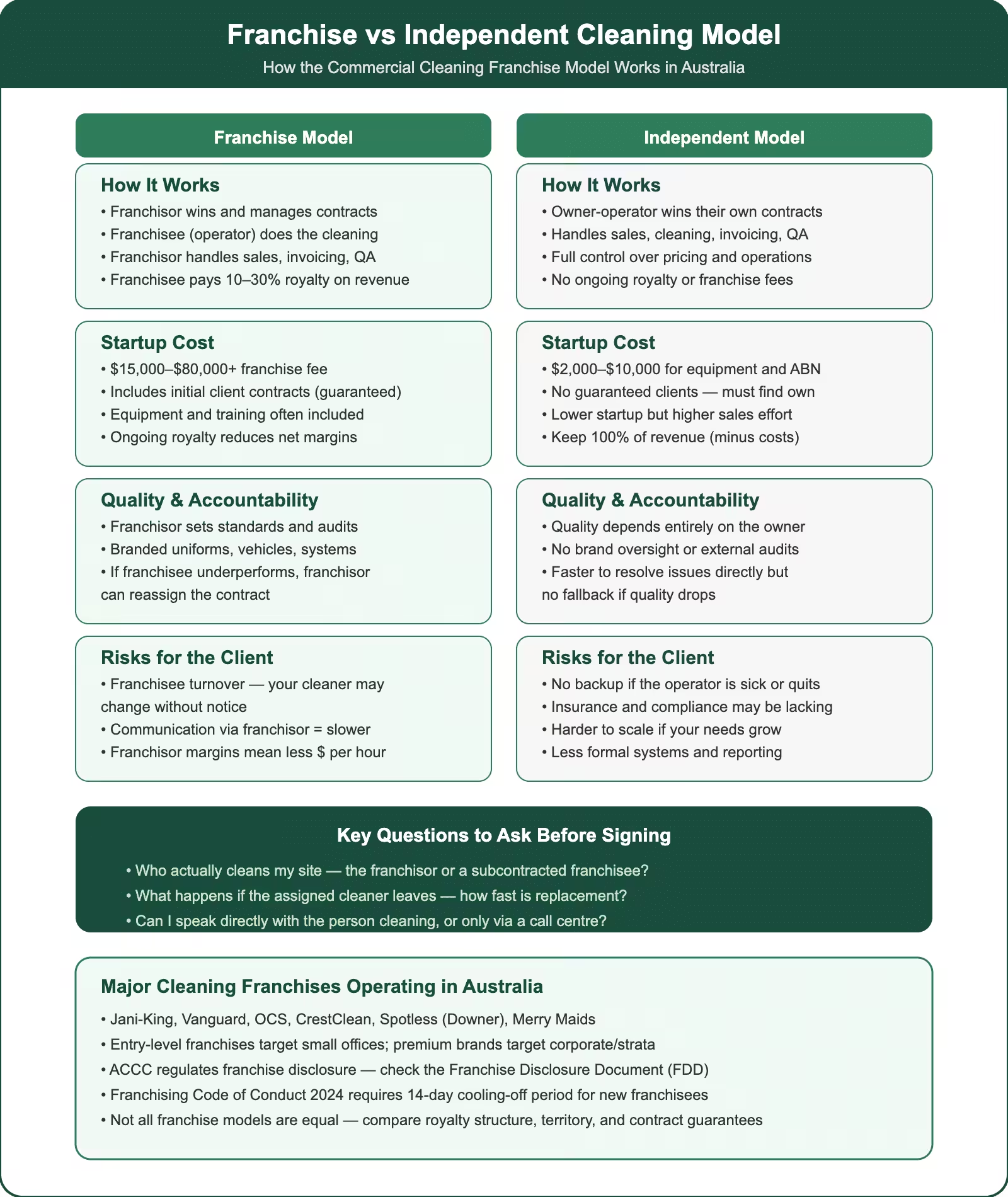
Franchise versus independent commercial cleaning model comparison covering how each works, startup costs, quality control, and client risks
How the Franchise Model Works in Commercial Cleaning
A franchise is essentially a licence to operate a commercial cleaning services business using someone else’s brand, systems, and support infrastructure.
We’ve found that You pay an initial franchise fee (typically $10,000–$300,000), agree to ongoing royalties (usually 4–12% of revenue), and commit to following the franchisor’s protocols for cleaning, client management, and staffing. In return, you get training, operational manuals, marketing support, and access to their established client network.
Our team has worked alongside franchisees and owner-operators, and the main trade-off is clear: franchises reduce startup risk and accelerate client acquisition, but you surrender autonomy and keep less profit margin.
Top Cleaning Franchises in Australia — What They Cost
Several major franchises dominate Australia’s commercial cleaning sector.
Jim’s Cleaning Group is Australia’s largest domestic and commercial cleaning franchise, with over 1,700 franchises nationwide. Initial investment starts around $30,000, with ongoing fees varying by territory and contract volume.
Jani-King, a US-based global franchise, operates across Australia with initial investments ranging $17,990 (minimal start) to $306,420 (full turnkey). They charge 4% admin fees plus 10% royalty on gross profit, making it one of the more transparent models.
Urban Clean is an Australian franchise offering flexible entry between $18,750 and $120,000+. They focus on building long-term client relationships rather than rapid growth.
JAN-PRO markets entry costs around $12,750 for Australian franchisees, though ongoing fees vary significantly by state and market conditions.
V.I.P. Home Services and AMC Commercial Cleaning offer smaller-scale franchise models suited to regional operators outside major cities like Sydney and Melbourne.
Franchise
Initial Investment
Ongoing Royalty
Support Level
Territory Protection
Jim’s Cleaning Group
$30,000+
Varies
High
Moderate
Jani-King
$17,990–$306,420
4% admin + 10% royalty
Very High
Strong
Urban Clean
$18,750–$120,000+
Varies
High
Moderate
JAN-PRO
~$12,750
Varies
Moderate
Varies
V.I.P. Home Services
$15,000–$50,000
Varies
Moderate
Weak
Franchise vs Starting Your Own Cleaning Business
Franchise vs Starting Your Own Cleaning Business requires specific protocols that we tailor to each facility based on its layout, traffic, and compliance requirements. Franchising isn’t inherently better than starting independently — it depends on your capital, risk tolerance, and growth timeline.
Franchise advantages: Established brand recognition, ready-made client pipelines, operational training, insurance templates, and head-office support during disputes. A Jani-King franchisee in Parramatta can use the global brand and access corporate clients already contracted to Jani-King’s nationwide network.
Franchise disadvantages: Higher initial costs, locked-in royalties (eating 10–15% of profit indefinitely), less pricing flexibility, and termination clauses that can be punitive. You’re also answerable to the franchisor’s standards — if they breach compliance, it can damage your local reputation.
Independent operator advantages: You keep 100% of profit, control pricing and marketing, and build equity in your own brand. Starting from scratch costs $5,000–$15,000, dramatically lower than franchise entry fees.
Independent operator disadvantages: You must build your own client base (taking 6–12 months), handle all compliance independently, and can’t tap into established support networks. Our team has seen independent operators in Chatswood and North Sydney succeed brilliantly, but growth typically takes longer than franchise routes.
Reading the Franchise Disclosure Document (ACCC Requirements)
Every legitimate Australian franchisor must provide a Franchise Disclosure Document (FDD) before you sign anything.
The ACCC (Australian Competition and Consumer Commission) enforces the Franchising Code of Conduct, which mandates that FDDs disclose historical financial performance, litigation history, franchisee contact information, and all fees. This transparency is designed to protect you from scams.
Key sections to scrutinise:
Item 3: Financial performance representations (actual profit data from existing franchisees)
Item 5: Litigation history (lawsuits involving the franchisor or franchisees)
Item 11: Franchisee contact list (call 5–10 existing franchisees for candid feedback)
Item 19: Total fees and refund policies
The FDD must be provided at least 14 days before you sign the franchise agreement. Red flags: missing contact info for franchisees, vague financial claims, litigation you can’t verify, or aggressive sales tactics.
Ongoing Fees, Royalties and What You Actually Keep
Ongoing Fees, Royalties and What You Actually Keep addresses specific protocols that we tailor to each facility based on its layout, traffic, and compliance requirements. Royalties directly impact your profitability — they’re not optional.
Jani-King’s model is typical: 4% administration fee (for IT systems, marketing, compliance) plus 10% royalty on gross profit. If you invoice $200,000 annually and keep 40% gross profit ($80,000), Jani-King takes $8,000 (admin) plus $8,000 (royalty) — leaving you $64,000. That’s a 20% haircut before tax.
Jim’s Cleaning Group, Urban Clean, and others vary royalty rates (4–15%) depending on contract value and territory. Some franchises front-load costs (high initial fee, low ongoing royalty); others charge minimal entry but high royalties. Run the math across 5–10 years to see the total cost.
Hidden costs often surprise franchisees: mandatory marketing levies (2–3%), training top-ups, insurance premium sharing, and technology fees. Always ask the franchisor to itemise every cost for a 5-year projection.
Territory Protection and What It Means for Your Earnings
Territory protection is critical and poorly understood.
“Exclusive territory” means the franchisor won’t place another franchisee within your defined area (e.g., all suburbs with postcodes 2000–2010). Jani-King typically offers strong territorial exclusivity; JAN-PRO is vaguer. Check your franchise agreement — some use vague terms like “local market” rather than specific postcode or suburb definitions.
Weak territory protection can leave you competing against another franchisee from the same brand. Our team has seen conflicts in Epping and Mascot where two franchisees from the same brand bid against each other, undercutting prices and eroding margins for both.
Ask the franchisor: What geographic boundaries define your territory? Can another franchisee open within 5 km? What happens if you want to expand to adjacent suburbs?
Multi-Unit Franchise Growth Strategy
Many franchisees start with one territory and expand to multiple units within the same franchise system.
Successful multi-unit franchisees in Sydney (Jani-King, Urban Clean) typically operate 2–5 territories across greater Sydney — one person managing three suburbs rather than spreading operations across three brands.
This scaling model works because operational systems are identical across units: staff training, client protocols, and safety standards remain consistent. You hire a manager to oversee one territory while you focus on growth and business development.
Franchisors often offer incentive pricing for multi-unit commitments (lower per-unit royalties if you take three territories). However, check if your territory agreement permits expansion — some restrict you to a single unit unless you renegotiate.
Exit Strategy — Selling Your Franchise Later
Exit Strategy — Selling Your Franchise Later covers specific protocols that we tailor to each facility based on its layout, traffic, and compliance requirements. Your franchise is an asset you can eventually sell, but the process is tightly controlled.
The franchisor typically has “right of first refusal” — they can match any buyer’s offer and claim the unit themselves. This protects brand quality but limits your exit options.
A successful Jani-King franchise in Parramatta cleaning offices and retail spaces might be valued at $150,000–$300,000 (based on recurring revenue and client contracts). When you sell, the buyer needs franchisor approval, and you’ll pay transfer fees ($5,000–$15,000).
We’ve seen firsthand that not all franchises hold resale value equally. Check the FDD’s Item 20 (franchisee transfers) to see how many franchisees have exited in the past 3–5 years and at what valuations. High exit rates may signal franchisees aren’t making projected earnings. If you prefer building your own brand from the ground up, our guide on writing a winning cleaning proposal will help you close deals and establish competitive positioning from day one.
Frequently Asked Questions
How much profit can a commercial cleaning franchisee realistically make?
A Jani-King or Urban Clean franchisee grossing $300,000 annually might retain $90,000–$120,000 profit after royalties (10–15%), labour, and overheads. Franchisees in high-density areas like North Sydney and Surry Hills report faster scaling because corporate office supply is concentrated. Our team’s experience shows franchisees reach six-figure profit within 3–4 years if they actively grow the client base.
Can I start a cleaning franchise part-time?
Yes, most franchisors allow part-time entry, though you won’t scale quickly. Initial operations might run 2–3 evenings per week while you keep your day job. However, franchisors expect you to transition to full-time within 12–24 months to hit growth targets. The Fair Work Act applies to any employees, so even part-time operations require proper classification and payroll.
What happens if the franchisor goes bankrupt?
You can typically continue operating your cleaning business under the same systems, but you lose head-office support, marketing access, and access to their client database. Your franchise agreement may become void, though courts often interpret this flexibly. Checking Item 6 of the FDD (franchisor solvency history) and speaking to existing franchisees protects you. The ACCC Franchising Code of Conduct offers some consumer protections, but they’re limited.
Is territory protection legally binding?
Territory protection clauses are enforceable if clearly defined in your franchise agreement, but only if the franchisor agreed in writing. Vague terms like “local area” may not hold up in dispute. Before signing, request that “territory” is defined by specific postcodes or suburbs (e.g., 2000–2012 for Sydney CBD and inner suburbs). If a dispute arises, seek advice from a franchise lawyer to determine enforceability under the Franchising Code of Conduct.
How long does it take a cleaning franchise to become profitable?
Most franchisees break even within 12–18 months and turn profit by month 20–24. Jani-King franchisees report faster paths (12–18 months) because they inherit client contracts from the franchisor’s network. Independent operators building from scratch take 2–3 years. Variables include local competition, your marketing effort, and whether you staff the business from day one or operate solo initially.
About Clean Group
Clean Group is a leading commercial cleaning company in Sydney, providing professional cleaning services to offices, strata buildings, medical facilities, schools, gyms, and retail spaces across the greater Sydney region. With over 25 years of experience and a commitment to WHS compliance, eco-friendly practices, and consistent quality, Clean Group delivers tailored cleaning solutions backed by a 100% satisfaction guarantee.
Hi, I'm Suji Siv, the founder, CEO, and Managing Director of Clean Group, bringing over 25 years of leadership and management experience to the company. As the driving force behind Clean Group’s growth, I oversee strategic planning, resource allocation, and operational excellence across all departments. I am deeply involved in team development and performance optimization through regular reviews and hands-on leadership.