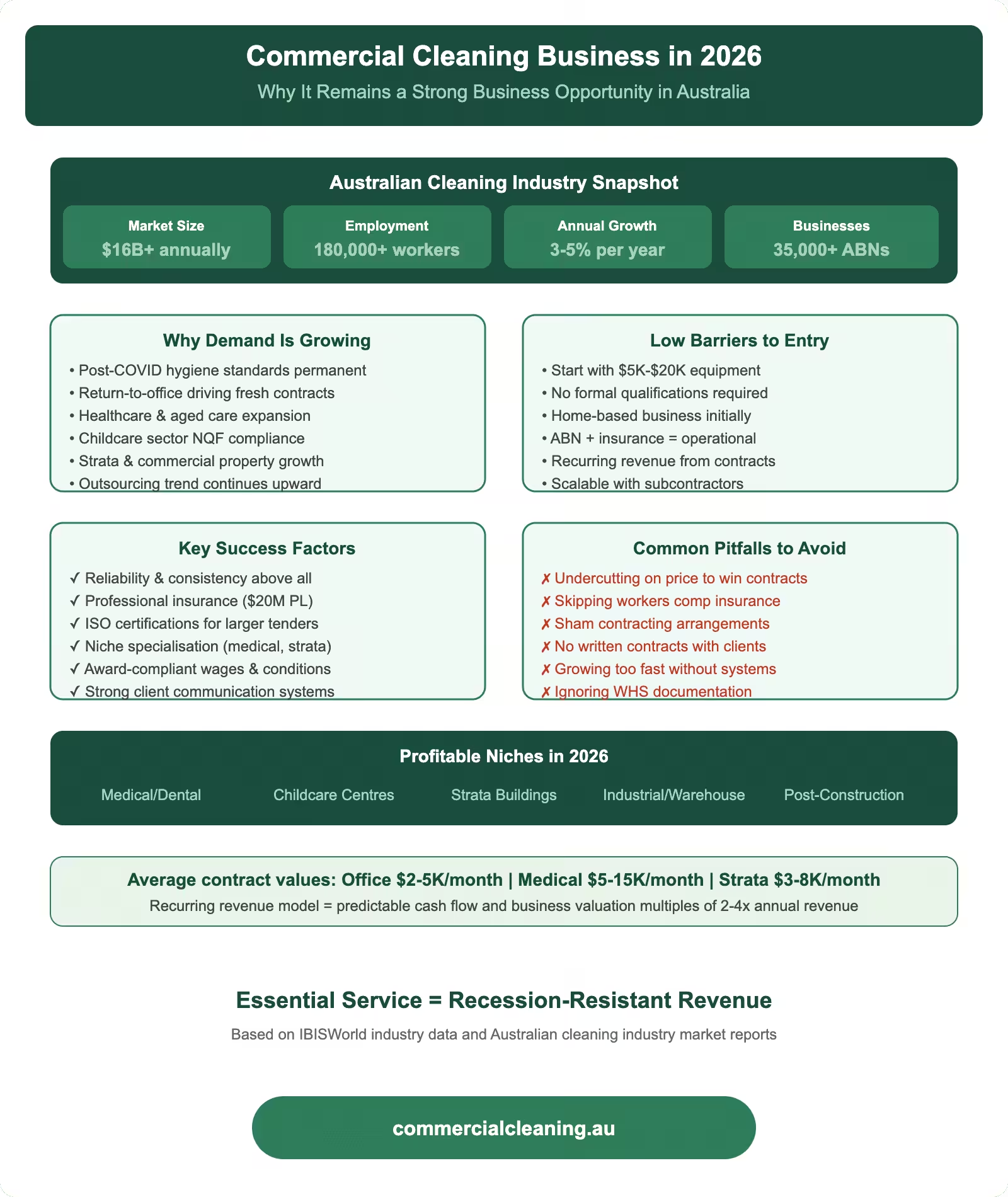
Commercial cleaning business opportunity in Australia showing market size, growth drivers, success factors, common pitfalls, and profitable niches for 2026
Why Commercial Cleaning Is a Strong Business Opportunity in 2026
When it comes to commercial cleaners Sydney, understanding the fundamentals matters. Why Commercial Cleaning Is a Strong Business Opportunity in 2026 covers specific protocols that we tailor to each facility based on its layout, traffic, and compliance requirements. Australia’s commercial cleaning sector is growing faster than most trades. Office buildings across Sydney, Melbourne, and Brisbane need regular professional maintenance, and demand continues to outpace supply in many regions.
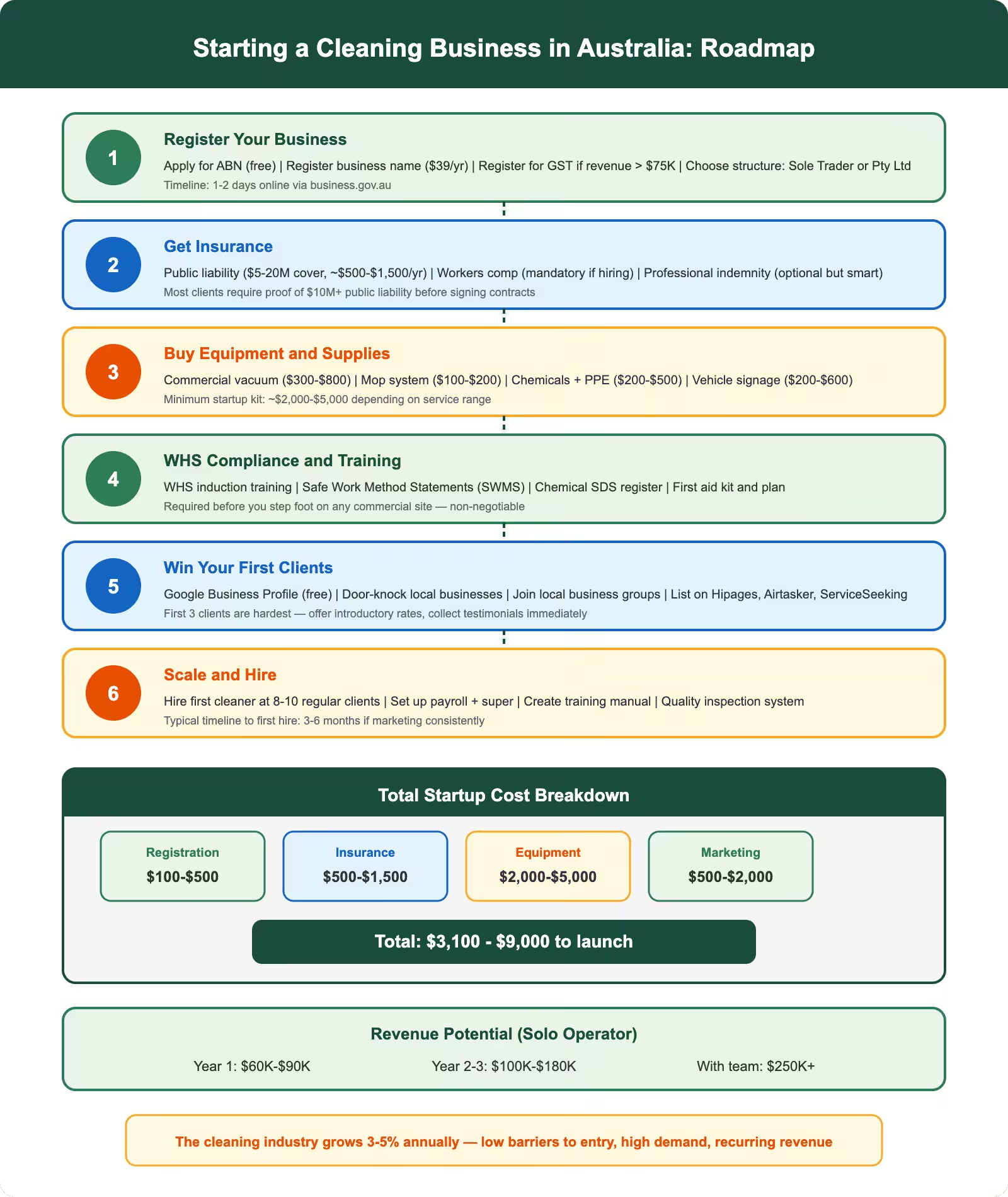
Starting a commercial cleaning business in Australia step-by-step roadmap with startup costs
The shift toward health-conscious workplaces post-pandemic has meant facility managers are spending more on deep cleans, disinfection, and specialist services. We’ve found that the average office building now contracts more frequent cleaning cycles than they did five years ago.
What makes this sector attractive is the recurring revenue model. Once you secure a client like an office tower in North Sydney or a retail complex in Parramatta, you’re building predictable monthly income — not chasing one-off jobs.
Choosing Your Business Structure — Sole Trader vs Pty Ltd
Choosing Your Business Structure — Sole Trader vs Pty Ltd involves specific protocols that we tailor to each facility based on its layout, traffic, and compliance requirements. Your first decision is whether to register as a sole trader or form a private company.
As a sole trader, you report income and expenses directly on your personal tax return filed with the ATO. There’s minimal paperwork, lower setup costs, and fewer regulatory obligations. This works well if you’re starting solo and earning under $75,000 in GST-turnover.
A Pty Ltd company requires ASIC registration, separate tax returns, and annual compliance reporting. However, it separates your personal liability from the business — critical when operating a cleaning company that carries public liability exposure. In our experience cleaning commercial office spaces across Chatswood and Surry Hills, most operators who scale beyond one person move to Pty Ltd within 12–18 months.
The liability shield is the key difference. If a client claims injury or property damage, a sole trader’s personal assets are at risk; a Pty Ltd limits that exposure to company assets.
ABN, GST and Tax Registration Requirements
ABN, GST and Tax Registration Requirements requires specific protocols that we tailor to each facility based on its layout, traffic, and compliance requirements. You’ll need an Australian Business Number (ABN) before you can operate legally or invoice clients.
Register your ABN free with the ATO at asic.gov.au or ato.gov.au. Most ABN applications take 2–3 business days. You need an ABN to claim GST on expenses, open a business bank account, and bid for government contracts like those managed by SSROC (Southern Sydney Regional Organisation of Councils).
GST registration is optional if you earn less than $75,000 per financial year, but our team recommends registering voluntarily even if you’re below the threshold. Why? You can claim back GST on all business purchases — equipment, supplies, vehicle fuel — which cuts your actual costs significantly.
Once registered, you lodge monthly or quarterly Activity Statements with the ATO reporting sales (input-taxed) and expenses (input-taxed claims). Keep careful records: invoices, receipts, bank statements, and mileage logs.
Insurance You Actually Need (Public Liability, Workers’ Comp)
Public liability insurance is non-negotiable.
This covers you if a client alleges your team damaged property or caused bodily injury while cleaning their premises. A single claim — say, chemicals damaging a client’s flooring or a slip-and-fall by a visitor — can cost $50,000 to $500,000. Most commercial contracts require proof of at least $5–$20 million in public liability cover before you step foot on site.
Workers compensation insurance is mandatory under NSW law once you employ even one person. The WHS Act 2011 requires businesses to hold workers compensation insurance registered with SIRA (State Insurance Regulatory Authority). As your team grows from solo to 2–3 cleaners, this cost typically runs $800–$2,500 per year depending on payroll.
Professional indemnity isn’t always required for cleaning, but our team at an Epping office building client once faced a claim that SSROC protocols had been breached — professional indemnity would have covered legal costs.
Insurance Type
Typical Cost (Annual)
Coverage Limit
Mandatory?
Public Liability
$400–$1,200
$5–$20M
Yes (client requirement)
Workers Compensation
$800–$2,500
Statutory
Yes (if employees)
Management Liability
$300–$800
$1–$5M
No (recommended)
Professional Indemnity
$200–$600
$100K–$1M
No (recommended for tenders)
Startup Costs — What to Budget for in Sydney and Beyond
Startup Costs — What to Budget for in Sydney and Beyond addresses specific protocols that we tailor to each facility based on its layout, traffic, and compliance requirements. Launching a commercial cleaning operation requires capital for equipment, insurance, registration, and initial marketing.
Here’s a realistic breakdown for a solo operator starting in greater Sydney:
ABN and business registration: $0–$100
Public liability and workers comp insurance (first year): $1,200–$3,500
Chemical supplies and cleaning products (TGA-approved for healthcare if relevant): $500–$1,500
Vehicle livery and signage: $300–$800
Website and basic marketing: $200–$1,000
Accountancy and tax setup: $300–$600
Total minimum: $5,000–$12,500. Many operators start part-time while keeping their day job, which stretches the cash outlay across several months.
If you’re in a regional area like regional NSW or Queensland, overheads may be lower. In high-density areas like Mascot or North Sydney, rent and fuel costs climb, so budget 15–20% higher.
Equipment and Supplies for Your First Contracts
Equipment and Supplies for Your First Contracts targets specific protocols that we tailor to each facility based on its layout, traffic, and compliance requirements. Buy professional-grade equipment, not homeware-store alternatives.
A commercial vacuum cleaner like a Kärcher or Nilfisk upright costs $1,500–$3,000 but handles daily use across multiple sites without breakdown. Consumer vacuums fail within weeks under commercial pressure. For hard floors, a Duplex Cleaning Machine or similar scrubber-dryer ($2,000–$4,000) is industry standard for larger jobs.
Cleaning chemicals matter as much as equipment. Stock TGA-approved disinfectants, degreasers, glass cleaners, and floor polish. If you bid for medical facilities, you’ll need therapeutic goods approved under TGA standards.
Microfibre cloths, mop heads, extension poles, and squeegees are consumables — budget $150–$300 per month as your business grows.
Our team investing in BSCAA-certified eco-friendly products found we attracted more environmentally conscious clients in areas like Surry Hills and Chatswood, which offsetting slightly higher product costs.
WHS Compliance and Safe Work Method Statements
WHS Compliance and Safe Work Method Statements focuses on specific protocols that we tailor to each facility based on its layout, traffic, and compliance requirements. The WHS Act 2011 applies to all cleaning businesses in NSW, regardless of size.
You must develop Safe Work Method Statements (SWMS) for each cleaning task — how your crew will access high windows, handle chemical mixing, or operate floor machines safely. SafeWork NSW provides templates and guidance on their website.
A Certificate III in Cleaning Operations (CPP30321) is not mandatory but strengthens your credentials for government contracts and larger commercial clients. Community colleges and RTO providers across Sydney offer this qualification part-time.
Induction training for team members covers chemical safety (PPE, spillage response, mixing protocols), manual handling (to prevent back injuries), and emergency procedures. Document all training with dated records — SafeWork NSW inspections check these first.
In our experience cleaning office buildings after incidents like spills or equipment failures, clients immediately asked for proof of staff training and incident response protocols.
Getting Your First Clients — Marketing That Works Locally
Getting Your First Clients — Marketing That Works Locally covers specific protocols that we tailor to each facility based on its layout, traffic, and compliance requirements. Door-knocking and networking beat paid ads for cleaning startups.
Your first clients typically come from personal referrals, Facebook ads targeted to local business owners, and Google My Business local search. Set up a simple website with before-and-after photos, your ABN, public liability certificate, and a contact form. Include your NSW suburbs served — “Commercial cleaning Epping, Parramatta, North Sydney” ranks better locally than vague descriptions.
Join local business groups like Chambers of Commerce in Parramatta or Mascot. Attend networking events, hand out business cards, and follow up with decision-makers at office buildings and retail complexes.
Email outreach works surprisingly well. Research facility managers at 10–15 target buildings, personalise your pitch (“I’ve serviced similar-sized offices in Surry Hills”), and offer a free site walkthrough to quote their cleaning needs.
Google Local Services Ads (if you’re Google-certified) put you at the top of search results for “cleaning services near me” and let you bid for jobs on a pay-per-lead model.
Winning Government and SSROC Cleaning Contracts
Government and council contracts offer consistent, high-volume work — but the application process is formal.
SSROC (covering councils like Randwick, Sutherland, Waverley, and Wollongong) and LGNSW (Local Government NSW) publish open tenders for cleaning contracts worth $50,000–$500,000+ annually. You bid via NSW eTendering.
To qualify, you’ll need: ABN, GST registration, current public liability ($5–$20M), workers compensation, a written WHS policy, evidence of past contracts, and an NCRP (National Contractors Register Profile) on the Australian Constructors Association database.
Tender documents include detailed schedules of what must be cleaned (every surface, daily/weekly/quarterly tasks), frequency, KPIs (key performance indicators), and penalty clauses for non-compliance. Our team at a Mascot council facility found that specifications matched ISSA CIMS (Cleaning Industry Management Standard) protocols — familiarising yourself with ISSA CIMS before tendering saves time.
The evaluation typically weights price (30–40%), experience (20–30%), WHS compliance (15–25%), and local content or sustainability (10–15%).
Scaling From Solo Operator to a Team of Cleaners
Scaling From Solo Operator to a Team of Cleaners requires specific protocols that we tailor to each facility based on its layout, traffic, and compliance requirements. Your first hire is a turning point.
As a solo operator, you can earn $40,000–$60,000 annually working 40–50 hours per week. To grow beyond that ceiling, you must employ staff. This triggers workers compensation insurance, payroll tax (if your payroll exceeds $960,000+ in NSW), and Fair Work Act obligations.
Start with one part-time cleaner. Offer casual or part-time hours initially — simpler than permanent contracts early on. Use payroll software like MYOB, Xero, or Deputy to track hours, calculate tax withholding, and stay compliant with Fair Work Ombudsman requirements.
As you add clients and scale to 2–3 staff, systemise everything: standard cleaning checklists, client-specific protocols, equipment maintenance logs, and staff scheduling. Tools like Jobber or HubSpot let you track jobs, dispatch crews, and invoice clients from one dashboard.
ISO 9001 (quality management) and ISO 14001 (environmental management) certification becomes valuable once you’re bidding for larger commercial or government contracts. As you grow your operation and consider business model expansion, our cleaning franchise guide for Australia provides detailed insights into scaling via franchising or exploring alternative growth pathways.
Frequently Asked Questions
Do I need a licence to start a cleaning business in Australia?
No formal cleaning licence is required in Australia — you just need an ABN, public liability insurance, and compliance with the WHS Act 2011. A Certificate III in Cleaning Operations (CPP30321) isn’t mandatory but strengthens your tender applications and demonstrates expertise to clients. SafeWork NSW and the Fair Work Ombudsman are your primary regulators.
How much can I earn starting a commercial cleaning business?
Solo operators charging $35–$50 per hour across 4–5 commercial contracts typically earn $45,000–$65,000 annually after expenses. Scaling to a team of 3–4 cleaners running 10+ contracts can push earnings to $100,000–$150,000 net profit. Our team has seen cleaning operators in North Sydney and Parramatta double revenue within 2 years of their first hire.
What insurance do I absolutely need?
Public liability insurance ($5–$20M) is non-negotiable — all clients require proof before allowing you on site. Workers compensation is mandatory under the WHS Act 2011 once you employ anyone. Management liability and professional indemnity are optional but recommended for tendering government contracts via SSROC or local councils.
How do I bid for council and government cleaning contracts?
Government contracts are published on NSW eTendering by SSROC councils and other agencies. You’ll need ABN, GST registration, current insurance certificates, a WHS policy, and evidence of past work. Familiarising yourself with ISSA CIMS standards and having a documented Safe Work Method Statement significantly improves your chances of winning.
Should I start as a sole trader or form a Pty Ltd company?
Start as a sole trader if you’re solo and earning under $75,000 — lower costs and simpler tax reporting. Move to a Pty Ltd once you employ staff or exceed $100,000 turnover, as it separates your personal liability from business risk. The WHS Act 2011 and workers compensation insurance requirements remain the same either way.
About Clean Group
Clean Group is a leading commercial cleaning company in Sydney, providing professional cleaning services to offices, strata buildings, medical facilities, schools, gyms, and retail spaces across the greater Sydney region. With over 25 years of experience and a commitment to WHS compliance, eco-friendly practices, and consistent quality, Clean Group delivers tailored cleaning solutions backed by a 100% satisfaction guarantee.
Hi, I'm Suji Siv, the founder, CEO, and Managing Director of Clean Group, bringing over 25 years of leadership and management experience to the company. As the driving force behind Clean Group’s growth, I oversee strategic planning, resource allocation, and operational excellence across all departments. I am deeply involved in team development and performance optimization through regular reviews and hands-on leadership.