We were contacted by the operations director of a pharmaceutical distribution facility in Girraween who needed a cleaning partner capable of maintaining TGA-compliant environmental conditions across their 3,200-square-metre warehouse and adjoining quality control laboratory. As a Sydney office cleaning services provider with deep experience in healthcare-adjacent environments, our team recognised immediately that this engagement required a fundamentally different approach from standard warehouse cleaning. The facility handled temperature-sensitive medications destined for pharmacies and medical centres across Toongabbie East, Old Guildford, and the greater Western Sydney distribution network.
Understanding the Girraween Pharmaceutical Environment
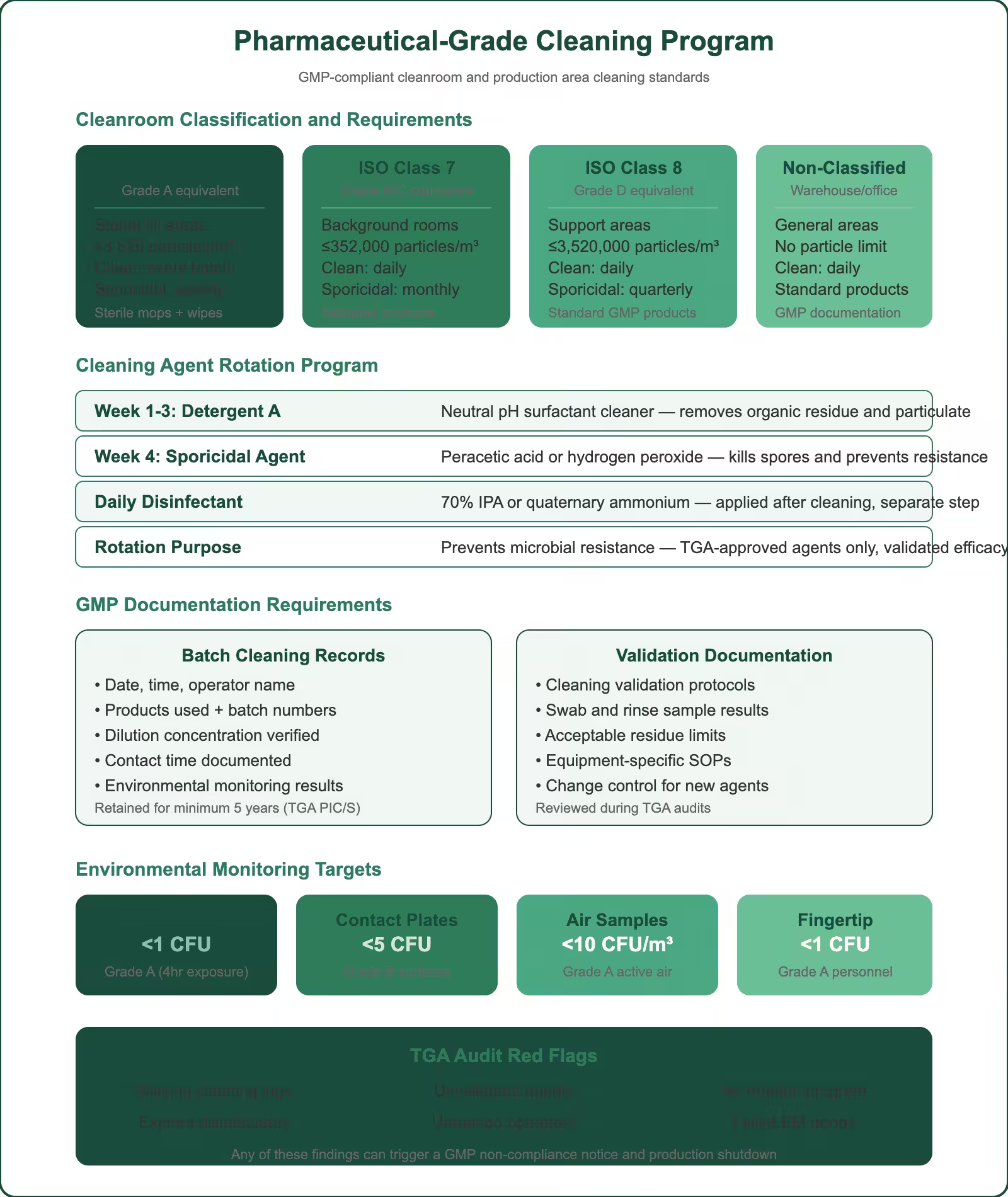
Understanding the Girraween Pharmaceutical Environment covers specific protocols that we tailor to each facility based on its layout, traffic, and compliance requirements. We spent three days conducting our pre-engagement assessment, which was longer than usual because pharmaceutical warehousing operates under regulatory requirements that most cleaning providers have never encountered. Our team walked every aisle, loading dock, cold chain room, and clean room ante-chamber with the facility’s quality assurance manager. We identified 167 critical control surfaces that required documented cleaning at prescribed frequencies, including cold room door handles, picking station benches, and the packaging line conveyors that direct-contact medication blister packs passed over.
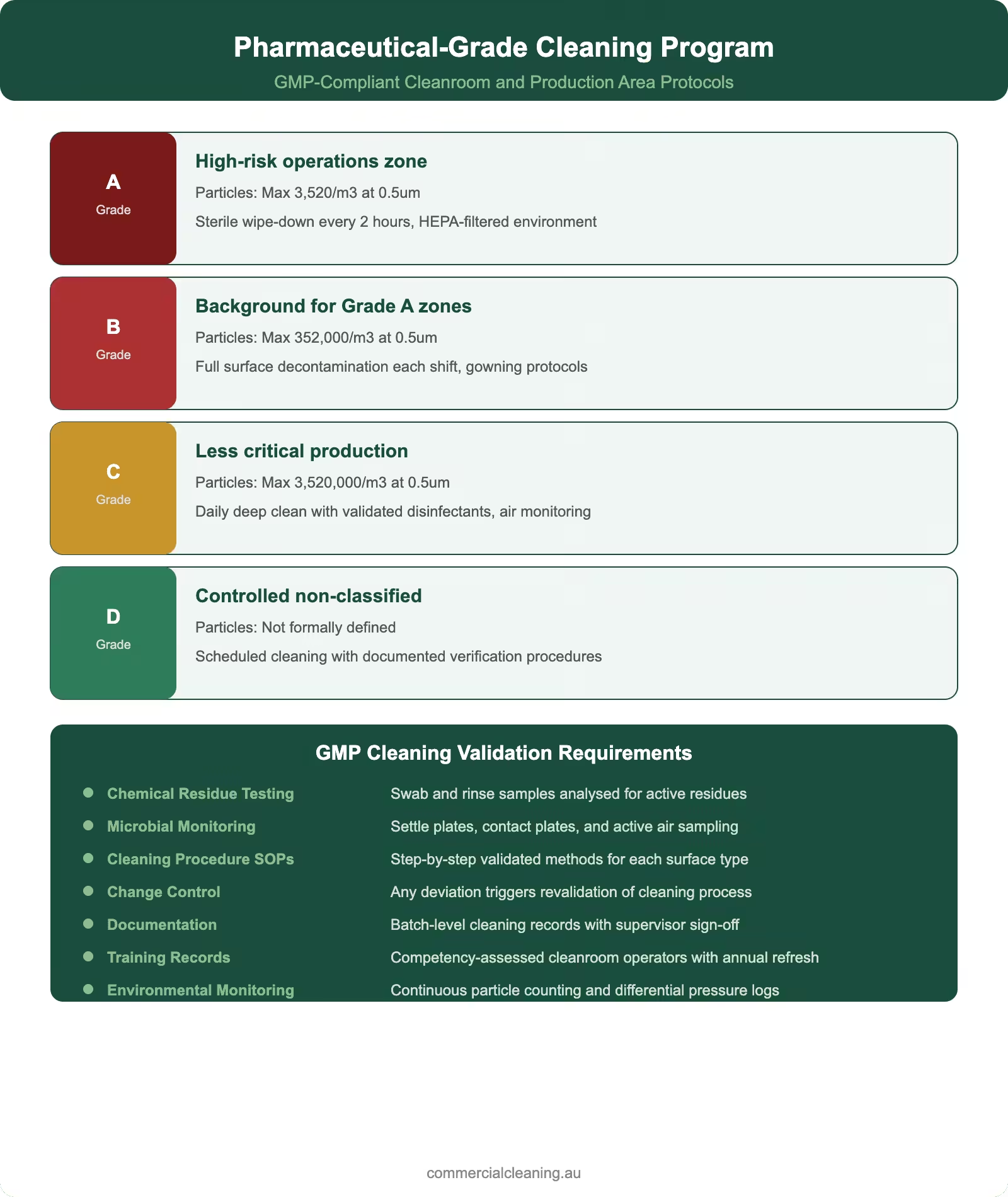
Our assessment uncovered several compliance gaps that the facility’s previous cleaning contractor had either not understood or not addressed. The clean room ante-chamber, where staff gowned up before entering the quality control laboratory, had visible dust accumulation on the HEPA filter grilles. We tested particle counts in this space and found they exceeded the ISO Class 8 threshold that the facility’s operating licence required. We flagged this to the operations director as an immediate risk to their TGA manufacturing licence, and we have seen similar situations in other pharmaceutical environments where cleaning providers lack specific cleanroom experience.
We also noted that the cold chain rooms, which maintained medications at between two and eight degrees Celsius, were showing condensation buildup around door seals and on the lower sections of racking. Our team has cleaned pharmaceutical cold chain environments for several years and we know that condensation creates both a slip hazard and a microbial growth risk. We recommended a twice-daily condensation management protocol as part of our cleaning scope, which was something the facility had not previously considered. Patients across Toongabbie East and Old Guildford who relied on medications stored in this facility deserved assurance that storage conditions met the highest standards.
Pharmaceutical-grade cleaning program showing cleanroom classifications, agent rotation schedule, GMP documentation, and environmental monitoring targetsPharmaceutical-grade cleaning program infographic showing GMP cleanroom classification tiers and validation requirements
Building the Pharmaceutical-Grade Cleaning Program
We designed a three-tier cleaning program stratified by contamination risk and regulatory sensitivity. Our first tier covered the quality control laboratory and clean room ante-chamber, where we implemented daily cleaning protocols aligned with AS 4260.1, which specifies requirements for high-efficiency particulate air filters used in controlled environments. We applied this standard not just to the HEPA filter maintenance but to every surface in the controlled environment zone, because we have learned that maintaining air quality standards is pointless if surface contamination introduces particles back into the airstream during normal operations.
Our second tier addressed the main warehouse floor, picking stations, and packaging areas. We implemented a daily sweep-and-scrub cycle using a ride-on scrubber that we dedicated to this facility to prevent cross-contamination from other cleaning sites. Our team operated this equipment during the overnight window between the last outbound dispatch and the first morning receiving dock activity. We have found that scheduling warehouse floor maintenance during operational downtime eliminates the safety risks associated with cleaning equipment operating alongside forklift traffic and picking staff.
Our third tier covered the cold chain rooms, loading docks, and office areas. We implemented the twice-daily condensation management protocol we had recommended, along with daily surface disinfection of all cold room touch points and weekly deep cleaning of dock levellers and roller doors. Our operations manager worked with the facility’s maintenance team to establish a coordinated schedule that ensured our cleaning activities did not interfere with temperature monitoring systems or automated stock management equipment.
We assigned two dedicated team members to the Girraween facility, both of whom completed our pharmaceutical environment induction program before their first shift. Our induction covered gowning and de-gowning procedures, clean room entry protocols, cold chain awareness, chemical compatibility with pharmaceutical packaging materials, and the documentation requirements specific to TGA-regulated facilities. We have built this training program over several years of pharmaceutical cleaning experience and we update it annually based on regulatory changes and lessons learned from our quality audit program.
Office Area Cleaning Frequency Guide
Area
Daily
Weekly
Monthly
Quarterly
Reception & Lobby
Vacuum, mop, wipe
Glass doors, furniture
Deep carpet clean
Window wash
Workstations
Surface wipe, bins
Monitor & keyboard
Drawer clean-out
Chair shampoo
Kitchen/Breakroom
Bench, sink, floor
Fridge, microwave
Deep degrease
Exhaust fan clean
Bathrooms
Full sanitise + restock
Grout scrub
Descale fixtures
Vent clean
Meeting Rooms
Table wipe, vacuum
AV equipment dust
Upholstery clean
Carpet extraction
AS 4260.1 Compliance and Regulatory Documentation
Office Area Cleaning Frequency Guide requires specific protocols that we tailor to each facility based on its layout, traffic, and compliance requirements. We structured our compliance framework around the requirements of AS 4260.1 and the TGA’s guidelines for good manufacturing practice in pharmaceutical distribution. Our documentation captured every cleaning event with timestamps, operator identification, products used, and environmental monitoring data. We have maintained similar systems across our pharmaceutical and medical cleaning portfolio for the past four years and we refine our approach continuously based on feedback from TGA inspectors and quality assurance professionals.
AS 4260.1 Compliance and Regulatory Documentation includes specific protocols that we tailor to each facility based on its layout, traffic, and compliance requirements. Our weekly environmental monitoring program included particle count testing in the clean room ante-chamber and quality control laboratory. We used a handheld particle counter calibrated to measure particles at 0.5 and 5.0 micron thresholds, consistent with the ISO Class 8 classification the facility maintained. Our data over the first six months showed that particle counts remained consistently below 50 percent of the maximum allowable threshold, which gave the quality assurance team substantial headroom during their own internal monitoring and TGA inspection preparation.
We maintained a detailed chemical register that listed every cleaning product used across all three tiers, along with material compatibility data specific to pharmaceutical packaging. Our register noted which products were safe to use near blister packaging lines, which could be used on cold room racking without affecting temperature probe calibration, and which required specific ventilation conditions before staff could re-enter treated areas. We have found that this level of chemical management detail is non-negotiable in pharmaceutical environments because even minor product selection errors can trigger contamination events that result in batch quarantines or product recalls.
We supported the facility through two TGA inspections during our first eighteen months of service. Our team prepared environmental cleaning validation packs that included particle count trend data, surface ATP results from the quality control laboratory, cleaning frequency compliance records, and staff training documentation. We received positive feedback from the TGA inspector on both occasions, and the operations director told us that our documentation had streamlined their inspection preparation process significantly compared to their experience with the previous cleaning provider.
Outcomes, Investment Transparency, and Ongoing Partnership
Outcomes, Investment Transparency, and Ongoing Partnership addresses specific protocols that we tailor to each facility based on its layout, traffic, and compliance requirements. We delivered quantifiable results that validated the facility’s decision to engage a specialist pharmaceutical cleaning provider. Our monthly service fee of $2,310 covered all three-tier cleaning, cold chain condensation management, environmental monitoring, chemical register maintenance, and TGA inspection support. We structured this as a fixed monthly rate with no variable charges because we have found that pharmaceutical operations managers need certainty in their cost base, particularly when environmental cleaning is a line item that TGA inspectors scrutinise during audits.
Our measurable outcomes over the first twelve months included maintaining particle counts consistently below 50 percent of the ISO Class 8 threshold, achieving a 99 percent surface hygiene pass rate in the quality control laboratory, and eliminating all condensation-related incidents in the cold chain rooms. We tracked zero cleaning-related contamination events across the entire facility during this period, which the quality assurance manager told us was the first clean year they had recorded since the facility commenced operations. We presented these metrics in quarterly reports to the operations director alongside trend analysis and continuous improvement recommendations.
We also identified $12,400 in preventable maintenance costs through observations made during our routine cleaning operations. Our team spotted early-stage corrosion on two cold room evaporator drip trays, flagged a deteriorating floor coating in the loading dock that was creating dust contamination risk, and detected a loose ceiling tile in the packaging area that could have allowed unfiltered air into the product handling zone. We reported each finding through our digital notification system and the maintenance team confirmed that our early detection prevented what could have become significant compliance issues if left unaddressed.
The Girraween pharmaceutical facility has renewed our contract twice and we continue to serve as their sole cleaning and environmental monitoring partner. Our scope has expanded to include quarterly deep cleaning of the entire warehouse racking system, annual HEPA filter pre-screen cleaning, and specialist floor coating maintenance. We are proud that our work contributes to the safe storage and distribution of medications that serve patients and pharmacies across Girraween, Toongabbie East, Old Guildford, and the broader Western Sydney healthcare network. For another example of our specialist cleaning work, see our Sydney strata building cleaning case study.
Frequently Asked Questions
What makes pharmaceutical warehouse cleaning different from standard warehouse cleaning?
We approach pharmaceutical environments as regulated healthcare-adjacent facilities requiring TGA-compliant protocols, environmental monitoring, and documented cleaning validation. Our program covers HEPA-filtered clean rooms, cold chain areas, and product contact surfaces with specialist products and trained staff, which goes far beyond what standard warehouse cleaning providers typically offer.
How does AS 4260.1 apply to pharmaceutical distribution facilities?
We use AS 4260.1 to guide our approach to HEPA filter maintenance and environmental cleaning in controlled areas. Our interpretation extends beyond filter servicing to include all surfaces in clean room environments because surface contamination can reintroduce particles into filtered airstreams and compromise the controlled classification the facility maintains.
How do you manage cold chain room cleaning without affecting temperature stability?
We coordinate our cold chain cleaning with the facility’s maintenance team to confirm our activities do not interfere with temperature monitoring systems. Our twice-daily condensation management protocol specifically addresses the moisture buildup around door seals and lower racking that creates both slip hazards and microbial growth risk in two-to-eight degree storage environments.
What environmental monitoring do you provide for clean room areas?
We conduct weekly particle count testing using calibrated handheld counters measuring at 0.5 and 5.0 micron thresholds consistent with ISO Class 8 classification. Our data over twelve months showed counts consistently below 50 percent of maximum allowable thresholds, providing substantial compliance headroom for TGA inspections.
What does the $2,310 monthly pharmaceutical cleaning program include?
Our fixed monthly fee covers three-tier cleaning across clean rooms, warehouse, and cold chain areas, plus condensation management, environmental particle monitoring, chemical register maintenance, and TGA inspection documentation support. We provide this as a fixed rate with no variable charges to verify budget certainty for operations managers.
Can your team support TGA inspections?
We have supported multiple TGA inspections across our pharmaceutical cleaning portfolio. Our validation packs include particle count trends, ATP surface results, cleaning frequency records, chemical registers with material compatibility data, and staff training documentation. We received positive inspector feedback on both occasions at this facility.
How do you prevent cross-contamination in pharmaceutical environments?
We dedicate equipment exclusively to each pharmaceutical facility to prevent cross-site contamination. Our ride-on scrubber, microfibre sets, and mop systems never leave the Girraween site. We also maintain strict chemical compatibility protocols to protect pharmaceutical packaging materials from cleaning product residues.
What additional value has your cleaning team provided beyond standard cleaning?
Our team identified $12,400 in preventable maintenance costs including cold room evaporator corrosion, deteriorating floor coatings, and loose ceiling tiles in the packaging area. We report findings within two hours through our digital notification system, preventing potential compliance issues before they escalate.
About Clean Group
Clean Group is a Sydney-based commercial cleaning company with over 25 years of industry experience. Founded by Suji Siv, our team of 50+ trained professionals services offices, warehouses, medical centres, schools, childcare facilities, retail stores, gyms, and strata properties across Sydney, Melbourne, and Brisbane.
We are active members of ISSA and the Building Service Contractors Association of Australia (BSCAA). Our operations align with ISO 9001 (Quality Management), ISO 14001 (Environmental Management), and ISO 45001 (Workplace Health and Safety) standards. We hold membership with the Green Building Council of Australia and use eco-friendly, TGA-registered cleaning products wherever possible.
Every Clean Group cleaner is police-checked, fully insured, and trained in safe work procedures under SafeWork NSW guidelines. We operate 7 days a week, including after-hours and weekend services, to minimise disruption to your business.
Hi, I'm Suji Siv, the founder, CEO, and Managing Director of Clean Group, bringing over 25 years of leadership and management experience to the company. As the driving force behind Clean Group’s growth, I oversee strategic planning, resource allocation, and operational excellence across all departments. I am deeply involved in team development and performance optimization through regular reviews and hands-on leadership.