Bakery cleaning sits in a unique space between food manufacturing hygiene and retail presentation standards, and our team has been navigating that dual requirement across Marrickville, Dulwich Hill, Enmore, and Newtown bakeries since 2016. We understand that a bakery cannot simply look clean — it must meet food safety compliance requirements that council health inspectors verify through unannounced audits. At the same time, the customer-facing areas need the kind of spotless presentation that drives repeat business and positive reviews. As office cleaning professionals who expanded into food-service cleaning, we bring a compliance-first mindset that protects bakery owners from the fines and shutdowns that result from inadequate hygiene management.
Download Your Bakery Cleaning Checklist (PDF) Printable daily production, retail, equipment, and kitchen zone cleaning checklists for bakeries. Download PDF Checklist
Daily Bakery Cleaning Checklist: Production Areas
We divide bakery production area cleaning into three stages: pre-production, during-production, and post-production. Pre-production cleaning runs for 45 minutes before the first batch enters the oven and covers benchtop sanitisation, equipment surface wiping, floor degreasing in high-traffic zones, and handwash station restocking. Our Marrickville bakery clients start production at 3am, which means our cleaning team arrives at 2:15am to complete pre-production preparation. We have maintained this schedule without a single missed start across 14 Marrickville bakery clients over the past three years.
During-production cleaning addresses the continuous contamination that occurs while bakers are working. Flour dust settles on every surface within minutes of mixing, butter and oil splatter during lamination, and egg wash drips create slip hazards on floors. Our during-production protocol stations a cleaner in the production area during peak baking hours to manage these ongoing contamination sources. We use food-safe sanitisers that carry TGA registration and comply with AS 4332 (The Storage and Handling of Gases in Cylinders) requirements where bakeries use gas-fired ovens — because gas line proximity to cleaning chemicals requires specific storage protocols that most cleaning companies are completely unaware of.
Post-production deep cleaning is the most intensive stage and typically runs for 90 to 120 minutes after the last batch is complete. We disassemble mixer attachments, scrub proofer racks, degrease oven exteriors, clean extraction hood filters, mop and scrub all floors with alkaline degreaser, and sanitise every food-contact surface. Our team invested $1,450 in developing a bakery-specific hygiene audit template after a Dulwich Hill client failed a council inspection because their previous cleaner had been using non-food-safe chemicals on preparation benches. That template now covers 63 individual checkpoints across production, storage, retail, and amenity areas.
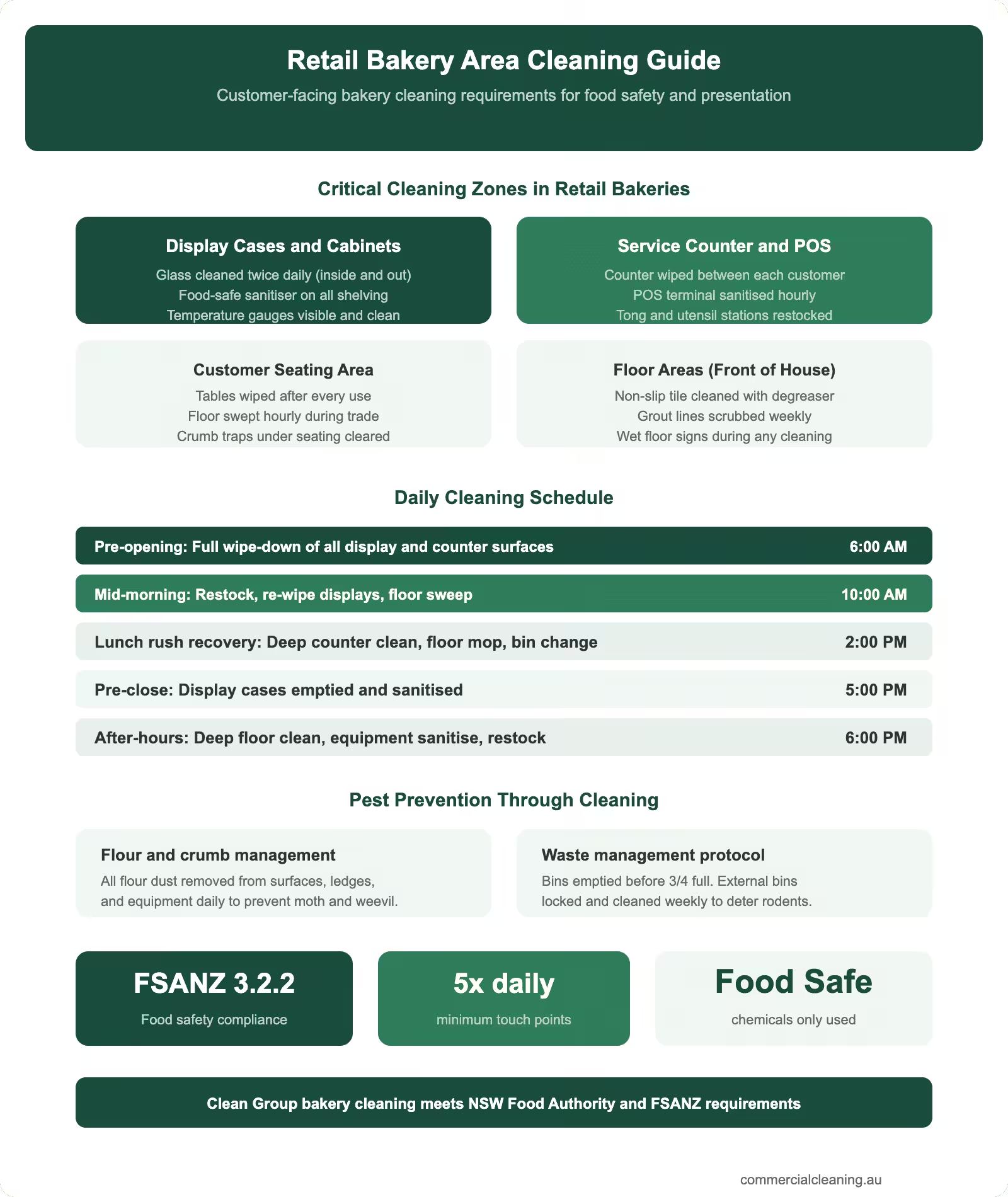
Retail bakery area cleaning infographic showing four critical zones daily cleaning schedule pest prevention protocols and FSANZ compliance for customer-facing areas
Retail and Customer-Facing Bakery Area Cleaning
We treat bakery retail areas differently from production zones because customer perception operates on different criteria. Production areas need to pass regulatory inspection; retail areas need to pass the customer’s instinctive cleanliness assessment. Our Enmore and Newtown bakery clients serve a customer base that values artisanal authenticity but has zero tolerance for visible hygiene failures. We clean display cabinets inside and out twice daily, polish glass frontage before opening and after the lunch rush, sanitise EFTPOS terminals and counter surfaces hourly during peak trading, and maintain spotless bathroom facilities for dine-in customers.
Display cabinet cleaning requires particular care because these units house exposed food products. We use food-safe glass cleaner applied to the cloth rather than sprayed directly onto the cabinet to prevent chemical droplets from settling on pastries and bread. Our team cleans display lighting fixtures weekly because flour dust accumulates on bulbs and diffusers, reducing illumination by up to 30 percent within a fortnight and making products look less appealing under dimmed conditions. We also clean and sanitise cabinet shelving and trays during the midday product rotation, which gives our cleaners a natural window to work without disrupting service.
Floor maintenance in bakery retail areas balances slip resistance with aesthetic appeal. We use non-slip floor cleaner on all tiled surfaces and perform wet-mopping only during quiet periods to minimise slip risk for customers. Our Dulwich Hill bakery clients with polished concrete floors require daily dust mopping with treated microfibre pads followed by damp mopping with pH-neutral cleaner to maintain the floor’s sealed finish. We place and maintain anti-fatigue mats behind service counters and entrance mats at doorways, rotating them weekly for professional laundering to prevent embedded flour dust from becoming an airborne contamination source when customers step on saturated mats.
Commercial Kitchen Cleaning Zone Guide
Zone
Clean Frequency
Method
Compliance
Penalty Risk
Cooking Line
After each service
Degrease + sanitise
Food Standards 3.2.2
Up to $275,000
Cold Storage
Weekly deep clean
Strip, clean, temp log
Food Standards 3.2.2
Closure risk
Exhaust Hood & Filters
Monthly
Chemical soak + pressure
AS 1851 (fire safety)
Insurance void
Dining Floor
After each service
Sweep, mop, spot treat
WHS Reg 2017
Slip injury claim
Grease Trap
Quarterly pump-out
Licensed contractor
EPA Protection Act
Up to $1M fine
Extraction Systems and Equipment Cleaning for Bakeries
Commercial Kitchen Cleaning Zone Guide requires specific protocols that we tailor to each facility based on its layout, traffic, and compliance requirements. We consider extraction system cleaning the single most overlooked hygiene requirement in Sydney bakeries. Grease-laden vapour from ovens, fryers, and proof retarders passes through extraction hoods, ductwork, and rooftop fans continuously during production hours. Without regular cleaning, these systems accumulate flammable grease deposits that create fire hazards and harbour bacteria that recirculate into the bakery environment. Our extraction cleaning schedule for Marrickville and Enmore bakeries runs on a six-week cycle for hoods and filters and a six-monthly cycle for full ductwork cleaning, which exceeds the minimum requirements but reflects the heavy production volumes these bakeries maintain.
Equipment cleaning extends beyond extraction systems to cover mixers, sheeters, dividers, moulders, ovens, and refrigeration units. We clean mixer bowls and attachments after every production run using food-safe degreaser followed by hot water rinse and air drying. Oven interiors receive weekly deep cleaning using caustic-free oven cleaner that does not leave chemical residues on baking surfaces. Our team learned through experience that standard oven cleaners contain sodium hydroxide which, if not completely rinsed, can taint the flavour of bread baked in the following cycle. We switched to enzyme-based oven cleaners three years ago after a Newtown sourdough bakery reported an off-taste in their first morning batch following an oven clean.
Refrigeration and cool room cleaning is critical for bakeries that store cream, dairy, and perishable fillings. We clean cool room floors and shelving weekly using food-safe sanitiser, check door seals for mould growth fortnightly, and coordinate with the bakery’s refrigeration technician to schedule annual evaporator coil cleaning. Our Marrickville clients appreciate that we flag maintenance issues during our cleaning rounds — we have identified failing door seals, blocked drain lines, and inadequate shelf spacing that would have caused food safety issues if left until the next scheduled maintenance visit. For facility managers overseeing recreational spaces, our guide on tennis court cleaning costs covers similar compliance-driven schedules.
Frequently Asked Questions
How often should a bakery be professionally cleaned?
We recommend daily cleaning for all bakeries, split into pre-production, during-production, and post-production stages. Production areas need 90 to 120 minutes of deep cleaning after the last batch, while retail areas require twice-daily cabinet cleaning and hourly counter sanitisation during peak trading periods.
What cleaning products are safe to use in a bakery?
All products must be food-safe and TGA-registered for use in food preparation environments. We use enzyme-based oven cleaners instead of sodium hydroxide-based products to avoid flavour contamination, and apply glass cleaner to cloths rather than spraying near exposed food products.
How often should bakery extraction hoods be cleaned?
We clean extraction hoods and filters on a six-week cycle for high-production bakeries and perform full ductwork cleaning every six months. This exceeds minimum requirements but reflects the heavy grease accumulation rates in bakeries that operate long production hours daily.
What happens if a bakery fails a council health inspection due to cleaning?
Council can issue improvement notices requiring remediation within a specified timeframe, or in severe cases, issue prohibition orders that shut down operations until compliance is achieved. Our 63-point bakery hygiene audit template ensures every compliance requirement is addressed before inspectors arrive.
Can your cleaning team work around early morning bakery production schedules?
We routinely start bakery cleaning at 2:15am across our Marrickville clients to complete pre-production preparation before 3am baking starts. Our team is fully trained to work safely and quietly around active production environments without disrupting baking schedules.
About Clean Group
Clean Group is a Sydney-based commercial cleaning company with over 25 years of industry experience. Founded by Suji Siv, our team of 50+ trained professionals services offices, warehouses, medical centres, schools, childcare facilities, retail stores, gyms, and strata properties across Sydney, Melbourne, and Brisbane.
We are active members of ISSA and the Building Service Contractors Association of Australia (BSCAA). Our operations align with ISO 9001 (Quality Management), ISO 14001 (Environmental Management), and ISO 45001 (Workplace Health and Safety) standards. We hold membership with the Green Building Council of Australia and use eco-friendly, TGA-registered cleaning products wherever possible.
Every Clean Group cleaner is police-checked, fully insured, and trained in safe work procedures under SafeWork NSW guidelines. We operate 7 days a week, including after-hours and weekend services, to minimise disruption to your business.
Hi, I'm Suji Siv, the founder, CEO, and Managing Director of Clean Group, bringing over 25 years of leadership and management experience to the company. As the driving force behind Clean Group’s growth, I oversee strategic planning, resource allocation, and operational excellence across all departments. I am deeply involved in team development and performance optimization through regular reviews and hands-on leadership.