We have cleaned pharmacies across Sydney for over a decade, and the challenge of keeping these spaces genuinely safe goes far beyond what most people imagine. Pharmacies operate at the intersection of retail, healthcare, and pharmaceutical storage, which means our dental cleaning services and medical practice cleaning expertise translates directly into the protocols we apply in pharmacy environments. Every surface in a pharmacy potentially contacts pharmaceutical products, vulnerable patients, and healthcare workers simultaneously, and our cleaning approach reflects that unique combination of risks.
TGA GMP Regulatory Framework and Pharmacy Board Requirements
TGA GMP Regulatory Framework and Pharmacy Board Requirements covers specific protocols that we tailor to each facility based on its layout, traffic, and compliance requirements. We align our pharmacy cleaning protocols with the Therapeutic Goods Administration’s Good Manufacturing Practice requirements, which set the baseline standard for premises where pharmaceutical products are stored, prepared, or dispensed. TGA GMP requires that pharmacy premises be maintained in a clean and hygienic condition that prevents contamination of medicines. Our cleaning schedules, product selections, and documentation systems are all designed to meet this standard and provide the evidence trail that pharmacy owners need during TGA inspections and Pharmacy Board accreditation reviews.
We maintain detailed cleaning logs for every pharmacy we service, recording the date, time, areas cleaned, products used, and the name of the team member who completed each task. These logs are formatted to match the documentation expectations of TGA inspectors and are available to the pharmacy owner in both digital and printed format. Our experience has been that inspectors respond positively to well-organised cleaning records, and several of our pharmacy clients in the Leppington area have told us our documentation contributed to smooth accreditation outcomes.
Our teams understand the distinction between compounding pharmacies and community dispensing pharmacies, because the cleaning standards differ significantly. Compounding pharmacies that prepare customised medications need cleanroom-grade protocols in their preparation areas, aligned with AS 2252 which covers controlled environments and cleanroom specifications. Community pharmacies without compounding still need healthcare-grade cleaning throughout their dispensary and medication storage zones. We assess each pharmacy during onboarding and build a customised cleaning plan that matches the specific regulatory requirements for that type of operation.
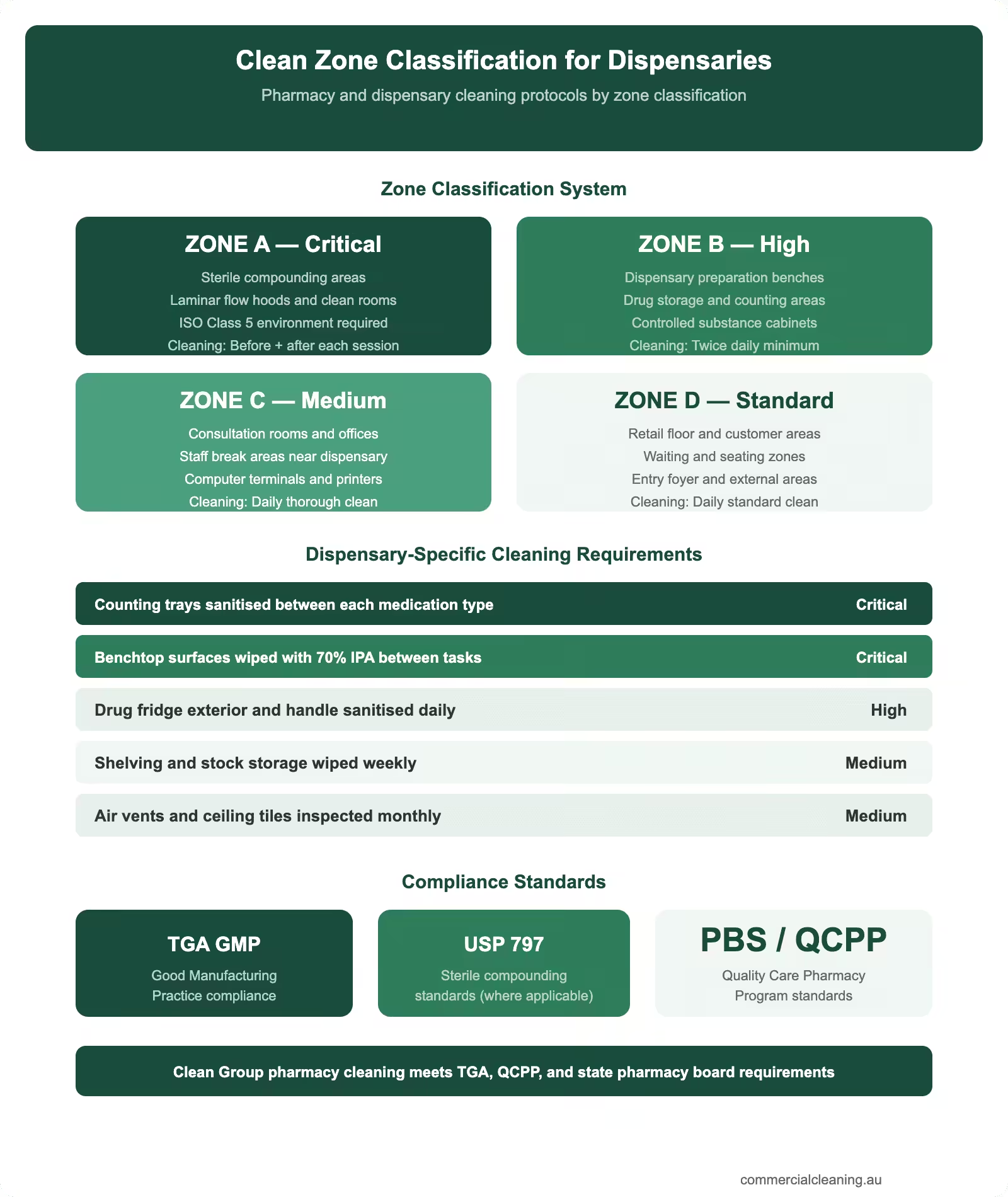
Clean zone classification infographic for pharmacies and dispensaries showing four zone levels with specific cleaning protocols and TGA compliance standards
Clean Zone Classification and Dispensary Protocols
We classify every area within a pharmacy into cleaning zones based on the contamination risk profile. The dispensary and compounding areas are our highest priority zones, requiring hospital-grade disinfection of all surfaces including benchtops, scales, measuring equipment housings, computer terminals, and storage shelving. We clean these areas daily using a detergent pre-clean followed by a quaternary ammonium disinfectant, and we wipe down the dispensary benchtop between prescription preparation batches during operating hours. Our dispensary cleaning approach mirrors the principles of ISO 14644 cleanroom management, scaled appropriately for community pharmacy settings.
The retail floor area requires a different approach that balances infection control with customer experience. We vacuum carpet areas with HEPA-filtered machines and damp mop hard floor surfaces with a hospital-grade floor cleaner. Product display shelves are dusted with microfibre cloths weekly and deep cleaned monthly. We pay particular attention to checkout counters, EFTPOS terminals, and consultation room surfaces because these are high-touch points that multiple customers and staff contact throughout the day. Our retail cleaning is scheduled outside trading hours to avoid disrupting customer flow, but we perform touch-point cleans during operating hours when the pharmacy requests it.
We spent approximately $2,340 per year on dedicated pharmacy cleaning training and cleanroom-grade consumables across our pharmacy contract portfolio. This investment covers microfibre systems rated for controlled environments, low-linting disposable wipes for sensitive areas, particulate monitoring equipment, and annual competency reassessment for pharmacy-assigned cleaning staff. We view this as necessary rather than optional because the consequences of contaminating pharmaceutical products through inadequate cleaning practices are potentially life-threatening for patients who depend on those medications.
Office Area Cleaning Frequency Guide
Area
Daily
Weekly
Monthly
Quarterly
Reception & Lobby
Vacuum, mop, wipe
Glass doors, furniture
Deep carpet clean
Window wash
Workstations
Surface wipe, bins
Monitor & keyboard
Drawer clean-out
Chair shampoo
Kitchen/Breakroom
Bench, sink, floor
Fridge, microwave
Deep degrease
Exhaust fan clean
Bathrooms
Full sanitise + restock
Grout scrub
Descale fixtures
Vent clean
Meeting Rooms
Table wipe, vacuum
AV equipment dust
Upholstery clean
Carpet extraction
Medication Storage and Container Cleaning
We clean medication storage areas with extreme care because any contamination introduced during cleaning could compromise the integrity of stored pharmaceuticals. Our protocol for medication shelving involves removing all products from a section, wiping the shelf surface with a low-residue hospital-grade disinfectant, allowing it to dry completely, and then replacing the products. We never spray disinfectant directly onto surfaces near open medication containers because the aerosol can settle on packaging and potentially contaminate the product inside when it is opened. Our teams use pre-dampened cloths applied in a controlled wiping motion to eliminate spray drift entirely.
Temperature-controlled storage areas including refrigerators and cool rooms get particular attention in our cleaning schedule. We clean pharmacy refrigerator interiors monthly, working quickly to minimise the time the door is open and the temperature fluctuation that results. We wipe all internal surfaces with a food-safe hospital-grade disinfectant and check door seals for visible mould or debris that could compromise the seal. Our cleaning log includes a temperature reading taken before and after refrigerator cleaning to document that the cold chain was maintained throughout the process. Several of our pharmacy clients in Austral and Edmondson Park have incorporated our refrigerator cleaning logs into their own cold chain documentation for regulatory audits.
We handle Schedule 8 medication storage areas with additional security awareness. Our team members working in pharmacies hold current National Police Checks and understand that they must not access locked medication cabinets under any circumstances. We clean the exterior of Schedule 8 storage units during our normal rounds but only clean the interior when the pharmacist is present and has unlocked the cabinet specifically for that purpose. We document these supervised cleaning events separately to maintain the security audit trail that pharmacy regulations require.
Consultation Rooms, Restrooms, and Staff Areas
We treat pharmacy consultation rooms as clinical spaces because they are used for vaccinations, blood pressure checks, medication reviews, and other health services that involve direct patient contact. Our consultation room protocol includes between-appointment surface disinfection of the desk, chairs, blood pressure cuff housing, and any equipment the pharmacist used during the consultation. We clean the floor daily and deep clean the room weekly, including walls up to hand height, window sills, and air conditioning vents. The standard we apply to pharmacy consultation rooms is identical to what we use in GP examination rooms because the infection control risks are essentially the same.
Pharmacy restrooms serve both staff and customers, and we clean them a minimum of twice daily with additional touch-point cleans during busy periods. Our restroom protocol covers all contact surfaces with hospital-grade disinfectant, and we check and restock soap, hand sanitiser, and paper towels during every visit. We also clean and inspect sharps disposal bins in pharmacy restrooms that offer injection services, ensuring they are properly sealed and replaced before reaching the three-quarter fill mark. Our restroom cleaning documentation includes the time of each clean so pharmacy managers can verify compliance with their own quality management schedules.
Staff break rooms and back-of-house areas receive daily cleaning attention because hygiene practices in these spaces directly affect the clinical areas. Our teams clean staff kitchen benches, sinks, and appliances with food-safe disinfectants. We empty bins, wipe down tables and chairs, and mop floors as part of the daily routine. We have found that maintaining high cleaning standards in staff areas reinforces a culture of cleanliness across the entire pharmacy. When back-of-house areas are visibly clean, staff are more likely to maintain hygiene standards in customer-facing and clinical zones. Our team at a pharmacy in Leppington noticed this cultural effect clearly when the pharmacy manager reported improved staff hand hygiene compliance after we upgraded the break room cleaning schedule.
Quality Assurance and Professional Service Management
Quality Assurance and Professional Service Management targets specific protocols that we tailor to each facility based on its layout, traffic, and compliance requirements. We verify our pharmacy cleaning quality through the same three-layer approach we use across all our medical contracts: ATP bioluminescence testing, quarterly microbiological sampling, and observational auditing. ATP testing in pharmacies focuses on dispensary benchtops, consultation room surfaces, checkout counters, and refrigerator door handles. We test a minimum of eight surfaces per visit and maintain a threshold of 100 RLU for dispensary and clinical areas and 250 RLU for retail and common areas. Our first-pass compliance rate across pharmacy contracts currently sits at 97 percent, and any result above threshold triggers an immediate re-clean.
We provide each pharmacy client with a monthly cleaning summary that includes ATP test results, audit scores, any incidents or maintenance observations, and a comparison against our internal benchmarks. This summary arrives by email within the first week of each month so pharmacy owners and managers have current data for their regulatory records. We also schedule a quarterly face-to-face review meeting where we discuss performance trends, upcoming operational changes at the pharmacy, and any adjustments to the cleaning schedule that might be needed. We find these review meetings invaluable because they keep our service aligned with the pharmacy’s evolving needs. For more on specialised medical facility cleaning, read our guide on allied health clinic cleaning.
Frequently Asked Questions on Pharmacy Cleaning
Why do pharmacies require specialist cleaning services beyond standard commercial cleaning? Pharmacies store, prepare, and dispense pharmaceutical products that can be compromised by contamination from cleaning chemicals, dust, or microbial activity. We use healthcare-grade protocols including TGA-registered disinfectants, low-residue application techniques, and cleanroom principles in dispensary areas to protect medication integrity. Our documentation meets TGA GMP and Pharmacy Board audit requirements, which standard commercial cleaners typically cannot provide.
What are ISO 14644 clean zone classifications and how do they affect pharmacy cleaning? ISO 14644 classifies environments by airborne particle concentrations per cubic metre. Compounding pharmacies must meet specific cleanliness classes in their preparation areas. We apply cleanroom cleaning principles scaled for pharmacy settings, including low-linting cloths, controlled wiping techniques, and particulate monitoring. Community dispensing pharmacies without compounding still benefit from these principles in their dispensary zones.
How should medication storage areas be cleaned to maintain pharmaceutical integrity? We remove products section by section, wipe shelves with low-residue hospital-grade disinfectant, allow complete drying, and replace products. We never spray disinfectant near open medication containers to prevent aerosol contamination. Refrigerator interiors are cleaned monthly with minimal door-open time, and we record temperature readings before and after to document cold chain maintenance.
What personal protective equipment requirements apply to pharmacy cleaning staff? Our minimum PPE standard includes disposable nitrile gloves, fluid-resistant aprons, and closed-toe shoes. In dispensary and compounding areas, we add hair nets and shoe covers to prevent particulate contamination. Gloves are changed between zones and hand hygiene is performed between every glove change. All PPE is disposed of as general waste unless contaminated with clinical materials.
How can pharmacies confirm regulatory compliance with TGA GMP cleaning requirements? We maintain detailed cleaning logs recording dates, times, areas, products, and staff names for every pharmacy service. These logs are formatted for TGA inspector review and available in digital and printed format. Our ATP testing results and quarterly microbiological sampling reports provide objective evidence of cleaning effectiveness. We coordinate our documentation with each pharmacy’s quality management system to verify smooth audit preparation.
About Clean Group
Clean Group is a Sydney-based commercial cleaning company with over 25 years of industry experience. Founded by Suji Siv, our team of 50+ trained professionals services offices, warehouses, medical centres, schools, childcare facilities, retail stores, gyms, and strata properties across Sydney, Melbourne, and Brisbane.
We are active members of ISSA and the Building Service Contractors Association of Australia (BSCAA). Our operations align with ISO 9001 (Quality Management), ISO 14001 (Environmental Management), and ISO 45001 (Workplace Health and Safety) standards. We hold membership with the Green Building Council of Australia and use eco-friendly, TGA-registered cleaning products wherever possible.
Every Clean Group cleaner is police-checked, fully insured, and trained in safe work procedures under SafeWork NSW guidelines. We operate 7 days a week, including after-hours and weekend services, to minimise disruption to your business.
Hi, I'm Suji Siv, the founder, CEO, and Managing Director of Clean Group, bringing over 25 years of leadership and management experience to the company. As the driving force behind Clean Group’s growth, I oversee strategic planning, resource allocation, and operational excellence across all departments. I am deeply involved in team development and performance optimization through regular reviews and hands-on leadership.