We were approached by the facility manager of a large medical research laboratory in Rydalmere that was expanding its clinical trial support services and needed a cleaning partner capable of maintaining GMP-grade environmental conditions. As a Sydney commercial cleaning services provider with proven experience in laboratory and healthcare environments, our team was well positioned to deliver the specialised protocols this facility required. The laboratory supported clinical trials for pharmaceutical companies and processed biological samples from medical practices across Clyde, Granville South, and the broader Parramatta river corridor.
Evaluating the Rydalmere Laboratory Complex
Evaluating the Rydalmere Laboratory Complex covers specific protocols that we tailor to each facility based on its layout, traffic, and compliance requirements. We conducted a three-day assessment of the facility that covered the main analysis laboratory, two controlled environment rooms, a biological sample receiving area, a chemical storage wing, and the administrative offices. Our team has assessed over thirty laboratory environments during our years of operation and we have developed a systematic evaluation methodology that captures every surface, airflow pathway, and contamination vector in the facility. We identified 198 critical control surfaces that required documented cleaning at frequencies determined by their proximity to sample handling zones.
Our most significant finding was that the biological sample receiving area had inadequate separation between incoming sample processing and outgoing waste streams. We observed that the same bench surfaces were being used for both activities, with only a time-based separation rather than a physical one. We raised this with the facility manager as both a cleaning efficiency issue and a contamination risk, and we recommended a workflow modification that would allow our cleaning team to decontaminate surfaces between receiving and disposal activities. We have seen similar layout challenges in other Rydalmere industrial precinct laboratories that were converted from general commercial premises.
We also tested particle counts in the two controlled environment rooms and found that one was operating above its ISO Class 7 threshold during afternoon shifts. Our investigation traced the problem to a combination of inadequate gowning compliance by research staff and insufficient environmental cleaning frequency during operational hours. We proposed a modified cleaning schedule that included mid-shift surface decontamination in both controlled rooms, which we have found to be necessary in facilities where staff enter and exit multiple times throughout the day. The laboratory served research programs that ultimately benefited patients across Clyde and Granville South, so we took the environmental standards seriously.
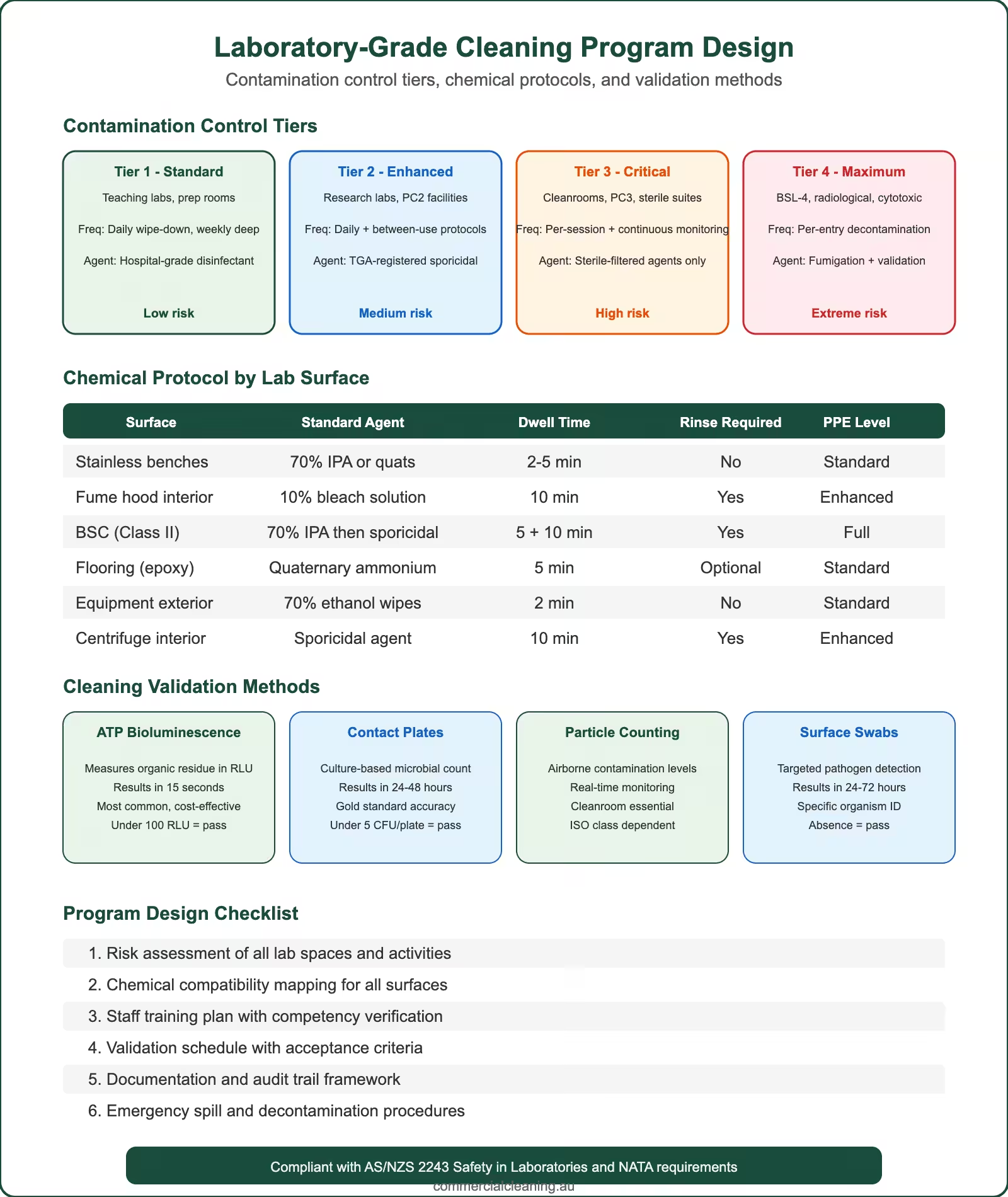
Laboratory-grade cleaning program design infographic showing contamination tiers chemical protocols validation methods and design checklist
Designing the Laboratory-Grade Cleaning Program
We built a five-zone cleaning program that reflected the distinct contamination risk profiles across the facility. Our first zone covered the controlled environment rooms, where we implemented terminal cleaning protocols and mid-shift decontamination cycles aligned with AS 4187.10, which specifies requirements for decontamination of transport and processing equipment in clinical and laboratory settings. We applied these principles to the entire controlled environment including walls, ceilings, and equipment exteriors, not just the bench surfaces that most cleaning providers focus on.
Our second zone addressed the main analysis laboratory, where we scheduled daily deep cleaning after the last shift and between-shift surface decontamination of workstation benches, fume hood interiors, and shared equipment surfaces. We have found that laboratories operating multiple shifts accumulate contamination much faster than single-shift facilities, and our program reflected this by doubling the cleaning frequency compared to what the previous provider had been delivering. Our third zone covered the biological sample receiving area, where we implemented the workflow-integrated cleaning protocol we had recommended during our assessment.
We assigned three dedicated team members to the Rydalmere facility, each of whom completed our laboratory environment training program that we have developed and refined over many years of specialist cleaning service delivery. Our training covered biological spill response, chemical hazard awareness, cleanroom gowning and behaviour protocols, and the specific documentation requirements of GMP-regulated facilities. We also required all team members to hold current first aid and hazardous materials handling certifications before commencing work at this site.
We introduced a dedicated equipment set for the Rydalmere facility that never left the premises. Our philosophy is that laboratory cleaning equipment must be treated with the same contamination prevention discipline as the laboratory instruments themselves. We provided facility-specific microfibre sets colour-coded by zone, a dedicated floor scrubber for the main laboratory, and separate mop systems for the controlled environment rooms and the general areas. We have found that this equipment dedication approach eliminates the cross-contamination risk that shared equipment creates, particularly in facilities that handle biological samples.
Office Area Cleaning Frequency Guide
Area
Daily
Weekly
Monthly
Quarterly
Reception & Lobby
Vacuum, mop, wipe
Glass doors, furniture
Deep carpet clean
Window wash
Workstations
Surface wipe, bins
Monitor & keyboard
Drawer clean-out
Chair shampoo
Kitchen/Breakroom
Bench, sink, floor
Fridge, microwave
Deep degrease
Exhaust fan clean
Bathrooms
Full sanitise + restock
Grout scrub
Descale fixtures
Vent clean
Meeting Rooms
Table wipe, vacuum
AV equipment dust
Upholstery clean
Carpet extraction
AS 4187.10 Compliance and GMP Documentation
Office Area Cleaning Frequency Guide requires specific protocols that we tailor to each facility based on its layout, traffic, and compliance requirements. We structured our compliance framework around AS 4187.10 and the TGA’s guidelines for good manufacturing practice as they applied to the laboratory’s clinical trial support activities. Our documentation system captured every cleaning event with a timestamp, operator identification, zone reference, products and concentrations used, and any environmental monitoring data collected during the shift. We have maintained similar GMP-aligned documentation systems across our laboratory and pharmaceutical cleaning portfolio and we update our templates annually based on regulatory changes and auditor feedback.
AS 4187.10 Compliance and GMP Documentation includes specific protocols that we tailor to each facility based on its layout, traffic, and compliance requirements. Our environmental monitoring program included weekly particle count testing in both controlled environment rooms and monthly bioburden sampling of critical surfaces in the biological sample receiving area. We used calibrated particle counters and contact plate sampling methods consistent with the facility’s existing quality management system. Our data over the first eight months showed that both controlled rooms maintained particle counts consistently below 70 percent of their ISO Class 7 threshold, which represented a significant improvement from the marginal compliance position we had identified during our initial assessment.
We maintained detailed chemical registers for each zone, documenting every product’s active ingredient, concentration, contact time, material compatibility, and relevance to specific contaminant types encountered in the laboratory. Our chemical selection process involved consultation with the facility’s quality assurance team to confirm that no cleaning product could interfere with assay sensitivity or introduce false positive results in the analytical methods used on site. We have encountered this issue in other laboratory environments and we know that even trace residues from certain cleaning agents can compromise analytical accuracy at parts-per-billion detection levels.
We supported the facility through a NATA surveillance audit and a TGA GMP inspection during our first year of service. Our team prepared environmental cleaning validation reports that included particle count trends, bioburden sampling results, surface ATP data, cleaning frequency compliance analysis, and staff training records. We received commendation from both auditing bodies for the quality and completeness of our environmental monitoring documentation, and the facility manager told us that our systematic approach had significantly reduced the preparation time required for these regulatory events compared to their previous experience.
Outcomes, Cost Structure, and Research Partnership Value
Outcomes, Cost Structure, and Research Partnership Value addresses specific protocols that we tailor to each facility based on its layout, traffic, and compliance requirements. We delivered results that directly supported the laboratory’s expansion plans and regulatory standing. Our monthly service fee of $2,530 covered all five-zone cleaning, mid-shift decontamination cycles, environmental particle and bioburden monitoring, chemical register management, and regulatory audit documentation support. We structured this as a fixed monthly rate because we have found that laboratory facility managers operating under GMP requirements need absolute cost certainty to maintain their quality management budgets without variance explanations during audit reviews.
Our measurable outcomes over the first twelve months were strong across every metric we tracked. Controlled environment particle counts remained below 70 percent of ISO Class 7 thresholds throughout the period. Surface ATP pass rates in the biological sample receiving area improved from 62 percent at baseline to 98 percent. We recorded zero environmental contamination incidents that affected any clinical trial data or required batch investigation, which the quality assurance manager told us was the first contamination-free year in the facility’s operating history.
We identified $9,800 in preventable maintenance costs through our routine observations, including a slowly failing HEPA filter gasket in the primary controlled environment room, early-stage corrosion on the biological waste autoclave drainage pipe, and a cracked floor tile near the chemical storage wing that was allowing moisture ingress into the subfloor. We reported each finding within two hours through our digital notification system, and the maintenance team confirmed that our early detection had prevented what could have been significant compliance events if left unaddressed during the next regulatory inspection cycle.
The Rydalmere laboratory renewed our contract and expanded our scope to include quarterly deep cleaning of all fume hoods, annual ceiling grid restoration in the controlled environment rooms, and specialist floor coating maintenance throughout the analysis areas. Our partnership continues to support research programs that benefit the broader healthcare community, and we are proud to maintain the environmental standards that underpin the integrity of clinical trial data generated at this facility for patients across Rydalmere, Clyde, Granville South, and the wider Western Sydney region. You can read about our work at another specialist facility in our Girraween cleaning case study.
Frequently Asked Questions
What makes laboratory cleaning different from standard medical facility cleaning?
We treat laboratories as controlled environments where cleaning directly affects analytical accuracy and regulatory compliance. Our programs address particle contamination, bioburden management, chemical residue prevention, and GMP documentation requirements that go well beyond what standard medical cleaning protocols cover.
How does AS 4187.10 apply to medical research laboratory cleaning?
We apply AS 4187.10 decontamination principles to controlled environment rooms, biological sample areas, and equipment surfaces throughout the laboratory. Our protocols cover walls, ceilings, and equipment exteriors in addition to bench surfaces, maintaining consistent standards across the entire controlled space.
How do you prevent cleaning products from interfering with laboratory analysis?
We consult with the facility’s quality assurance team during chemical selection to verify no cleaning product can affect assay sensitivity or introduce false positive results. Our experience shows that trace residues from certain cleaning agents can compromise analytical accuracy at parts-per-billion detection levels in sensitive laboratory methods.
What environmental monitoring do you provide for controlled environment rooms?
We conduct weekly particle count testing using calibrated counters and monthly bioburden sampling of critical surfaces. Our data showed both controlled rooms maintaining particle counts below 70 percent of ISO Class 7 thresholds, significantly improving from the marginal compliance position identified during initial assessment.
What does the $2,530 monthly laboratory cleaning program include?
Our fixed monthly fee covers five-zone cleaning, mid-shift decontamination cycles in controlled rooms, particle and bioburden monitoring, chemical register management, and regulatory audit documentation for NATA and TGA inspections. We provide absolute cost certainty for GMP budget management.
Can your team support NATA and TGA regulatory audits?
We prepared validation reports for both a NATA surveillance audit and a TGA GMP inspection during our first year. Our documentation included particle trends, bioburden results, ATP data, compliance analysis, and training records. Both auditing bodies commended the quality of our environmental monitoring documentation.
How do you handle biological spills in laboratory environments?
Our team holds current hazardous materials handling certifications and completes our laboratory-specific biological spill response training. We maintain dedicated spill kits on site with appropriate disinfectants for the biological agents handled at each facility, and we follow documented response protocols that include incident recording for quality management review.
What additional value has your team provided beyond routine cleaning?
We identified $9,800 in preventable maintenance costs including a failing HEPA filter gasket, autoclave drainage corrosion, and moisture-ingress floor damage. Our digital notification system reports findings within two hours, preventing potential compliance events before regulatory inspections.
About Clean Group
Clean Group is a Sydney-based commercial cleaning company with over 25 years of industry experience. Founded by Suji Siv, our team of 50+ trained professionals services offices, warehouses, medical centres, schools, childcare facilities, retail stores, gyms, and strata properties across Sydney, Melbourne, and Brisbane.
We are active members of ISSA and the Building Service Contractors Association of Australia (BSCAA). Our operations align with ISO 9001 (Quality Management), ISO 14001 (Environmental Management), and ISO 45001 (Workplace Health and Safety) standards. We hold membership with the Green Building Council of Australia and use eco-friendly, TGA-registered cleaning products wherever possible.
Every Clean Group cleaner is police-checked, fully insured, and trained in safe work procedures under SafeWork NSW guidelines. We operate 7 days a week, including after-hours and weekend services, to minimise disruption to your business.
Hi, I'm Suji Siv, the founder, CEO, and Managing Director of Clean Group, bringing over 25 years of leadership and management experience to the company. As the driving force behind Clean Group’s growth, I oversee strategic planning, resource allocation, and operational excellence across all departments. I am deeply involved in team development and performance optimization through regular reviews and hands-on leadership.