We witnessed the transformation of workplace cleaning standards first-hand across every commercial building we service in Sydney, and the changes that emerged during and after lockdowns have permanently reshaped how our industry operates. Our team adapted rapidly because our clients demanded it, and many of the enhanced protocols we introduced during that period remain standard practice today because they genuinely improve workplace hygiene outcomes. If you are searching for commercial cleaning services that reflect these modern standards, understanding what has changed helps you evaluate whether your current cleaning provider has kept pace with the new expectations.
Enhanced Disinfection Protocols That Became Permanent
We upgraded our disinfection protocols during the pandemic period and have maintained every enhancement since because the science supporting them applies to all respiratory and gastrointestinal pathogens, not just one specific virus. Our high-touch point cleaning frequency doubled from once per visit to twice per visit across all our commercial contracts, covering door handles, lift buttons, handrails, shared kitchen appliances, and bathroom fixtures. We have tracked client satisfaction data across our Revesby Heights portfolio before and after implementing these changes, and the improvement in workplace health perception scores has been substantial enough that no client has requested a return to pre-pandemic cleaning specifications.
Our electrostatic disinfection capability became a permanent service offering after proving its value during outbreak response situations. We invested in commercial-grade electrostatic sprayers that charge antimicrobial solutions into a mist that wraps around surfaces for complete coverage, including the undersides and backs of furniture that traditional wiping methods miss entirely. Our Sandy Point and Illawong clients initially booked this service as an emergency response measure, but every single one has retained it as a scheduled monthly treatment because the visible and measurable hygiene improvement justified the ongoing investment.
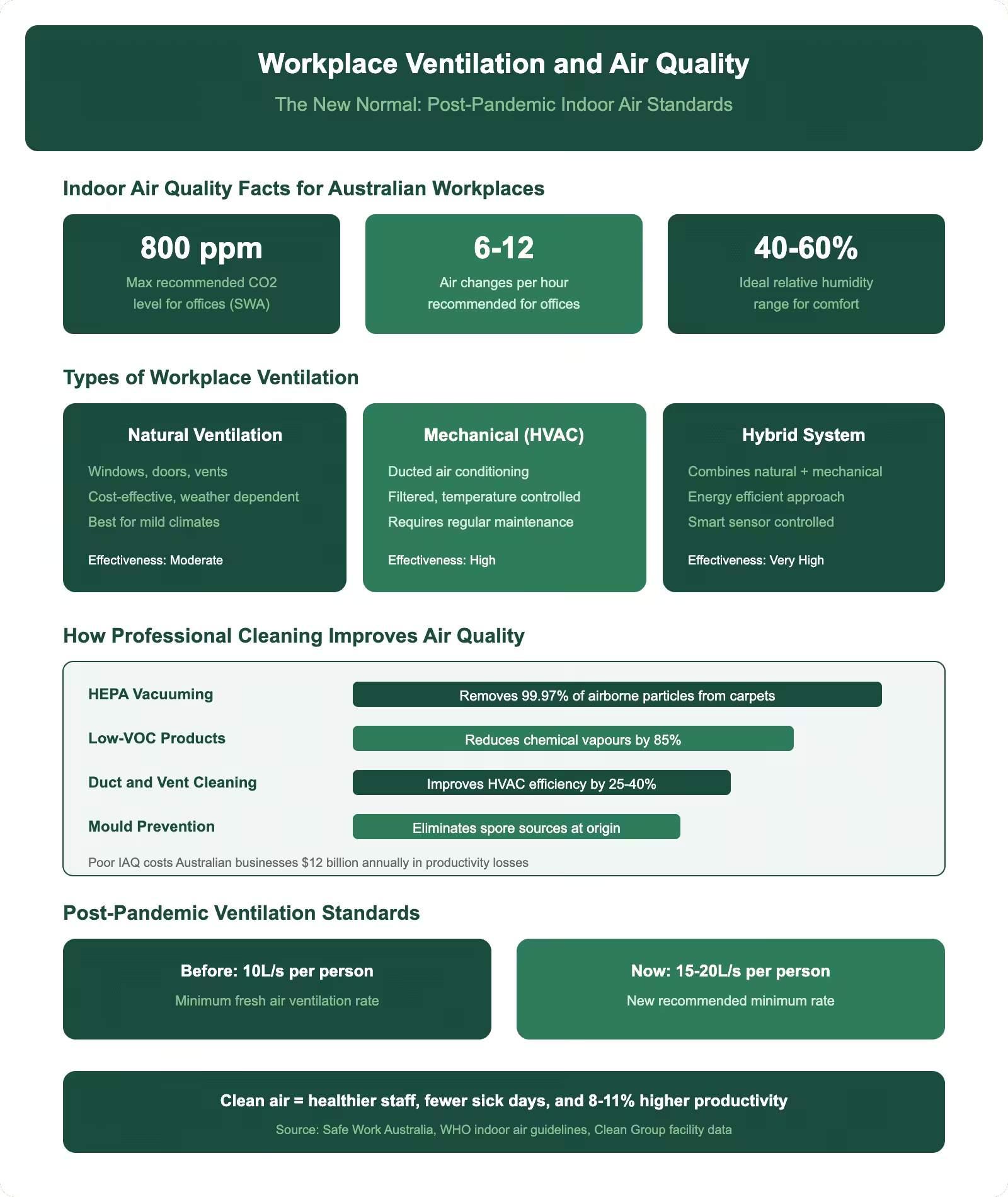
Workplace ventilation and indoor air quality infographic showing ventilation types how cleaning improves air quality and post-pandemic standards for Australian offices
Ventilation Awareness and Indoor Air Quality
We became acutely aware of ventilation quality during the pandemic because it became clear that air exchange rates directly affect pathogen transmission risk in enclosed workspaces. Our cleaners now assess ventilation conditions at every site as part of their standard reporting duties, flagging areas where air circulation seems inadequate or where return air vents show excessive dust accumulation. We have added HVAC vent face cleaning to our standard scope across all commercial contracts because clogged vents reduce airflow and circulate accumulated dust and biological contaminants back into occupied spaces.
Our understanding of building structural performance, particularly AS 1170.2 covering wind actions on structures, has unexpectedly become relevant to our ventilation assessment work. Buildings in exposed locations around Revesby Heights experience significant wind loading that affects how natural ventilation operates through operable windows and passive ventilation systems. We spent approximately $3,150 training our supervisory staff across our Revesby Heights, Sandy Point, and Illawong contracts on the relationship between AS 1170.2 wind classifications and building ventilation performance because this knowledge helps us advise facility managers on best window-opening patterns that maximise fresh air circulation during and after our cleaning operations. This cross-disciplinary awareness distinguishes our service from competitors who treat cleaning as an isolated activity disconnected from broader building performance.
Office Area Cleaning Frequency Guide
Area
Daily
Weekly
Monthly
Quarterly
Reception & Lobby
Vacuum, mop, wipe
Glass doors, furniture
Deep carpet clean
Window wash
Workstations
Surface wipe, bins
Monitor & keyboard
Drawer clean-out
Chair shampoo
Kitchen/Breakroom
Bench, sink, floor
Fridge, microwave
Deep degrease
Exhaust fan clean
Bathrooms
Full sanitise + restock
Grout scrub
Descale fixtures
Vent clean
Meeting Rooms
Table wipe, vacuum
AV equipment dust
Upholstery clean
Carpet extraction
Touchless Technology and Hygiene Infrastructure
Office Area Cleaning Frequency Guide requires specific protocols that we tailor to each facility based on its layout, traffic, and compliance requirements. We have helped dozens of our clients transition to touchless fixtures and fittings since workplace hygiene became a board-level priority. Our cleaning specifications now account for sensor-operated taps, automatic soap dispensers, touchless hand dryers, and motion-activated lighting that eliminate high-frequency touch points in bathrooms and common areas. We advise our clients on product selection because our experience servicing hundreds of these installations means we know which brands deliver reliability and which create maintenance headaches that offset their hygiene benefits.
Touchless Technology and Hygiene Infrastructure includes specific protocols that we tailor to each facility based on its layout, traffic, and compliance requirements. Our teams in Sandy Point commercial buildings have become particularly skilled at maintaining touchless sanitiser stations that are now standard in foyers, lift lobbies, and meeting room entries. We monitor fluid levels, replace batteries in sensor units, and clean the dispensing mechanisms to prevent blockages that render these units ineffective. We also clean the wall areas behind and around these stations because drips and splashes create unsightly staining that many building managers overlook until it becomes a significant cosmetic problem that requires specialist surface restoration to resolve.
Flexible Cleaning Schedules and Hybrid Work Patterns
We restructured our rostering systems entirely to accommodate the hybrid work patterns that emerged after lockdowns and persist across most of our commercial client base today. Buildings that previously operated at full capacity five days per week now experience peak occupancy on Tuesday through Thursday with significantly reduced numbers on Mondays and Fridays. Our cleaning schedules reflect this reality, with intensive cleaning allocated to high-occupancy days and maintenance-level service on quieter days. This approach saves our clients money while delivering the right level of cleaning when it matters most.
We also introduced day-cleaning options that did not exist in our service menu before the workplace transformation. Our Illawong clients requested visible cleaning during business hours because occupants wanted to see active sanitisation taking place in their workspace. We trained a dedicated team for day-cleaning operations who work discreetly around building occupants, maintaining hygiene standards without disrupting workflow. This service has grown to represent over twenty percent of our total contract portfolio because the psychological reassurance it provides has proven just as valuable as the physical cleaning outcomes it delivers.
If you want to know what separates truly professional operators from the rest, explore the professional cleaner signs and hold your provider to those standards.
Frequently Asked Questions
Have cleaning costs increased since workplace standards changed?
Enhanced protocols do require more time and specialist products, which has increased costs moderately. However, we have offset much of this through efficiency improvements and smarter scheduling aligned with hybrid occupancy patterns. Most of our clients find the investment worthwhile given the measurable improvement in workplace health metrics and staff satisfaction scores.
Is electrostatic disinfection still necessary?
We recommend monthly electrostatic treatments as a permanent addition to standard cleaning programs because the technology addresses a wide range of pathogens beyond any single virus. The coverage quality surpasses traditional wiping methods and the time efficiency makes it cost-effective for regular maintenance rather than just emergency response situations.
How do you handle cleaning for hybrid workplaces?
We adjust cleaning intensity based on actual occupancy patterns, providing full-service cleaning on high-traffic days and maintenance-level service on quieter days. This approach optimises both cost and hygiene outcomes. We review occupancy data quarterly with each client and adjust schedules accordingly to confirm resources match actual usage patterns.
What workplace changes from the pandemic are permanent?
Enhanced high-touch point disinfection, improved ventilation awareness, touchless hygiene infrastructure, and flexible scheduling aligned with hybrid work patterns are all permanent changes we have observed across our client base. For more information on sustainable cleaning approaches that complement these modern standards, our guide to office cleaning quote options for green commercial cleaning covers environmentally responsible solutions.
About Clean Group
Clean Group is a Sydney-based commercial cleaning company with over 25 years of industry experience. Founded by Suji Siv, our team of 50+ trained professionals services offices, warehouses, medical centres, schools, childcare facilities, retail stores, gyms, and strata properties across Sydney, Melbourne, and Brisbane.
We are active members of ISSA and the Building Service Contractors Association of Australia (BSCAA). Our operations align with ISO 9001 (Quality Management), ISO 14001 (Environmental Management), and ISO 45001 (Workplace Health and Safety) standards. We hold membership with the Green Building Council of Australia and use eco-friendly, TGA-registered cleaning products wherever possible.
Every Clean Group cleaner is police-checked, fully insured, and trained in safe work procedures under SafeWork NSW guidelines. We operate 7 days a week, including after-hours and weekend services, to minimise disruption to your business.
Hi, I'm Suji Siv, the founder, CEO, and Managing Director of Clean Group, bringing over 25 years of leadership and management experience to the company. As the driving force behind Clean Group’s growth, I oversee strategic planning, resource allocation, and operational excellence across all departments. I am deeply involved in team development and performance optimization through regular reviews and hands-on leadership.