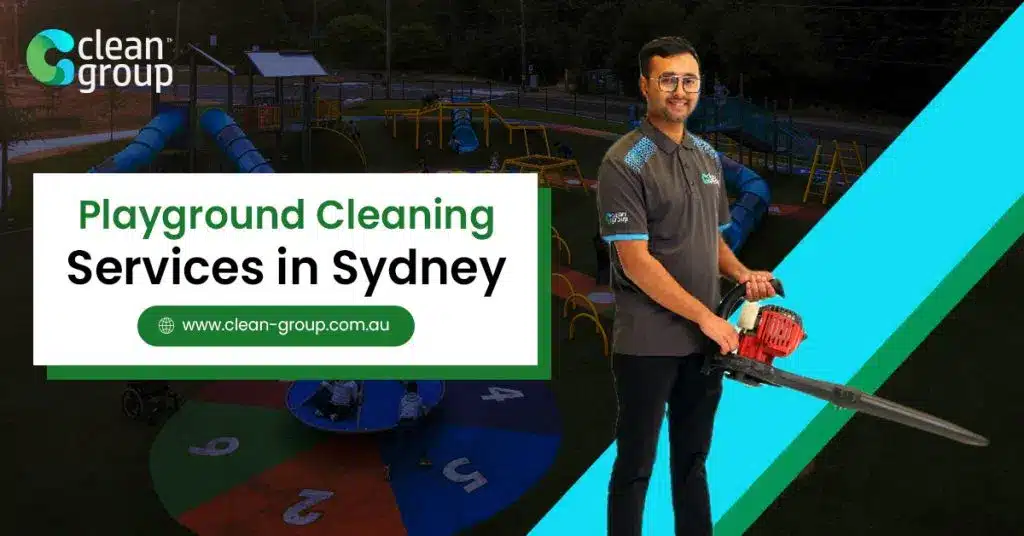
We have cleaned playgrounds across Sydney for over a decade, and our experience in childcare centre cleaning has shown us that outdoor play equipment is consistently the most neglected hygiene risk in early learning environments. Our team services centres in Sutherland, Kirrawee and Gymea, where coastal weather accelerates equipment degradation and creates cleaning challenges that inland facilities never encounter. We align our playground maintenance with AS 4685.1 general safety requirements for playground equipment because hygiene and structural safety are inseparable when children are climbing, swinging and touching every surface with bare hands.
What Playground Cleaning Actually Involves
We approach playground cleaning as a multi-stage process that goes far beyond hosing down slides and wiping seats. Our protocol starts with a visual inspection of every piece of equipment for structural damage, sharp edges, loose bolts and surface degradation. We then remove gross contamination — bird droppings, leaf litter, spider webs, insect nests — before applying our cleaning and sanitisation cycle. In Sutherland, we once found a paper wasp nest inside a tunnel slide that staff had been sending children through for weeks without noticing.
Our sanitisation cycle uses food-grade disinfectant applied via low-pressure sprayer to avoid damaging painted surfaces or rubber coatings. We allow the manufacturer-specified contact time before rinsing with clean water and allowing equipment to air-dry. We never use bleach-based products on playground equipment because chlorine accelerates rubber degradation and creates a slipping hazard on plastic surfaces when residue remains after drying.
We finish every playground clean by inspecting ground surfaces — rubber softfall, synthetic turf, bark chip and sand — for contamination, drainage issues and impact-attenuation degradation. Our Kirrawee centres sit on sloped sites where stormwater runoff deposits sediment into sandpits and erodes softfall edges. We address these issues during every visit rather than waiting for them to become safety hazards that require expensive remediation.
Australian playground safety standards infographic showing AS 4685 and AS 4422 requirements cleaning schedules by material type and injury prevention data
Australian Safety Standards for Playground Equipment
We structure our playground cleaning program around AS 4685.1, which sets general safety requirements for playground equipment including design, installation, inspection and maintenance. While most people associate this standard with structural engineering, we have found that its maintenance provisions directly inform cleaning practices — particularly around surface finishes, entrapment hazards created by debris accumulation and the condition of impact-attenuating ground surfaces.
Our inspections follow the three-tier frequency model recommended in AS 4685.1: routine visual checks during every cleaning visit, operational inspections monthly and detailed annual assessments. We document findings using a standardised checklist that maps to the standard’s requirements, and we share reports with centre directors within 24 hours. In Gymea, our inspection process identified a corroded swing chain that passed the centre’s own visual check but failed our load-bearing assessment — we flagged it before any incident occurred.
We also test impact-attenuating surfaces quarterly using a drop-height assessment that estimates whether the ground surface would adequately protect a child falling from the highest accessible point on each piece of equipment. Our Sutherland centres use a mix of rubber softfall and bark chip, and we have found that bark chip compacts significantly over summer, reducing its protective properties. We flag these findings so centres can arrange top-up before the compaction reaches unsafe levels.
Office Area Cleaning Frequency Guide
Area
Daily
Weekly
Monthly
Quarterly
Reception & Lobby
Vacuum, mop, wipe
Glass doors, furniture
Deep carpet clean
Window wash
Workstations
Surface wipe, bins
Monitor & keyboard
Drawer clean-out
Chair shampoo
Kitchen/Breakroom
Bench, sink, floor
Fridge, microwave
Deep degrease
Exhaust fan clean
Bathrooms
Full sanitise + restock
Grout scrub
Descale fixtures
Vent clean
Meeting Rooms
Table wipe, vacuum
AV equipment dust
Upholstery clean
Carpet extraction
Pathogen Risks on Outdoor Play Equipment
Office Area Cleaning Frequency Guide requires specific protocols that we tailor to each facility based on its layout, traffic, and compliance requirements. We take pathogen risks on playground equipment seriously because children touch these surfaces and then put their hands in their mouths, noses and eyes. Our swab testing across Sutherland Shire playgrounds has detected Staphylococcus aureus, E. coli and various enteric bacteria on equipment surfaces that appeared visually clean. The worst contamination levels consistently appear on swing chains, climbing rope surfaces and the inside walls of enclosed slides where moisture and darkness create ideal microbial conditions.
Pathogen Risks on Outdoor Play Equipment includes specific protocols that we tailor to each facility based on its layout, traffic, and compliance requirements. Our team applies hospital-grade disinfectant to all high-touch playground surfaces during every visit, with particular attention to handrails, chain links, steering wheels and stepping platforms. We use a product with broad-spectrum efficacy against bacteria, viruses and fungi that holds current TGA registration and is safe for incidental skin contact — critical given that children with cuts and grazes regularly touch these surfaces. In Kirrawee, our post-cleaning swab results consistently show colony counts below 50 CFU per surface, which meets our internal benchmark for child-safe environments.
Seasonal Cleaning Adjustments for Sydney Playgrounds
We adjust our playground cleaning protocols seasonally because Sydney’s climate creates distinct challenges throughout the year. During summer, UV degradation accelerates surface cracking on plastic components, exposing rough edges that harbour bacteria and can cut children’s skin. We inspect for UV damage during every summer visit and apply protective treatments to vulnerable surfaces. Our Gymea centres near the Royal National Park also deal with increased insect activity in warmer months, requiring additional checks for ant colonies under softfall and spider habitation inside enclosed equipment.
Winter brings different challenges — moss and algae growth on shaded surfaces creates serious slip hazards, particularly on timber platforms and concrete pathways. We treat these surfaces with an algaecide during autumn before conditions deteriorate and apply anti-slip treatments to high-traffic walking paths. Our Sutherland data shows that slip-related incident reports drop by over 40 percent at centres where we implement our winter pre-treatment protocol compared to centres that only address slippery surfaces reactively.
During spring, pollen accumulation on equipment surfaces triggers allergic reactions in sensitive children. We increase our wipe-down frequency from weekly to twice weekly during peak pollen season and deploy air-quality monitoring in outdoor covered areas where pollen concentrates. We have found that a simple pre-play wipe of handrails and seats reduces allergen exposure enough to keep most sensitive children comfortable outdoors.
Routine Maintenance Versus Deep Cleaning
We distinguish clearly between routine maintenance and deep cleaning because they serve different purposes and require different approaches. Routine maintenance happens during every visit — visual inspection, debris removal, surface sanitisation and basic ground-surface checks. Deep cleaning happens quarterly and includes pressure-washing all hard surfaces, descaling metal components, treating timber with preservative, replenishing sandpit media and conducting full impact-attenuation testing.
Our deep-clean sessions are scheduled during term holidays when playground usage drops to zero, giving us uninterrupted access for pressure-washing without risk to children. We photograph every piece of equipment before and after the deep clean and include these images in our quarterly report to centre management. In Kirrawee, one director uses our before-and-after photos in parent newsletters to demonstrate the centre’s commitment to outdoor hygiene.
Why Professional Playground Cleaning Matters
We have seen too many centres attempt playground cleaning with garden hoses and household spray bottles, and the results are consistently inadequate. Professional playground cleaning requires equipment calibrated for the task — low-pressure sprayers that do not damage surfaces, food-grade disinfectants formulated for outdoor use, pressure washers with adjustable PSI to handle different materials safely, and calibrated testing equipment to verify results. Our investment in specialist tools is one reason our outcomes consistently outperform DIY approaches.
Our team also brings expertise in identifying hazards that untrained staff miss. We have found concealed rust under paint, hidden mould inside enclosed structures, structural fatigue in welded joints and entrapment hazards created by debris wedged into equipment gaps. Our Gymea inspection checklist covers 67 points across structural, hygienic and surface-condition categories — a level of thoroughness that no centre could replicate with internal staff who have dozens of other responsibilities.
Our Detailed Playground Cleaning Service
We offer playground cleaning as a standalone service or integrated into our full childcare centre cleaning contract. Our standalone playground service visits weekly and includes visual inspection, debris removal, surface sanitisation, ground-surface assessment and a written condition report. Centres that bundle playground cleaning with their indoor contract receive quarterly deep-cleans and annual detailed assessments at no additional charge.
We price our standalone playground cleaning at approximately $1,470 per month for a medium-sized childcare centre with standard outdoor play equipment, sandpit, bike track and covered outdoor area. This includes all labour, products, equipment and reporting. Centres in the Sutherland Shire area benefit from our proximity to our southern depot, which means faster response times and lower travel overheads that we pass on through competitive pricing.
Our playground cleaning expertise comes from years of hands-on experience across Sutherland, Kirrawee and Gymea childcare centres, and we continue refining our approach each season based on testing data and centre feedback. To learn about the indoor areas that most cleaning providers overlook in educational settings, read our next guide in our childcare cleaning series where we expose the five most commonly missed zones.
Frequently Asked Questions
How often should playground equipment be cleaned? We sanitise all high-touch playground surfaces weekly during routine visits and conduct quarterly deep-cleans including pressure-washing and full structural inspection. During illness outbreaks, we increase sanitisation to twice weekly until the centre confirms the event has resolved.
What products do you use on playground equipment? We use TGA-registered food-grade disinfectant safe for incidental skin contact, applied via low-pressure sprayer to avoid damaging surfaces. We never use bleach on playground equipment because it accelerates rubber degradation and creates slip hazards on plastic surfaces.
Do you inspect equipment for structural safety during cleaning? We follow the three-tier inspection model from AS 4685.1 — routine visual checks every visit, operational inspections monthly and detailed annual assessments. We document all findings and share reports with centre directors within 24 hours.
How do you handle sandpit hygiene? We rake sandpits during every visit to remove debris, apply UV-activated antimicrobial treatment and check for animal contamination or foreign objects. Quarterly deep-cleans include sand turnover and replenishment where media has compacted or been lost to stormwater runoff.
What seasonal adjustments do you make? Summer focuses on UV damage inspection and insect control. Autumn applies algaecide pre-treatment for winter slip prevention. Winter addresses moss and algae with anti-slip treatments. Spring increases wipe-down frequency for pollen management on equipment surfaces.
How much does playground cleaning cost? Our standalone playground cleaning costs approximately $1,470 per month for a medium-sized childcare centre. This includes weekly sanitisation visits, all products and equipment, condition reporting and quarterly deep-cleans. Bundled contracts with indoor cleaning include additional services at no extra charge.
Can you clean synthetic turf and rubber softfall surfaces? We pressure-wash rubber softfall quarterly and treat synthetic turf with antimicrobial solutions. We test impact-attenuation properties during deep-cleans and flag any surfaces that have compacted below safe levels so centres can arrange remediation before incidents occur.
Do you provide reports on playground condition? Every visit generates a written condition report covering structural observations, hygiene results and ground-surface status. Quarterly deep-cleans include before-and-after photography and impact-attenuation test results. All documentation is formatted for ACECQA assessment evidence requirements.
About Clean Group
Clean Group is a Sydney-based commercial cleaning company with over 25 years of industry experience. Founded by Suji Siv, our team of 50+ trained professionals services offices, warehouses, medical centres, schools, childcare facilities, retail stores, gyms, and strata properties across Sydney, Melbourne, and Brisbane.
We are active members of ISSA and the Building Service Contractors Association of Australia (BSCAA). Our operations align with ISO 9001 (Quality Management), ISO 14001 (Environmental Management), and ISO 45001 (Workplace Health and Safety) standards. We hold membership with the Green Building Council of Australia and use eco-friendly, TGA-registered cleaning products wherever possible.
Every Clean Group cleaner is police-checked, fully insured, and trained in safe work procedures under SafeWork NSW guidelines. We operate 7 days a week, including after-hours and weekend services, to minimise disruption to your business.
Hi, I'm Suji Siv, the founder, CEO, and Managing Director of Clean Group, bringing over 25 years of leadership and management experience to the company. As the driving force behind Clean Group’s growth, I oversee strategic planning, resource allocation, and operational excellence across all departments. I am deeply involved in team development and performance optimization through regular reviews and hands-on leadership.