Commercial cleaning contractors professionals need to understand this. We have responded to hundreds of cleaning tenders across every sector in Sydney, and we can tell you that the difference between winning and losing almost always comes down to how well the response demonstrates understanding of the client’s actual needs. Our office cleaners sydney team has refined our tender process through years of wins, losses, and debriefs, and this guide shares the practical framework we use every time a Request for Tender crosses our desk.
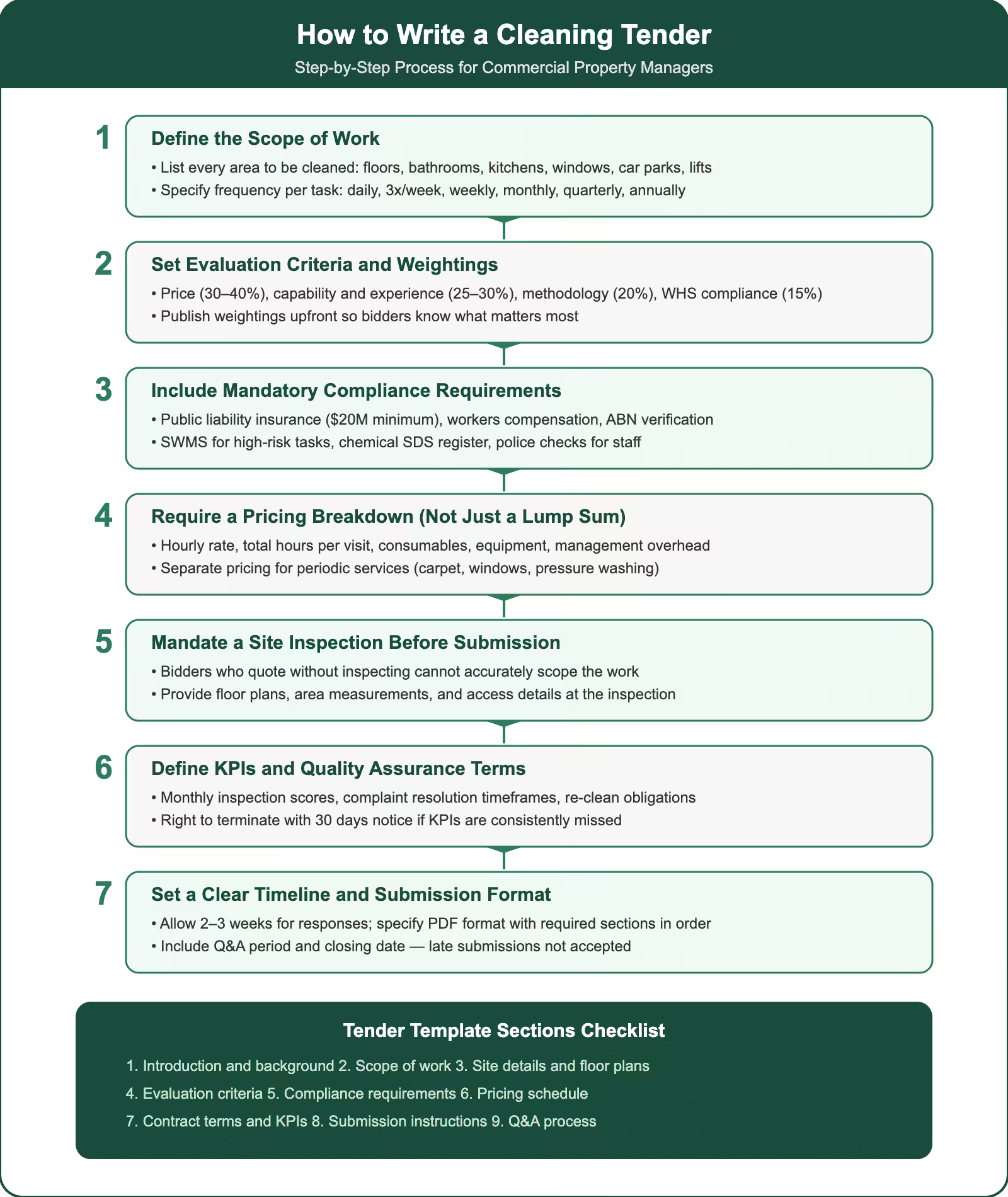
How to write a cleaning tender for commercial properties showing 7-step process from scope definition through evaluation criteria to submission management
Request for Tender (RFT) Analysis and Evaluation Criteria
We start every tender response by reading the RFT document three times—once for overall scope, once for evaluation criteria weighting, and once for mandatory compliance requirements. Our team has found that most unsuccessful tenders fail not on price but on failure to address evaluation criteria in the order and format the client specified. We mark up every RFT with colour-coded annotations: red for mandatory requirements, amber for scored criteria, and green for value-add opportunities.
We pay particular attention to the evaluation methodology because it tells us where to invest our effort. Our Hornsby tender team analysed thirty government RFTs from the past two years and found that methodology and quality documentation accounted for 45 percent of the weighted score on average, while price accounted for only 30 percent. We allocate our response-writing time proportionally to these weightings, which means our methodology sections receive more drafting attention than our pricing schedules.
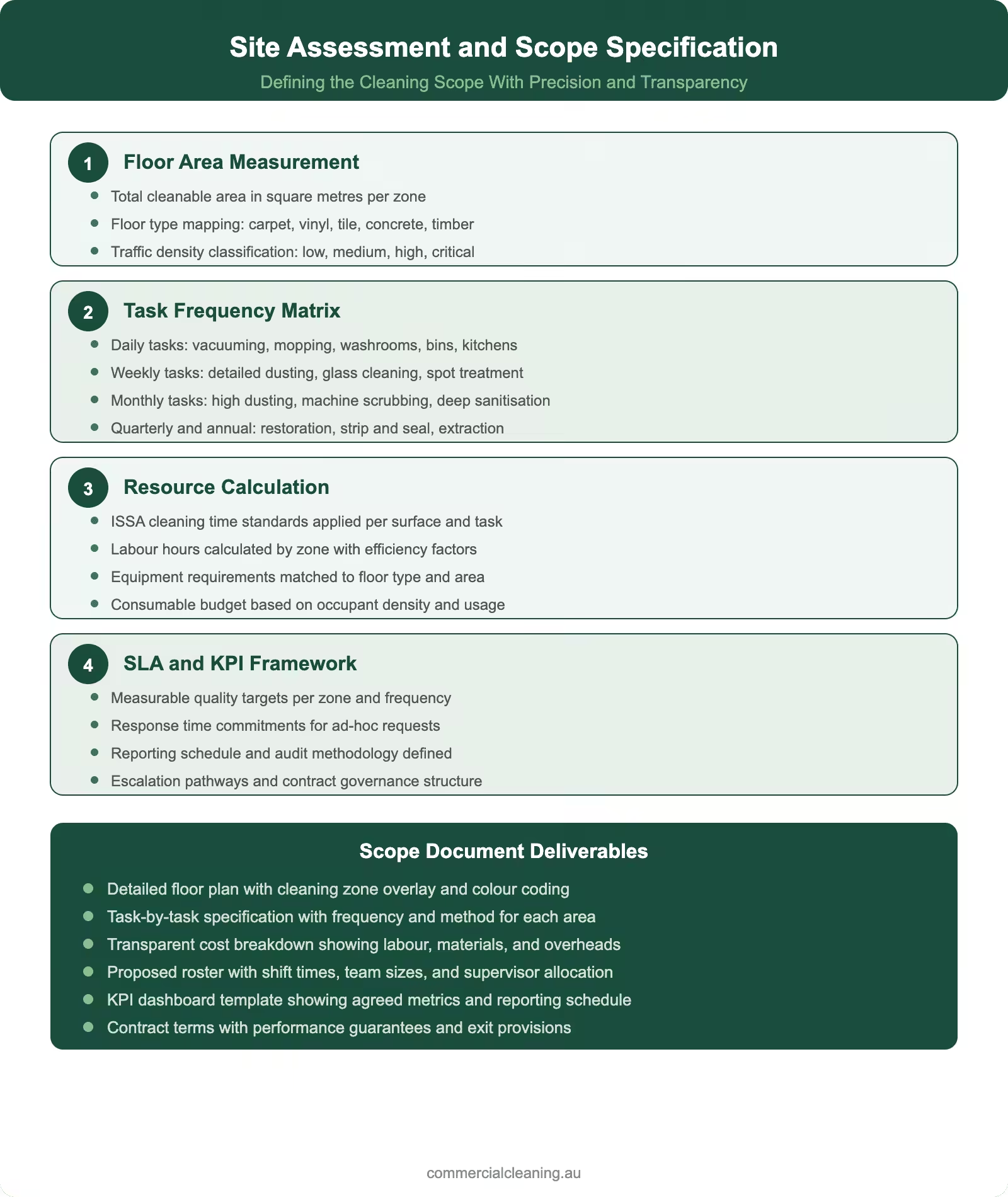
Site assessment and scope specification infographic showing four components from floor measurement to SLA framework with deliverables
Site Assessment and Scope Specification
Site Assessment and Scope Specification involves specific protocols that we tailor to each facility based on its layout, traffic, and compliance requirements. We conduct a physical site inspection for every tender we pursue, because responding to a tender without seeing the building is like quoting a renovation from photographs alone. Our estimators in Hornsby spend a minimum of two hours on-site during the mandatory or optional site visit, photographing every zone, counting fixtures, measuring floor areas, and noting the condition of existing finishes. We have won contracts specifically because our site assessment identified issues—like a failing grout seal in a ground-floor foyer—that competitors’ desktop assessments missed entirely.
We document our site assessment findings in a structured report that becomes an appendix to the tender response, demonstrating to the evaluation panel that our pricing is grounded in physical reality rather than assumptions. Our Waitara portfolio manager developed a site assessment template that captures 83 data points per floor, covering surface types, traffic patterns, fixture counts, chemical storage locations, and WHS hazards. We invested $2,600 in refining this tender preparation toolkit, including the assessment template, response framework, and quality management documentation—an investment that has contributed to a 68 percent tender success rate over the past eighteen months.
Office Area Cleaning Frequency Guide
Area
Daily
Weekly
Monthly
Quarterly
Reception & Lobby
Vacuum, mop, wipe
Glass doors, furniture
Deep carpet clean
Window wash
Workstations
Surface wipe, bins
Monitor & keyboard
Drawer clean-out
Chair shampoo
Kitchen/Breakroom
Bench, sink, floor
Fridge, microwave
Deep degrease
Exhaust fan clean
Bathrooms
Full sanitise + restock
Grout scrub
Descale fixtures
Vent clean
Meeting Rooms
Table wipe, vacuum
AV equipment dust
Upholstery clean
Carpet extraction
Cleaning Services Award and Cost-of-Labour Costing
Office Area Cleaning Frequency Guide requires specific protocols that we tailor to each facility based on its layout, traffic, and compliance requirements. We build every tender price from the Cleaning Services Award 2020 base rates up, because undercutting the award is both illegal and unsustainable. Our costing model starts with the current Level 1 hourly rate and layers on superannuation, workers compensation insurance, payroll tax, leave provisions, and uniform allowances to calculate a true cost-per-hour that reflects the actual cost of employing a cleaner in NSW. We have seen competitors submit tender prices that sit below the award rate plus on-costs—a red flag that tells us either they are planning to underpay staff or they have not costed the job properly.
We present our award-based costing transparently in our tender responses because we have found that evaluation panels—particularly in government and institutional tenders—actively penalise submissions that cannot demonstrate award compliance. Our Asquith clients told us that our labour-costing breakdown was the section that differentiated our response from three competitors, because it showed the panel we understood the industrial relations obligations that come with the contract.
Quality and Methodology Documentation
We dedicate more pages to our quality methodology than to any other section of the tender response, because this is where we demonstrate how we will deliver the scope rather than just what we will deliver. Our methodology documentation covers cleaning sequences, product specifications, equipment lists, frequency matrices, and quality verification methods for every zone type in the building. We reference AS 4902 building defect identification principles in our methodology because we train our crews to identify and report building maintenance issues—like cracked tiles, leaking taps, and damaged paintwork—during their cleaning rounds.
We include our inspection and audit framework in the methodology section, showing the evaluation panel exactly how we will measure and report our own performance. Our Hornsby tender responses include sample inspection reports, dashboard screenshots, and trend charts from comparable contracts—evidence that our quality system is operational rather than theoretical. We have found that providing concrete evidence of a working system outperforms written promises of future implementation every time.
Risk Management and Compliance Framework
We present a risk management framework that identifies the specific risks associated with the tendered site rather than a generic risk register copied from a template. Our framework follows the AS/NZS ISO 31000 risk management standard and identifies hazards, assesses likelihood and consequence, assigns controls, and nominates responsible persons for each risk. We tailor the framework to each tender by incorporating findings from our site assessment—for example, at a Waitara aged care facility, we identified chemical storage proximity to food preparation areas as a site-specific risk that required dedicated controls.
We include our WHS management system documentation as an appendix, covering Safe Work Method Statements for high-risk tasks, incident reporting procedures, and our consultation mechanisms under the Work Health and Safety Act 2011 (NSW). Our compliance documentation demonstrates to the evaluation panel that we manage safety as a system rather than as a collection of standalone documents, which aligns with the expectations of sophisticated procurement teams in government and institutional settings.
Transition and Implementation Planning
Transition and Implementation Planning focuses on specific protocols that we tailor to each facility based on its layout, traffic, and compliance requirements. We present a detailed transition plan that covers the first ninety days of the contract, because we have learned that poor transitions destroy client confidence before the ongoing service has a chance to prove itself. Our transition plan breaks the period into three phases: mobilisation (days 1 to 14), stabilisation (days 15 to 45), and optimisation (days 46 to 90). Each phase has defined milestones, responsible persons, and success criteria that the client can monitor in real time.
We assign a dedicated transition manager to every new contract, separate from the ongoing account manager, because transition management requires a different skill set—project management discipline rather than relationship management. Our Mount Colah transition for a 12,000-square-metre commercial campus involved onboarding fourteen new staff members, installing chemical dispensing systems, calibrating our digital inspection platform, and conducting three rounds of site-specific training—all within the fourteen-day mobilisation window. We documented every milestone in a shared project tracker that the client accessed daily.
Customer References and Past Performance Evidence
Customer References and Past Performance Evidence covers specific protocols that we tailor to each facility based on its layout, traffic, and compliance requirements. We select references strategically, choosing clients whose facilities most closely match the tendered site in size, sector, and complexity. Our reference pack includes a written testimonial, a contact name and phone number, and a summary of the contract scope and duration. We prepare our referees in advance by letting them know a call is coming and reminding them of the specific achievements we would like them to highlight—not to script their responses, but to confirm they have the relevant details fresh in mind.
We supplement references with quantitative performance data from comparable contracts, including average inspection scores, defect rates, complaint rates, and staff retention figures. Our Hornsby portfolio data shows a 94 percent average inspection score and a 1.1 percent defect rate across all commercial contracts—figures that carry more weight with evaluation panels than subjective testimonials alone.
Presentation and Response Structure
We structure every tender response to mirror the RFT’s evaluation criteria, because we want the assessor to find our answers exactly where they expect them. Our formatting standards include a table of contents linked to the RFT clause numbers, executive summary on the first page, and clear section breaks with headers that match the RFT’s language. We have found that evaluation panels assess multiple responses in a single sitting, and making our document easy to handle earns goodwill that influences scoring at the margins.
We limit our executive summary to a single page that addresses the three most heavily weighted evaluation criteria with specific, quantified commitments. Our Asquith tender team tested longer executive summaries against one-page versions and found that the concise format received consistently higher engagement feedback from debrief sessions. We treat the executive summary as our elevator pitch—if the panel reads nothing else, this page must convince them we understand their needs.
Value-for-Money Positioning and Competitive Analysis
Value-for-Money Positioning and Competitive Analysis requires specific protocols that we tailor to each facility based on its layout, traffic, and compliance requirements. We position our pricing on value rather than cost, because the lowest price rarely wins well-structured tenders. Our value proposition articulates the total cost of ownership—including the hidden costs of poor cleaning like increased maintenance spend, tenant churn, and WHS incidents—and positions our pricing as an investment in building asset protection. We have found that evaluation panels in Hornsby and the upper North Shore respond particularly well to asset-protection framing because building owners in these areas manage high-value properties where maintenance costs compound quickly.
We research our competitors’ likely pricing positions by analysing publicly available contract award notices and industry salary benchmarking data. Our competitive analysis is not about undercutting—it is about understanding where the market sits so we can price competitively while maintaining award compliance and service quality. We have walked away from tenders where the indicative budget made it clear that the client was looking for a below-award price, because winning an unsustainable contract damages both parties.
Insurance and Compliance Documentation
We present our insurance portfolio as evidence of risk management maturity rather than just a compliance checkbox. Our coverage includes $20 million public liability, $10 million products liability, professional indemnity, and workers compensation—all from A-rated insurers. We provide current certificates of currency with every tender response and include a summary table that maps each insurance type to the specific risks it covers in the context of the tendered contract.
Long-Term Contract Sustainability and Escalation Procedures
We build CPI escalation clauses into every tender price to verify the contract remains sustainable over its full term. Our escalation model uses the ABS Consumer Price Index for Sydney as the benchmark and applies annual adjustments to the labour component of the price—which typically represents 70 to 80 percent of the total contract value. We present this model transparently in our tender because we have seen competitors win contracts with artificially low initial prices and then demand unsustainable increases at the first review point.
We include a continuous improvement plan that outlines specific initiatives we will implement during the contract term, such as equipment upgrades, process automation, and sustainability improvements. Our Waitara aged care contract included a commitment to transition from disposable to reusable microfibre systems within the first twelve months—a change that reduced consumable waste by 40 percent and delivered a net cost saving that we shared with the client.
Documentation Quality and Proofreading
We treat documentation quality as a direct reflection of our service quality, because a tender response full of typos and formatting errors signals a lack of attention to detail that evaluation panels rightly find concerning. Our tender team includes a dedicated proofreader who reviews every response before submission, checking for spelling, grammar, formatting consistency, and compliance with the RFT’s submission requirements. We have received feedback from evaluation panels that our documentation quality stood out—a comment that confirms the investment in professional presentation pays dividends.
We submit every tender response at least 24 hours before the deadline because last-minute submissions create avoidable risks—upload failures, format incompatibilities, and missing attachments. Our Mount Colah team maintains a submission checklist that covers every RFT requirement, every appendix, and every compliance certificate, ticked off by two people before the response goes out. For a detailed understanding of how tender pricing relates to ongoing contract costs, we recommend reading our guide on switching cleaning providers.
Frequently Asked Questions
About Clean Group
Clean Group is a Sydney-based commercial cleaning company with over 25 years of industry experience. Founded by Suji Siv, our team of 50+ trained professionals services offices, warehouses, medical centres, schools, childcare facilities, retail stores, gyms, and strata properties across Sydney, Melbourne, and Brisbane.
We are active members of ISSA and the Building Service Contractors Association of Australia (BSCAA). Our operations align with ISO 9001 (Quality Management), ISO 14001 (Environmental Management), and ISO 45001 (Workplace Health and Safety) standards. We hold membership with the Green Building Council of Australia and use eco-friendly, TGA-registered cleaning products wherever possible.
Every Clean Group cleaner is police-checked, fully insured, and trained in safe work procedures under SafeWork NSW guidelines. We operate 7 days a week, including after-hours and weekend services, to minimise disruption to your business.
What is the most important section of an RFT document when developing a tender response?
The evaluation criteria section is the most important because it tells you exactly how the panel will score your response. We allocate our writing effort proportionally to the criteria weightings, which typically prioritise methodology and quality documentation over price. Understanding the scoring framework before you start writing ensures every section of your response contributes to your overall score.
What is the minimum hourly rate for cleaners under the Cleaning Services Award?
The Cleaning Services Award 2020 sets minimum hourly rates that are updated annually by the Fair Work Commission. We build every tender price from these base rates upward, adding superannuation, workers compensation, payroll tax, leave provisions, and uniform allowances. Any tender price that falls below the fully loaded award rate should be treated as a compliance risk by the evaluation panel.
How should cleaning methodology be documented in tender responses?
Cleaning methodology should be documented with specific detail for each zone type, covering cleaning sequences, product specifications, equipment lists, frequency matrices, and quality verification methods. We reference AS 4902 building defect identification in our methodology and include sample inspection reports and dashboard screenshots to demonstrate that our quality system is operational.
How do award rate escalation clauses work in commercial cleaning contracts?
Award rate escalation clauses adjust the contract price annually to reflect changes in the Cleaning Services Award minimum rates and CPI movements. We use the ABS Consumer Price Index for Sydney as the benchmark and apply adjustments to the labour component, which typically represents 70 to 80 percent of total contract value. This mechanism ensures the contract remains sustainable without requiring renegotiation.
What is value-for-money pricing in government procurement?
Value-for-money pricing in government procurement means the total cost of ownership over the contract term, not just the lowest sticker price. We articulate the hidden costs of poor cleaning including increased maintenance spend, tenant churn, and WHS incidents, positioning our pricing as an investment in building asset protection rather than a commodity cost.
Hi, I'm Suji Siv, the founder, CEO, and Managing Director of Clean Group, bringing over 25 years of leadership and management experience to the company. As the driving force behind Clean Group’s growth, I oversee strategic planning, resource allocation, and operational excellence across all departments. I am deeply involved in team development and performance optimization through regular reviews and hands-on leadership.