We get this question from job seekers and business owners alike, and the answer is more detailed than most people expect. Our company has been paying full-time cleaners across Sydney for over fifteen years, so we have genuine payroll data to back up everything we share here. The cleaning industry in Australia operates under a structured award system that sets minimum rates, but what people actually take home depends on classification levels, shift patterns, and the specific type of office cleaning services they perform. We want to give you the complete picture based on our real-world experience as one of Sydney’s largest commercial cleaning employers.
Understanding Fair Work Classifications and Minimum Rates
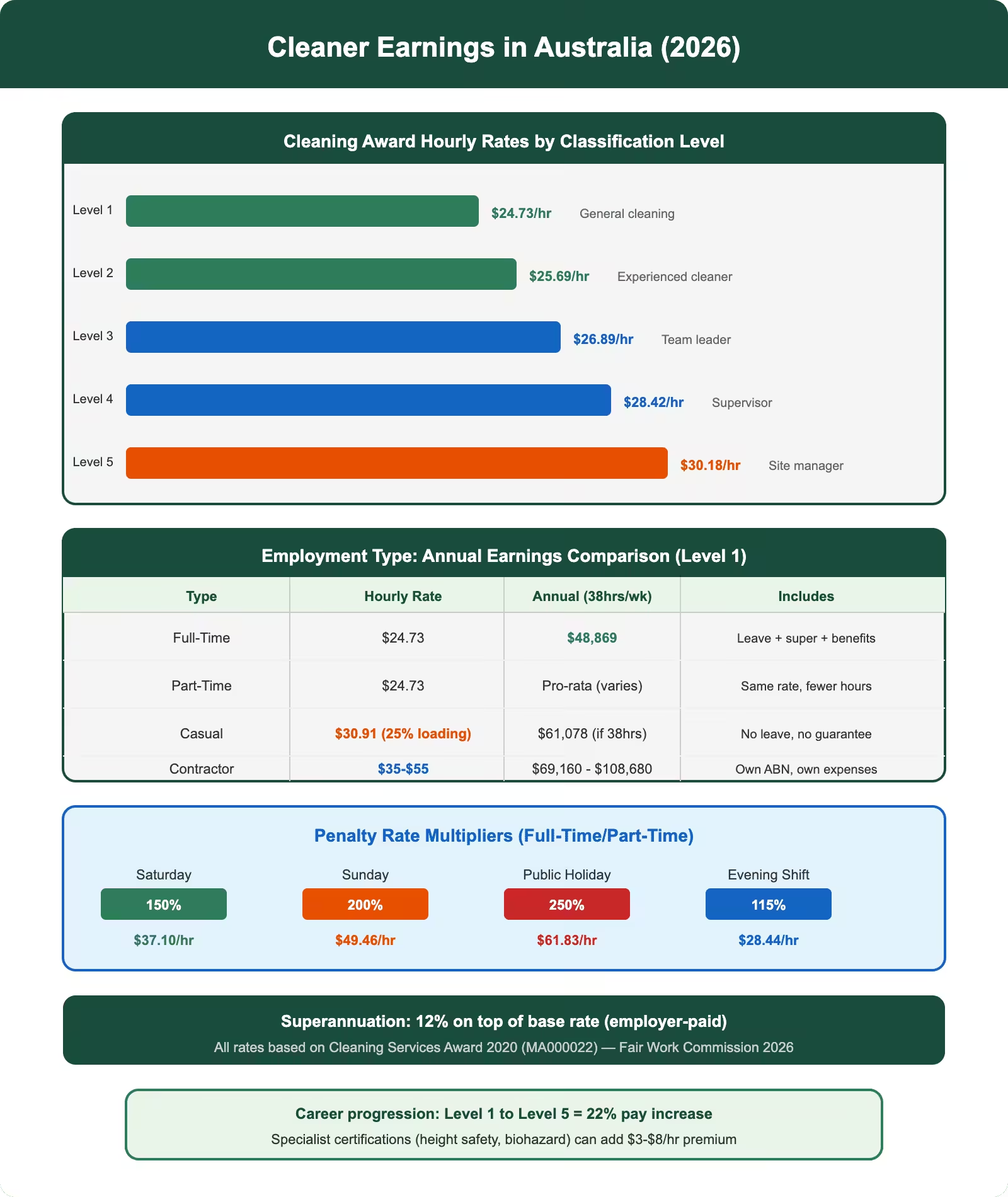
We structure all our employment contracts around the Cleaning Services Award 2020 (MA000022), and every cleaner we hire receives at minimum the applicable award rate for their classification level. Our Level 1 cleaners performing general duties earn the base rate of approximately $24.73 per hour, while our Level 2 operators who handle machinery and specialised tasks earn a higher classified rate. We review these figures annually when the Fair Work Commission hands down its national wage review decision, and we adjust our payroll systems within the first pay cycle after any increase takes effect.
Our experience running contracts in Putney shows that many cleaners do not realise they may be entitled to a higher classification than their current employer is paying them. We have recruited staff from competitors who were being paid Level 1 rates despite performing Level 2 duties involving machine operation and chemical mixing. Our HR team assesses every new hire against the award classification descriptors and places them at the correct level from their first shift, which is something we consider a basic ethical obligation as an employer.
Cleaner earnings comparison chart showing award rates, employment types and penalty rates in Australia 2026Employment types comparison infographic showing full-time part-time and casual entitlements for commercial cleaning workforce
Full-Time vs. Part-Time vs. Casual Employment
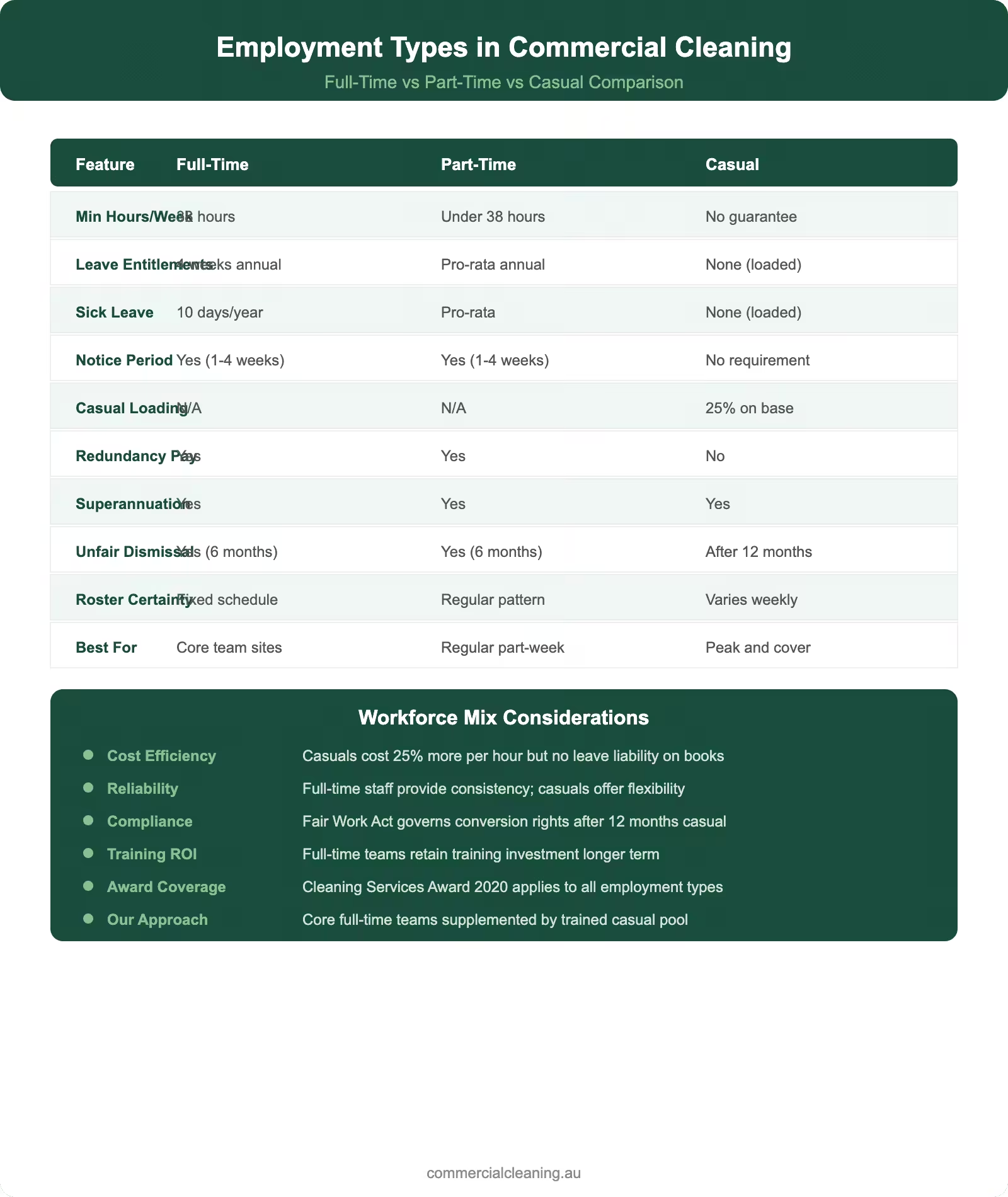
We employ cleaners across all three employment types, and the earnings differences are significant when you factor in total remuneration packages. Our full-time cleaners work thirty-eight hours per week with guaranteed hours, paid annual leave, personal leave, and public holiday entitlements. We have calculated that the total value of these entitlements adds approximately eighteen to twenty-two percent on top of the base hourly rate, which many casual workers do not consider when comparing pay packets.
Our casual cleaners receive a twenty-five percent loading on the base rate to compensate for the absence of leave entitlements, but we have found that long-term casual employment rarely works out better financially for the worker. We actively encourage our casual staff in Tennyson Point and Denistone to transition to permanent part-time arrangements once their hours stabilise, because the income predictability and leave access improves their financial wellbeing measurably. Our data shows that staff who convert from casual to permanent stay with us an average of two and a half years longer.
Office Area Cleaning Frequency Guide
Area
Daily
Weekly
Monthly
Quarterly
Reception & Lobby
Vacuum, mop, wipe
Glass doors, furniture
Deep carpet clean
Window wash
Workstations
Surface wipe, bins
Monitor & keyboard
Drawer clean-out
Chair shampoo
Kitchen/Breakroom
Bench, sink, floor
Fridge, microwave
Deep degrease
Exhaust fan clean
Bathrooms
Full sanitise + restock
Grout scrub
Descale fixtures
Vent clean
Meeting Rooms
Table wipe, vacuum
AV equipment dust
Upholstery clean
Carpet extraction
Self-Employed and Contractor Earnings
We occasionally work alongside independent cleaning contractors on large projects, and their earnings model is fundamentally different from our employed staff. Self-employed cleaners set their own rates and we have seen them charge anywhere from $35 to $65 per hour depending on the service type and their reputation. However, our experience suggests that once you subtract GST obligations, insurance premiums, equipment depreciation, vehicle costs, and the absence of paid leave, many contractors actually earn less per effective hour than our award-rate employees.
We have had several former contractors join our permanent workforce specifically because the financial security of employment outweighed the theoretical earning potential of contracting. Our operations manager in the Putney district was previously an independent operator who found that chasing invoices, managing his own superannuation contributions, and covering the cost of equipment breakdowns from his own pocket made employment a more attractive proposition overall.
Penalty Rates and Additional Pay
Penalty rates significantly boost our cleaners’ take-home pay and we build this into our rostering strategy wherever possible. Our Saturday workers receive time-and-a-half loading, while Sunday shifts attract double time under the current award provisions. We roster our Tennyson Point contracts across weekend shifts specifically because several of our long-term staff members have requested these hours to maximise their weekly earnings. A full Saturday shift adds approximately $130 to a cleaner’s weekly pay compared to the equivalent weekday hours.
Public holiday rates sit at double time and a half, and we pay these without exception across every contract we manage. Our payroll records show that cleaners who strategically take on public holiday shifts can earn an additional $4,000 to $6,000 annually compared to colleagues who only work standard weekday hours. We also pay overtime at time-and-a-half for the first two hours and double time thereafter, which applies when our teams extend their shifts to complete urgent client requests or cover for absent colleagues.
Superannuation and Total Remuneration
We pay superannuation at the current statutory rate of eleven and a half percent on top of all ordinary time earnings for every employee. This adds substantial value to our cleaners’ total compensation package that people often overlook when comparing hourly rates between employers. Our full-time Level 2 cleaners accumulate approximately $6,200 in superannuation contributions annually at current rates, which compounds significantly over a career spanning twenty or thirty years in the industry.
We also provide salary sacrifice options for staff who want to boost their super contributions, and our payroll team assists employees with the paperwork to set this up. Our Denistone site supervisors have been particularly proactive in encouraging their teams to understand superannuation because several of our senior staff approaching retirement have shared how impactful consistent employer contributions have been to their retirement savings over decades of employment in the cleaning sector.
Experience, Qualifications, and Career Progression
We reward experience and qualifications because they directly improve the service quality our clients receive. Our cleaners who hold Certificate III in Cleaning Operations earn above-award rates from the date their qualification is confirmed, and we fund the training cost for all permanent staff. We have tracked the correlation between qualifications and client satisfaction scores across our portfolio, and certified staff consistently outperform uncertified colleagues on every metric we measure including quality audit results, chemical handling accuracy, and equipment maintenance compliance.
Career progression within our company follows a structured pathway that we communicate transparently during induction. Cleaners advance through classification levels based on demonstrated competency rather than simply time served, and our assessment process involves practical demonstrations observed by our training coordinator. We promote from within wherever possible, and our current team includes fourteen supervisors and three operations managers who started as general cleaners on our payroll. Their earnings have increased between sixty and one hundred and twenty percent from their starting rates through progression alone.
Geographic Variation Across Sydney and Beyond
We operate across the entire Sydney metropolitan area and our pay rates vary depending on the specific contract location and the skills required. Our Putney contracts attract slightly higher rates because the residential and commercial mix in that area demands versatile cleaners who can switch between office environments and boutique retail spaces within the same shift. We have found that inner-west and northern suburbs generally command premium rates compared to western Sydney contracts because the cost of living and travel expenses for our staff are higher in these areas.
Our teams working in high-rise buildings face unique challenges that justify additional compensation. Cleaners assigned to buildings that require crane-accessible external cleaning coordination need awareness of AS 2550 covering crane operations because they share workspaces with crane operators during facade maintenance periods. We invested approximately $930 per team in AS 2550 awareness training across our Putney, Tennyson Point, and Denistone high-rise contracts last financial year. This training ensures our cleaners understand exclusion zones, load movement signals, and safe working practices when cranes are operating above or adjacent to their cleaning areas. Property managers in these districts specifically request staff with this awareness certification.
Industry Trends and Earning Potential
We have watched cleaner earnings rise steadily over the past decade, driven by award increases, skills shortages, and growing demand for specialised services. Our payroll data shows that average earnings across our workforce have increased by approximately thirty-eight percent over the past five years when we factor in award increases, reclassifications, and above-award adjustments we have made to retain key staff. We expect this upward trend to continue because the supply of qualified commercial cleaners has not kept pace with demand in Sydney.
Specialisation is where we see the biggest earning potential for motivated cleaners. Our staff who develop expertise in medical facility cleaning, food production area sanitisation, or post-construction cleaning earn substantially more than general office cleaners because these niches demand additional certifications and carry higher compliance standards. We actively encourage our team members to pursue specialisation pathways because it benefits their income, our service capability, and our clients’ confidence in the quality of work being delivered across their facilities.
Understanding Gross vs. Net Income
We encourage all our staff to understand the difference between gross and net income because it affects how they perceive the value of their employment. Our full-time cleaners earning $52,000 gross annually typically take home approximately $44,500 after tax and Medicare levy deductions at current ATO thresholds. We provide every new starter with a clear breakdown of their expected net pay during induction so there are no surprises when their first pay slip arrives. Our payroll team is also available to answer questions about tax offsets, deductions, and the impact of salary sacrifice arrangements on take-home pay.
We also remind our staff that work-related expenses including non-slip footwear, cleaning product knowledge courses, and union fees if applicable can be claimed as tax deductions. Our Tennyson Point team leader maintains a simple spreadsheet template that he shares with new starters to help them track claimable expenses throughout the financial year. This practical support is something our cleaners genuinely appreciate because it maximises their after-tax income without requiring expensive accountant fees.
If you are building a procurement file for your next cleaning tender, our companion resource walks through the global cleaning industry standards guide we use to assess contractor capability, from ISSA CIMS accreditation to ISO 9001 and ISO 45001 frameworks.
Frequently Asked Questions
What is the minimum hourly rate for a full-time cleaner in Australia?
The minimum hourly rate for a Level 1 full-time cleaner under the Cleaning Services Award 2020 is approximately $24.73 per hour. This rate is reviewed annually by the Fair Work Commission and typically increases each July. Higher classification levels attract progressively higher minimum rates based on the skills and responsibilities involved in the role.
Do full-time cleaners get paid more than casual cleaners?
Casual cleaners receive a twenty-five percent loading on the base hourly rate, so their per-hour pay is higher. However, full-time cleaners receive paid annual leave, personal leave, and public holiday entitlements that add approximately eighteen to twenty-two percent to their total remuneration value. Over a full year, full-time employment typically provides greater total compensation and income stability.
How much do cleaning supervisors earn in Sydney?
Cleaning supervisors in Sydney typically earn between $58,000 and $75,000 annually depending on their classification level, employer, and whether they work penalty rate shifts. Our Level 3 supervisors earn at the upper end of this range because we factor in site complexity and team size when setting pay rates. Overtime and weekend shifts can push annual earnings even higher.
Can cleaners earn more by specialising in certain areas?
Absolutely. We pay premium rates for specialised skills including medical facility cleaning, confined space work, biohazard remediation, and high-rise environments. These specialisations require additional certifications and carry higher compliance requirements. Our specialised staff earn between fifteen and forty percent above standard classification rates. Understanding office cleaning company pricing structures helps put cleaner earnings into context.
Hi, I'm Suji Siv, the founder, CEO, and Managing Director of Clean Group, bringing over 25 years of leadership and management experience to the company. As the driving force behind Clean Group’s growth, I oversee strategic planning, resource allocation, and operational excellence across all departments. I am deeply involved in team development and performance optimization through regular reviews and hands-on leadership.