How to Remove Stubborn Stains in Commercial Buildings [Sydney Tips]
![How to Remove Stubborn Stains in Commercial Buildings [Sydney Tips]](https://commercialcleaning.au/wp-content/uploads/2021/07/How-to-Remove-Stubborn-Stains-in-Commercial-Buildings-Sydney-Tips.png)
We have tackled stubborn stains on virtually every commercial surface imaginable over the past fifteen years, and the single most important lesson our team has learned is that identifying the stain correctly matters more than the chemical you throw at it. Our commercial cleaners in Sydney approach every stain removal job with a diagnostic-first mindset — we test, classify, and then treat rather than reaching for the strongest solvent and hoping for the best. We developed this discipline after ruining a polished concrete floor in a Liverpool restaurant by applying an acidic rust remover to what turned out to be a tannin stain from red wine. That mistake cost us a floor re-polish and taught our entire crew that assumptions about stain composition lead to expensive damage.
Understanding Stain Chemistry Before Reaching for a Bottle
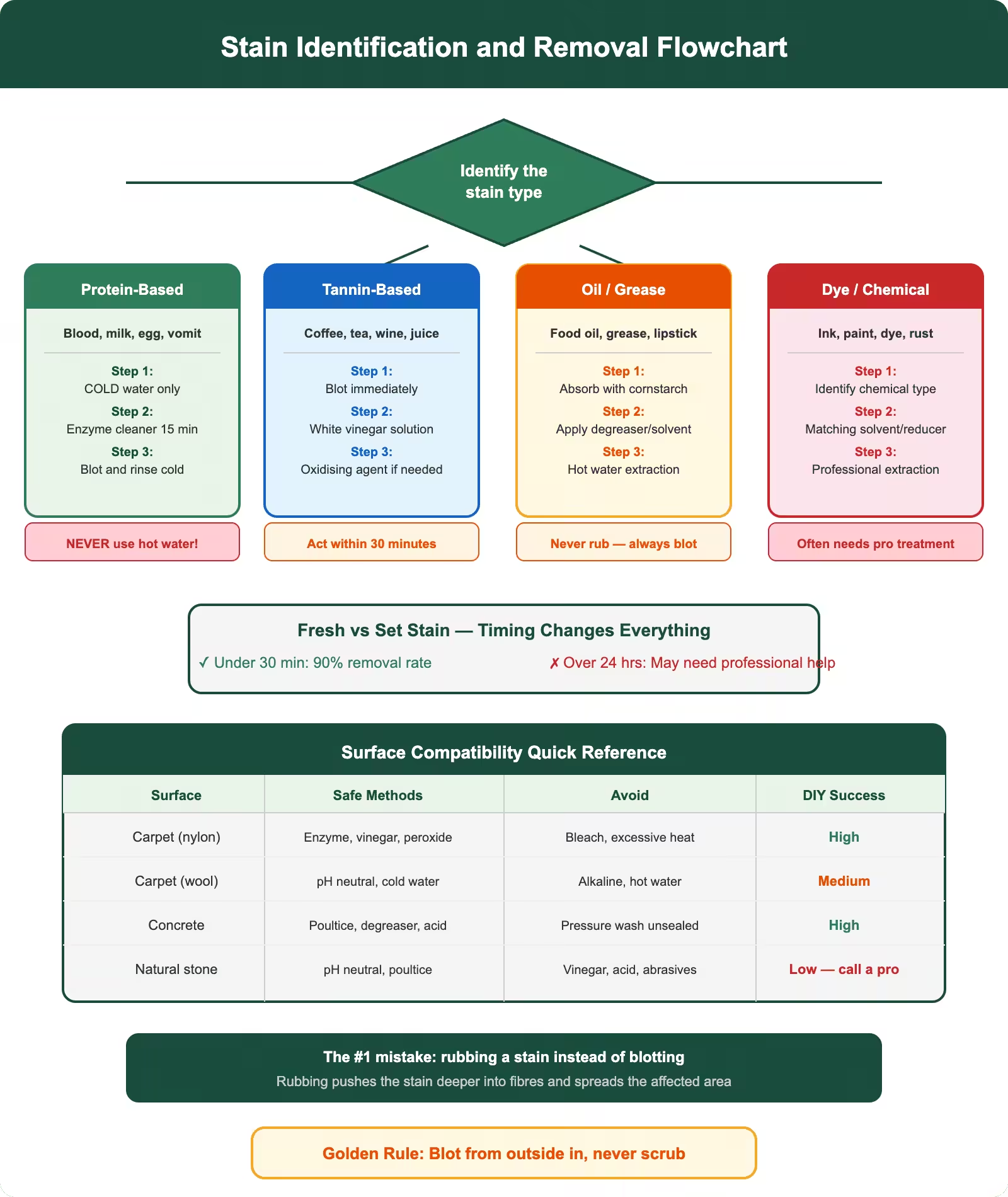
Understanding Stain Chemistry Before Reaching for a Bottle covers specific protocols that we tailor to each facility based on its layout, traffic, and compliance requirements. We categorise commercial stains into five families based on their chemical behaviour, and this classification drives every treatment decision our team makes. Protein-based stains — blood, dairy, egg — respond to enzymatic cleaners and cool water but denature permanently under heat. Tannin stains from coffee, tea, wine, and fruit juice break down under oxidising agents like hydrogen peroxide but resist soap-based products. Oil and grease stains require solvent-based treatments or alkaline degreasers that emulsify lipids. Mineral deposits including rust, calcium, and limescale dissolve in acidic solutions but those same acids will etch natural stone and corrode aluminium. Dye-based stains from ink, marker, and textile transfer need solvent extraction matched to the specific dye chemistry. Our technicians carry a portable stain identification kit that includes pH test strips, UV light for fluorescence testing, and solubility reagents that help classify unknown stains on site. We reference AS 4187.8 surface decontamination protocols when dealing with stains in healthcare or food-service environments because cross-contamination risks change the treatment hierarchy entirely.
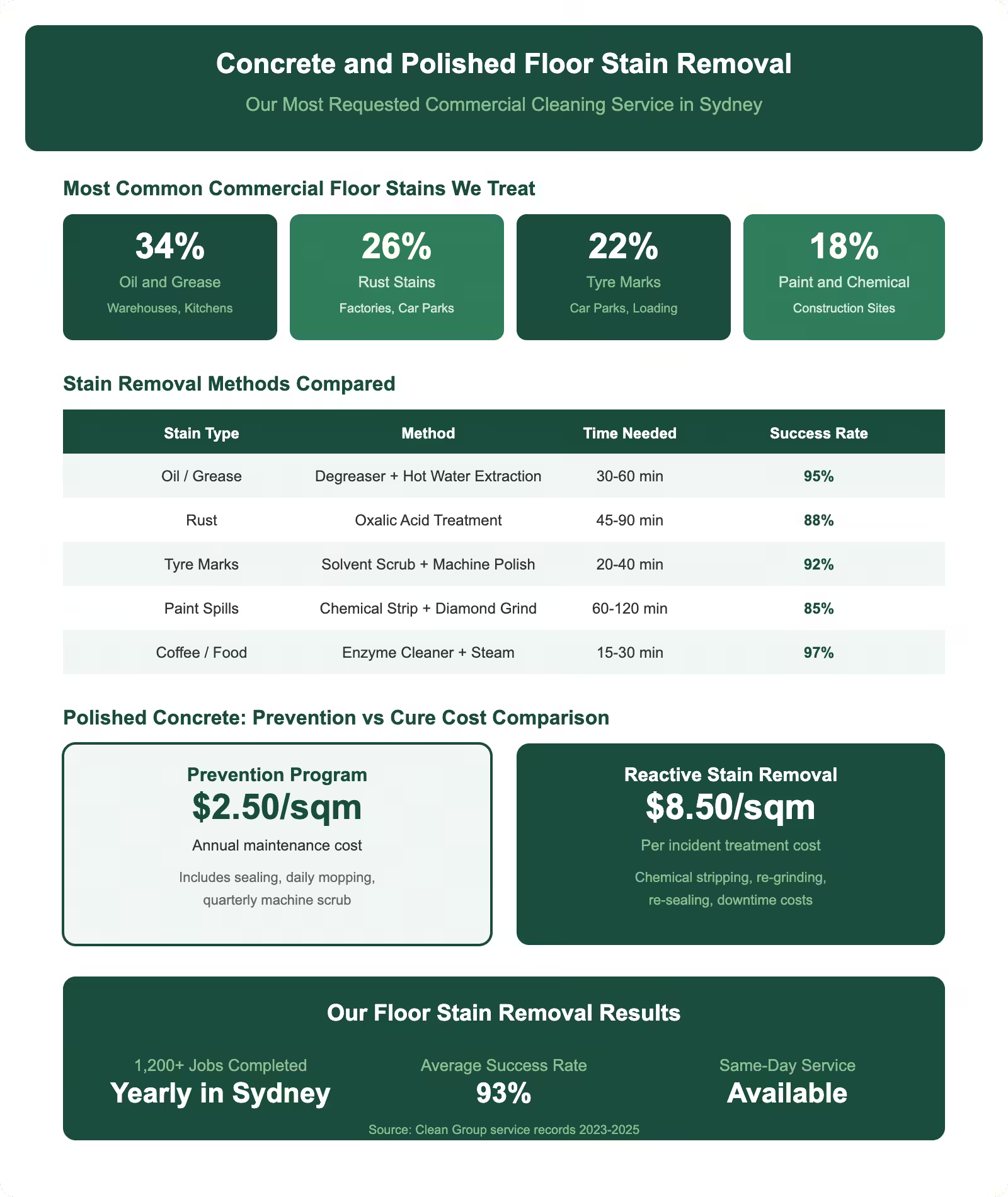
Concrete and Polished Floor Stain Removal — Our Most Requested Service
We remove more stains from commercial concrete and polished flooring than any other surface type, and the challenges are unique because concrete is porous and absorbs contaminants deep into its matrix. Our team uses a three-step process: initial surface degreasing with an alkaline emulsifier, poultice application to draw embedded stains upward through capillary action, and final treatment with a stain-specific chemical matched to the contaminant family. For oil stains in warehouse and workshop floors across Liverpool and Moorebank, we apply a lithium-silicate poultice that sits for twelve to twenty-four hours drawing petroleum products out of the concrete pores. Rust stains on exposed aggregate get an oxalic acid treatment at controlled concentration — too strong and it bleaches the surrounding concrete, too weak and the iron oxide barely shifts. We have removed stains from concrete floors that building managers had written off as permanent, including a hydraulic oil spill in a Chipping Norton factory that had been driven over for eighteen months before anyone called us. Three poultice cycles and a diamond-pad polish brought that floor back to near-original condition.
Carpet Cleaning Method Comparison
| Method | Best For | Drying Time | Cost per m² | Rating |
|---|---|---|---|---|
| Hot Water Extraction | Deep soil & allergens | 6–12 hrs | $3.50–$5.50 | ★★★★★ |
| Dry Compound | Low-moisture zones | 30–60 min | $2.80–$4.20 | ★★★ |
| Encapsulation | Maintenance cleans | 20–45 min | $2.00–$3.50 | ★★★★ |
| Bonnet Cleaning | Surface refresh | 1–2 hrs | $1.80–$3.00 | ★★ |
| Shampooing | Heavy staining | 8–24 hrs | $3.00–$4.80 | ★★★ |
Carpet Stain Removal in Commercial Settings — Why DIY Attempts Usually Make Things Worse
Carpet Cleaning Method Comparison requires specific protocols that we tailor to each facility based on its layout, traffic, and compliance requirements. We genuinely wish more commercial clients would call us before attempting carpet stain removal themselves, because the most common DIY mistakes — over-wetting, using dish soap, scrubbing aggressively — almost always set the stain deeper and damage carpet fibres in the process. Our team uses hot-water extraction with pre-treatment spotting agents matched to the stain family, and we carry eight different spotting chemicals in our van specifically for commercial carpet work. The critical principle our technicians follow is to work from the outside of the stain inward, using blotting pressure rather than scrubbing motion, to prevent spreading the contaminant into clean fibres. We treated a large coffee stain in a Moorebank office where the receptionist had poured salt on it — a common home remedy that actually fixes tannin stains into synthetic carpet fibres through osmotic pressure. Our team had to apply a specialised tannin spotter followed by a peroxide rinse to lift what would have been a simple extraction job before the salt intervention. We now include a laminated first-response card in our welcome packs for new commercial clients that tells their staff exactly what to do — and what not to do — when spills occur.
Natural Stone Surfaces — The Stains That Terrify Building Managers
Carpet Stain Removal in Commercial Settings — Why DIY Attempts Usually Make Things Worse includes specific protocols that we tailor to each facility based on its layout, traffic, and compliance requirements. We understand the panic that hits when someone spills red wine on a marble lobby floor or drops acidic cleaner on a granite benchtop, because natural stone is simultaneously beautiful and chemically vulnerable. Our team treats stone stain removal as a specialist discipline requiring knowledge of mineralogy, pH chemistry, and surface sealing systems. Marble and limestone are calcium carbonate based and react violently with acids — even orange juice will etch an unsealed marble surface within minutes. Granite is more chemically resistant but still porous enough to absorb oil-based stains if unsealed. We have rescued marble floors in Liverpool commercial lobbies where cleaning staff had used vinegar-based products that etched the surface, requiring diamond-honing and re-polishing that cost four times what a proper neutral-pH treatment would have. Our stone-specific stain removal process uses poultice compounds mixed with the appropriate chemical for the stain family — baking soda and acetone for oil on marble, hydrogen peroxide poultice for organic stains on granite, and iron-specific chelating agents for rust on sandstone. We always test our treatment in an inconspicuous area first and we carry AS 4187.8 compliant decontamination products for stone surfaces in food-service and healthcare environments.
Pricing Transparency and What Drives Stain Removal Costs
Natural Stone Surfaces — The Stains That Terrify Building Managers addresses specific protocols that we tailor to each facility based on its layout, traffic, and compliance requirements. We price stain removal based on three variables: surface type, stain family, and affected area — and we are upfront about all three before we start work. Our standard commercial stain treatment for a premises in the Liverpool, Moorebank, or Chipping Norton area runs approximately $2,930 for a full-day session covering multiple stain sites across mixed surfaces. Simple surface stains on sealed flooring take our team thirty to sixty minutes per site. Deep-set stains requiring poultice treatment extend to twenty-four to forty-eight hours per application cycle, and some jobs need three or four cycles before the stain lifts completely. We never promise results we cannot deliver — if a stain has been chemically fixed by heat, incorrect treatment, or excessive age, we tell the client upfront and discuss whether replacement is more cost-effective than continued treatment. Our quotes include all chemicals, equipment, and labour, and we guarantee our work with a simple policy: if the stain returns within thirty days of treatment, we retreat at no charge.
Grout and Tile Stain Challenges in Commercial Washrooms
Pricing Transparency and What Drives Stain Removal Costs targets specific protocols that we tailor to each facility based on its layout, traffic, and compliance requirements. We spend a disproportionate amount of our stain removal time in commercial washrooms because grout is essentially a sponge for every contaminant that touches it. Cementitious grout absorbs moisture, bacteria, soap residue, and mineral deposits from day one, and without proper sealing it develops permanent discolouration within months of installation. Our team uses a combination of alkaline grout cleaners applied through rotary scrubbing machines and steam injection at one hundred and fifty degrees to lift embedded contamination from grout lines. For severely stained grout in high-traffic washrooms across Liverpool and surrounding suburbs, we sometimes recommend grout colour sealing — a process where we apply a pigmented epoxy-based sealer that simultaneously colours and waterproofs the grout, effectively resetting its appearance while providing long-term protection. We have colour-sealed washroom grout in over sixty commercial buildings across Sydney and the treatment typically lasts three to five years before requiring reapplication, making it significantly more cost-effective than repeated deep cleaning cycles.
Prevention Strategies That Save Our Clients Money Long-Term
Grout and Tile Stain Challenges in Commercial Washrooms focuses on specific protocols that we tailor to each facility based on its layout, traffic, and compliance requirements. We would rather help our clients prevent stains than charge them to remove stains, and our preventive consulting has become one of the most valued services we offer. Our team assesses commercial premises for stain vulnerability by examining surface types, sealing conditions, traffic patterns, and operational activities that generate stain risks. We then recommend a targeted protection plan that typically includes surface sealing or re-sealing on an appropriate schedule, placement of absorbent entry matting at key transition points, spill response kits positioned near high-risk areas, and staff training on immediate containment techniques. For food-service environments in Chipping Norton and Liverpool we also recommend specific cleaning chemical selections aligned with AS 4187.8 surface decontamination guidelines to confirm daily cleaning routines do not inadvertently damage surface seals or create chemical buildup that attracts future staining. Our preventive programmes have reduced stain-related callouts by an average of forty-five percent across our client base, and the annual cost of prevention typically equals one or two reactive stain removal visits.
Prevention Strategies That Save Our Clients Money Long-Term covers specific protocols that we tailor to each facility based on its layout, traffic, and compliance requirements. To understand how our team applies these stain prevention and treatment techniques on a daily basis, read about what a Sydney office cleaner does throughout a typical shift.
Frequently Asked Questions
How do you identify what type of stain is on a commercial surface?
Our technicians carry a portable stain identification kit with pH test strips, UV light for fluorescence testing, and solubility reagents. We classify stains into five families — protein, tannin, oil and grease, mineral, and dye — because each family requires a fundamentally different chemical treatment approach. Misidentifying the stain family is the most common cause of failed removal attempts.
Can you remove oil stains from polished concrete floors?
We use a three-step process for concrete oil stains: alkaline emulsifier surface degreasing, lithium-silicate poultice application for twelve to twenty-four hours to draw petroleum products from the pores, and final diamond-pad polishing. We have successfully removed oil stains that had been embedded for over eighteen months in factory floors across Liverpool and Chipping Norton.
Why do DIY carpet stain removal attempts usually fail?
The most common mistakes are over-wetting, using dish soap which leaves sticky residue that attracts dirt, and scrubbing aggressively which pushes the stain deeper into carpet fibres. Our team works from outside inward using blotting pressure with pre-treatment spotting agents matched to the specific stain family. We carry eight different spotting chemicals specifically for commercial carpet work.
How much does professional stain removal cost for a commercial premises?
Our standard commercial stain treatment in the Liverpool, Moorebank, or Chipping Norton area runs approximately $2,930 for a full-day session covering multiple stain sites across mixed surfaces. We price based on surface type, stain family, and affected area, and all quotes include chemicals, equipment, and labour with a thirty-day retreatment guarantee.
Is it safe to use acidic cleaners on natural stone surfaces?
Acids should never be used on marble or limestone because these are calcium carbonate based and react chemically with acidic products, causing permanent etching. Granite is more resistant but still requires careful pH management. Our team always uses neutral-pH treatments on natural stone and tests in an inconspicuous area first. We reference AS 4187.8 decontamination protocols for stone in food-service and healthcare settings.
How do you treat severely stained grout in commercial washrooms?
We use alkaline grout cleaners applied through rotary scrubbing machines combined with steam injection at one hundred and fifty degrees. For grout beyond cleaning recovery, we recommend colour sealing — a pigmented epoxy-based sealer that simultaneously colours and waterproofs the grout. This treatment lasts three to five years and is more cost-effective than repeated deep cleaning cycles.
Can you guarantee that a stubborn stain will be completely removed?
We never promise results we cannot deliver. If a stain has been chemically fixed by heat, incorrect treatment, or excessive age, we tell the client upfront and discuss whether replacement is more cost-effective than continued treatment. For stains we do treat, we guarantee our work — if the stain returns within thirty days, we retreat at no charge.
Can preventive measures reduce staining in commercial buildings?
Our preventive programmes have reduced stain-related callouts by an average of forty-five percent across our client base. We recommend surface sealing on appropriate schedules, absorbent entry matting at key points, positioned spill response kits, and staff training on immediate containment. The annual cost of prevention typically equals one or two reactive stain removal visits.
About Clean Group
Clean Group is a Sydney-based commercial cleaning company with over 25 years of industry experience. Founded by Suji Siv, our team of 50+ trained professionals services offices, warehouses, medical centres, schools, childcare facilities, retail stores, gyms, and strata properties across Sydney, Melbourne, and Brisbane.
We are active members of ISSA and the Building Service Contractors Association of Australia (BSCAA). Our operations align with ISO 9001 (Quality Management), ISO 14001 (Environmental Management), and ISO 45001 (Workplace Health and Safety) standards. We hold membership with the Green Building Council of Australia and use eco-friendly, TGA-registered cleaning products wherever possible.
Every Clean Group cleaner is police-checked, fully insured, and trained in safe work procedures under SafeWork NSW guidelines. We operate 7 days a week, including after-hours and weekend services, to minimise disruption to your business.
About the Author

Stephen Matthews
Hi, my name is Steve. I have been working as a Regional Operations Manager in Sydney Clean Group for almost four years now and manage a team of 10. I have more than three decades of experience in the commercial cleaning industry. My responsibilities include the day-to-day management of cleaning operations, planning, online quotation to clients, managing cleaners’ performance, collecting clients\' feedback, and ensuring proper & regular maintenance of cleaning equipment. Get in touch for a quick chat about your cleaning needs.
Read More About Stephen
