How to Professionally Clean Upholstery
We have professionally cleaned upholstery in commercial buildings across Sydney for over fifteen years, and the gap between what most people think upholstery cleaning involves and what it actually requires to do properly is wider than in almost any other cleaning discipline. Our upholstery cleaning services in Sydney are built on the principle that every fabric, every stain, and every piece of furniture demands an individual assessment before a single drop of cleaning solution touches it. We learned this lesson definitively on a job in Kogarah where a well-intentioned cleaning operative used the same alkaline degreaser on a silk-blend banquette that we routinely use on polyester task chairs — the fibres shrank, the colour shifted, and we replaced the entire piece at our cost. That expensive education permanently changed how our team approaches upholstery work.
The Professional Assessment Process That Separates Experts from Amateurs
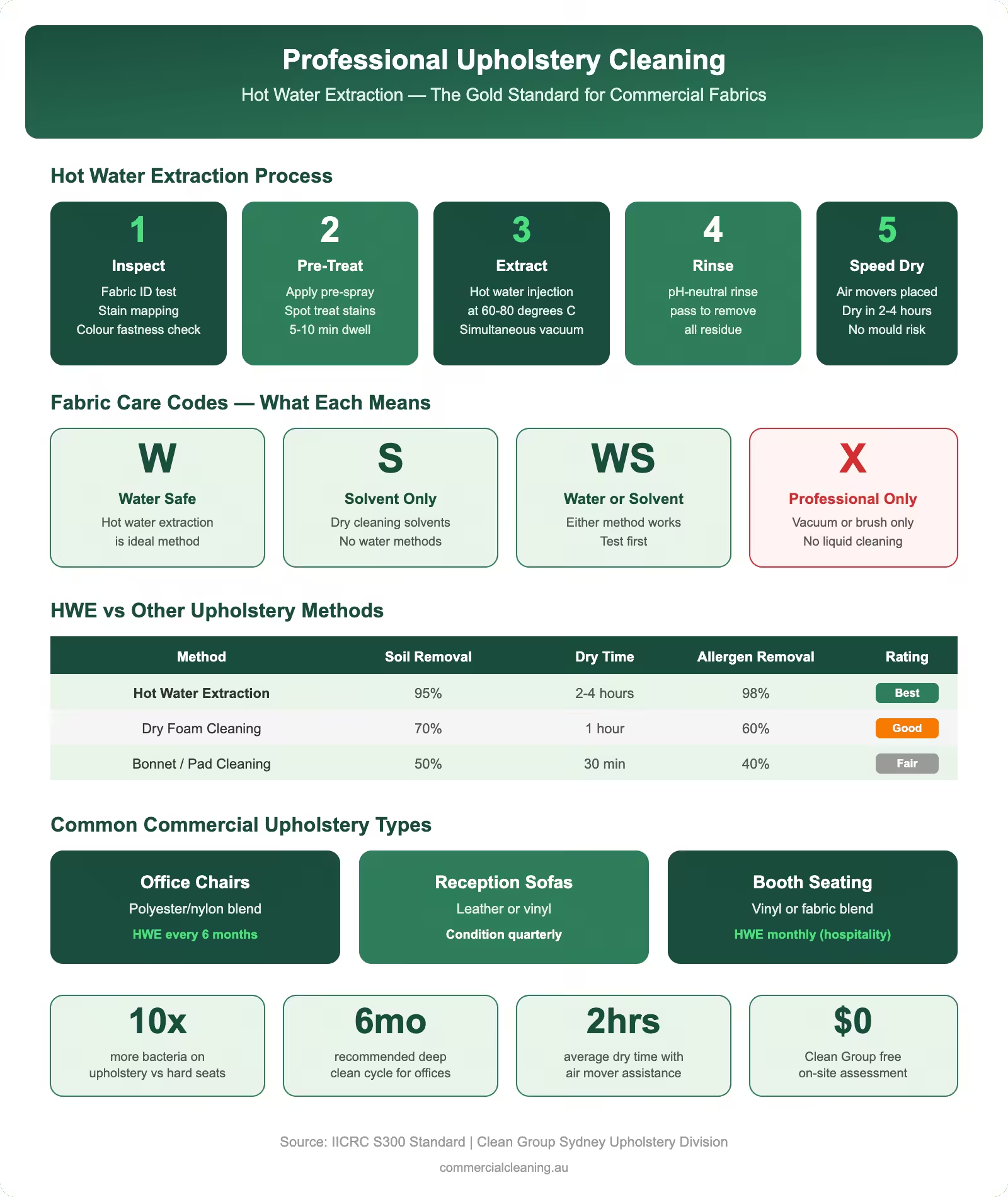
The Professional Assessment Process That Separates Experts from Amateurs covers specific protocols that we tailor to each facility based on its layout, traffic, and compliance requirements. We start every upholstery cleaning job with a structured assessment that takes less than ten minutes per piece but prevents the kind of damage that costs thousands to rectify. Our technicians identify the fabric type using visual inspection and burn testing on concealed fibres — natural fibres like cotton and wool char and smell like burning hair, while synthetics melt and form hard beads. We then check the manufacturer’s cleaning code if present: W means water-based cleaning is safe, S means solvent only, WS means either method works, and X means vacuum only with no wet cleaning permitted. Next comes our colourfastness test and foam resilience check. We document everything photographically because pre-existing damage that is not recorded before we start invariably gets blamed on our cleaning. Our assessment protocol references AS 1530.2 fire propagation standards because commercial upholstery in public buildings must meet specific flame-resistance requirements, and certain cleaning chemicals can strip or degrade flame-retardant treatments — a compliance issue that most upholstery cleaners never consider but that leaves building owners legally exposed if their furniture fails a fire inspection after cleaning.
Hot Water Extraction — The Gold Standard for Most Commercial Fabrics
We use hot water extraction as our primary method for the majority of commercial upholstery because it achieves the deepest clean with the most complete contamination removal. Our extraction machines heat cleaning solution to between fifty and sixty degrees Celsius and inject it through a specialised upholstery tool at precisely controlled pressure — too high and the fabric distorts, too low and the solution does not penetrate deeply enough to flush embedded contamination from the fibre structure. The extraction vacuum pulls simultaneously, removing the solution along with dissolved soiling, body oils, allergens, and biological matter in a single pass. We typically make three to four passes on high-contact areas like armrests and headrests, and two passes on lower-contact panels. Our team has refined the pressure and temperature settings for every major commercial fabric type we encounter across Kogarah, Carlton, and Allawah — polyester at fifty-five degrees with moderate pressure, nylon at sixty degrees with higher pressure for its resilient fibre structure, and olefin at fifty degrees with reduced pressure because it softens at lower temperatures than other synthetics. These fabric-specific parameters are documented in our technician reference cards and account for the consistent results we achieve across diverse furniture fleets.
Upholstery Fabric Cleaning Method Guide
| Fabric Type | Method | Drying Time | Risk Level | Cost per Seat |
|---|---|---|---|---|
| Synthetic (Polyester) | Hot water extraction | 4–6 hrs | Low | $25–$45 |
| Natural (Cotton/Linen) | Low-moisture foam | 2–4 hrs | Medium (shrinkage) | $35–$60 |
| Leather | pH-neutral wipe + condition | 1 hr | High (discolouration) | $40–$75 |
| Velvet/Chenille | Dry clean / low-moisture | 3–5 hrs | High (crush marks) | $45–$80 |
| Microfibre | Solvent-based spot clean | 1–2 hrs | Low | $20–$40 |
Low-Moisture Encapsulation — When Wet Methods Create More Problems Than They Solve
Upholstery Fabric Cleaning Method Guide requires specific protocols that we tailor to each facility based on its layout, traffic, and compliance requirements. We carry encapsulation cleaning systems alongside our extraction equipment because certain situations demand a low-moisture approach that minimises drying time and eliminates the risk of waterlogging foam padding. Encapsulation uses a crystallising polymer solution applied by rotary brush that surrounds soil particles in a brittle shell as it dries — the encapsulated contamination is then vacuumed out during the next routine maintenance pass. We use this method on furniture that cannot be taken out of service for drying time, on fabrics that are water-sensitive, and in situations where the building’s humidity levels make normal drying problematic. Our team cleaned an entire floor of task chairs in a Carlton insurance office using encapsulation during a particularly humid February week when our standard extraction method would have left the chairs damp for six hours or more in the non-air-conditioned after-hours environment. The chairs were ready for use within forty-five minutes, and ATP testing showed contamination reduction of over seventy percent — less than the ninety percent we achieve with extraction, but a practical compromise that the client valued.
Flame Retardant Compliance — The Hidden Risk Most Cleaners Ignore
Low-Moisture Encapsulation — When Wet Methods Create More Problems Than They Solve includes specific protocols that we tailor to each facility based on its layout, traffic, and compliance requirements. We raise this issue with every commercial client because it represents a genuine legal exposure that upholstery cleaning can inadvertently create. Commercial furniture in public buildings must comply with AS 1530.2 flame spread testing requirements, and many fabrics achieve compliance through topical flame-retardant treatments applied during manufacture. Certain cleaning chemicals — particularly alkaline degreasers and some solvent-based spotters — can strip or degrade these treatments, leaving the furniture non-compliant after cleaning even though it looks perfectly presentable. Our team verifies the flame-retardant status of commercial upholstery during our assessment phase and selects cleaning chemicals that are certified as compatible with fire-retardant treatments. When we suspect that previous cleaning may have compromised compliance, we recommend independent fire testing and can arrange re-treatment through our network of textile treatment specialists. We have flagged this issue for building managers in Allawah and across the St George area who had no idea their furniture compliance was at risk, and in two cases our intervention prevented potential regulatory penalties during subsequent fire safety inspections.
Professional Upholstery Cleaning Costs and Programme Structure
Flame Retardant Compliance — The Hidden Risk Most Cleaners Ignore addresses specific protocols that we tailor to each facility based on its layout, traffic, and compliance requirements. We structure our upholstery cleaning programmes around the specific needs of each commercial client rather than offering generic packages. Our standard professional upholstery cleaning for a commercial premises in the Kogarah, Carlton, or Allawah area typically costs around $3,090 per session for a detailed treatment of forty to fifty seating positions covering task chairs, meeting room seating, and any lounge furniture present. This figure includes our full assessment, pre-treatment of stained areas, extraction or encapsulation cleaning as appropriate for each fabric type, and post-clean verification testing. We offer frequency-based pricing tiers — quarterly programmes receive a fifteen percent discount on our standard per-session rate because our setup costs amortise across more visits and the furniture stays in better condition between sessions, reducing the intensity of each clean. Our team provides a detailed inventory and condition report after every session that tracks fabric condition, identifies emerging wear patterns, and recommends intervention before damage becomes irreversible.
Professional Upholstery Cleaning Costs and Programme Structure targets specific protocols that we tailor to each facility based on its layout, traffic, and compliance requirements. For specific guidance on couch and sofa cleaning costs and what factors influence pricing, our team has published a detailed breakdown in our sofa and couch cleaning cost guide for Sydney businesses.
Frequently Asked Questions
What makes professional upholstery cleaning different from DIY methods?
Professional cleaning starts with a structured assessment covering fabric identification, colourfastness testing, foam resilience, and cleaning code verification. We select methods and chemicals matched to each specific fabric rather than using a one-size-fits-all approach. Our extraction equipment operates at temperatures and pressures that consumer machines cannot achieve, and we verify results with ATP biological testing.
How do you determine which cleaning method to use on upholstery?
We identify the fabric type through visual inspection and burn testing, check the manufacturer cleaning code, test colourfastness per AS 1530.2 fire compliance considerations, and assess foam condition. Synthetic fabrics typically get hot water extraction while natural fibres, water-sensitive fabrics, and furniture in humid environments receive encapsulation or dry-compound treatment.
How much does professional upholstery cleaning cost for a commercial office?
Our standard treatment for forty to fifty seating positions in the Kogarah, Carlton, or Allawah area costs around $3,090 per session including assessment, pre-treatment, extraction or encapsulation, and verification testing. Quarterly programme clients receive a fifteen percent discount on our standard rate.
Can upholstery cleaning affect fire safety compliance?
Yes — certain cleaning chemicals strip or degrade topical flame-retardant treatments required under AS 1530.2, leaving furniture non-compliant after cleaning. Our team verifies flame-retardant status during assessment and uses only fire-retardant-compatible chemicals. We can arrange independent testing and re-treatment if previous cleaning has compromised compliance.
What is encapsulation cleaning and when do you use it?
Encapsulation uses a crystallising polymer solution that surrounds soil particles in a brittle shell as it dries, then vacuums out. We use it when furniture cannot be taken out of service for drying, on water-sensitive fabrics, or in humid conditions. It achieves seventy percent contamination reduction versus ninety percent for extraction, but chairs are ready in forty-five minutes.
How often should commercial upholstery be professionally cleaned?
We recommend quarterly cleaning for high-use task chairs and reception furniture, biannual for meeting room seating, and monthly for healthcare waiting room furniture. Our frequency recommendations are based on ATP testing data rather than arbitrary schedules, and we adjust based on measured contamination trends at each visit.
Do you document the condition of furniture before and after cleaning?
We photograph every piece before cleaning begins to document pre-existing condition, then provide a detailed inventory and condition report after every session. This tracks fabric condition over time, identifies emerging wear patterns, and provides evidence for asset management decisions. Pre-existing damage documentation protects both the client and our team.
What happens if cleaning damages my upholstery?
Our assessment protocol exists specifically to prevent damage, and our damage rate is effectively zero since we formalised it. In the rare event that cleaning causes unexpected damage despite proper assessment, we carry full professional indemnity insurance and take complete responsibility for repair or replacement costs. Our twenty million dollar public liability coverage protects our clients comprehensively.
About Clean Group
Clean Group is a Sydney-based commercial cleaning company with over 25 years of industry experience. Founded by Suji Siv, our team of 50+ trained professionals services offices, warehouses, medical centres, schools, childcare facilities, retail stores, gyms, and strata properties across Sydney, Melbourne, and Brisbane.
We are active members of ISSA and the Building Service Contractors Association of Australia (BSCAA). Our operations align with ISO 9001 (Quality Management), ISO 14001 (Environmental Management), and ISO 45001 (Workplace Health and Safety) standards. We hold membership with the Green Building Council of Australia and use eco-friendly, TGA-registered cleaning products wherever possible.
Every Clean Group cleaner is police-checked, fully insured, and trained in safe work procedures under SafeWork NSW guidelines. We operate 7 days a week, including after-hours and weekend services, to minimise disruption to your business.
About the Author

Beau Sleeman
Hi, I’m Beau, a full-time accountant and part-time writer at Clean Group. With over ten years of industry experience managing company accounts and records, I’m responsible for keeping everything organised. I have worked with multiple cleaning companies to help successfully manage their businesses and generate profits while ensuring the best value for money for their customers. I also actively engage in the process of creating personalised cleaning packages based on customers’ needs and designed to be affordable for them.
Read More About Beau
