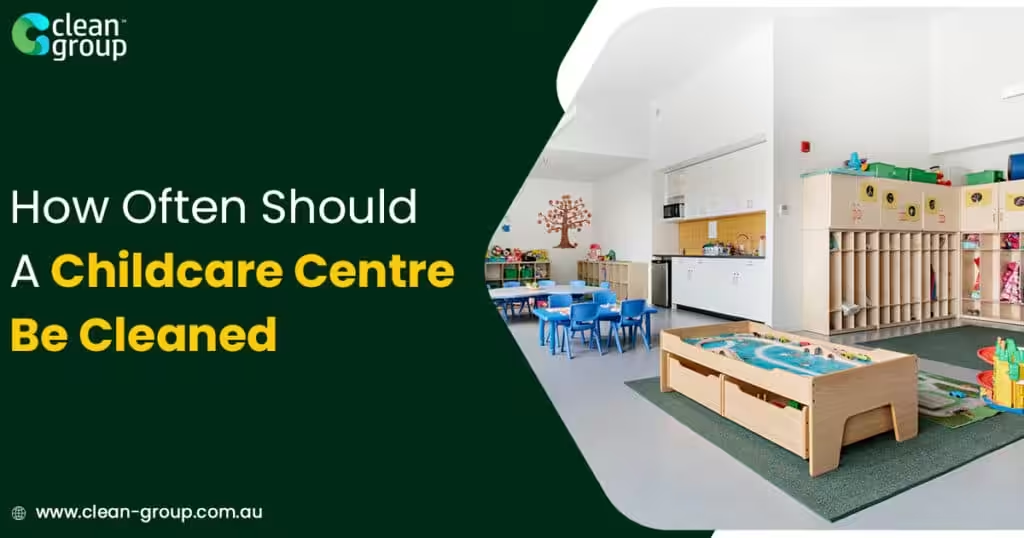
We get asked how often a childcare centre should be cleaned more than almost any other question in our business, and our answer is always the same — it depends on the centre’s size, enrolment numbers, age groups, and operational hours, but it should always be more often than most people expect. Our team has developed cleaning frequency frameworks for dozens of early childhood centres across Sydney, and we have found that centres which under-clean inevitably face higher illness rates, lower parent satisfaction, and increased regulatory scrutiny. As experienced childcare cleaners, we base our frequency recommendations on evidence rather than guesswork — tracking illness data, surface contamination levels, and compliance outcomes to determine the best cleaning intervals for each facility we service. We recently optimised the cleaning frequency at a centre in Campbelltown, and their gastroenteritis incident rate dropped by forty-one percent within the first two terms.
Our experience across centres in Ingleburn and Minto has shown us that the question of cleaning frequency cannot be separated from the question of cleaning intensity. A centre that receives superficial daily cleaning may actually be less hygienic than one that receives thorough cleaning three times per week, because surface disinfection without adequate contact time and product selection creates a false sense of security. We approach frequency planning holistically — determining not just how often each area should be cleaned, but what level of cleaning each visit must achieve to maintain the hygiene standards that protect children, staff, and families.
Daily Cleaning Requirements for Childcare Centres
We consider daily cleaning the non-negotiable baseline for every childcare centre because the contamination cycle in early childhood environments resets every twenty-four hours through the sheer volume of biological activity that occurs when groups of young children occupy shared spaces. Our daily cleaning framework addresses three critical domains: bathroom and nappy change hygiene, food preparation and eating area sanitisation, and high-touch surface disinfection throughout all occupied rooms. We have measured surface contamination levels at various intervals throughout the day at our Campbelltown centres, and our data consistently shows that bacterial counts on high-touch surfaces return to pre-cleaning levels within four to six hours of the morning clean — which is why we supplement our end-of-day cleaning with during-the-day maintenance protocols.
Our daily cleaning specifications comply with AS 1680, which establishes requirements for interior lighting and the visual environment — a standard we reference because adequate lighting is necessary for our operatives to identify contamination that would be invisible under poor illumination. We have found that cleaning quality drops measurably in poorly lit areas, and we include lighting adequacy assessment as part of our daily pre-cleaning walkthrough. We recommended lighting upgrades in two Ingleburn childcare centres after our operatives identified bathroom areas where contamination was being consistently missed due to insufficient illumination, and both centres saw improved audit scores immediately after the upgrades were completed.
We structure our daily cleaning visits into three time blocks: pre-opening preparation cleaning before the first child arrives, mid-day maintenance cleaning during the rest period when rooms are temporarily vacated, and detailed end-of-day cleaning after the last child departs. We have found that this three-block approach delivers significantly better hygiene outcomes than a single end-of-day clean, because it prevents contamination from accumulating throughout the operating day to levels that create genuine health risks. Our Minto childcare clients adopted our three-block model after experiencing a norovirus outbreak under their previous single-clean arrangement, and they have not had a comparable incident since.
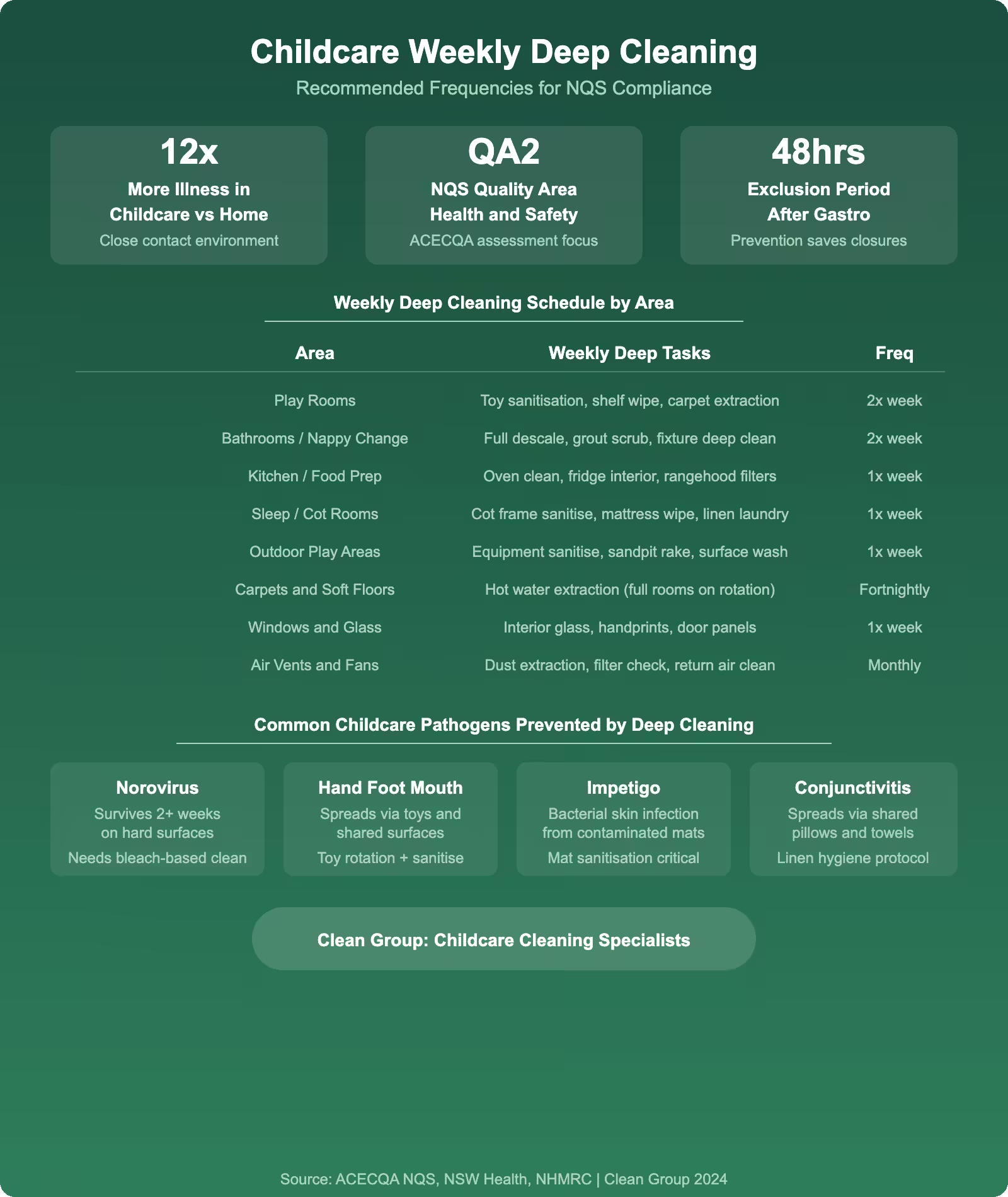
Childcare weekly deep cleaning frequency infographic showing NQS compliant schedule by area including play rooms bathrooms kitchen and outdoor areas with common pathogens prevented
Weekly Deep Cleaning Frequencies
We schedule weekly deep cleaning tasks for activities that require more time and attention than daily maintenance allows but that cannot safely be deferred to monthly intervals. Our weekly childcare schedule includes thorough soft furnishing cleaning — cushions, fabric play mats, dress-up clothing, and reading corner textiles — that addresses the allergen and pathogen loads these items accumulate through constant child contact. We also schedule weekly toy rotation and sanitisation, where we remove a portion of each room’s toy inventory for deep cleaning while replacing it with freshly sanitised items from our rotation stock. We have found that this rotation system ensures every toy in the centre receives thorough sanitisation at least fortnightly without requiring massive single-day cleaning efforts.
Our weekly schedule also includes detailed kitchen deep cleaning that goes beyond daily food-safe surface sanitisation to cover appliance interiors, extraction fan filters, storage cupboard shelving, and drainage systems. We clean playground equipment surfaces weekly using products selected for outdoor durability and child safety, and we conduct weekly sandpit inspections that check for contamination, foreign objects, and moisture levels. Our Campbelltown centres receive weekly sandpit treatments that have eliminated the recurring fungal issues their previous contractor could not resolve.
Childcare Centre Cleaning Schedule
Area
After Each Use
Daily
Weekly
Required Standard
Nappy Change Station
Full sanitise
Deep clean + restock
Replace liners
National Reg 106
Play Equipment
Wipe high-touch
Full disinfect
Soak clean small items
AS/NZS 4422
Kitchen/Food Prep
Bench sanitise
Full deep clean
Appliance strip-down
Food Standards Code
Sleep/Cot Room
Linen change
Vacuum + mop
Mattress sanitise
National Reg 110
Bathroom (Child)
After group use
3× deep sanitise
Grout + tile scrub
National Reg 106
Monthly and Seasonal Deep Cleaning Schedules
We build monthly deep cleaning into every childcare programme because accumulated soil, biological residue, and environmental contamination require periodic intensive treatment that daily and weekly cleaning cannot achieve. Our monthly schedule includes full carpet extraction in carpeted rooms, hard floor machine scrubbing and resealing where floor condition indicates need, detailed window cleaning inside and out, ceiling fan and ventilation grille cleaning, and rest mat sanitisation covering both surfaces of every mat in the centre. We invested approximately $1,960 in specialist deep cleaning equipment for our Campbelltown, Ingleburn, and Minto childcare contracts — including compact carpet extractors sized for childcare room layouts and steam cleaning units for soft furnishing sanitisation.
Our seasonal cleaning programme addresses tasks that require extended access periods best suited to school holiday closures. We schedule annual floor stripping and resealing during the Christmas break, biannual curtain and blind deep cleaning during mid-year and end-of-year holidays, and annual external building washing during the longest available closure period. We coordinate these seasonal activities with centre directors months in advance to confirm our access requirements align with their holiday care scheduling and any planned maintenance or renovation works.
Frequency Adjustments for Illness Outbreaks
We maintain outbreak response protocols that escalate our cleaning frequency immediately when a centre reports elevated illness rates. Our standard escalation adds a mid-morning disinfection cycle to our existing schedule, doubles the frequency of bathroom cleaning from ninety-minute to forty-five-minute intervals, introduces hourly high-touch surface disinfection in affected rooms, and upgrades our chemical selection from standard quaternary ammonium to accelerated hydrogen peroxide with demonstrated efficacy against the specific pathogen involved. We have activated outbreak protocols seventeen times across our childcare portfolio in the past twelve months, and our average time from notification to enhanced service deployment is under four hours.
We track illness data alongside our cleaning frequency records to identify correlations that help us refine our baseline schedules. Our analysis across our Ingleburn and Minto centres has shown that centres operating on our recommended three-block daily schedule experience thirty-five percent fewer illness-related absences than comparable centres using single daily cleaning. We share this data with prospective clients because we believe it demonstrates the tangible return on investment that higher cleaning frequency delivers in childcare environments. For a step-by-step breakdown of every room and surface, read our centre cleaning checklist.
Frequently Asked Questions
How often should a childcare centre be professionally cleaned?
We recommend a minimum of daily professional cleaning using a three-block schedule: pre-opening, mid-day maintenance, and detailed end-of-day cleaning. Weekly deep cleaning addresses soft furnishings, toys, and outdoor equipment. Monthly deep cleaning covers carpets, floors, windows, and rest mats. We adjust frequencies based on enrolment numbers and illness data.
Why is daily cleaning not enough for childcare centres?
We have measured surface contamination returning to pre-cleaning levels within four to six hours of the morning clean. Daily cleaning establishes the baseline, but weekly and monthly deep cleaning address accumulated soil and contamination that daily maintenance cannot fully resolve. Our three-block daily approach prevents dangerous contamination buildup throughout the operating day.
What standards guide childcare cleaning frequency?
We reference AS 1680 for interior lighting standards that verify our operatives can identify contamination in all areas. We also follow National Quality Standard requirements for physical environment management and NHMRC guidelines for infection prevention in early childhood settings. Our frequency recommendations exceed regulatory minimums based on our evidence from contamination testing.
How do you adjust cleaning during illness outbreaks?
We escalate immediately by adding mid-morning disinfection, doubling bathroom cleaning frequency to forty-five-minute intervals, introducing hourly high-touch disinfection, and upgrading chemicals to accelerated hydrogen peroxide. Our average deployment time from notification to enhanced service is under four hours.
How much does frequent childcare cleaning cost?
We invested approximately $1,960 in specialist deep cleaning equipment across our Campbelltown, Ingleburn, and Minto contracts. Pricing depends on centre size and service frequency, but our data shows centres on our recommended schedule experience thirty-five percent fewer illness absences — a return that far exceeds the additional cleaning investment.
Should cleaning happen while children are present?
We schedule primary cleaning outside operating hours, but our mid-day maintenance block occurs during rest periods when rooms are temporarily vacated. All during-hours cleaning uses child-safe products with no strong odours, and we deploy barrier signage and secure chemical storage whenever our operatives are on site during operating hours.
How do you track whether cleaning frequency is adequate?
We conduct monthly ATP bioluminescence testing to measure surface contamination levels objectively. We correlate these results with illness absence data and cleaning frequency records to identify whether adjustments are needed. We share all data with centre directors through monthly performance reports.
Can you clean our centre more frequently during winter?
We routinely increase cleaning frequency during winter months when respiratory and gastrointestinal illness rates peak. We add supplementary disinfection visits and increase high-touch surface cleaning frequency across all our childcare contracts from May through September. We build this seasonal adjustment into our service agreements so centres receive enhanced protection without needing to request it.
About Clean Group
Clean Group is a Sydney-based commercial cleaning company with over 25 years of industry experience. Founded by Suji Siv, our team of 50+ trained professionals services offices, warehouses, medical centres, schools, childcare facilities, retail stores, gyms, and strata properties across Sydney, Melbourne, and Brisbane.
We are active members of ISSA and the Building Service Contractors Association of Australia (BSCAA). Our operations align with ISO 9001 (Quality Management), ISO 14001 (Environmental Management), and ISO 45001 (Workplace Health and Safety) standards. We hold membership with the Green Building Council of Australia and use eco-friendly, TGA-registered cleaning products wherever possible.
Every Clean Group cleaner is police-checked, fully insured, and trained in safe work procedures under SafeWork NSW guidelines. We operate 7 days a week, including after-hours and weekend services, to minimise disruption to your business.
Hi, I'm Suji Siv, the founder, CEO, and Managing Director of Clean Group, bringing over 25 years of leadership and management experience to the company. As the driving force behind Clean Group’s growth, I oversee strategic planning, resource allocation, and operational excellence across all departments. I am deeply involved in team development and performance optimization through regular reviews and hands-on leadership.