Concrete floors are a practical choice for many commercial spaces across Sydney—warehouses, industrial facilities, retail environments, and modern office complexes all benefit from their durability and cost-effectiveness. But concrete requires specialist care to maintain its appearance, extend its lifespan, and protect your investment. Polishing is one of the most effective ways to achieve this. As a commercial cleaning company serving Sydney, we’ve refined concrete polishing techniques that protect your facility while enhancing its visual appeal. Let’s explore why polishing matters and how it benefits your office cleaners operations.
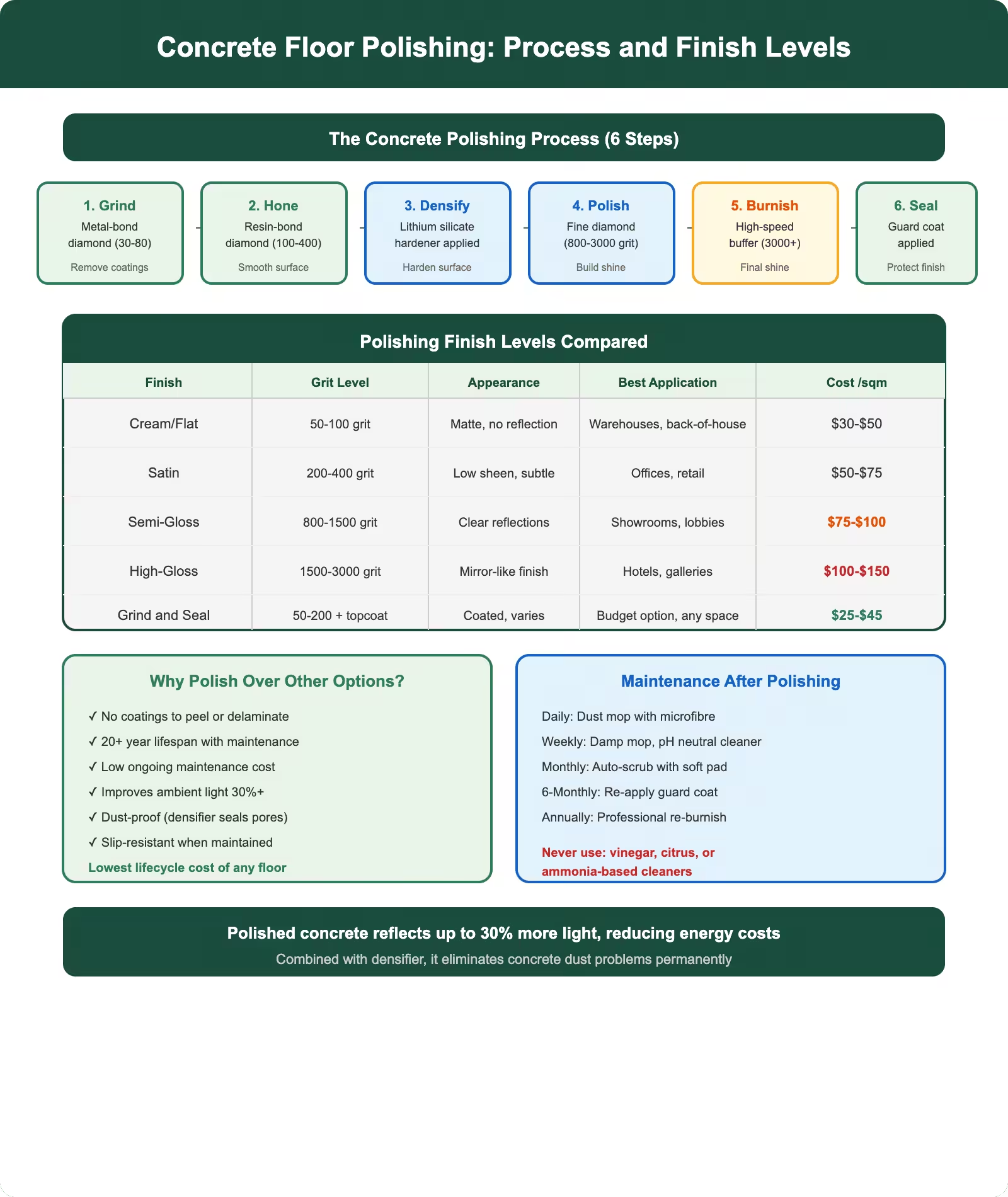
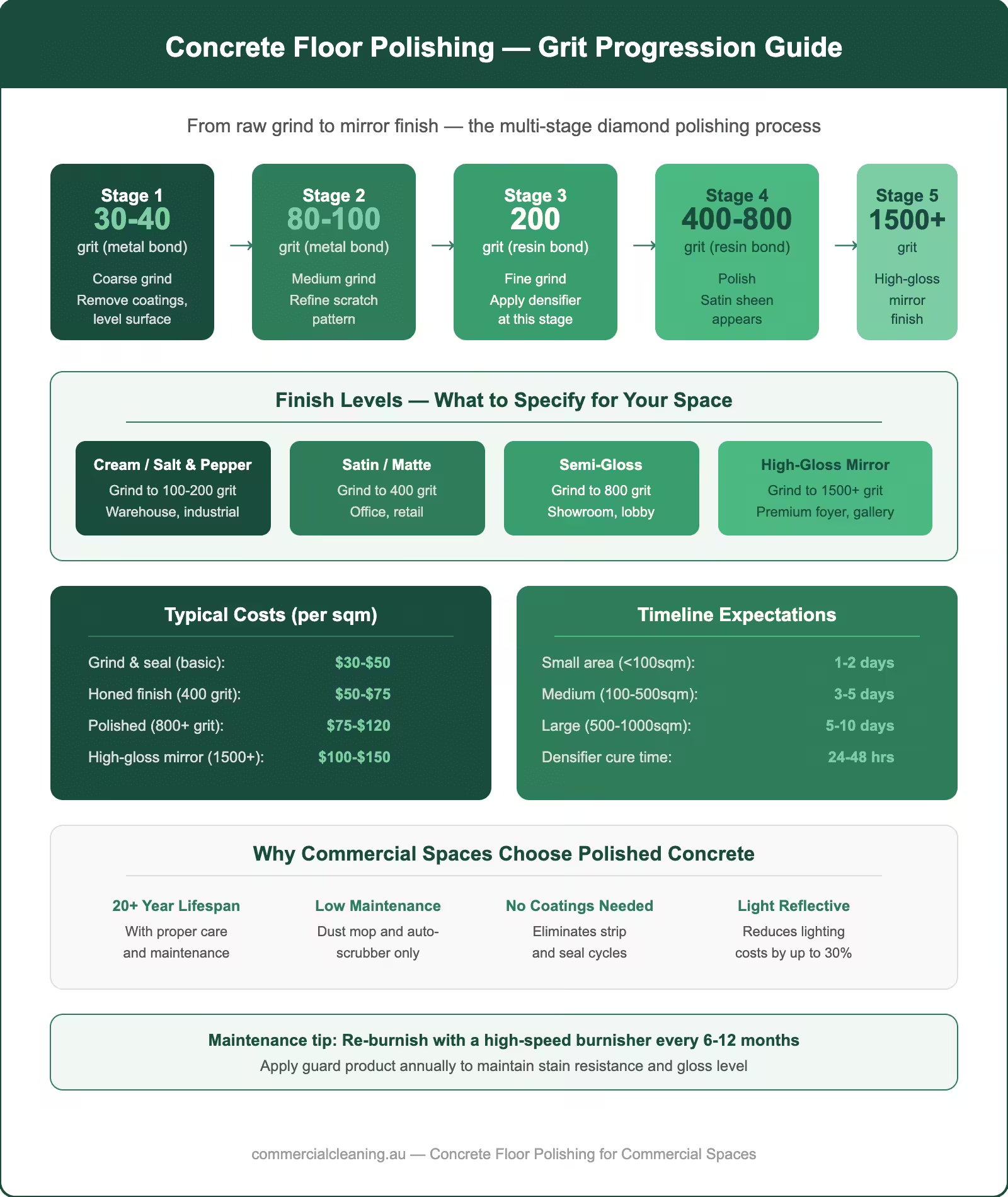
Concrete floor polishing process and finish level comparison guide for commercial spacesConcrete floor polishing grit progression guide showing five stages from coarse grind to mirror finish with costs, timelines, and finish level specifications
What Is Concrete Floor Polishing?
Concrete floor polishing is a multi-stage mechanical process that progressively grinds the concrete surface with finer and finer diamond-grit abrasives, then applies densifiers and sealers to harden and protect the surface. The result is a smooth, dense, polished finish that transforms raw concrete into an attractive, durable surface.
The process typically involves:
Initial coarse grinding to level the concrete and remove surface imperfections
Progressive grinding through increasingly fine grits (medium, fine, micro-fine)
Chemical treatment with densifiers to harden the concrete subsurface
Final sealing and polishing to create gloss or semi-gloss finish
Dust collection and environmental management throughout
The entire process, depending on concrete condition and desired finish, typically takes 2-4 days for a standard commercial space. In our experience, the investment pays dividends through improved durability, easier maintenance, and enhanced professional appearance.
Why Polish Concrete Floors in Commercial Spaces?
Why Polish Concrete Floors in Commercial Spaces? involves specific protocols that we tailor to each facility based on its layout, traffic, and compliance requirements. Untreated concrete is porous, stains easily, creates dust, and degrades under foot traffic and chemical exposure. Polishing addresses all these issues.
Stain resistance: Polished concrete resists oil, chemical, and water penetration, protecting against permanent marks
Reduced dust: The dense surface seals the pores that generate concrete dust, improving indoor air quality
Enhanced durability: Densifiers harden the concrete, reducing surface wear and extending floor lifespan by 10+ years
Easier cleaning: Smooth surfaces are faster and cheaper to maintain with standard commercial cleaning methods
Professional appearance: Polished concrete conveys quality and care, important for client-facing spaces
Cost-effectiveness: Lower long-term maintenance costs offset the upfront polishing investment
Types of Concrete Polishing Finishes
Concrete polishing isn’t one-size-fits-all. Different applications call for different finishes.
Matte Finish
A subtle, non-reflective finish that emphasises the concrete’s natural colour and any decorative aggregates. Ideal for environments where slip resistance is a priority, such as commercial kitchens or medical facilities.
Semi-Gloss Finish
Offers moderate reflectivity that enhances the concrete’s appearance without creating slip hazards. Our most popular choice for Sydney offices and retail environments.
High-Gloss Finish
Creates a mirror-like surface that dramatically enhances light reflection and visual impact. Best suited to showrooms, galleries, and reception areas where appearance takes priority over slip resistance concerns.
Concrete Polishing: Comparison with Alternatives
Floor Treatment
Cost
Durability
Maintenance
Appearance
Best For
Polished concrete
$$
Excellent (10+ years)
Low (basic cleaning)
Professional, modern
High-traffic commercial
Epoxy coating
$$
Good (5-7 years)
Moderate
Customisable colours
Warehouses, workshops
Polished concrete with sealer
$$$
Excellent (15+ years)
Very low
Premium finish
Client-facing spaces
Carpet or vinyl overlay
$
Moderate (3-5 years)
High
Varied
Temporary situations
Untreated concrete
$
Poor (degrades rapidly)
Very high
Industrial
Temporary or utility spaces
The Polishing Process: What to Expect
Understanding the concrete polishing process helps you plan the work and manage expectations. We typically schedule the project during a period when your facility can accommodate the process with minimal disruption.
Day 1: Initial Assessment and Preparation
We inspect the floor to identify damage, cracks, or areas requiring repair. Any epoxy, paint, or adhesive is removed. High-traffic areas and problem zones are mapped for targeted attention.
Days 2-3: Progressive Grinding
We begin with 30-grit diamond pads to level the surface and expose the aggregate. Progressive refinement moves through 100-grit, 200-grit, 400-grit, and 800-grit stages. Dust extraction runs continuously, meeting SafeWork NSW requirements for air quality and worker safety.
Day 3-4: Densification and Sealing
Chemical densifiers penetrate the concrete, harden the surface, and reduce dust generation. Final sealing and polishing create the desired finish. The concrete is then cleaned thoroughly before handover.
Maintaining Your Polished Concrete Floor
Maintaining Your Polished Concrete Floor targets specific protocols that we tailor to each facility based on its layout, traffic, and compliance requirements.
Daily: Sweep or vacuum to remove loose dust and debris. This prevents dust accumulation and maintains appearance.
Weekly: Damp mop with pH-neutral cleaner diluted in water. Avoid acidic cleaners which can dull the polish.
Monthly: Inspect for spills or damage. Address stains immediately to prevent settling.
Quarterly: Professional cleaning with extraction methods if needed. We provide this service as part of ongoing facility maintenance.
Annual: Assess for resealing needs. High-traffic zones may need refresher coating every 1-2 years.
Polished concrete floors in properly maintained facilities can last 10-15 years before requiring refinishing. This far exceeds carpet, vinyl, or epoxy coating lifespan, making polishing a genuinely cost-effective long-term choice.
Common Concrete Polishing Mistakes to Avoid
Common Concrete Polishing Mistakes to Avoid focuses on specific protocols that we tailor to each facility based on its layout, traffic, and compliance requirements. We’ve seen facilities damage their polished concrete by using incorrect cleaning methods or neglecting maintenance. Here are common pitfalls:
Using acidic cleaners: These etch the polished surface and dull the finish. Always use pH-neutral products.
Neglecting moisture control: Polished concrete can be slippery when wet. Confirm proper drainage and use anti-slip additives if needed.
Ignoring spills: Chemical spills, oil, or organic material should be cleaned immediately. Delay allows penetration and staining.
Improper initial polishing: Rushing through grit progression or skipping densification compromises durability. Hire experienced specialists.
Excessive wax or coating: Some facilities apply wax over polished concrete, which traps moisture and causes damage. Polished concrete doesn’t require wax.
Concrete Polishing for Sydney Commercial Facilities
We’ve polished concrete floors across Sydney’s diverse commercial landscape. Parramatta warehouses, CBD office foyers, Eastern Suburbs medical facilities, and retail spaces have all benefited from our polishing expertise. Our work aligns with SafeWork NSW standards and AS/NZS requirements for worker safety during the grinding process.
We provide consultation on finish selection, manage the scheduling to minimise your operational disruption, and deliver post-project maintenance training to verify your floor stays pristine long-term. For facilities considering floor upgrades or maintenance strategies, polished concrete offers exceptional value and durability.
After your concrete is polished to perfection, maintaining it requires consistent care. Our regular cleaning services coordinate with your polished floor’s unique maintenance needs, ensuring your investment remains protected. We also handle vinyl floor maintenance for facilities with mixed flooring types, providing integrated solutions across your entire facility.
Frequently Asked Questions
How long does concrete polishing take?
Typical projects take 2-4 days depending on floor size and current condition. Very large facilities or those with significant existing damage may take longer. We provide detailed timelines during the site assessment.
Can you polish concrete with existing epoxy or paint?
Yes, but the coating must be removed first. This adds to project time and cost. We can provide quotes for complete removal and polishing, or discuss alternatives if removal isn’t feasible.
Is polished concrete slippery?
It can be when wet, depending on finish. Matte finishes are naturally slip-resistant. For higher-gloss finishes in wet environments, we recommend anti-slip coatings or textured finishes.
What’s the cost of concrete polishing?
Budget $3-8 per square metre depending on current floor condition, desired finish, and site accessibility. We provide transparent quotes after on-site assessment.
How often does polished concrete need resealing?
High-traffic areas typically need refresher coating every 1-2 years. Standard commercial spaces can go 3-5 years between resealing. We recommend annual inspections to assess your specific floor’s needs.
About Clean Group
Clean Group is a leading commercial cleaning company in Sydney, serving offices, strata properties, medical centres, schools, and industrial facilities across the greater Sydney region. With over 25 years of experience and a team of fully trained, insured cleaners, we deliver consistent results backed by a 100% satisfaction guarantee. Our services are tailored to your schedule, your budget, and your industry’s compliance requirements.
Hi, I'm Suji Siv, the founder, CEO, and Managing Director of Clean Group, bringing over 25 years of leadership and management experience to the company. As the driving force behind Clean Group’s growth, I oversee strategic planning, resource allocation, and operational excellence across all departments. I am deeply involved in team development and performance optimization through regular reviews and hands-on leadership.