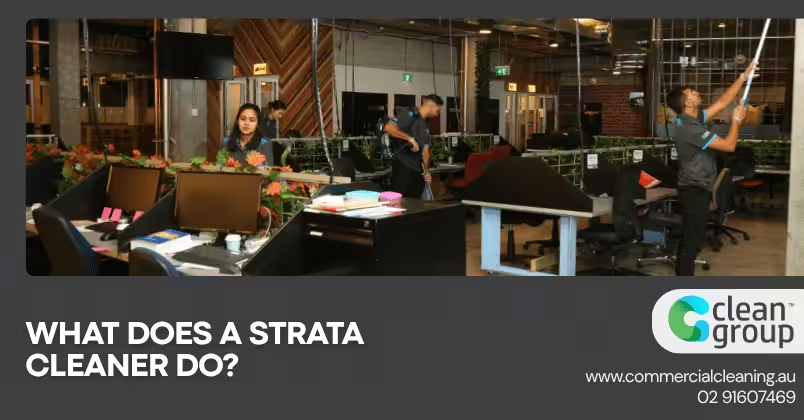
We get asked this question constantly by strata committees, new lot owners, and property managers who have never worked closely with a professional cleaning team before. The short answer is that a strata cleaner maintains every shared space in a residential building — but the real answer involves far more than most people realise. Our team handles buildings across Sydney from Bankstown to Chatswood, and a typical day for our body corporate cleaning crew involves everything from lobby floor maintenance and lift sanitisation to car park degreasing, bin room deep cleans, and garden path pressure washing.
A Day in the Life of Our Strata Cleaning Crew
A Day in the Life of Our Strata Cleaning Crew covers specific protocols that we tailor to each facility based on its layout, traffic, and compliance requirements. We arrive at most buildings between 6:00 and 7:00 AM to complete high-disruption tasks before residents leave for work. Our morning routine typically starts with lobby mopping, entrance glass cleaning, and mail room tidying. We then move through corridors and stairwells with backpack vacuums — HEPA-filtered units that run quieter than uprights, which matters when people are sleeping one wall away. Lift cars get wiped down, buttons sanitised, and floors mopped. By 9:00 AM, every resident has walked through freshly cleaned common areas on their way out.
The rest of the day involves deeper tasks on a rotating schedule. Monday might be car park sweeping and bin room cleaning. Tuesday could be amenity space sanitisation and garden path sweeping. Wednesday is often designated for specialist tasks like window cleaning, pressure washing, or equipment maintenance. Our Parramatta team services one 150-lot building where the weekly task sheet runs to 47 individual line items — and every one is tracked digitally with timestamps and completion photos.
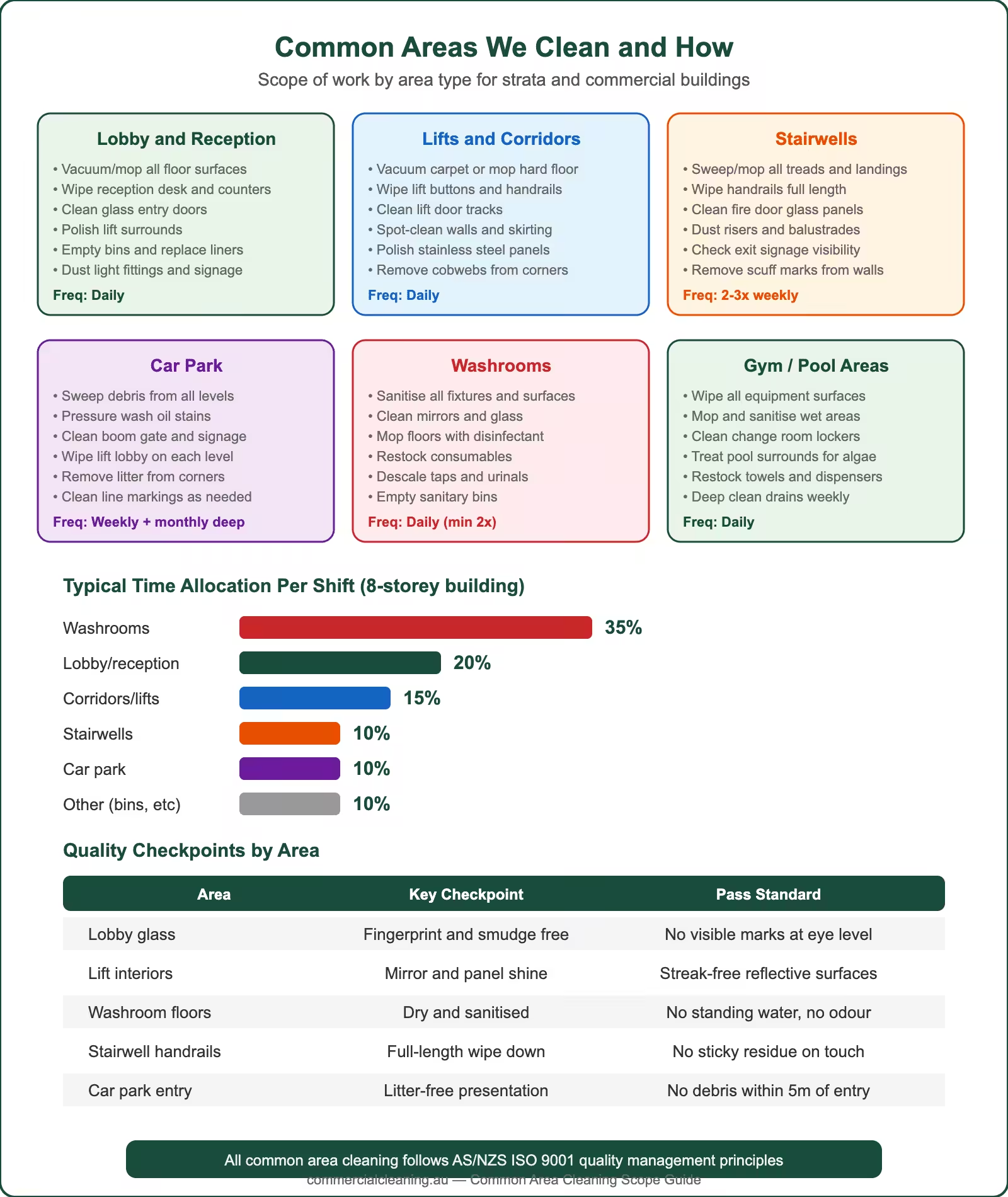
Common areas we clean and how infographic showing scope of work by area type, time allocation, and quality checkpoints for commercial buildings
Common Areas We Clean and How
Common Areas We Clean and How involves specific protocols that we tailor to each facility based on its layout, traffic, and compliance requirements. We maintain lobbies, corridors, stairwells, lifts, car parks, bin rooms, gyms, pools, rooftop terraces, BBQ areas, function rooms, laundries, garden paths, driveways, and external walkways. Each space has its own cleaning protocol based on surface type, traffic volume, and hygiene requirements. Lobbies with natural stone floors get pH-neutral mopping following AS 3733 guidelines. Car park concrete gets quarterly pressure washing at 3,000 PSI with bunded containment to prevent stormwater contamination under the Protection of the Environment Operations Act 1997.
We also handle tasks that most people do not associate with cleaning. Fire stairwell inspections for obstruction compliance, bin room waste stream auditing, garden irrigation checks during visits, and light fitting condition reporting all fall within our scope. Our Surry Hills team flagged a failed emergency exit light during a routine stairwell clean — the strata manager had it repaired within 24 hours, avoiding a potential fire safety compliance notice that could have cost the owners corporation $5,000 or more.
Strata Common Area Maintenance Schedule
Area
Daily
Weekly
Monthly
Annual
Lobby & Foyer
Sweep, mop, glass
Deep mop, dust lights
Floor machine scrub
Strip & reseal
Lifts & Doors
Wipe panels + buttons
Full interior detail
Track & rail degrease
Deep restoration
Car Park
Litter patrol
Sweep + line check
Pressure wash bays
Full pressure + repaint
Pool/Gym
Sanitise surfaces
Deep clean equipment
Grout scrub
Full tile restoration
Bin Room
Hose down, deodorise
Deep scrub walls
Pest treatment
Full sanitise + repaint
Chemicals, Equipment, and Safety Compliance
Strata Common Area Maintenance Schedule requires specific protocols that we tailor to each facility based on its layout, traffic, and compliance requirements. We carry a full range of commercial cleaning products matched to specific surfaces and tasks. Every chemical on our strata sites has a current Safety Data Sheet accessible through our digital system, and our team is trained in correct dilution ratios, PPE requirements, and spill response procedures under AS/NZS 2243.10. We use hospital-grade disinfectants registered with the Therapeutic Goods Administration for high-touch surfaces like lift buttons, handrails, and gym equipment, and pH-neutral products for sensitive surfaces like natural stone and stainless steel.
Chemicals, Equipment, and Safety Compliance includes specific protocols that we tailor to each facility based on its layout, traffic, and compliance requirements. Our equipment fleet includes commercial backpack vacuums, ride-on scrubbers for large car parks, hot-water pressure washers for degreasing, and specialist tools for window cleaning, high-reach dusting, and hard floor polishing. We invest approximately $65,000 in equipment across our strata portfolio and maintain everything on a strict 90-day service cycle. A Eastwood strata manager told us that the difference in cleaning quality between our commercial equipment and the previous contractor’s domestic-grade machines was immediately visible — particularly on corridor carpets and car park concrete.
Reporting and Communication With Strata Managers
Reporting and Communication With Strata Managers addresses specific protocols that we tailor to each facility based on its layout, traffic, and compliance requirements. We generate digital reports for every visit that include timestamped photos, task completion records, and any maintenance issues flagged during cleaning. These reports feed into a client portal that strata managers can access anytime. Our reporting system has become a critical tool for AGM presentations — committees can see exactly what cleaning was performed, when, and to what standard across the entire year.
We also maintain a communication log for every building that records resident interactions, complaint responses, and ad-hoc requests. When a Homebush resident complained about corridor odour, our team investigated within 24 hours, identified a leaking waste pipe behind a wall panel, and escalated it to the strata manager with photographic evidence. The repair cost $380 — if left undetected, it could have caused mould contamination requiring remediation costing $8,000 or more.
Skills and Training Our Cleaners Need
Skills and Training Our Cleaners Need targets specific protocols that we tailor to each facility based on its layout, traffic, and compliance requirements. We train every strata cleaner across multiple disciplines before they work independently on any building. Our onboarding program covers surface-specific cleaning methods, chemical safety handling, equipment operation and maintenance, WHS compliance including working at heights certification where required, and customer service skills for interacting with residents. We also train on building-specific systems — fire panel locations, security protocols, after-hours access procedures, and emergency contact chains.
Our retention rate sits above 85 percent because we invest in our people and pay above award rates. High retention matters in strata because residents notice when their regular cleaner changes — and a new person takes weeks to learn a building’s specific quirks. Our Newtown crew has serviced one building continuously for seven years, and the strata manager credits that consistency as a major factor in the building’s consistently high resident satisfaction scores. The cleaner knows every surface, every problem area, and every resident’s preferences.
For a detailed overview of how buildings plan and manage their maintenance programs, read our guide on choosing a cleaner.
Frequently Asked Questions
How often should common areas in a strata scheme be cleaned?
Frequency depends on the scheme’s size, foot traffic, and location. Lobbies and corridors typically need cleaning five to six days per week in medium-density schemes, and daily in high-rises or high-traffic buildings. Stairwell handrails should be sanitised daily with a full deep-clean weekly. Car parks require weekly sweeping and monthly pressure washing. Bin rooms need intensive weekly cleaning at minimum. Seasonal tasks—gutter clearing, facade washing, carpet shampooing—happen one to four times per year depending on environmental exposure. We tailor schedules to each scheme after assessing actual usage patterns rather than applying a one-size-fits-all template.
What qualifications or certifications should a strata cleaner have?
At minimum, a strata cleaner should hold current First Aid certification, evidence of WH&S training aligned with SafeWork NSW requirements, and a Working with Children Check where the scheme includes facilities used by minors. Many firms also require strata-specific induction training, chemical safety certification under the GHS framework, and equipment operation licences for machinery like pressure washers or ride-on scrubbers. Current public liability insurance and workers’ compensation coverage are non-negotiable for any contractor operating in New South Wales. At Clean Group, we add our own internal training modules covering strata by-law compliance and resident communication protocols.
Can strata cleaners use any chemicals they choose?
Definitely not. Strata by-laws frequently restrict chemical types—some schemes ban aerosols, others prohibit bleach-based products near certain surfaces, and many now require biodegradable or low-toxicity alternatives as standard. SafeWork NSW mandates proper labelling, accessible Safety Data Sheets for every product stored on site, and secure storage of anything classified as hazardous. Professional cleaners verify scheme approval before introducing any new product and maintain a complete SDS register that the strata manager can review at any time.
Who is responsible if a resident slips and injures themselves in a common area?
It comes down to negligence. If the cleaner failed to place adequate wet-floor signage, left equipment in a walkway, or didn’t address a known hazard, liability falls on them and their employer. If the resident ignored visible warnings or acted carelessly, liability may shift. In practice, the owners’ corporation, strata manager, and cleaning contractor all share duty-of-care obligations under NSW workplace health and safety law. This is precisely why professional strata cleaners carry public liability insurance—typically $20 million—and follow strict safety protocols including photographic evidence of signage placement.
What’s the difference between a strata cleaner and a regular commercial cleaner?
The differences are substantial. Strata cleaners work in residential environments with round-the-clock occupancy, where residents have legal rights under strata legislation and by-laws govern nearly every operational decision. Commercial cleaners typically service offices or retail spaces with controlled access hours and no resident interaction. Strata cleaning requires familiarity with the Strata Schemes Management Act 2015, committee processes, by-law restrictions, and the interpersonal skills to manage resident concerns diplomatically. The scheduling constraints, compliance burden, and communication demands make it a distinct specialisation within the broader cleaning industry.
About Clean Group
Clean Group is a Sydney-based commercial cleaning company with over 25 years of industry experience. Founded by Suji Siv, our team of 50+ trained professionals services offices, warehouses, medical centres, schools, childcare facilities, retail stores, gyms, and strata properties across Sydney, Melbourne, and Brisbane.
We are active members of ISSA and the Building Service Contractors Association of Australia (BSCAA). Our operations align with ISO 9001 (Quality Management), ISO 14001 (Environmental Management), and ISO 45001 (Workplace Health and Safety) standards. We hold membership with the Green Building Council of Australia and use eco-friendly, TGA-registered cleaning products wherever possible.
Every Clean Group cleaner is police-checked, fully insured, and trained in safe work procedures under SafeWork NSW guidelines. We operate 7 days a week, including after-hours and weekend services, to minimise disruption to your business.
Hi, I'm Suji Siv, the founder, CEO, and Managing Director of Clean Group, bringing over 25 years of leadership and management experience to the company. As the driving force behind Clean Group’s growth, I oversee strategic planning, resource allocation, and operational excellence across all departments. I am deeply involved in team development and performance optimization through regular reviews and hands-on leadership.