Cleaning Supplies and Toiletries Budget for Office Spaces — Complete Australian Guide
We have managed cleaning supplies and toiletries budgets for offices across Sydney ranging from small five-person suites to corporate headquarters with over 500 staff, and as a provider of cleaning supplies australia guidance, our team has accumulated detailed cost benchmarks that help facility managers set realistic budgets. Our experience shows that most offices either significantly overspend on supplies through poor procurement practices or critically underspend and create hygiene problems that cost more in the long run. We share our budgeting framework because we believe transparency about realistic costs helps everyone.
For more insights, see our guide on cleaning products Sydney.
What Office Cleaning Supplies and Toiletries Actually Cost
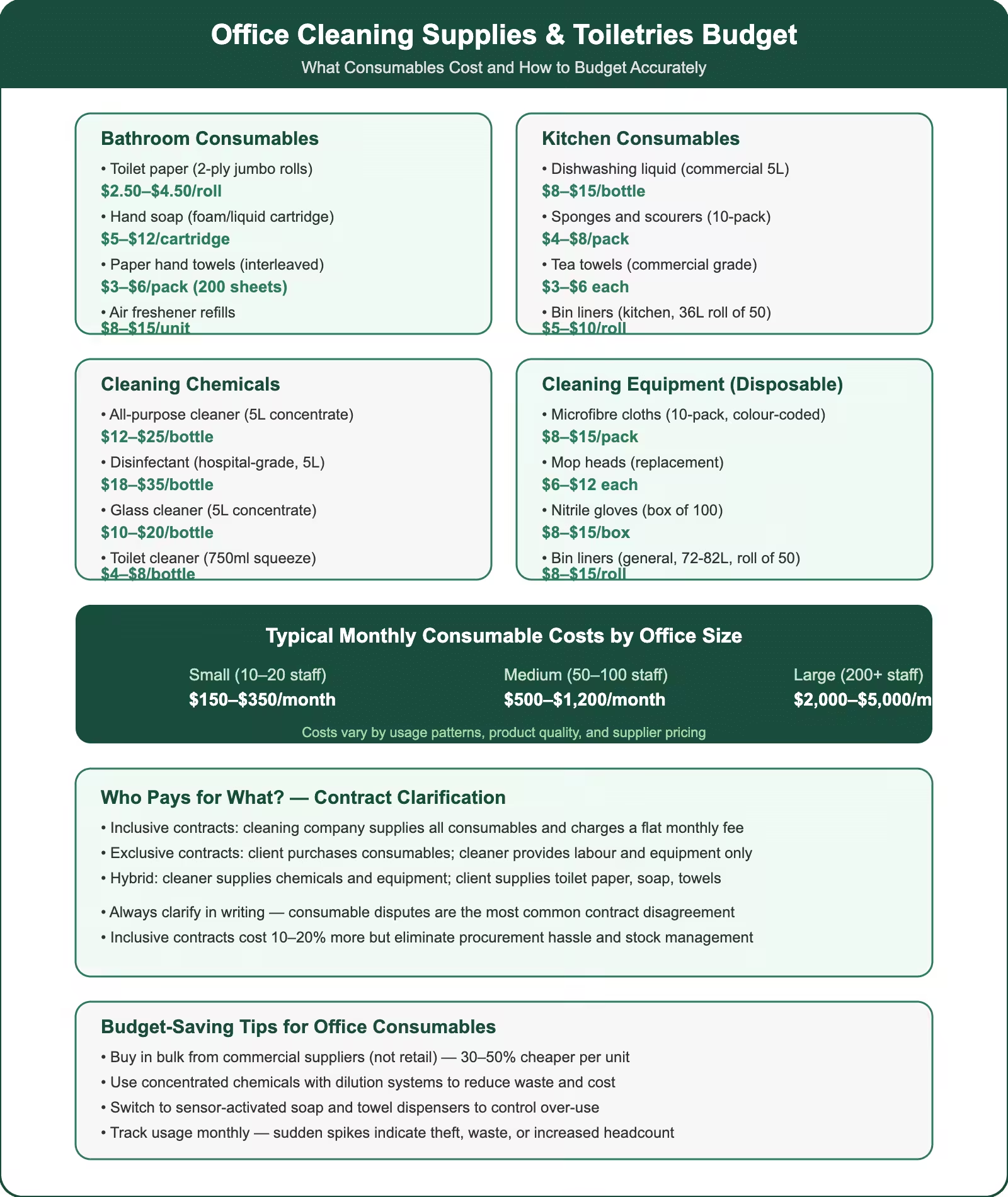
What Office Cleaning Supplies and Toiletries Actually Cost covers specific protocols that we tailor to each facility based on its layout, traffic, and compliance requirements. We track our consumable costs per person per month across all our office contracts, and our data provides reliable benchmarking for any Sydney office facility. Our team calculates that the average office worker consumes approximately $8 to $12 worth of cleaning supplies and toiletries per month, covering hand soap, paper towels or hand dryer electricity, toilet paper, bin liners, surface cleaning products, and shared kitchen consumables. This range assumes standard-quality products purchased at competitive commercial prices — premium eco-friendly products can push costs 20 to 30 percent higher.
We break down costs by category to help our clients understand where their budget goes. Our data shows that bathroom consumables represent approximately 45 percent of the total — hand soap, toilet paper, and hand drying account for the largest single cost category. Kitchen consumables including dishwashing liquid, sponges, tea towels, and bin liners represent about 25 percent. Cleaning chemicals for surfaces, floors, and glass account for roughly 20 percent. And miscellaneous items like air fresheners, bin liners for desk bins, and specialty products make up the remaining 10 percent.
Building a Realistic Office Supplies Budget
We recommend that facility managers build their cleaning supplies budget from the bottom up rather than applying a blanket per-square-metre figure. Our team starts by counting the number of occupants, the number of bathroom facilities, the number of kitchen areas, and the total cleanable floor area. We then apply our cost-per-unit benchmarks to calculate a realistic monthly budget. We’ve found that this approach produces budgets that are 15 to 25 percent more accurate than top-down estimates, which tend to either significantly over- or under-estimate actual needs.
We also factor in seasonal variations that affect consumable usage. Our data from offices in the Prairiewood area shows that winter months see increased tissue and hand sanitiser usage due to cold and flu season, while summer increases water consumption and hand washing frequency. We build a 10 percent seasonal buffer into our annual budget recommendations to account for these fluctuations without requiring mid-year budget adjustments. This buffer also covers unexpected events like illness outbreaks that temporarily spike consumable demand.
Commercial Cleaning Product Comparison
| Product Type | Active Ingredient | Kill Time | Best For | TGA Listed |
|---|---|---|---|---|
| Quaternary Ammonium | Benzalkonium chloride | 10 min | General surfaces | Yes |
| Sodium Hypochlorite | Bleach 0.1% | 1 min | Bathrooms, blood spills | Yes |
| Hydrogen Peroxide | H₂O₂ 3–6% | 5 min | Multi-surface, eco | Yes |
| Isopropyl Alcohol | IPA 70% | 30 sec | Electronics, glass | No |
| Peracetic Acid | PAA 0.2% | 5 min | Food-grade surfaces | Yes |
Common Budgeting Mistakes We See
Commercial Cleaning Product Comparison requires specific protocols that we tailor to each facility based on its layout, traffic, and compliance requirements. We have taken over supply management from in-house procurement teams that were making costly mistakes without realising it. Our team frequently encounters offices buying retail-priced products from supermarkets when commercial alternatives cost 30 to 40 percent less for equivalent quality. We’ve seen facilities purchasing premium branded toilet paper and hand soap for staff bathrooms where commercial-grade products would be perfectly acceptable, and we’ve found offices using industrial-grade cleaning chemicals diluted at incorrect ratios, wasting product while achieving poor cleaning results.
Common Budgeting Mistakes We See includes specific protocols that we tailor to each facility based on its layout, traffic, and compliance requirements. We also see facility managers cutting costs in ways that create bigger expenses. One office in Bonnyrigg eliminated hand soap from bathroom budgets temporarily during a cost-cutting exercise — within three weeks, a gastro outbreak affected 15 staff members, costing the business an estimated $1,770 in sick leave and lost productivity. Our team restored the hand soap supply and implemented a proper hygiene consumable program that prevented further outbreaks. We believe that toiletries in office bathrooms are a non-negotiable expense that delivers enormous return on investment in staff health and productivity.
Optimising Without Compromising Quality
We help our clients reduce cleaning supply costs without compromising hygiene standards through several proven strategies. Our team switches clients from retail purchasing to commercial supply agreements, which immediately reduces per-unit costs. We implement concentrated cleaning products with automated dilution systems, which deliver consistent quality while reducing product waste. We replace paper towel dispensers with efficient hand dryers where appropriate, which typically pays for itself within 12 months through eliminated paper towel purchasing.
We also optimise consumable placement and dispensing to reduce waste. Our team has found that providing toilet paper in controlled dispensers rather than loose rolls reduces consumption by approximately 25 percent without any reduction in availability for users. Similarly, soap dispensers that deliver a metered dose reduce soap waste compared to pump bottles where users typically dispense more than needed. These small changes compound across a facility and can reduce the overall consumable budget by 15 to 20 percent while maintaining or improving the experience for building occupants.
Managing Toiletries for Different Office Environments
Managing Toiletries for Different Office Environments targets specific protocols that we tailor to each facility based on its layout, traffic, and compliance requirements. We tailor our toiletry specifications to the type of office environment. Our team provides premium products including moisturising hand soap, quality toilet paper, and hand cream dispensers for client-facing reception areas and executive floors where presentation matters. For general staff areas, we use good-quality commercial products that are comfortable and effective without the premium pricing. For back-of-house areas like loading docks and maintenance rooms, we provide strong industrial products designed for heavy use. This tiered approach optimises budget allocation by investing in premium presentation where it matters most while using cost-effective alternatives where practical.
We also manage amenity supplies for offices with shower facilities, parent rooms, or wellness rooms. Our team in the Cabramatta West area services several modern offices that include these amenities as part of their workplace design, and the consumable requirements differ significantly from standard bathroom provisions. Shower facilities need body wash, shampoo, and quality towels. Parent rooms require specific hygiene supplies. We build these requirements into our budgets from the outset rather than treating them as afterthoughts that blow out the consumable budget mid-year.
Tracking and Reporting on Supply Costs
Tracking and Reporting on Supply Costs focuses on specific protocols that we tailor to each facility based on its layout, traffic, and compliance requirements. We provide our office clients with monthly consumable usage reports that track spending against budget, identify consumption trends, and flag any unusual variances. Our team uses this data to continuously optimise procurement and delivery schedules. We’ve found that offices where supply costs are actively monitored and managed spend 10 to 15 percent less annually than offices where purchasing is reactive and unmonitored. Our reporting also helps facility managers justify their cleaning supply budgets to management by providing clear data on what’s being spent and why.
Our digital tracking system monitors stock levels at each facility and triggers automatic reorder when supplies reach predetermined thresholds. This prevents both stock-outs — which create hygiene problems and staff complaints — and over-ordering, which ties up budget in excess inventory. We confirm that fire detection and emergency equipment in supply storage areas aligns with AS 1670.4 sound system requirements, and our storage practices maintain safe, organised environments. We believe that professional supply management is a service that pays for itself through waste reduction, better pricing, and elimination of the time facility managers currently spend on ad-hoc purchasing.
If you need help building or optimising your office cleaning supplies budget, our team can conduct a full consumable audit and provide specific recommendations custom to your facility. We bring real cost data and practical procurement expertise. Contact us to learn more alongside our cleaning supplies and surface types matching guide.
Frequently Asked Questions
How much should an office spend on cleaning supplies per person per month?
We benchmark $8 to $12 per person per month for standard commercial products, covering bathroom consumables, kitchen supplies, cleaning chemicals, and miscellaneous items. Premium eco-friendly products push this 20 to 30 percent higher. Our data comes from tracking costs across hundreds of Sydney office facilities.
What is the biggest cost category in office cleaning supplies?
We find bathroom consumables represent approximately 45 percent of total costs — hand soap, toilet paper, and hand drying are the largest single expense. Kitchen consumables account for about 25 percent, cleaning chemicals for 20 percent, and miscellaneous items for the remaining 10 percent.
How can I reduce cleaning supply costs without compromising hygiene?
We recommend switching from retail to commercial supply agreements, implementing concentrated products with automated dilution, using controlled toilet paper dispensers that reduce waste by 25 percent, and installing metered soap dispensers. These changes typically reduce budgets by 15 to 20 percent while maintaining quality.
Should I use different quality products in different areas of my office?
We recommend a tiered approach: premium products for client-facing areas and executive floors, good-quality commercial products for general staff areas, and strong industrial products for back-of-house spaces. This optimises budget allocation by investing in presentation where it matters most.
How do seasonal variations affect cleaning supply budgets?
We find winter increases tissue and sanitiser usage due to cold and flu season, while summer increases hand washing frequency. We build a 10 percent seasonal buffer into annual budgets to cover these fluctuations and unexpected events like illness outbreaks without mid-year adjustments.
What happens if we cut bathroom consumable costs too aggressively?
We’ve seen offices eliminate hand soap during cost-cutting, resulting in gastro outbreaks costing thousands in sick leave. Bathroom toiletries are non-negotiable expenses that deliver enormous ROI in staff health and productivity. Cutting too deep always costs more in the long run.
How do you track and manage supply costs for offices?
We provide monthly usage reports tracking spending against budget with consumption trends and variance alerts. Our digital system monitors stock levels and triggers automatic reorders at predetermined thresholds, preventing both stock-outs and over-ordering.
Can you manage cleaning supplies for offices with special amenities?
We manage consumables for offices with shower facilities, parent rooms, and wellness rooms, building these requirements into budgets from the outset. These amenities need specific supplies — body wash, shampoo, quality towels — that differ from standard bathroom provisions.
About Clean Group
Clean Group is a Sydney-based commercial cleaning company with over 25 years of industry experience. Founded by Suji Siv, our team of 50+ trained professionals services offices, warehouses, medical centres, schools, childcare facilities, retail stores, gyms, and strata properties across Sydney, Melbourne, and Brisbane.
We are active members of ISSA and the Building Service Contractors Association of Australia (BSCAA). Our operations align with ISO 9001 (Quality Management), ISO 14001 (Environmental Management), and ISO 45001 (Workplace Health and Safety) standards. We hold membership with the Green Building Council of Australia and use eco-friendly, TGA-registered cleaning products wherever possible.
Every Clean Group cleaner is police-checked, fully insured, and trained in safe work procedures under SafeWork NSW guidelines. We operate 7 days a week, including after-hours and weekend services, to minimise disruption to your business.
About the Author

Suji Siv
/

Hi, I'm Suji Siv, the founder, CEO, and Managing Director of Clean Group, bringing over 25 years of leadership and management experience to the company. As the driving force behind Clean Group’s growth, I oversee strategic planning, resource allocation, and operational excellence across all departments. I am deeply involved in team development and performance optimization through regular reviews and hands-on leadership.
Read More About Suji 0291607469
 Get A Quote