We have spent over a decade matching the right cleaning product to the right surface, and the one lesson we keep learning is that shortcuts destroy finishes faster than dirt ever will. Our team services offices, medical centres, and retail spaces across Sydney, so we see first-hand what happens when a well-meaning staff member grabs the wrong bottle and attacks a marble benchtop with an acidic bathroom cleaner. We created this guide because professional cleaning supplies only deliver results when they are paired correctly with the surface underneath. Every recommendation below comes from products we actually stock on our carts and solutions we have tested in live commercial environments — not lab conditions.
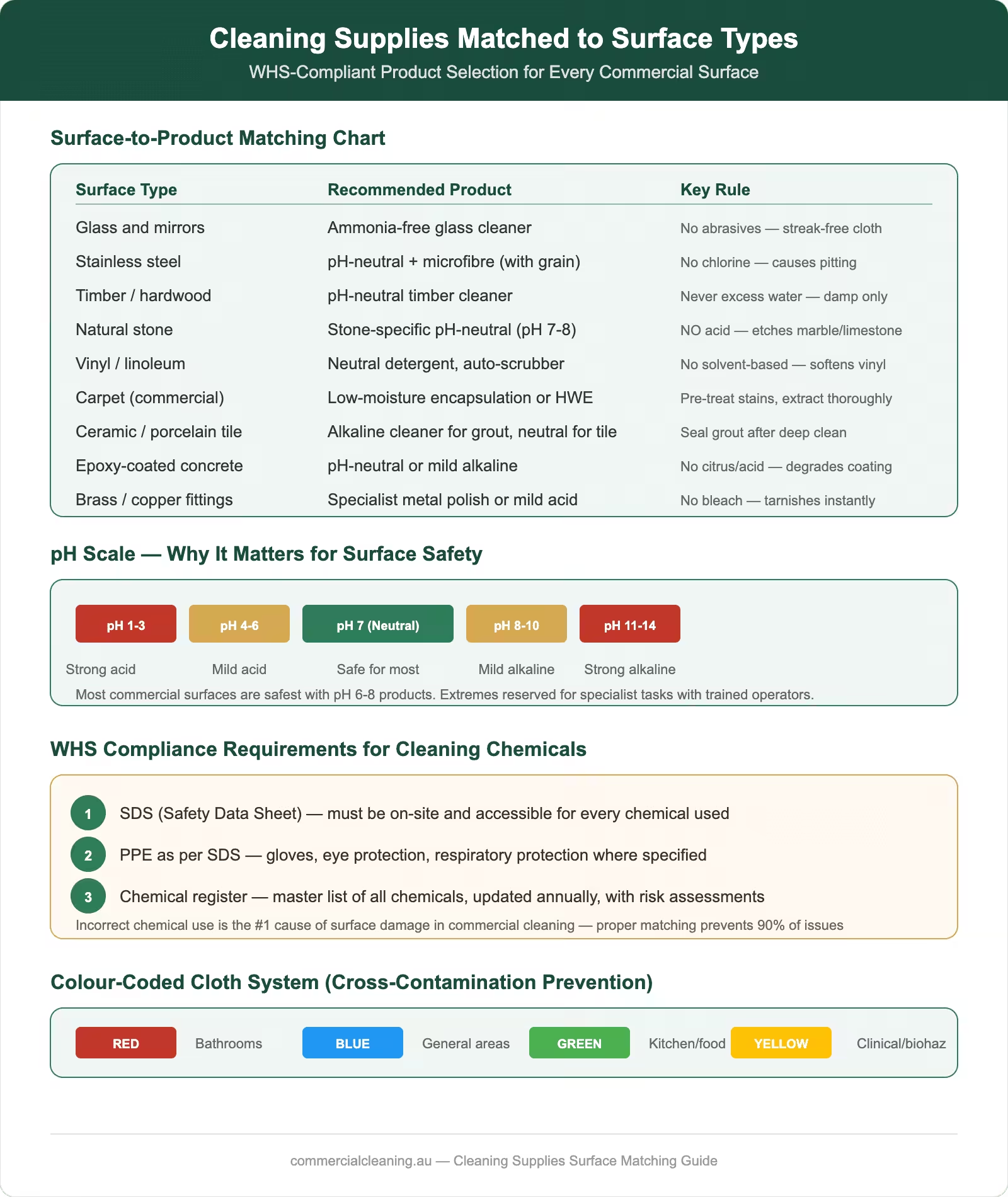
Cleaning supplies matched to surface types chart showing product recommendations, pH scale guide, WHS compliance requirements, and colour-coded cloth system
Cleaning Supplies for Different Surface Types: WHS-Compliant Product Matching and Safety Data Sheets
Cleaning Supplies for Different Surface Types covers specific protocols that we tailor to each facility based on its layout, traffic, and compliance requirements. We always tell our clients that a Safety Data Sheet is not just paperwork — it is the single most important document connecting a product to a surface. Our approach starts with reading Section 9 of every SDS, which lists the pH value. We have learned through years of trial and error that pH is the master variable: get it wrong and you etch stone, cloud acrylic, or strip wax coatings in seconds. Our team maintains a digital SDS library for every product we use, and we cross-reference pH against the manufacturer’s surface tolerance before any product enters a building. We follow AS 2700 colour-coding standards when labelling our spray bottles and buckets so that each colour corresponds to a specific surface category, reducing mix-ups on busy shifts. One of our supervisors in Cabramatta introduced this colour-coding system four years ago after a night-shift crew accidentally used a heavy-duty degreaser on a sealed timber floor — the repair bill came to $1,790, and that single incident convinced us to invest in proper product-surface matching protocols across every site we service.
We also insist that every cleaner on our team reads the hazard pictograms on Section 2 before opening a container. Our team learned the hard way that “suitable for all surfaces” claims on retail products rarely hold true in commercial settings where surface coatings vary enormously. We have built our own internal matching chart that maps each product SKU to approved surfaces, and we review it quarterly when manufacturers reformulate. We believe this discipline is what separates professional cleaning from guesswork, and our clients in Canley Heights and Lansvale have told us they notice the difference in surface longevity.
Natural Stone Surfaces: Marble, Granite, and Terrazzo with pH-Verified SDS
Natural Stone Surfaces: Marble, Granite, and Terrazzo with pH-Verified SDS involves specific protocols that we tailor to each facility based on its layout, traffic, and compliance requirements. We treat natural stone as the most unforgiving surface category in our entire portfolio. Our team has seen enough etched marble lobby floors to fill a cautionary photo album. We always use pH-neutral cleaners sitting between 6.5 and 7.5 on the scale, and we verify that number against Section 9 of the product SDS — never the marketing label. We have found that even products marketed as “stone safe” sometimes creep above pH 8, which is enough to dull a polished marble finish over repeated applications. Our standard protocol involves testing a small patch in a hidden corner, waiting twenty-four hours, and checking for haze or discolouration before rolling out to the full floor area.
Granite is more forgiving than marble, but we still avoid anything containing citric acid or vinegar derivatives. We have cleaned granite reception desks in medical centres where previous contractors left white residue rings from alkaline degreasers, and removing those marks required professional honing. Terrazzo presents its own challenge because the cement binder reacts differently to the marble or glass chips embedded in it. Our team uses a dedicated terrazzo-specific neutral cleaner and finishes with a penetrating impregnating sealer every six months. We learned this cadence after a facility manager in Cabramatta asked us why their terrazzo corridor was absorbing coffee spills despite being “sealed” — the previous cleaner had been using a topical coating that wore through within weeks under foot traffic.
Commercial Cleaning Product Comparison
Product Type
Active Ingredient
Kill Time
Best For
TGA Listed
Quaternary Ammonium
Benzalkonium chloride
10 min
General surfaces
Yes
Sodium Hypochlorite
Bleach 0.1%
1 min
Bathrooms, blood spills
Yes
Hydrogen Peroxide
H₂O₂ 3–6%
5 min
Multi-surface, eco
Yes
Isopropyl Alcohol
IPA 70%
30 sec
Electronics, glass
No
Peracetic Acid
PAA 0.2%
5 min
Food-grade surfaces
Yes
Hard Floor Surfaces: Vinyl, Timber, Concrete, and Tile with SDS pH Verification
Commercial Cleaning Product Comparison requires specific protocols that we tailor to each facility based on its layout, traffic, and compliance requirements. We service more vinyl composite tile and luxury vinyl plank than any other flooring type, and we have developed strong opinions about what works. Our team uses a slightly alkaline cleaner around pH 8 to 9 for daily maintenance on vinyl, but we never exceed pH 10 because higher alkalinity strips the factory finish and accelerates yellowing. We verify this on every new product by checking Section 9 and cross-referencing with the vinyl manufacturer’s maintenance guide — something most cleaning companies skip entirely. We have seen contractors pour undiluted floor stripper on vinyl thinking it would just “deep clean” the surface, and the result was a permanent haze that required full re-coating.
Hard Floor Surfaces: Vinyl, Timber, Concrete, and Tile with SDS pH Verification includes specific protocols that we tailor to each facility based on its layout, traffic, and compliance requirements. Timber floors demand the gentlest approach. We only use pH-neutral solutions on sealed timber and we never allow standing water — our microfibre mops are wrung almost dry. Our team refinished a sealed blackbutt floor in Canley Heights after a retail client’s previous cleaner had been wet-mopping with a heavily alkaline product for months, and the polyurethane coating had turned milky. That restoration job reinforced our conviction that timber floors need dedicated products, not multi-surface shortcuts. Concrete floors in warehouses and car parks receive a different treatment: we use mildly alkaline degreasers at pH 9 to 10, applied through an auto-scrubber, and we always verify that the product does not contain hydrofluoric acid by reading Section 3 of the SDS. Ceramic tile grout is the weak point in any tiled area — we use an alkaline grout-specific cleaner and seal the grout lines annually to prevent staining.
Stainless Steel and Metal Surfaces with Chloride-Avoidance Guidance from SDS
Stainless Steel and Metal Surfaces with Chloride-Avoidance Guidance from SDS addresses specific protocols that we tailor to each facility based on its layout, traffic, and compliance requirements. We clean stainless steel in commercial kitchens, lift lobbies, and laboratory benches almost every shift, and the number one rule our team follows is to avoid chloride-containing products at all costs. We have seen enough pitting corrosion on grade 304 stainless to know that even trace amounts of sodium hypochlorite left on a surface will cause permanent damage within weeks. Our protocol starts with checking Section 3 of the SDS for any chloride compounds, and if we spot one, that product never touches stainless steel. We use a dedicated stainless steel cleaner with a light mineral oil finish that polishes and protects in a single pass, and we always wipe in the direction of the grain — never in circles.
Aluminium window frames and anodised surfaces get their own treatment because they corrode under alkaline conditions. We keep our aluminium cleaners below pH 9 and verify compatibility on Section 10 of the SDS, which lists conditions to avoid. Our team once inherited a site in Lansvale where the previous contractor had been cleaning anodised aluminium partitions with a caustic oven cleaner, and the resulting oxidation damage ran into thousands of dollars. We now include a metal identification step in our site induction so every team member knows which metal type they are dealing with before selecting a product.
Glass and Mirror Surfaces: Streak-Free Formulations and VOC Considerations
Glass and Mirror Surfaces: Streak-Free Formulations and VOC Considerations targets specific protocols that we tailor to each facility based on its layout, traffic, and compliance requirements. We clean glass facades, interior mirrors, and glass partition walls daily across our commercial portfolio, and our approach has evolved significantly over the years. Our team moved away from ammonia-based glass cleaners three years ago because the volatile organic compound emissions were triggering complaints in enclosed office environments. We now use a low-VOC alcohol-based formulation that evaporates quickly without leaving streaks, and we verify the VOC content on Section 9 of the SDS. We have found that the key to streak-free glass is not the product itself but the application technique — we spray onto a microfibre cloth rather than directly onto the glass to control overspray and prevent drip marks on adjacent surfaces.
Tinted and coated glass panels require extra caution because abrasive ingredients in some glass cleaners can scratch or degrade the coating. Our team always checks with the building manager whether any glass has a solar film or privacy tint before we start, and we test in an inconspicuous corner when we encounter unfamiliar coatings. We have had situations where previous cleaners stripped the UV film from an entire glass wall because they used a cleaner containing butyl glycol ether, which dissolves adhesive films. We verify Section 3 of the SDS for glycol ether content before using any product on coated glass. Our team also avoids cleaning glass in direct sunlight because rapid evaporation leaves mineral deposits — we schedule glass work for early morning or overcast periods whenever possible.
Carpet and Textile Surfaces: Fibre-Specific Chemistry and TGA-Regulated Disinfectants
Carpet and Textile Surfaces: Fibre-Specific Chemistry and TGA-Regulated Disinfectants focuses on specific protocols that we tailor to each facility based on its layout, traffic, and compliance requirements. We maintain carpet in offices, hotels, and medical waiting rooms, and we have learned that fibre type dictates product choice more than any other variable. Our team always identifies whether we are working with nylon, polypropylene, or wool before selecting a cleaner, because each fibre reacts differently to pH and oxidising agents. Nylon carpet tolerates a wider pH range and responds well to our standard encapsulation chemistry, but wool demands a strictly neutral product below pH 8 — anything higher causes fibre damage and colour bleeding that no amount of rinsing will fix. We verify fibre type from the manufacturer’s specification sheet or by conducting a simple burn test on a tuft sample from a hidden edge.
Our team uses hot water extraction for deep cleaning and low-moisture encapsulation for interim maintenance, and we select our detergent based on the soil type and fibre. We have found that offices with heavy food traffic near kitchenettes need an enzymatic pre-spray to break down protein-based stains before extraction, while general office carpet responds well to a standard surfactant solution. For healthcare settings where disinfection is required, we use products registered with the Therapeutic Goods Administration on the Australian Register of Therapeutic Goods, and we verify the TGA listing number on every product before use. We refuse to use unregistered “sanitiser” products that make unsubstantiated antimicrobial claims, because our clients rely on us to meet infection control standards — not marketing promises.
Upholstery and Soft Furnishings: Cleaning Code Compliance and Leather Care
Upholstery and Soft Furnishings covers specific protocols that we tailor to each facility based on its layout, traffic, and compliance requirements. We clean office chairs, reception lounge suites, and waiting room seating regularly, and the first thing our team checks is the cleaning code tag on the furniture. We follow the standard W-S-WS-X coding system: W means water-based cleaners only, S means solvent-based only, WS means either will work, and X means professional vacuuming only with no wet cleaning. We have encountered situations where previous cleaners ignored the S code and applied a water-based spotter, leaving a permanent ring mark on a fabric lounge. Our team photographs the cleaning code tag during site induction and adds it to our digital job card so every cleaner who visits that site knows the correct product for each piece of furniture.
Leather furniture is a separate discipline entirely. We use a pH-balanced leather cleaner followed by a conditioner that replenishes the natural oils lost through daily use and air conditioning. Our team treats leather quarterly in office environments and monthly in high-traffic reception areas. We have seen enough cracked and peeling leather armchairs to know that neglecting the conditioning step leads to irreversible surface damage within twelve to eighteen months. We always test our leather products on the underside of a cushion before applying to visible surfaces, and we keep a separate set of soft cloths reserved exclusively for leather work to avoid cross-contamination with residues from other cleaning chemicals.
Creating a WHS-Compliant Surface-Product Matching Chart
We build a custom surface-product matching chart for every new site we take on, and we consider it one of the most valuable deliverables in our onboarding process. Our team walks through the entire facility identifying every surface type — floors, benchtops, partitions, furniture, fixtures — and records them on a room-by-room basis. We then cross-reference each surface against our approved product list, checking SDS pH values and hazard classifications to confirm compatibility. The finished chart lives in the site’s cleaning folder and on our digital platform so every team member can access it on their phone before selecting a product. We review and update these charts every six months or whenever a product is reformulated or discontinued.
We also use AS 2700 colour-coding principles to assign a coloured label to each surface category on our matching chart: blue for glass, green for floors, red for bathrooms, and yellow for kitchen surfaces. Our team attaches matching coloured tape to spray bottles and mop handles so the visual system reinforces the written chart. We introduced this system after a new team member at a site in Cabramatta accidentally used a bathroom acid cleaner on a limestone reception desk during their first week — the colour-coded system would have prevented that mistake instantly. We have since rolled out this approach across every site we manage, and our incident reports for surface damage have dropped significantly. We believe that investing time upfront in a proper matching chart saves far more than it costs in prevented damage, and our experience across hundreds of commercial sites in Sydney confirms that belief every quarter.
For products making antimicrobial or therapeutic claims, we always verify Therapeutic Goods Administration registration on the Australian Register of Therapeutic Goods before purchase. Surface protection and compliance go hand-in-hand — the lowest-cost product is not a bargain if it damages valuable surfaces or creates WHS documentation gaps. Our team has built these principles into every aspect of our floor scrubber buying guide and product selection process because we have seen too many facilities learn these lessons the expensive way.
Frequently Asked Questions
What pH level should cleaning products be for marble and natural stone surfaces?
We always use cleaners with a pH between 6.5 and 7.5 for marble and natural stone. Our team verifies this by reading Section 9 of the Safety Data Sheet rather than trusting marketing labels. We have seen products marketed as “stone safe” that sit above pH 8, which is enough to etch and dull a polished marble finish over repeated applications.
How do you prevent stainless steel pitting from cleaning products?
We check Section 3 of every product SDS for chloride compounds before allowing it near stainless steel. Our team has seen grade 304 stainless develop permanent pitting corrosion from sodium hypochlorite residue left on surfaces. We use a dedicated stainless steel cleaner with a light mineral oil finish and always wipe in the direction of the grain.
Why is the cleaning code tag on upholstery important?
We follow the W-S-WS-X cleaning code system on every piece of upholstered furniture because using the wrong product type causes permanent damage. Our team has seen water-based cleaners leave ring marks on solvent-only fabrics. We photograph every cleaning code tag during site induction and add it to our digital job cards.
How often should leather office furniture be conditioned?
We condition leather furniture quarterly in standard office environments and monthly in high-traffic reception areas. Our team uses a pH-balanced leather cleaner followed by a conditioner that replenishes natural oils. We have seen leather armchairs crack and peel within twelve to eighteen months when the conditioning step is neglected.
What is the best approach for cleaning tinted or coated glass?
We always check with the building manager whether any glass has a solar film or privacy tint before starting. Our team tests our cleaner in an inconspicuous corner first and verifies Section 3 of the SDS for glycol ether content, which dissolves adhesive films. We schedule glass cleaning for early morning or overcast conditions to prevent streaking from rapid evaporation.
How do you choose carpet cleaning products for different fibre types?
We identify the carpet fibre — nylon, polypropylene, or wool — before selecting any product. Our team keeps wool carpet strictly below pH 8 to prevent fibre damage and colour bleeding. We use enzymatic pre-sprays for protein-based stains near kitchenettes and standard surfactant solutions for general office soil.
What role does AS 2700 colour-coding play in cleaning supply management?
We apply AS 2700 colour-coding principles to label spray bottles and mop handles by surface category: blue for glass, green for floors, red for bathrooms, and yellow for kitchens. Our team introduced this system after a Cabramatta site incident where a bathroom cleaner was used on limestone, and our surface damage incident reports have dropped significantly since.
Should cleaning products with antimicrobial claims be TGA-registered?
We only use antimicrobial products that are registered with the Therapeutic Goods Administration on the Australian Register of Therapeutic Goods. Our team verifies the TGA listing number on every product before use in healthcare and commercial settings. We refuse to stock unregistered products making sanitiser claims because our clients depend on verified infection control standards.
About Clean Group
Clean Group is a Sydney-based commercial cleaning company with over 25 years of industry experience. Founded by Suji Siv, our team of 50+ trained professionals services offices, warehouses, medical centres, schools, childcare facilities, retail stores, gyms, and strata properties across Sydney, Melbourne, and Brisbane.
We are active members of ISSA and the Building Service Contractors Association of Australia (BSCAA). Our operations align with ISO 9001 (Quality Management), ISO 14001 (Environmental Management), and ISO 45001 (Workplace Health and Safety) standards. We hold membership with the Green Building Council of Australia and use eco-friendly, TGA-registered cleaning products wherever possible.
Every Clean Group cleaner is police-checked, fully insured, and trained in safe work procedures under SafeWork NSW guidelines. We operate 7 days a week, including after-hours and weekend services, to minimise disruption to your business.
Hi, I'm Suji Siv, the founder, CEO, and Managing Director of Clean Group, bringing over 25 years of leadership and management experience to the company. As the driving force behind Clean Group’s growth, I oversee strategic planning, resource allocation, and operational excellence across all departments. I am deeply involved in team development and performance optimization through regular reviews and hands-on leadership.