Spring Cleaning for Commercial Properties: Seasonal Deep Clean Checklist

Deep cleaning professionals need to understand this. Most commercial buildings in Sydney get the same clean fifty-two weeks a year — same frequency, same scope, same crew. A seasonal deep clean breaks that cycle by addressing the buildup that weekly maintenance cannot reach. We run spring deep cleans for offices, retail spaces, and strata buildings across the greater Sydney region every September through November, and the difference in air quality, floor condition, and overall presentation after a structured seasonal clean is something weekly service alone will never achieve.
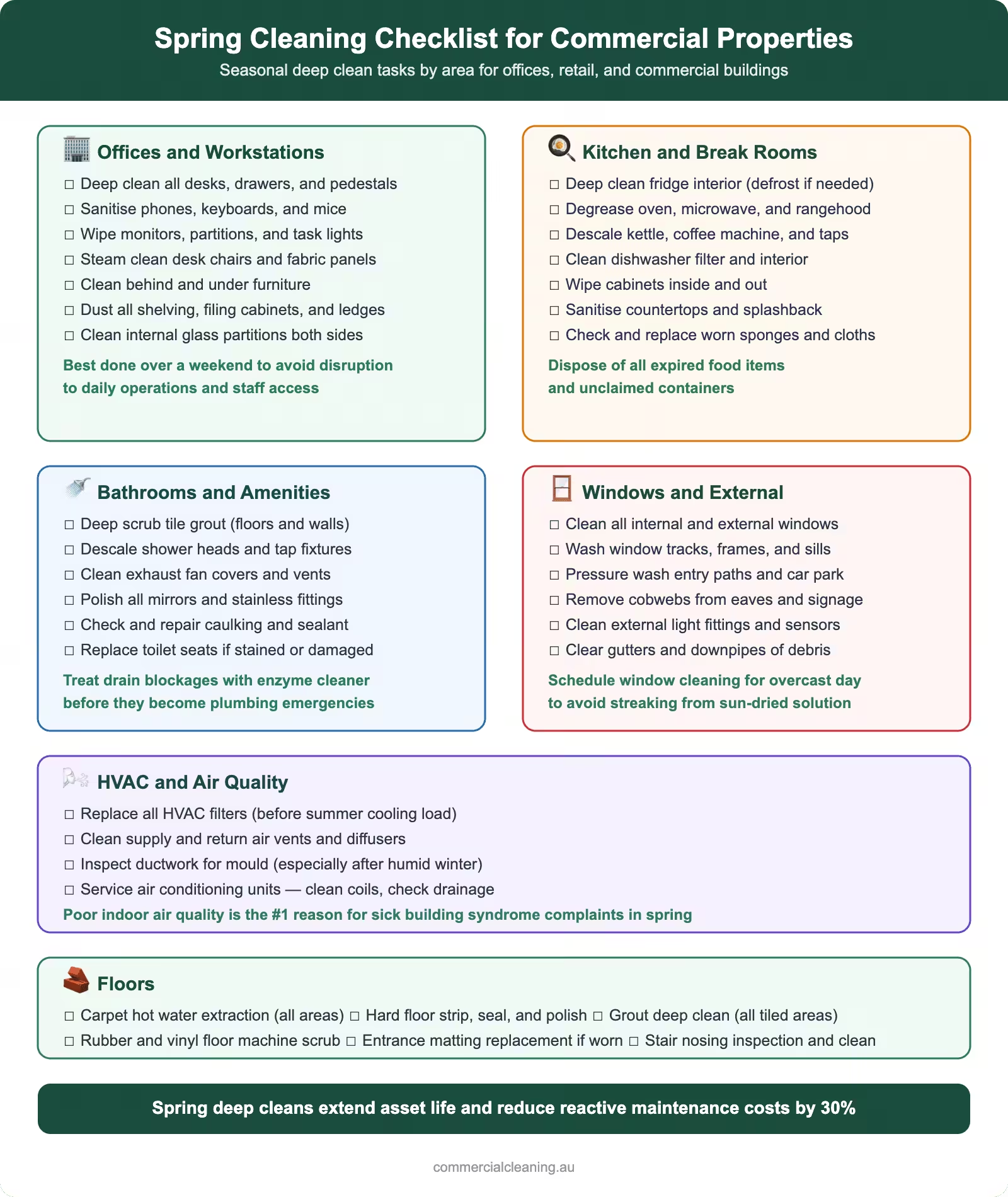
For more insights, see our guide on deep cleaning checklist for commercial properties.
Why Spring Is the Right Time for a Commercial Deep Clean
Why Spring Is the Right Time for a Commercial Deep Clean covers specific protocols that we tailor to each facility based on its layout, traffic, and compliance requirements. Sydney winters are mild by world standards, but six months of reduced ventilation, heating-related humidity, and wet-weather foot traffic takes a measurable toll on commercial interiors. We started tracking this pattern across our contract portfolio about five years ago and the data was consistent: sites receiving only weekly maintenance through winter scored eight to twelve per cent lower on our sixty-five-point audit in October compared to their April results. Carpet fibres compact under months of damp shoe traffic, HVAC filters accumulate recirculated dust, and bathroom grout develops mould in wet areas with poor airflow.
The sites that added a single annual deep clean in September or October — timed to the transition from heating to cooling season — held consistent scores year-round. That correlation was clear enough that we now include a spring deep clean option in every ongoing commercial cleaning contract we write.
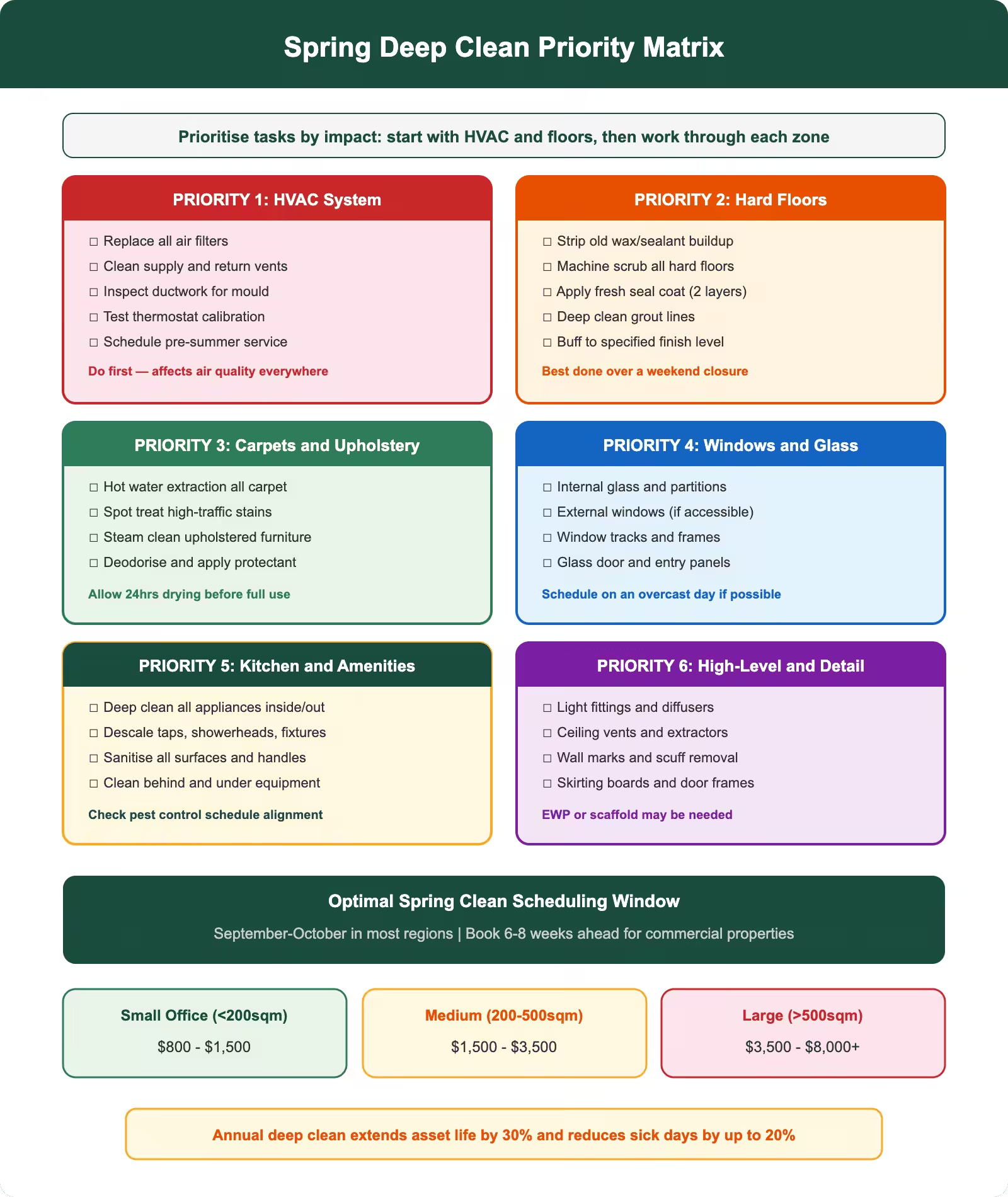
The Spring Deep Clean Checklist for Commercial Properties
The Spring Deep Clean Checklist for Commercial Properties involves specific protocols that we tailor to each facility based on its layout, traffic, and compliance requirements. A seasonal deep clean is not the same scope as an emergency one-off or an end-of-lease restoration. It targets the specific deterioration that accumulates during cooler months while the building stays fully operational. Our spring checklist covers six task categories that weekly maintenance does not address at all, or only addresses superficially.
📋 Free Spring Deep Clean Checklist
Download Spring Deep Clean Checklist (PDF)
Category Breakdown
| Category | Tasks | Why Spring Specifically |
|---|---|---|
| HVAC and ventilation | Return vent vacuuming, diffuser wipe-down, filter check coordination with HVAC contractor | Winter recirculation deposits dust on vents; spring transition to cooling mode pushes accumulated particles into occupied spaces |
| Carpet and soft flooring | Hot water extraction per AS/NZS 3733, spot treatment, traffic lane restoration | Winter foot traffic compacts carpet fibres; extraction restores pile and removes embedded soil |
| Hard floor stripping and sealing | Strip old sealant, machine scrub, apply fresh sealant coat | Winter moisture and foot traffic degrade floor sealant faster than summer; spring resealing lasts through the high-traffic pre-Christmas period |
| Window and glass | Internal and external glass, frames, tracks, partition glass | Winter condensation leaves mineral deposits on internal glass; spring sunlight makes streaks and film visible |
| Bathroom deep clean | Grout scrub, tile descale, silicone mould treatment, fixture restoration | Winter humidity accelerates mould growth in poorly ventilated wet areas |
| High-level dusting | Light fittings, ceiling tiles, cable trays, top of partitions, signage | Months of reduced air circulation allow dust to settle on elevated surfaces undisturbed |
HVAC Transition: The Most Overlooked Spring Cleaning Task
HVAC Transition: The Most Overlooked Spring Cleaning Task requires specific protocols that we tailor to each facility based on its layout, traffic, and compliance requirements. When a Sydney commercial building switches from heating to cooling — usually late September or early October — the HVAC system pushes air through ductwork and diffusers that have been collecting dust all winter. If the return vents and supply diffusers are not cleaned before this switchover, that accumulated dust gets blown directly into occupied areas. We have seen CBD office buildings where the first week of cooling mode triggered a spike in tenant complaints about air quality and visible dust on desks.
Our spring deep clean always begins with the HVAC-accessible components. We vacuum return air vents with HEPA-filtered equipment, wipe down supply diffusers, and coordinate timing with the building’s mechanical contractor so their filter replacement aligns with our vent cleaning. This is not a substitute for a full internal duct clean — that is a specialist mechanical service — but it addresses the visible components that directly affect the air tenants are breathing at desk height.
The UK’s Chartered Institution of Building Services Engineers publishes seasonal HVAC maintenance guidance that includes pre-cooling-season cleaning of terminal units. Australian building codes do not prescribe the same level of seasonal attention, which is why this step gets skipped on most Sydney buildings. We adapted CIBSE’s pre-season approach for our contracts and the results were immediate — a Parramatta client reported zero dust complaints in the first week of cooling mode for the first time in four years.
Hard Floor Restoration: Timing Your Strip and Seal
Vinyl, linoleum, and polished concrete floors in commercial buildings need periodic stripping and resealing. Spring is the right time for two reasons that our floor team has confirmed across years of data. First, six months of winter foot traffic and moisture from wet shoes degrades the existing sealant faster than the drier summer months. Second, a fresh seal applied in September or October has maximum protective life through the high-traffic period from October to January when most Sydney businesses hit peak activity and foot count.
Our restoration process runs three steps: mechanical stripping with a low-speed rotary scrubber and alkaline stripping solution, thorough rinsing and air-drying, then two to three coats of commercial-grade polymer sealant. The full job takes twelve to sixteen hours per five hundred square metres, so we schedule over weekends to avoid disrupting weekday operations. For a North Sydney law firm with eight hundred square metres of polished vinyl, we completed the strip and seal across a Saturday and Sunday — first coat Saturday afternoon, final coat cured overnight Sunday, ready for foot traffic Monday morning.
Scheduling a Spring Deep Clean Without Disrupting Operations
Scheduling a Spring Deep Clean Without Disrupting Operations addresses specific protocols that we tailor to each facility based on its layout, traffic, and compliance requirements. Disruption is the first concern facilities managers raise when we discuss seasonal deep cleaning, and it is a legitimate one. Carpet extraction machines generate noise. Floor stripping chemicals produce odours. High-level dusting displaces particles that settle on desks. We manage all of this through phased scheduling — dividing the building into zones that are completed across multiple after-hours or weekend sessions rather than attempting the whole premises in one hit.
For a typical two-thousand-square-metre office, we spread the spring deep clean across three sessions. Session one covers HVAC components and high-level dusting — done after hours with minimal noise impact. Session two handles carpet extraction — scheduled Friday evening through Saturday to allow forty-eight hours of drying before Monday. Session three tackles hard floors, bathrooms, and windows over the weekend. The building is never fully offline, and by Monday morning everything is dry, odour-free, and ready for normal use.
In the United States, commercial property managers often use the term “shutdown cleaning” for intensive seasonal work done during full building closures. Full shutdowns are rare in the Australian market outside the Christmas period, so our phased approach works better for the September-to-November spring window when Sydney commercial buildings operate at full capacity.
What It Costs and What You Get
A spring deep clean for a commercial building in Sydney typically costs between five and twelve dollars per square metre, depending on scope. A standard office requiring carpet extraction, HVAC vent cleaning, bathroom deep clean, and high-level dusting sits at the lower end. Adding hard floor strip-and-seal, external window cleaning, or specialist treatments like upholstery extraction pushes the rate higher.
The return shows up in three measurable ways across our client base. Audit scores on our sixty-five-point checklist improve by ten to fifteen per cent in the month following a spring deep clean. Tenant complaint volumes drop — our Chatswood portfolio recorded a forty per cent reduction in cleaning-related complaints in the quarter after we introduced annual spring cleans. And the service life of floor sealants, carpet, and soft furnishings extends when the deep soil buildup is removed annually instead of being left to accumulate and grind into fibres and finishes.
For buildings approaching the spring period, our team can walk through your property and recommend a scope that fits your budget and your building’s specific needs. Read more about removing stubborn stains from commercial surfaces.
Frequently Asked Questions
When is the best time to schedule a spring deep clean for a commercial building?
September through November is the window we recommend for Sydney. The HVAC vent and diffuser cleaning should happen before the building switches from heating to cooling mode — typically late September or early October. Carpet extraction and floor restoration can be scheduled anytime within that spring window, preferably over weekends to avoid disrupting weekday operations.
How long does a spring deep clean take for a typical office?
For a standard one-to-two-thousand-square-metre office, we spread the work across three after-hours or weekend sessions over one to two weeks. Each session runs four to eight hours depending on the scope. Larger buildings or those requiring hard floor strip-and-seal may need four to five sessions. We provide a detailed schedule at the quoting stage so the facilities manager can plan around it and communicate with tenants in advance.
Is a spring deep clean different from a regular deep clean?
Yes — the scope targets winter-specific deterioration. The HVAC transition cleaning, carpet decompaction from wet-weather foot traffic, bathroom mould treatment, and floor sealant restoration are all driven by what happens to a building over the cooler months. A standard deep clean at any other time of year covers the same surfaces but without this seasonal focus. The HVAC and hard floor components are the two elements that distinguish a spring deep clean from a general one.
Do you clean HVAC ducts as part of the spring deep clean?
We clean the accessible components — return air vents, supply diffusers, and the visible sections of ductwork at vent openings. Full internal duct cleaning is a separate specialist service requiring different equipment and mechanical certification. We coordinate with the building’s HVAC contractor to align our vent cleaning with their filter replacement schedule so the entire air pathway from filter to diffuser is addressed at the same time.
Can you do a spring deep clean while the building is occupied?
Yes, with phased scheduling. Noisy tasks like carpet extraction and floor stripping happen after hours or on weekends. Quieter work such as HVAC vent cleaning and bathroom deep cleaning can proceed during business hours in unoccupied zones. We do not clean any zone while it is actively occupied because the chemical odours from stripping products and the dust displacement from high-level work are not appropriate for an occupied workspace environment.
About Clean Group
Clean Group is a leading commercial cleaning company in Sydney, providing professional cleaning services to offices, strata buildings, medical facilities, schools, gyms, and retail spaces across the greater Sydney region. With over 25 years of experience and a commitment to WHS compliance, eco-friendly practices, and consistent quality, Clean Group delivers tailored cleaning solutions backed by a 100% satisfaction guarantee.
About the Author

Suji Siv
/

Hi, I'm Suji Siv, the founder, CEO, and Managing Director of Clean Group, bringing over 25 years of leadership and management experience to the company. As the driving force behind Clean Group’s growth, I oversee strategic planning, resource allocation, and operational excellence across all departments. I am deeply involved in team development and performance optimization through regular reviews and hands-on leadership.
Read More About Suji 0291607469
 Get A Quote