Salon and Spa Cleaning: Meeting NSW Health Standards and Client Safety
Beauty and wellness facilities operate in a hygiene-sensitive space where cleaning isn’t optional—it’s regulatory, client-facing, and directly impacts infection control. A saloon or day spa has different contamination risks than an office: skin contact surfaces, tool sterilisation requirements, wet areas prone to mould and Legionella, and chemical management around beauty products. That’s why we’ve developed commercial cleaning protocols specifically for salons and spas, built on NSW Health regulations, local council compliance, and the actual realities of running a beauty business in Sydney.
We’ve serviced salons in Double Bay, Bondi Junction, and Paddington where the difference between “clean-looking” and “actually meeting health standards” has directly impacted client retention and regulatory compliance. A salon that can demonstrate documented daily sterilisation and compliant cleaning protocols gains competitive advantage in a saturated market. More importantly, documented protocols protect both clients and staff under NSW Health, Public Health Regulation 2022 (NSW), and local council requirements.
For more insights, see our guide on commercial cleaning services.
Why Salon and Spa Cleaning Requires Specialist Knowledge
Skin Contact and Infection Risk
Why Salon and Spa Cleaning Requires Specialist Knowledge covers specific protocols that we tailor to each facility based on its layout, traffic, and compliance requirements. Salons and spas involve direct contact between tools and client skin. Unlike offices where risk is primarily respiratory, beauty facilities deal with skin bacteria and potential transmission of conditions like Staphylococcus aureus or fungal infections. The Public Health Regulation 2022 (NSW) specifically governs beauty premises sterilisation requirements.
We’ve found that many salon operators understand sterilisation protocols (autoclaves, Barbicide jars) but underestimate environmental cleaning. A properly sterilised tool used in a contaminated environment defeats the purpose. Our salon cleaning protocols treat both tools and surfaces as part of integrated infection control.
Wet Area Complexity
Salons with spas, saunas, or steam rooms introduce water-related hazards: mould growth, Legionella risk, slip hazards, and chemical residue from body products. Wet areas require AS/NZS 3666 compliance (Legionella management in water systems) and specific protocols that differ from standard floor cleaning. A salon in Mosman that added a spa without updating cleaning standards ended up with a Legionella detection requiring $15,000 in remediation—documented protocols would have prevented that.
Chemical Environment
Salons stock beauty chemicals, disinfectants, and solvents in close proximity. Cleaning crews need to understand product interactions, storage requirements, and safe disposal. We’ve found that untrained cleaners have mixed incompatible products or stored chemicals incorrectly, creating safety hazards.
NSW Health and Local Council Compliance for Beauty Premises
Public Health Regulation 2022 Requirements
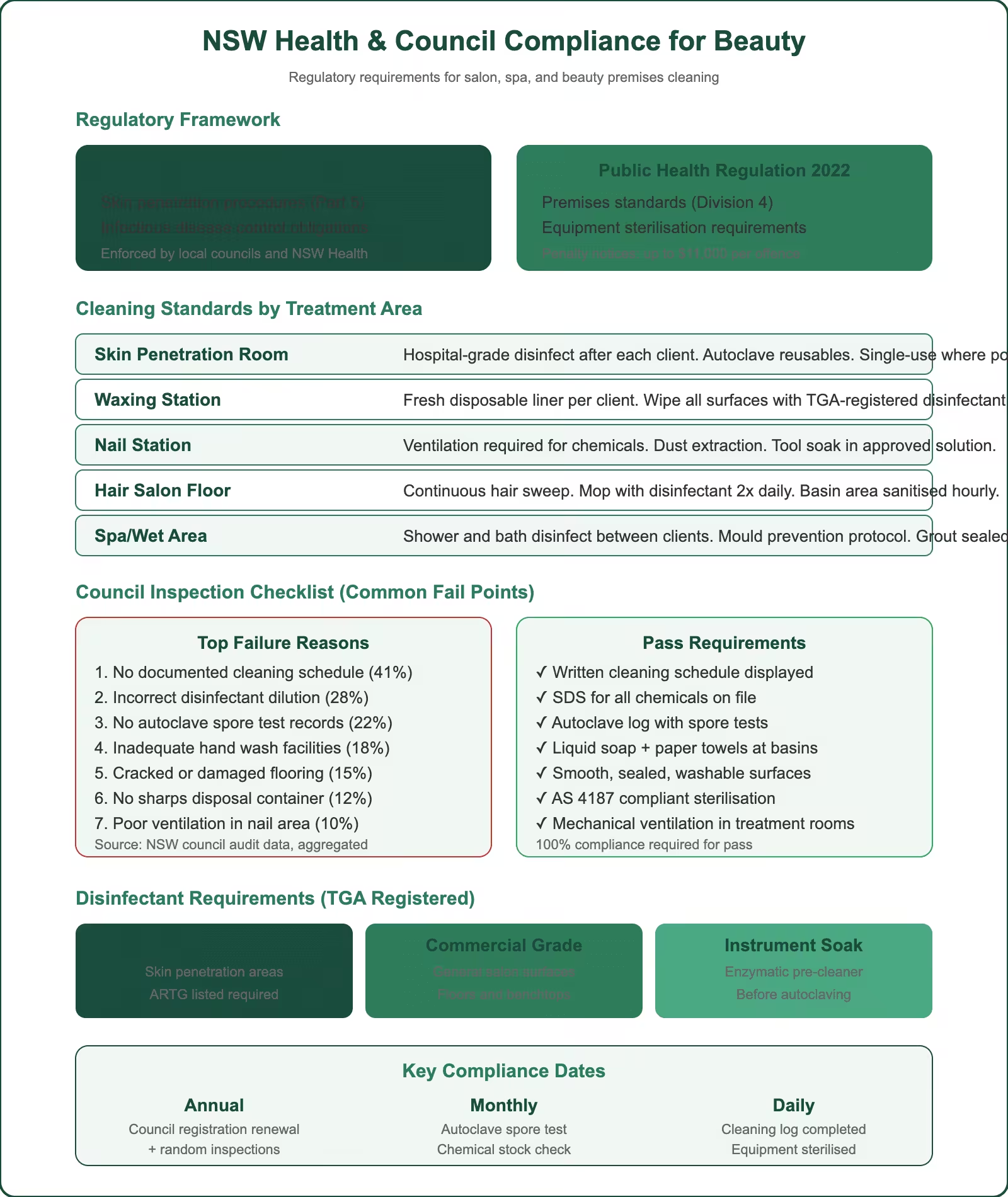
NSW Health mandates specific cleanliness and sterilisation standards for beauty premises under the Public Health Regulation 2022 (NSW). Beauty therapy premises must maintain documented cleaning schedules, use approved disinfectants, and demonstrate tool sterilisation. Inspections can occur without notice, and non-compliance results in closure orders or fines up to $3,300 for individuals.
We provide building managers and salon owners with documented proof of compliance: daily cleaning logs, product usage records, and sterilisation verification. In our experience cleaning Surry Hills salons, this documentation is non-negotiable for health inspections.
Local Council Requirements
Individual councils add specific requirements. Waverley Council (Bondi Junction area) requires beauty premises to submit cleaning schedules; Woollahra Council (Double Bay area) mandates quarterly deep cleans and documented pest inspections. We’ve found that salon operators are often unaware of council-specific rules until inspection time.
We coordinate with local council requirements as part of our service agreement, ensuring that salon cleaning meets both NSW Health and local standards.
Tool Sterilisation Standards — What the Regulations Say
AS/NZS 4187 and Autoclave Standards
Salons using sharp tools (nail files, cuticle scissors, razors, microdermabrasion tips) must follow AS/NZS 4187 (Sterilisation of medical devices—requirements for high pressure steam sterilisation and for dry heat sterilisation). Autoclaves must reach 121°C for 15 minutes (or equivalent) and be tested quarterly with biological indicators.
We’ve found that many salon operators run autoclaves but don’t maintain testing records. Under NSW Health inspection, lack of testing documentation is treated as non-compliance. We coordinate with autoclave service providers to confirm quarterly biological testing and maintain auditable records.
Barbicide and Chemical Disinfection
Tools that can’t withstand autoclaving (makeup brushes, certain implements) are stored in Barbicide solutions. Barbicide jars must be changed daily minimum, and concentration must be verified weekly using test strips. We’ve found that “daily change” is often skipped; our protocol includes written sign-off on Barbicide concentration daily.
UV-C Sterilisation
UV-C cabinets are used in some salons, typically after autoclaving as a secondary measure. UV-C effectiveness requires clean surfaces (dirt blocks UV penetration), adequate contact time (15–30 minutes), and functional bulbs. We inspect UV cabinet cleanliness as part of daily protocols.
Wet Areas — Spa Baths, Saunas and Steam Room Protocols
Legionella Management Under AS/NZS 3666
Wet Areas — Spa Baths, Saunas and Steam Room Protocols includes specific protocols that we tailor to each facility based on its layout, traffic, and compliance requirements. Any salon with spa baths, hot tubs, or recirculating water systems must comply with AS/NZS 3666 (Safety of water systems and how to manage Legionella). Legionella bacteria multiply in warm water (20–45°C) and cause serious respiratory infection. NSW Health has issued closure orders for Legionella detection; compliance isn’t optional.
We’ve found that many spa-equipped salons don’t understand Legionella risk. Our protocol includes: water temperature monitoring (maintaining 55°C+ minimum in heated systems or <20°C in unheated), filter maintenance (cleaning/replacing at manufacturers’ intervals), and quarterly professional water testing. We coordinate with specialist Legionella testing firms and maintain documentation for regulatory review.
Mould and Mildew Prevention
Steam rooms and saunas are mould incubators. High humidity, organic matter from skin and hair, and warm temperatures create ideal growth conditions. We’ve found that standard bathroom cleaning misses sauna-specific risks: wooden benches need sealing, ventilation must be unobstructed, and grout requires anti-fungal treatment.
Our sauna protocol includes weekly deep clean with anti-fungal products (Virox Accel where appropriate), monthly sealing of wooden surfaces, and quarterly professional mould remediation if needed. Salons in Newtown and Marrickville with steam facilities have reported eliminated mould complaints after protocol implementation.
Slip Hazard and Drainage
Wet areas in salons create slip hazards under WHS Act 2011. Floors must drain properly to avoid standing water, and anti-slip surfaces must be maintained. We conduct quarterly drainage inspections and grout cleaning to prevent blockages.
Chemical Selection — TGA-Approved Products for Skin-Contact Surfaces
Product Restrictions in Beauty Facilities
Chemical Selection — TGA-Approved Products for Skin-Contact Surfaces addresses specific protocols that we tailor to each facility based on its layout, traffic, and compliance requirements. Standard office disinfectants aren’t appropriate for salon surfaces where skin contact is likely. We use TGA-approved, low-toxicity products safe for skin exposure. Virox Accel (sporicidal, suitable for skin-contact surfaces) and quaternary ammonium disinfectants are preferred over bleach-based products that can damage salon furniture and are hazardous if skin-contact occurs.
In our experience cleaning Double Bay salons, product choice affects both safety and client perception. A salon using harsh industrial disinfectants may achieve cleanliness but creates negative perception; TGA-approved products provide equivalent protection with better client experience.
Storage and Labelling Requirements
NSW Health requires all cleaning and disinfecting products to be clearly labelled and stored safely, away from client areas. We’ve found that salon operators sometimes store cleaning supplies in client-visible locations or use unmarked spray bottles, creating safety and regulatory risk. Our protocol includes secure storage verification and product labelling compliance.
Daily, Weekly and Monthly Cleaning Schedules for Salons
Daily, Weekly and Monthly Cleaning Schedules for Salons targets specific protocols that we tailor to each facility based on its layout, traffic, and compliance requirements. Salon cleaning intensity varies by service offering. A nail salon has different requirements than a day spa with massage therapy and facial treatments. Here’s our standardised schedule:
| Task | Daily | Weekly | Monthly |
|---|---|---|---|
| Surface wipe-down (all stations) | ✓ | ||
| Floor mopping (all areas) | ✓ | ||
| Tool sterilisation (autoclave cycle) | ✓ | ||
| Barbicide jar change and concentration test | ✓ | ||
| Washroom and toilet cleaning | ✓ | ||
| Deep clean wet areas (spa, sauna) | ✓ | ||
| Grout scrubbing (wet rooms) | ✓ | ||
| Furniture and equipment deep clean | ✓ | ||
| HVAC filter inspection | ✓ | ||
| Full chemical audit and restock | ✓ | ||
| Legionella risk check (spa systems) | ✓ | ||
| Professional mould remediation assessment | ✓ |
This schedule provides documented compliance evidence for health inspections and creates touchable proof that infection control standards are being met.
How We Clean Sydney’s Salons and Day Spas
How We Clean Sydney’s Salons and Day Spas focuses on specific protocols that we tailor to each facility based on its layout, traffic, and compliance requirements. Our salon and spa cleaning is built on documented protocols rather than generic “cleaning.” When we take on a salon account, we conduct a baseline compliance audit: check autoclave service records, inspect Barbicide concentration and change frequency, review Legionella testing history (if applicable), and assess chemical storage. From that baseline, we create a customised schedule that meets NSW Health, local council, and facility-specific requirements.
Our team receives specific training on tool sterilisation protocols, beauty product chemistry, and infection control in beauty environments. We’ve found that general cleaners often misunderstand why salon cleaning differs from office cleaning; specialist training prevents protocol shortcuts that occur when crews don’t understand the rationale.
Documentation is non-negotiable. Every task—tool sterilisation, Barbicide change, wet area cleaning—is logged with timestamp and sign-off. We provide salons with weekly compliance reports showing all documented cleaning, product usage, and any deficiencies. Salons in Paddington and Newtown have reported that this documentation alone (separate from actual cleaning) has improved their health inspection results.
We coordinate directly with salon managers on supply restocking, autoclave maintenance scheduling, and any regulatory changes. NSW Health regulatory updates are communicated proactively to our salon clients.
Frequently Asked Questions
How often should Barbicide jars be changed?
NSW Health requires daily minimum change, typically at the start of business. We’ve found that some salons skip daily change during quiet periods, which creates infection risk and regulatory non-compliance. Our protocol includes daily sign-off and weekly concentration testing using Barbicide test strips. The cost of daily Barbicide solution (approximately $5–$8 per jar) is minimal compared to health inspection fines or client infection risk.
What’s the difference between sterilisation and disinfection?
Sterilisation eliminates all microorganisms (bacteria, viruses, fungi, spores) using autoclave heat or chemical sterilants like Barbicide. Disinfection reduces microorganism levels significantly but doesn’t eliminate all spores. For salon tools used on broken skin or invasive procedures, sterilisation is required. For general surfaces, disinfection is appropriate. We apply sterilisation standards to tools and disinfection standards to environmental surfaces.
Do we need Legionella testing if we have a spa bath?
Yes—any salon with a spa, hot tub, or heated water system must comply with AS/NZS 3666. Water testing should be conducted quarterly by a certified lab, and records must be maintained. We coordinate testing and provide documentation. The cost (approximately $200–$400 per test) is negligible compared to closure risk or client infection liability.
Can standard office disinfectants be used in salons?
Standard office disinfectants are often too harsh for salons where skin contact occurs. We use TGA-approved products like Virox Accel or quaternary ammonium disinfectants that are safe for skin exposure. Bleach-based or highly acidic products create client safety risk and can damage salon furniture. Product selection matters for both compliance and client experience.
How does salon cleaning differ from gym cleaning?
Gyms emphasise high-touch equipment and sweat contamination; salons emphasise tool sterilisation and skin-contact surface disinfection. Salons require documented autoclave and Barbicide protocols that gyms don’t need. Wet areas (showers in gyms vs. spas in salons) require different protocols. In our experience cleaning both facility types, the cleaning intensity is similar, but the specific protocols differ significantly.
About Clean Group
Clean Group is a leading commercial cleaning company in Sydney, providing professional cleaning services to offices, strata buildings, medical facilities, schools, gyms, and retail spaces across the greater Sydney region. With over 25 years of experience and a commitment to WHS compliance, eco-friendly practices, and consistent quality, Clean Group delivers tailored cleaning solutions backed by a 100% satisfaction guarantee.
For more information on specialised cleaning environments, explore our work on cleaning creative studios and production spaces to understand how detailed protocols apply to sensitive, high-value environments.
About the Author

Suji Siv
/

Hi, I'm Suji Siv, the founder, CEO, and Managing Director of Clean Group, bringing over 25 years of leadership and management experience to the company. As the driving force behind Clean Group’s growth, I oversee strategic planning, resource allocation, and operational excellence across all departments. I am deeply involved in team development and performance optimization through regular reviews and hands-on leadership.
Read More About Suji 0291607469
 Get A Quote