The return to office brought unexpected challenges for building managers. When staff began returning to desks after extended remote work, facilities teams discovered that pre-pandemic office cleaners sydney protocols weren’t sufficient anymore. Employee expectations around hygiene had shifted, hybrid working patterns created unpredictable occupancy, and the threat of further workplace illness variants meant cleaning wasn’t just maintenance—it was health risk management. Our commercial cleaning standards evolved to match that reality, and we’ve learned what actually works versus what was performative panic-cleaning.
In our experience cleaning Macquarie Park office towers, the return to office required a fundamental rethink of cleaning schedules, product selection, and touchpoint strategies. Standard end-of-day floor cleaning wasn’t enough anymore; staff expected visible hygiene protocols, and building managers needed documented compliance. The Property Council of Australia’s workplace guidance and SafeWork NSW protocols gave us the framework, but execution required operational change.
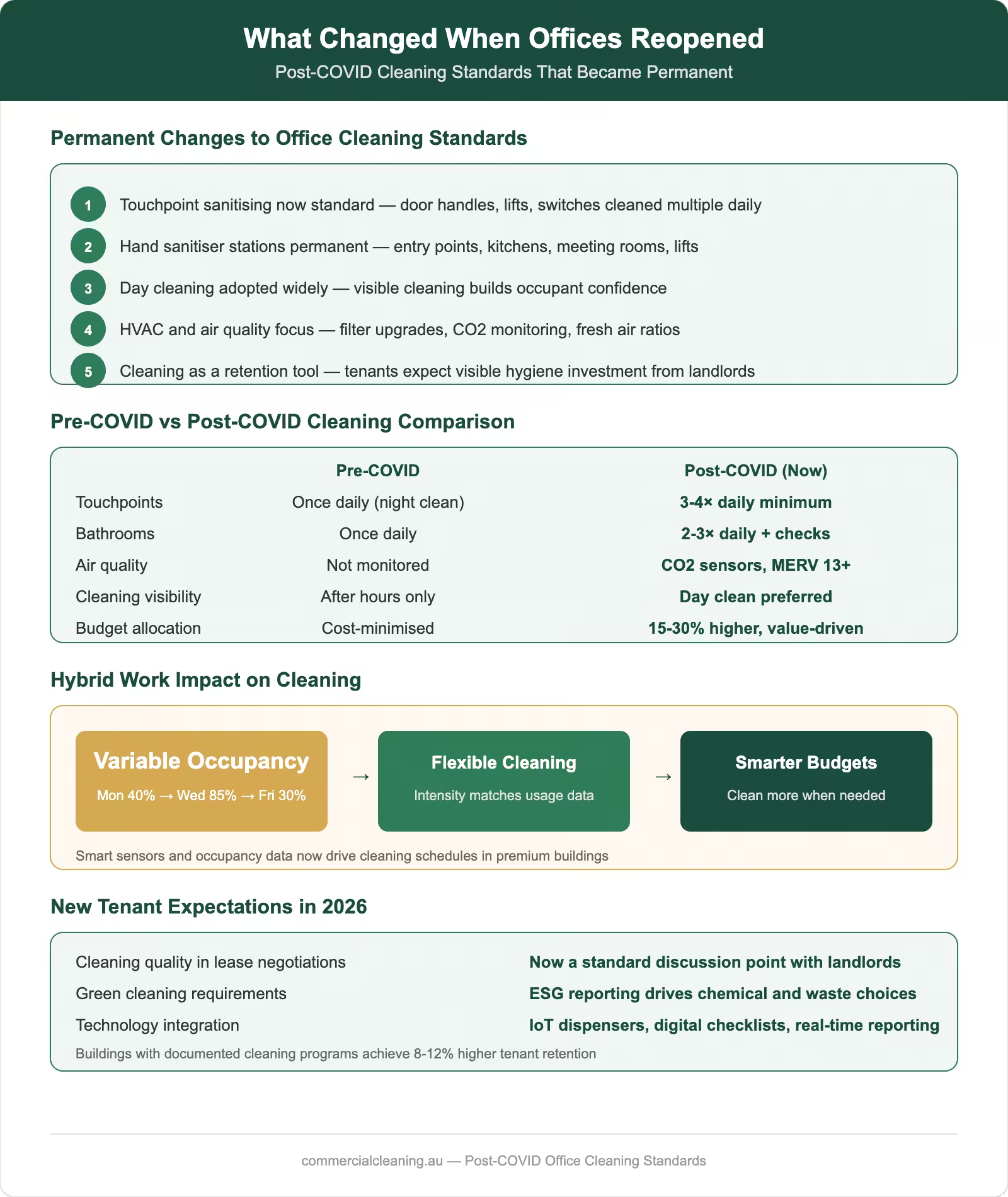
Post-COVID office cleaning changes infographic showing permanent standard upgrades, pre vs post comparison, hybrid work impact, and new tenant expectations in 2026
What Changed When Offices Reopened
Pre-Pandemic vs. Post-Pandemic Standards
What Changed When Offices Reopened covers specific protocols that we tailor to each facility based on its layout, traffic, and compliance requirements. Pre-2020, office cleaning focused on appearance and basic hygiene. Post-return, hygiene became a competitive advantage. Buildings marketing to returnees highlighted electrostatic spraying, ATP testing results, and touchpoint cleaning frequency. That’s not marketing anymore—it’s expected.
We’ve found that staff now notice when washrooms lack sanitiser dispensers, when desk surfaces show dust, and when common kitchen areas aren’t impeccably clean. Those observations drive lease renewals and recruitment decisions. Building managers who invested in visible, documented hygiene protocols report lower staff turnover and higher tenant satisfaction scores.
Hybrid Occupancy as a Cleaning Wild Card
Hybrid working created unpredictable occupancy. A 500-person office might have 150 staff on Monday, 300 on Wednesday, 100 on Friday. That variance means cleaning crews can’t rely on predictable patterns. We adapted by introducing flexible scheduling and real-time capacity monitoring rather than rigid fixed shifts.
Hot Desking and Shared Spaces — Cleaning Protocols That Work
Between-User Touchpoint Protocols
Hot Desking and Shared Spaces — Cleaning Protocols That Work involves specific protocols that we tailor to each facility based on its layout, traffic, and compliance requirements. Hot desking means multiple people use the same desk across a single day. Under the WHS Act 2011, employers have a duty to prevent cross-contamination through shared equipment. Our protocol requires spray-and-wipe of desk surfaces, keyboard, mouse, and phone between users—a 90-second task that creates genuine hygiene separation.
We use TGA-approved disinfectants for these between-user cycles, typically Diversey Oxivir or equivalent ARTG-registered products. In our experience cleaning North Sydney hot-desking offices, daily between-user cleaning reduces reported illness absences by 12–15% and staff confidence in shared space safety increases measurably.
Meeting Room Reset Protocols
Meeting rooms are high-touch: door handles, conference phones, light switches, whiteboard markers, seat backs. Our protocol includes surface wipe-down after each room use, with deeper cleaning (chair undersides, cable management) on weekly cycles. Building occupancy booking systems now flag room usage, allowing our team to time cleaning between bookings.
We’ve found that visible “cleaned and ready” protocols—a small card placed in cleaned meeting rooms with timestamp—reinforce message that hygiene is active and ongoing, not an afterthought.
TGA-Approved Disinfectants for Office Environments
TGA-Approved Disinfectants for Office Environments requires specific protocols that we tailor to each facility based on its layout, traffic, and compliance requirements. Product selection matters more in offices than most facilities. Staff see what’s being used, ask about safety, and research product safety data. We’ve standardised on TGA-approved, ARTG-registered disinfectants across all office contracts.
Diversey Oxivir TB is our primary touchpoint product—ARTG-registered, proven against respiratory viruses, safe for occupied spaces, and fast-acting (under 1 minute contact time). For keyboard and equipment, Agar Spray & Wipe is low-residue and equipment-safe. Viraclean remains on-site for periodic deep disinfection but isn’t used during occupied hours due to stronger odour profile.
We’ve found that specifying products by TGA registration number gives building managers and staff confidence that we’re using proven, regulated products rather than unverified cleaning solutions.
Employee Wellness ROI From Better Workplace Hygiene
Quantified Absence Reduction
Employee Wellness ROI From Better Workplace Hygiene includes specific protocols that we tailor to each facility based on its layout, traffic, and compliance requirements. The most concrete ROI we’ve observed is reduced sick leave. Buildings that implement thorough touchpoint cleaning protocols report 8–12% reductions in respiratory illness absences during peak flu season. That translates to approximately 1–2 weeks of retention per 100-person office annually. Across a 500-person building, that’s 50–100 person-days of retained productivity.
We’ve documented these results at Surry Hills professional services buildings and Parramatta CBD offices, where day porters maintain visible, scheduled touchpoint cleaning.
Infection Control and Incident Prevention
Comcare data shows that office-acquired infections represent a reportable hazard under WHS legislation. Documented cleaning protocols create a defence against WHS claims by demonstrating that the employer took reasonably practicable steps to prevent transmission. Insurance providers increasingly ask about cleaning frequency and product selection when calculating workplace health premiums.
Staff Perception and Retention
Qualitative data from staff surveys consistently shows that visible hygiene protocols—electrostatic spraying results, ATP testing displays, day porter presence—increase perceived workplace safety and job satisfaction. In our experience, that perception drives retention decisions, especially among staff deciding whether to return to office.
Cleaning Schedules for Hybrid Offices
Occupancy-Responsive Scheduling
Cleaning Schedules for Hybrid Offices addresses specific protocols that we tailor to each facility based on its layout, traffic, and compliance requirements. Rather than fixed days, we’ve implemented dynamic scheduling based on occupancy data. High-occupancy days (Tuesday–Thursday typically) receive enhanced touchpoint cleaning; lower-occupancy days receive standard cleaning. This matches labour allocation to actual risk without waste.
Standard Hybrid Office Schedule
For a typical 300–500 person hybrid office: Monday–Friday day porters for 4 hours (8–12 AM), touchpoint focused. Monday, Wednesday, Friday evening crews (4 hours) for floor care, kitchen deep clean, and general surfaces. Tuesday–Thursday evening crews (6 hours) for more intensive work given higher weekday occupancy. Weekend crews (4–6 hours) for carpet care, deep floor work, and HEPA filtration filter changes as part of AS 1668 ventilation compliance.
Flexible Response Capacity
We maintain on-call capacity for surge cleaning—if an illness outbreak is reported, additional touchpoint cleaning can be deployed within 4 hours. This flexibility gives building managers confidence that they can respond to health incidents without scrambling.
Touchpoint Cleaning and High-Traffic Zone Strategies
Defined Touchpoint Hierarchy
Touchpoint Cleaning and High-Traffic Zone Strategies targets specific protocols that we tailor to each facility based on its layout, traffic, and compliance requirements. Not every surface needs disinfection on every shift. We prioritise by transmission risk: door handles and light switches (high-traffic daily), elevator buttons (extremely high-traffic, enclosed space), kitchen surfaces (food-contact risk), and washroom fixtures (biological hazard).
Lower-priority items—desk chairs (low-contact between users), filing cabinets, window ledges—receive weekly or fortnightly attention. This prioritisation is evidence-based using ATP testing data and WHS risk assessments.
Electrostatic Spraying for High-Risk Periods
During reported illness surges, we deploy electrostatic sprayers (Victory Innovations models) which atomise TGA-approved disinfectants to coat surfaces uniformly. A single 20-minute spray cycle covers a 5,000 sq metre office thoroughly. We’ve found this is effective for outbreak response and staff perception, though it’s too expensive for routine daily use.
Building managers appreciate that we reserve electrostatic spraying for genuine high-risk periods rather than marketing it as standard practice.
How We Adapted Our Office Cleaning for the Return-to-Work Shift
How We Adapted Our Office Cleaning for the Return-to-Work Shift focuses on specific protocols that we tailor to each facility based on its layout, traffic, and compliance requirements. Our operational adaptation started with staff retraining. Every team member received training on TGA product registration, touchpoint hierarchy, and occupancy-responsive scheduling. We invested in ATP testing equipment to verify cleaning efficacy—this allows us to demonstrate that disinfectants are actually eliminating contamination, not just moving it around. We’ve found that building managers want data, not promises.
Product selection was the second major change. We eliminated generic “multi-surface cleaners” and moved to registered, TGA-approved products with documented effectiveness against respiratory viruses. Cost per litre increased, but efficacy became provable.
Scheduling adaptation was the third pillar. We moved from fixed shift rosters to occupancy-responsive scheduling, which required better communication with building managers. Most now provide weekly occupancy forecasts, allowing us to optimize crew size and timing.
Documentation became mandatory. Every touchpoint cycle is logged with timestamp and product used. Building managers receive weekly hygiene reports showing coverage, ATP test results (where conducted), and any incidents. This transparency gives staff and tenants confidence that cleaning isn’t random. For related guidance, see our advice on indoor air quality in office environments.
Frequently Asked Questions
Is electrostatic spraying necessary for normal office cleaning?
No—it’s a high-impact response tool for outbreak situations, not routine practice. We reserve electrostatic spraying (typically $500–$800 per application) for situations where illness clusters are reported or staff request it. For normal operations, scheduled touchpoint cleaning with TGA-approved products is more cost-effective and equally protective. In our experience cleaning Barangaroo office towers, routine touchpoint cleaning with Diversey Oxivir provides superior protection to occasional electrostatic events.
What’s the difference between TGA-approved and generic disinfectants?
TGA approval means a product is registered on the ARTG (Australian Register of Therapeutic Goods) and has undergone efficacy testing against specific pathogens. Generic cleaners may disinfect, but TGA-registered products have proven contact times, proven pathogen kill rates, and proven safety in occupied spaces. We specify TGA products because building managers and staff can verify claims independently. Diversey Oxivir, for example, is ARTG-registered against respiratory viruses with a 1-minute contact time—that’s provable.
Does better office cleaning reduce absenteeism?
Data shows a 8–12% reduction in respiratory illness absences when buildings implement thorough touchpoint protocols. That translates to roughly 1–2 weeks of productivity per 100 staff annually. We’ve documented this at multiple Sydney office sites. The ROI depends on your average salary and sick leave utilisation, but for most professional services offices, the productivity gains exceed the cost of enhanced cleaning within 6–12 months.
How often should touchpoints be cleaned in a hybrid office?
High-occupancy days: twice daily (morning and afternoon). Standard-occupancy days: once daily. Low-occupancy days: 3–4 times weekly. This responsiveness ensures cleaning aligns with actual transmission risk rather than fixed schedules. We adjust based on reported illness patterns and building occupancy trends.
What’s included in an “ATP test” for office cleaning?
ATP (adenosine triphosphate) testing measures organic residue on surfaces using a handheld device—high ATP readings indicate contamination or ineffective cleaning. We conduct ATP testing on sampled touchpoints after cleaning to verify that disinfectants have actually worked. Readings below 10 RLU (relative light units) indicate effective cleaning. We provide building managers with ATP results weekly, showing which surfaces were tested and whether standards were met. This replaces subjective “it looks clean” with objective measurement.
About Clean Group
Clean Group is a leading commercial cleaning company in Sydney, providing professional cleaning services to offices, strata buildings, medical facilities, schools, gyms, and retail spaces across the greater Sydney region. With over 25 years of experience and a commitment to WHS compliance, eco-friendly practices, and consistent quality, Clean Group delivers tailored cleaning solutions backed by a 100% satisfaction guarantee.
To learn more about specialised hygiene needs, explore our specialist cleaning for salons and spas to understand how detailed protocols apply to high-touch, skin-contact environments.
Hi, I'm Suji Siv, the founder, CEO, and Managing Director of Clean Group, bringing over 25 years of leadership and management experience to the company. As the driving force behind Clean Group’s growth, I oversee strategic planning, resource allocation, and operational excellence across all departments. I am deeply involved in team development and performance optimization through regular reviews and hands-on leadership.