Carpet Odour Removal in Commercial Buildings
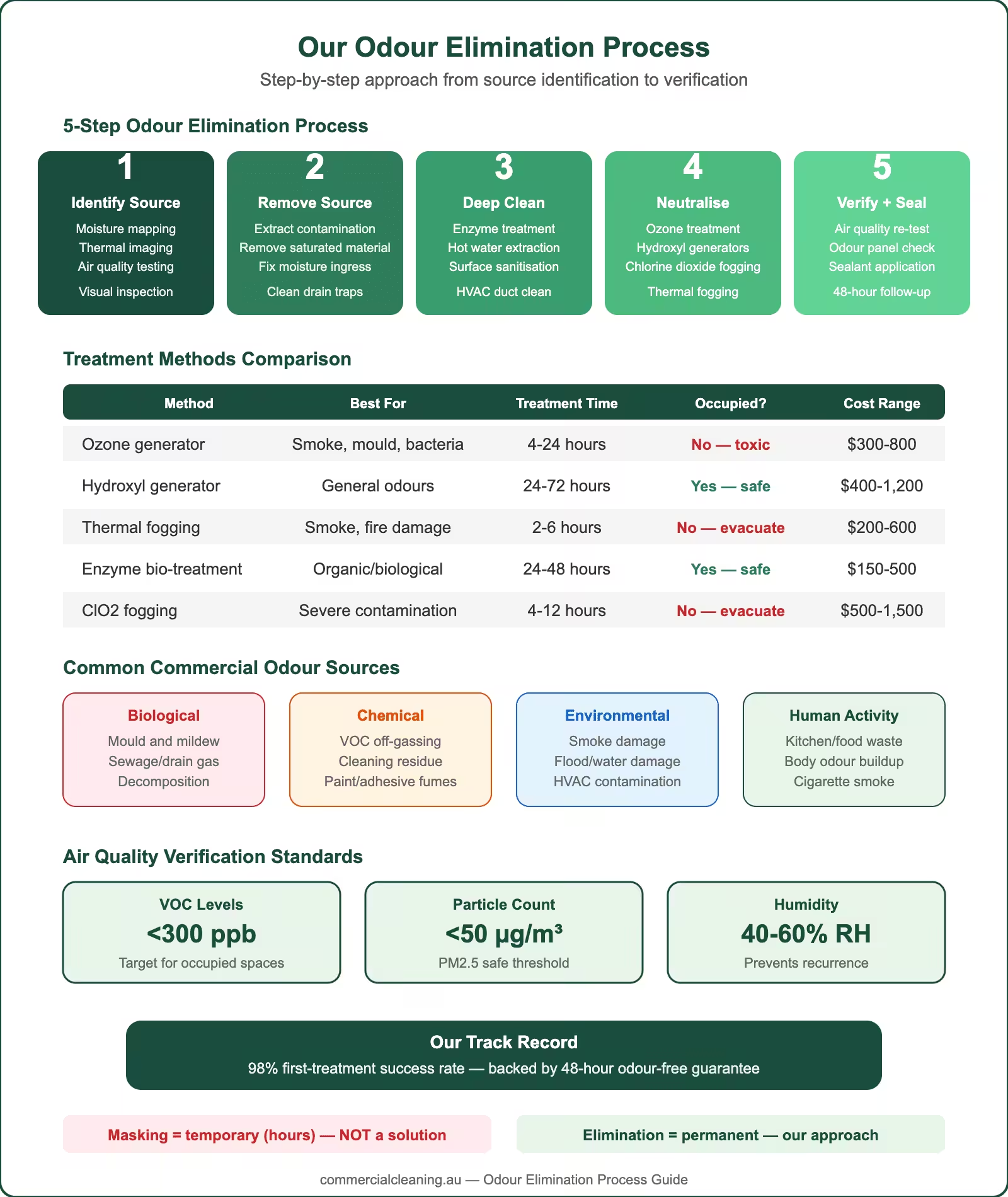
We have walked into offices in Sydney where the carpet odour hit us before we crossed the threshold. Carpet odour in commercial buildings is more than an unpleasant nuisance — it signals biological contamination, chemical degradation, or moisture damage that requires professional assessment and targeted treatment. Our commercial carpet cleaning team has eliminated persistent odours from offices across Surry Hills, Darlinghurst, and Paddington that building managers had been masking with air fresheners for months. We have learned that odour masking never works long term because the source continues to deteriorate, and the smell always returns stronger than before.
We wrote this guide because carpet odour complaints are among the most common reasons facility managers contact us for urgent help. Our team treats these calls as diagnostic investigations rather than simple cleaning jobs because the odour source determines the treatment approach. A musty smell from moisture damage requires completely different intervention than a sour odour from biological contamination or a chemical smell from adhesive off-gassing. We identify the source before we select a treatment, and this systematic approach is why our odour elimination results are permanent rather than temporary.
Common Carpet Odour Sources We Diagnose in Commercial Buildings
We encounter four primary categories of carpet odour in commercial environments. The most common is biological contamination — decomposing organic matter trapped in carpet fibres and backing that produces volatile organic compounds detectable by the human nose at extremely low concentrations. Our team has found food particles, insect remains, and even rodent contamination beneath carpet tiles in Surry Hills offices that appeared clean on the surface. These biological sources require enzymatic treatment that breaks down the organic material at a molecular level rather than simply masking the smell.
The second category is moisture-related odour, typically from mould or mildew colonisation within the carpet system. Our team uses moisture meters to map elevated readings across the floor before any treatment begins, because applying odour treatment to carpet that is still damp from an unresolved water source is pointless. We have traced moisture-related carpet odours to leaking pipes behind walls, HVAC condensate overflow, and even rising damp through concrete slabs in older Darlinghurst buildings. We follow microbial control principles outlined in AS 3666.1, which addresses contamination in building air and water systems, because carpet odour often indicates a broader building health issue.
The third category is chemical off-gassing from carpet adhesives, backing materials, or cleaning product residue. Our team has diagnosed a sharp chemical smell in newly renovated Paddington offices as volatile compounds released from carpet adhesive that had not fully cured. We have also found that cleaning product buildup from years of improper maintenance creates a persistent synthetic odour that occupants may not consciously notice but that contributes to sick building syndrome complaints. The fourth category is pet or pest-related odour in ground-floor tenancies near parks and laneways, where animal urine or pest activity contaminates carpet from below.
Our Odour Elimination Process
We begin every odour treatment with a diagnostic assessment that identifies the source category before any product is applied. Our team uses a combination of moisture mapping, visual inspection beneath carpet tiles and along edges, UV light examination for biological contamination, and air quality sampling where warranted. We have found that skipping this diagnostic step leads to ineffective treatment and recurring odour complaints, which is why we invest the time upfront to understand exactly what we are dealing with.
We select our treatment chemistry based on the diagnosed odour source. For biological contamination, our team applies enzymatic cleaners that use beneficial bacteria to consume organic matter and eliminate the odour at its source. We have tested these products extensively against masking agents and found that enzymatic treatment produces permanent results within twenty-four to forty-eight hours, while masking agents provide temporary relief that fades within days. For moisture-related odour, we combine antimicrobial treatment with thorough extraction and controlled drying to eliminate both the mould and the conditions that supported its growth.
We address chemical off-gassing through deep extraction with alkaline pre-treatment that dissolves and removes product buildup from within the carpet pile. Our team has found that multiple extraction passes with clean rinse water are necessary to flush accumulated chemical residue from carpets that have been improperly maintained. For severe cases in Surry Hills heritage buildings, we have recommended carpet replacement when the contamination has permeated the backing and underlay beyond the reach of any surface treatment method.
Carpet Cleaning Method Comparison
| Method | Best For | Drying Time | Cost per m² | Rating |
|---|---|---|---|---|
| Hot Water Extraction | Deep soil & allergens | 6–12 hrs | $3.50–$5.50 | ★★★★★ |
| Dry Compound | Low-moisture zones | 30–60 min | $2.80–$4.20 | ★★★ |
| Encapsulation | Maintenance cleans | 20–45 min | $2.00–$3.50 | ★★★★ |
| Bonnet Cleaning | Surface refresh | 1–2 hrs | $1.80–$3.00 | ★★ |
| Shampooing | Heavy staining | 8–24 hrs | $3.00–$4.80 | ★★★ |
Preventing Carpet Odour Through Proper Maintenance
We tell every client that odour prevention is built into a proper maintenance program rather than bolted on after a complaint. Our team has found that buildings with regular quarterly extraction cleaning and monthly interim maintenance rarely develop persistent odour issues because contaminants are removed before they accumulate to detectable levels. We track odour complaints across our client base and the data clearly shows that proactively maintained carpets generate less than ten percent of the odour call-outs compared to reactively maintained carpets.
We also recommend proper ventilation management as part of odour prevention. Our team has observed that buildings in Paddington with inadequate fresh air intake allow volatile compounds to concentrate in the indoor environment, making carpet odour more noticeable even when contamination levels are low. We advise facilities managers to confirm HVAC systems deliver the fresh air volumes specified in building codes and to schedule carpet cleaning when maximum ventilation can be maintained during and after the treatment process.
We have found that a detailed carpet odour diagnosis and treatment for a standard commercial floor in the Darlinghurst area typically costs around $1,510, which includes diagnostic assessment, targeted chemical treatment, full extraction cleaning, and a follow-up inspection to confirm the odour has been permanently eliminated. For strategic guidance on advanced cleaning approaches and equipment deployment, consult our guide on carpet mould removal strategies for optimal facility management.
Frequently Asked Questions About Carpet Odour Removal
Why does my office carpet still smell after professional cleaning?
Standard cleaning removes surface soil but not the contamination causing the odour. Our team has found that residual smells almost always indicate biological contamination, trapped moisture, or chemical buildup that requires targeted enzymatic, antimicrobial, or deep-extraction treatment rather than another standard clean. We start with diagnosis, not treatment.
How long does professional odour removal take?
Our diagnostic assessment takes thirty to sixty minutes, the targeted treatment another two to four hours depending on floor area, and the carpet typically dries within six to twelve hours. We schedule the follow-up inspection forty-eight to seventy-two hours after treatment so we can confirm the odour is permanently gone before signing the job off.
Will air fresheners or carpet powders fix the problem?
No — and we strongly advise against them. Masking agents temporarily cover the smell while the underlying source continues to deteriorate, and the odour always returns stronger. Carpet powders can also leave residue that contributes to long-term buildup and creates its own synthetic odour.
How much does professional carpet odour removal cost?
For a standard commercial floor in our Darlinghurst service area, a complete diagnosis and treatment runs around $1,510 including the follow-up inspection. Severe biological contamination or moisture damage that requires multiple visits costs more — we provide a written quote after the diagnostic assessment so there are no surprises.
Can carpet odour be a sign of a bigger building problem?
Often, yes. Our team has traced moisture odours back to leaking pipes, HVAC condensate overflow, and rising damp through concrete slabs. We treat odour complaints as diagnostic investigations because the source frequently points to a building maintenance issue that needs addressing before any carpet treatment will hold.
Is enzymatic treatment safe for office staff and pets?
Yes — the enzymes we use are biological products that consume organic matter and become inert once the food source is gone. Our team uses TGA-registered formulations that meet Australian workplace safety standards, and the treated areas are safe to occupy as soon as they are dry.
How do I know if my carpet needs replacing instead of treating?
We make this call after the diagnostic assessment. If contamination has permeated the backing or underlay, or if moisture damage has caused structural deterioration of the carpet system, replacement is more cost-effective than repeated treatment. Our team gives an honest recommendation rather than chasing a treatment that will not hold.
How often should we deep clean to prevent odour buildup?
Quarterly hot water extraction with monthly encapsulation maintenance is our standard recommendation for preventing odour issues in commercial offices. Buildings with food courts, childcare facilities, or ground-floor pet exposure usually need a tighter cycle. We adjust the schedule after the first six months based on how the carpet actually responds.
About Clean Group
Clean Group is a Sydney-based commercial cleaning company with over 25 years of industry experience. Founded by Suji Siv, our team of 50+ trained professionals services offices, warehouses, medical centres, schools, childcare facilities, retail stores, gyms, and strata properties across Sydney, Melbourne, and Brisbane.
We are active members of ISSA and the Building Service Contractors Association of Australia (BSCAA). Our operations align with ISO 9001 (Quality Management), ISO 14001 (Environmental Management), and ISO 45001 (Workplace Health and Safety) standards. We hold membership with the Green Building Council of Australia and use eco-friendly, TGA-registered cleaning products wherever possible.
Every Clean Group cleaner is police-checked, fully insured, and trained in safe work procedures under SafeWork NSW guidelines. We operate 7 days a week, including after-hours and weekend services, to minimise disruption to your business.
About the Author

Suji Siv
/

Hi, I'm Suji Siv, the founder, CEO, and Managing Director of Clean Group, bringing over 25 years of leadership and management experience to the company. As the driving force behind Clean Group’s growth, I oversee strategic planning, resource allocation, and operational excellence across all departments. I am deeply involved in team development and performance optimization through regular reviews and hands-on leadership.
Read More About Suji 0291607469
 Get A Quote