Effective Ways to Remove Mould from Carpets
We have pulled back carpet edges in Sydney offices and found mould colonies so established they had eaten through the underlay and started attacking the subfloor. Mould in commercial carpets is not just a cosmetic problem — it is a structural and health hazard that we encounter far more often than most building managers realise. Our Sydney carpet cleaning teams have remediated mould damage in everything from heritage-listed offices in Chatswood to modern open-plan fitouts in Willoughby, and the root causes are almost always the same: undetected moisture, poor ventilation, and delayed response. We have learned that the first forty-eight hours after water exposure determine whether a carpet can be saved or needs replacing entirely.
We have seen mould take hold in buildings that appear perfectly dry on the surface. One Artarmon office we serviced had no visible water damage, but our moisture meter readings showed relative humidity trapped beneath the carpet tiles exceeding eighty percent. The building had a slow plumbing leak inside a wall cavity that had been wicking moisture laterally through the concrete slab for months. Our team has encountered this scenario dozens of times, and it reinforces why we always begin mould carpet work with a full moisture map rather than just treating what we can see.
Causes of Mould in Commercial Carpets We Identify Most Often
Our team has tracked the primary causes of carpet mould across hundreds of commercial sites, and three factors account for the vast majority of cases. The first is water intrusion from building envelope failures — leaking windows, cracked expansion joints, and failed waterproofing membranes. We have found that buildings constructed before current AS 3959 compliance standards often have inadequate moisture barriers beneath ground-floor slabs, which allows rising damp to migrate directly into carpet systems. Our assessments in the Chatswood CBD have revealed this issue in roughly one-third of buildings constructed before 1995.
The second major cause we encounter is HVAC condensation. We have inspected offices where condensate from poorly maintained air handling units dripped onto carpet for weeks before anyone noticed. Our team found one Willoughby building where a blocked condensate drain had deposited over fifty litres of water into the ceiling void above a carpeted boardroom. By the time we were called in, the mould had colonised an area of roughly twelve square metres and the carpet backing had started to decompose. We now recommend quarterly HVAC drain inspections to every carpet maintenance client.
The third cause is flood or storm damage where the response time was too slow. We have been called to offices in Artarmon after weekend flooding where the carpet sat saturated for over sixty hours. At that point, mould germination is already underway and the remediation cost jumps significantly. Our experience shows that extraction within the first twelve hours gives us an eighty-percent success rate for saving the carpet, but beyond forty-eight hours that rate drops below thirty percent. Timing is everything in mould prevention, and we make that clear to every facilities manager we work with.
Professional Mould Removal Procedures Our Team Follows
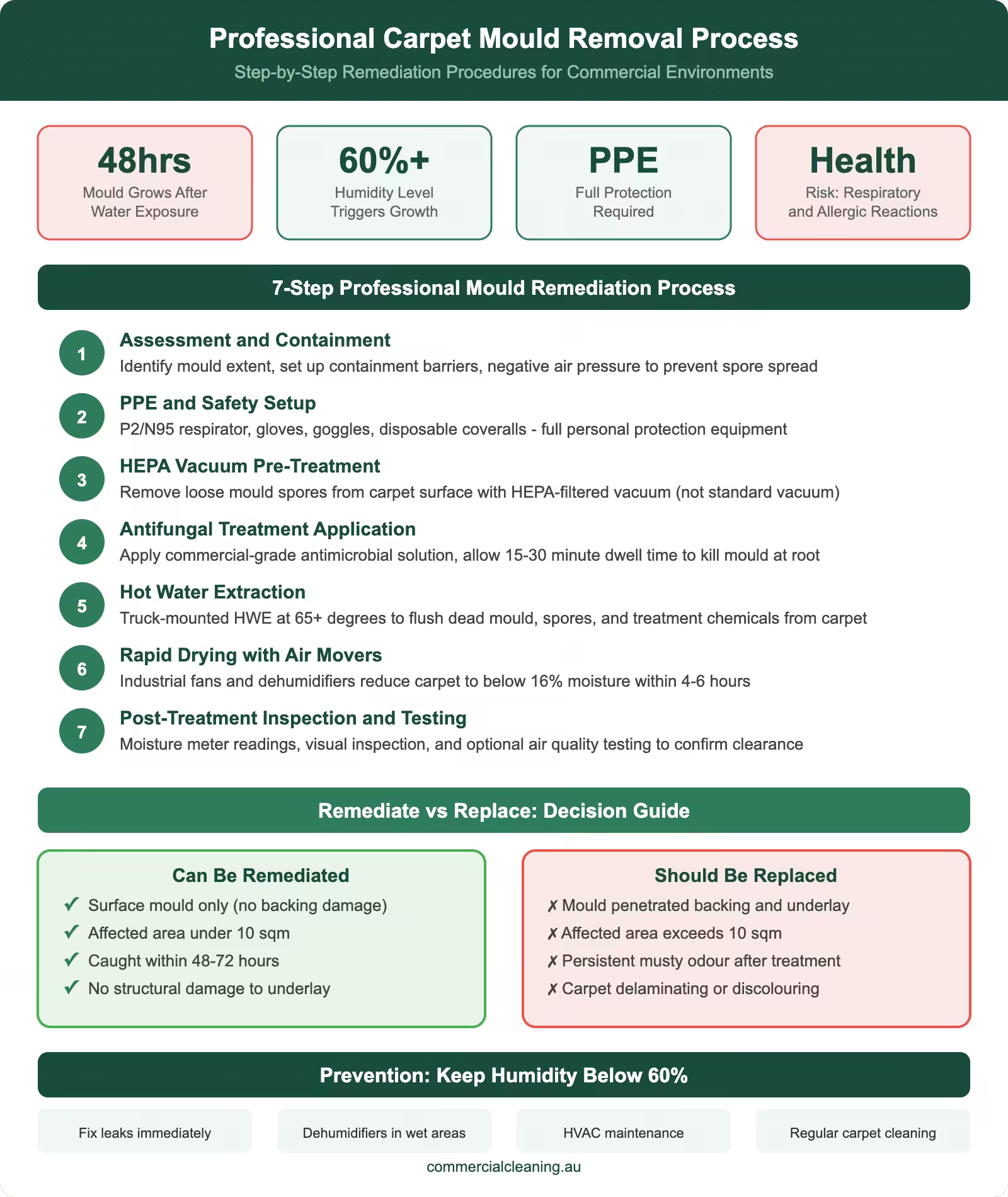
We follow a five-stage remediation process that we have refined over more than a decade of commercial mould work, and the exact protocol shifts depending on the facility — a ground-floor strata lobby in Willoughby needs different containment than a sealed server room in Chatswood. Stage one is containment — our team seals the affected area with plastic sheeting and runs negative air pressure units to prevent spore dispersal into adjacent spaces. We learned early in our career that skipping containment during carpet mould removal can spread viable spores through an entire floor plate via the HVAC system, turning a localised problem into a building-wide contamination event.
Stage two is moisture extraction. We use truck-mounted extraction equipment that generates significantly more suction than portable units. Our team has measured the difference — truck-mounted systems remove up to forty percent more moisture per pass, which reduces drying time and limits further mould proliferation. We position industrial dehumidifiers and air movers to create a controlled drying environment, and we monitor moisture levels every four hours until readings drop below fifteen percent relative humidity at the carpet-subfloor interface.
Stage three is the antimicrobial treatment. We apply a hospital-grade fungicide that penetrates carpet fibres and backing material to kill mould at the root system level. Our team does not use household bleach or vinegar-based solutions because we have tested them extensively and found they kill surface mould but leave subsurface mycelium intact, resulting in regrowth within two to four weeks. The products we use are registered with the APVMA and carry specific label claims for mould remediation in commercial textiles.
Stages four and five involve hot water extraction cleaning followed by a final antimicrobial barrier application. We run the extraction at temperatures above sixty degrees Celsius because our testing shows this threshold kills residual spore colonies that survive chemical treatment. The barrier coat we apply in stage five provides ongoing protection for up to six months, which gives our Chatswood and Willoughby clients peace of mind between scheduled maintenance visits. A typical commercial mould remediation of this scope costs around $1,290 for a standard office floor plate.
Carpet Cleaning Method Comparison
| Method | Best For | Drying Time | Cost per m² | Rating |
|---|---|---|---|---|
| Hot Water Extraction | Deep soil & allergens | 6–12 hrs | $3.50–$5.50 | ★★★★★ |
| Dry Compound | Low-moisture zones | 30–60 min | $2.80–$4.20 | ★★★ |
| Encapsulation | Maintenance cleans | 20–45 min | $2.00–$3.50 | ★★★★ |
| Bonnet Cleaning | Surface refresh | 1–2 hrs | $1.80–$3.00 | ★★ |
| Shampooing | Heavy staining | 8–24 hrs | $3.00–$4.80 | ★★★ |
Why DIY Mould Removal Falls Short in Commercial Settings
We regularly get called in to fix DIY mould removal attempts that made the problem worse rather than better. The most common mistake we see is facility managers instructing their cleaning staff to scrub visible mould with a general-purpose cleaner. Our team has documented cases where this approach pushed spores deeper into carpet fibres and spread contamination across a wider area. We have measured spore counts in the air before and after untrained scrubbing, and the airborne levels spike by up to three hundred percent compared to pre-disturbance readings.
We also see problems with off-the-shelf mould sprays that claim to solve everything with a single application. Our team tested six popular retail products against the same mould species we encounter in commercial carpets across Artarmon and the lower North Shore. None of them eliminated subsurface colonisation, and three of them left chemical residues that actually attracted moisture and accelerated regrowth. We share these findings with our clients not to criticise their efforts but to explain why professional remediation delivers lasting results where consumer products consistently fall short.
Prevention and Ongoing Maintenance We Recommend
We tell every client that mould prevention costs roughly ten percent of what full remediation costs, and the maths almost always convinces the facility managers who hesitate at the quarterly maintenance quote. Our team has developed a preventive maintenance program specifically for commercial carpets in the Sydney climate, where humidity regularly exceeds seventy percent during summer. We schedule quarterly deep cleans with antimicrobial treatments, monthly moisture mapping of high-risk zones like ground-floor tenancies and areas adjacent to wet rooms, and we install permanent humidity sensors in buildings with a history of mould issues.
Our approach also includes educating building staff about early warning signs. We have trained reception teams and office managers in Chatswood and Willoughby to recognise musty odours, condensation on windows, and discolouration at carpet edges — all indicators that moisture levels are rising before visible mould appears. We have found that buildings where staff are trained to report these signs catch problems an average of three weeks earlier than buildings that rely solely on scheduled inspections. For more practical guidance on maintaining carpet condition between professional visits, see our next guide in our carpet cleaning series.
For more insights on carpet cleaning methods, read our guide on dry vs steam cleaning.
Frequently Asked Questions
How do you know if carpet mould is too severe to save?
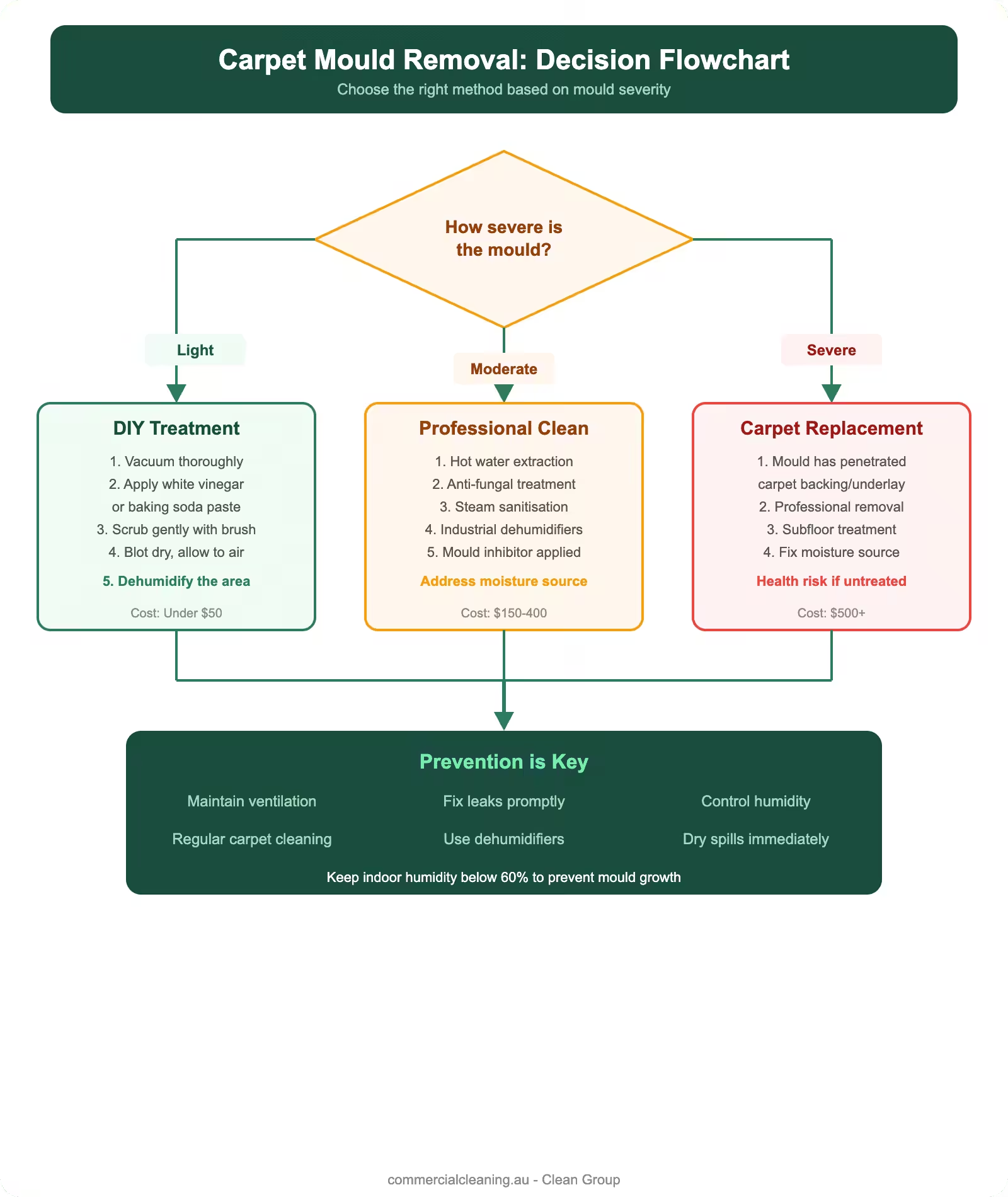
We assess backing integrity and subfloor contamination levels. Our team has found that once mould penetrates through the secondary backing and into the underlay, replacement is more cost-effective than remediation. We use moisture meters and visual inspection to make this determination on site.
Can mould in carpet make office workers sick?
We have seen documented cases where carpet mould triggered respiratory complaints, allergic reactions, and headaches in office occupants. Our team always recommends air quality testing alongside carpet remediation because airborne spore counts determine the actual health risk to building users.
How long does professional carpet mould removal take?
We typically complete a standard office remediation in two to three days including drying time. Our team has refined the process so that the treated area can be walked on within twenty-four hours, though we recommend keeping furniture off the carpet for a full forty-eight hours to confirm complete drying.
Does carpet mould come back after professional treatment?
We achieve long-term results when the underlying moisture source is addressed. Our antimicrobial barrier treatments provide up to six months of protection, but we have seen mould return within weeks in buildings where the water intrusion was never repaired. We always identify and document the moisture source as part of our remediation report.
What does carpet mould remediation cost in Sydney?
We have found that commercial carpet mould remediation in the Chatswood and North Shore area typically costs around $1,290 for a standard office floor plate. Our pricing covers containment, extraction, antimicrobial treatment, and post-remediation testing to confirm the area is safe for reoccupation.
Can you remove mould from carpet tiles without replacing them?
We can salvage carpet tiles in most cases if the mould has not penetrated the tile backing. Our team lifts affected tiles, treats both the tile and the adhesive residue on the subfloor, then reinstalls after full drying. We have saved clients thousands of dollars with this approach compared to full tile replacement.
How do you prevent mould after flood damage to carpet?
We recommend extraction within twelve hours and continuous dehumidification for a minimum of seventy-two hours. Our team deploys emergency response units across Sydney that can be on site within four hours of a flood event. We have found this rapid response prevents mould establishment in over eighty percent of cases.
Is there a standard for commercial mould remediation in Australia?
We reference AS 3959 for building moisture management principles and follow IICRC S520 guidelines for mould remediation procedures. Our team applies these frameworks to every commercial carpet job because they provide evidence-based protocols that protect both our workers and building occupants during the remediation process.
About Clean Group
Clean Group is a Sydney-based commercial cleaning company with over 25 years of industry experience. Founded by Suji Siv, our team of 50+ trained professionals services offices, warehouses, medical centres, schools, childcare facilities, retail stores, gyms, and strata properties across Sydney, Melbourne, and Brisbane.
We are active members of ISSA and the Building Service Contractors Association of Australia (BSCAA). Our operations align with ISO 9001 (Quality Management), ISO 14001 (Environmental Management), and ISO 45001 (Workplace Health and Safety) standards. We hold membership with the Green Building Council of Australia and use eco-friendly, TGA-registered cleaning products wherever possible.
Every Clean Group cleaner is police-checked, fully insured, and trained in safe work procedures under SafeWork NSW guidelines. We operate 7 days a week, including after-hours and weekend services, to minimise disruption to your business.
About the Author

Stephen Matthews
Hi, my name is Steve. I have been working as a Regional Operations Manager in Sydney Clean Group for almost four years now and manage a team of 10. I have more than three decades of experience in the commercial cleaning industry. My responsibilities include the day-to-day management of cleaning operations, planning, online quotation to clients, managing cleaners’ performance, collecting clients\' feedback, and ensuring proper & regular maintenance of cleaning equipment. Get in touch for a quick chat about your cleaning needs.
Read More About Stephen
