NABERS & Green Star Cleaning
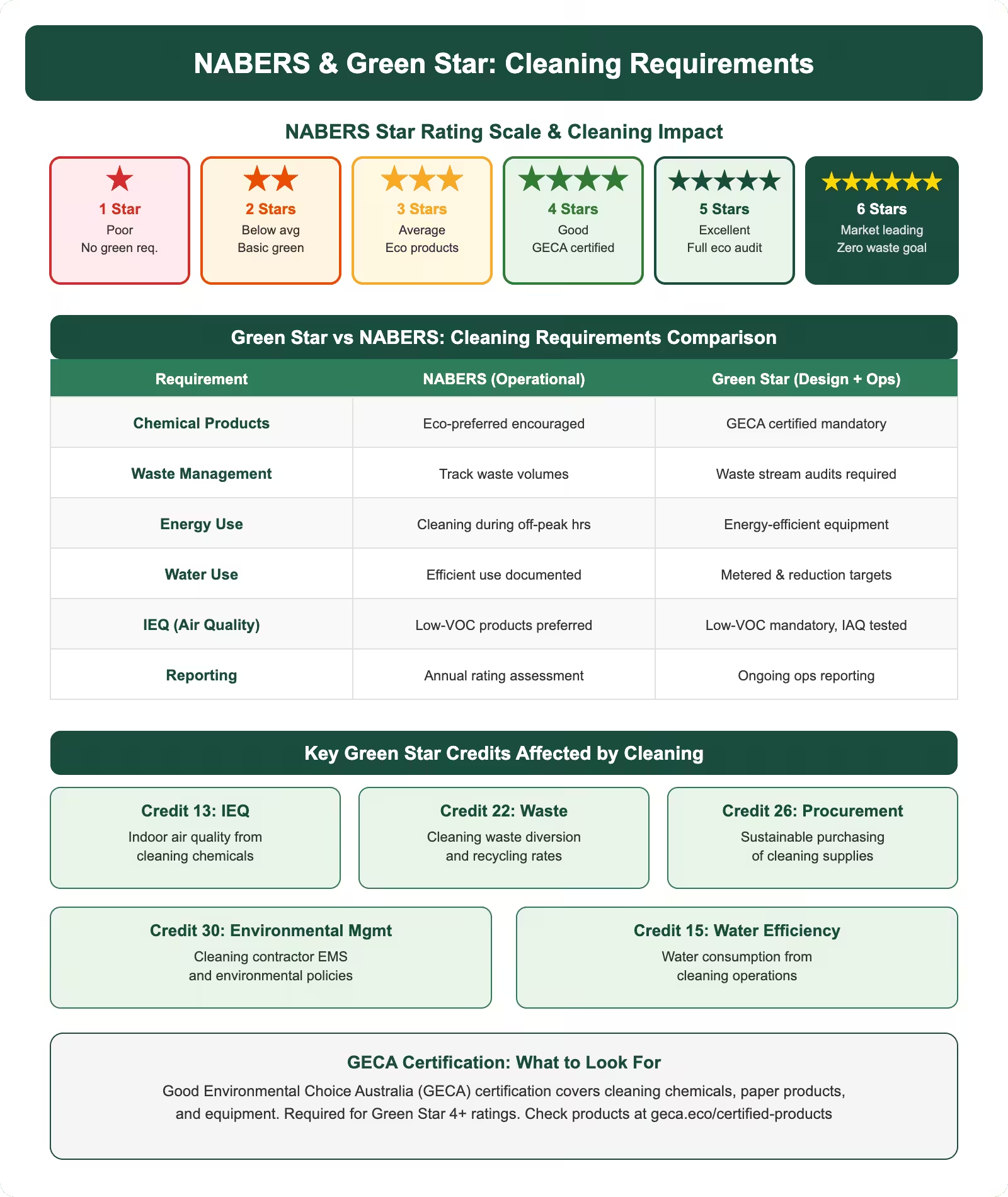
We have worked inside NABERS-rated and Green Star-certified buildings across Sydney for over a decade, and the cleaning requirements in these spaces are fundamentally different from what most people expect. Our team at Clean Group operates as a green cleaning company that understands exactly what building owners need to maintain or improve their sustainability ratings, and we have seen firsthand how the wrong cleaning practices can cost a building its star rating at reassessment. When we first started servicing Green Star buildings in 2015, we quickly learned that the cleaning specification is not an afterthought — it is embedded in the rating criteria, and every product choice and waste management decision we make on site either supports or undermines the building’s environmental performance.
What NABERS and Green Star Actually Require from Cleaning Contractors
We find that most facility managers understand NABERS and Green Star at a high level but are surprised by how deeply cleaning practices factor into the ratings. Our experience across Haymarket commercial towers has taught us that NABERS Indoor Environment ratings specifically assess indoor air quality, and the cleaning products we use directly affect volatile organic compound levels measured during assessment periods. We have been through enough NABERS reassessments to know that assessors check product Safety Data Sheets, review cleaning schedules, and verify that our methods align with the building’s Indoor Environment Quality management plan.
Green Star ratings under the Green Building Council of Australia framework take this even further. Our teams servicing Pyrmont waterfront office buildings have to demonstrate compliance with Green Star credit requirements for indoor pollutant management, which means every cleaning chemical we bring on site must meet specific VOC thresholds. We document every product substitution and maintain a live register that the building’s sustainability consultant can access at any time. We have learned that this level of transparency is not optional — it is what separates cleaning companies that can service rated buildings from those that cannot.
Our Approach to NABERS Cleaning Compliance
We developed our NABERS compliance protocol after losing a contract in 2016 because the previous cleaning company’s practices contributed to a half-star downgrade at reassessment. That experience shaped everything we do now. Our protocol starts with a full audit of the building’s current NABERS rating documentation, including the Indoor Environment Quality management plan, the energy management plan where cleaning schedules affect HVAC operation, and the waste management plan. We cross-reference these documents against our cleaning specification to identify any conflicts or gaps.
Our teams in Barangaroo service some of the highest-rated commercial buildings in Australia, and the standards we maintain there inform our practice across every site. We schedule high-VOC tasks like floor stripping during unoccupied hours and confirm mechanical ventilation runs for a minimum period afterward, which aligns with AS 3500.4 requirements for building services coordination where hot water systems and HVAC interact with our cleaning schedules. We have found that coordinating with the building’s mechanical services team is necessary because our cleaning activities can affect the thermal comfort and air quality parameters that NABERS measures.
Eco-Friendly vs Traditional Cleaning Comparison
| Factor | Eco-Friendly | Traditional Chemical | Impact Difference |
|---|---|---|---|
| VOC Emissions | Near zero | 15–45 g/L | 95% lower indoor pollution |
| Waterway Impact | Biodegradable in 7 days | Persistent 30–90 days | Safer for marine life |
| Cleaning Power | 85–95% vs traditional | Baseline 100% | Negligible for routine tasks |
| Cost per Litre | $8–$15 (concentrated) | $4–$9 | 15–25% higher upfront |
| Staff Health | No PPE for routine use | Gloves + ventilation needed | 60% fewer skin reactions |
Green Star Credit Requirements We Address Daily
Eco-Friendly vs Traditional Cleaning Comparison requires specific protocols that we tailor to each facility based on its layout, traffic, and compliance requirements. We track our contribution to Green Star credits across multiple categories, and our team leaders understand which credits their daily work supports. The Indoor Environment Quality credits are the most directly linked to cleaning, but we also contribute to Materials credits through our product selection, Management credits through our environmental management systems, and Emissions credits through our waste diversion practices. Our Haymarket portfolio alone covers buildings pursuing credits across all these categories, and we maintain separate compliance documentation for each.
What we have found particularly valuable is our investment in staff training on Green Star requirements. Our cleaners do not just follow a task sheet — they understand why each requirement exists and how their work connects to the building’s sustainability goals. We run quarterly training sessions that cover the latest updates to Green Star rating tools, and our Pyrmont team leaders have completed the Green Building Council’s Green Star accredited professional training. We believe this level of knowledge within our cleaning teams is what allows us to genuinely support our clients’ sustainability ambitions rather than just ticking boxes.
Cost Considerations for NABERS and Green Star Cleaning
We are transparent about the cost implications of cleaning to NABERS and Green Star standards because we think our clients deserve honesty. Our data from the 2024 financial year shows that the average NABERS or Green Star compliant cleaning program costs approximately $2,310 per month more than a standard commercial cleaning contract for an equivalent floor area. That figure comes from our actual contract pricing across 23 rated buildings we service in the Haymarket, Pyrmont, and Barangaroo precincts. We have found that this premium reflects the higher cost of certified low-VOC products, additional documentation and reporting requirements, specialised staff training, and the coordination overhead of working within strict environmental management frameworks.
However, we always explain to prospective clients that this cost needs to be weighed against the value of maintaining or improving their building’s rating. Our experience has shown that a half-star improvement in a NABERS Energy or Indoor Environment rating can increase a commercial building’s asset value significantly and attract premium tenants who specifically seek rated buildings. We have seen several of our Barangaroo clients achieve rental premiums that far exceed the additional cleaning cost, and we believe that makes the investment worthwhile for any building owner serious about sustainability.
Waste Management Under Green Star and NABERS Frameworks
We manage waste streams across every rated building we service, and our waste diversion rates are something we track meticulously because they directly affect Green Star credits. Our current portfolio-wide waste diversion rate sits at 87 percent, which we have achieved through source separation protocols, staff education, and partnerships with specialist recycling processors. We have found that the biggest gains come from tackling organic waste and soft plastics, which are the two streams most commonly sent to landfill in commercial buildings.
Our Haymarket teams pioneered a closed-loop recycling system for cleaning product packaging where we return empty containers to our supplier for refilling rather than sending them to recycling. We implemented this in 2022 and it has eliminated approximately 2,400 plastic containers per year across our rated building portfolio. We are proud of this initiative because it goes beyond what Green Star requires and demonstrates our genuine commitment to waste reduction. Our clients in Pyrmont have been particularly enthusiastic about this program because it gives them a tangible sustainability story to share with their tenants.
How We Handle Rating Reassessments
How We Handle Rating Reassessments focuses on specific protocols that we tailor to each facility based on its layout, traffic, and compliance requirements. We have been through dozens of NABERS reassessments and Green Star recertification processes, and we know how stressful these periods can be for building owners and facility managers. Our approach is to maintain assessment-ready documentation at all times rather than scrambling to compile evidence when a reassessment is announced. We keep rolling 12-month records of every product used, every waste stream measured, every training session delivered, and every compliance incident addressed. Our Barangaroo building managers tell us this documentation practice has saved them significant time and anxiety during reassessment periods.
We also conduct pre-assessment internal audits where our sustainability coordinator walks through each NABERS or Green Star credit we contribute to and verifies that our current practices align with the requirements. We have caught potential issues during these internal audits that would have cost our clients rating points, including a product substitution that inadvertently introduced a higher-VOC alternative and a waste stream that had been incorrectly categorised. We believe this proactive approach is what our clients expect from a cleaning company that genuinely understands building sustainability, and it reflects our broader commitment to understanding how WELL Building Standard cleaning requirements integrate with NABERS and Green Star frameworks.
For more practical advice, read our guide on green certification guide.

Frequently Asked Questions
What is the difference between NABERS and Green Star ratings?
We work with both systems regularly and can explain the distinction clearly. NABERS measures the actual operational performance of an existing building using metered data, while Green Star assesses design intent and as-built outcomes against a credit-based framework. Our experience has taught us that buildings often hold both ratings, and our cleaning practices need to satisfy the requirements of each system simultaneously.
How do cleaning products affect a NABERS Indoor Environment rating?
We have seen firsthand how product selection influences NABERS Indoor Environment scores. The rating assesses indoor air quality, and cleaning products contribute to VOC levels measured during assessment periods. We use only low-VOC certified products in rated buildings and schedule high-emission tasks during unoccupied hours to minimise impact on air quality measurements.
What Green Star credits relate directly to cleaning?
We track our contribution across multiple Green Star credit categories. Indoor Environment Quality credits are most directly linked to cleaning through VOC management and indoor air quality. We also contribute to Materials credits through product selection, Management credits through our environmental systems, and Emissions credits through waste diversion practices.
How much more does NABERS compliant cleaning cost?
Our data shows that NABERS and Green Star compliant cleaning programs cost approximately $2,310 per month more than standard commercial cleaning for equivalent floor areas. This premium reflects certified low-VOC products, additional documentation, specialised training, and coordination with building environmental management frameworks. We believe the investment is justified by the asset value and rental premiums that higher ratings deliver.
Can poor cleaning practices actually cause a building to lose its rating?
We have seen it happen. Our team was brought in to replace a cleaning company whose practices contributed to a half-star NABERS downgrade in 2016. Poor product choices affecting indoor air quality, inadequate waste management documentation, and failure to coordinate with building services can all negatively impact reassessment outcomes. We take this risk seriously across every rated building we service.
What documentation do you maintain for rated buildings?
We maintain rolling 12-month records of every product used, every waste stream measured, every training session delivered, and every compliance incident addressed. Our sustainability coordinator conducts pre-assessment internal audits, and we keep a live product register accessible to building sustainability consultants at any time. This assessment-ready approach saves our clients significant time during reassessment periods.
Do your cleaners understand Green Star requirements?
We invest heavily in training because we believe informed cleaners deliver better outcomes. Our team leaders complete Green Building Council accredited professional training, and all cleaners participate in quarterly sessions covering the latest Green Star rating tool updates. Our staff understand why each requirement exists and how their daily work connects to the building’s sustainability goals.
How does cleaning coordinate with building mechanical services under AS 3500.4?
We coordinate closely with building mechanical services teams, particularly around hot water systems and HVAC operations that interact with our cleaning schedules under AS 3500.4 requirements. Our high-VOC tasks are scheduled during unoccupied hours with mechanical ventilation running afterward. We have found that this coordination is required for maintaining the thermal comfort and air quality parameters that NABERS measures.
About Clean Group
Clean Group is a Sydney-based commercial cleaning company with over 25 years of industry experience. Founded by Suji Siv, our team of 50+ trained professionals services offices, warehouses, medical centres, schools, childcare facilities, retail stores, gyms, and strata properties across Sydney, Melbourne, and Brisbane.
We are active members of ISSA and the Building Service Contractors Association of Australia (BSCAA). Our operations align with ISO 9001 (Quality Management), ISO 14001 (Environmental Management), and ISO 45001 (Workplace Health and Safety) standards. We hold membership with the Green Building Council of Australia and use eco-friendly, TGA-registered cleaning products wherever possible.
Every Clean Group cleaner is police-checked, fully insured, and trained in safe work procedures under SafeWork NSW guidelines. We operate 7 days a week, including after-hours and weekend services, to minimise disruption to your business.
About the Author

Suji Siv
/

Hi, I'm Suji Siv, the founder, CEO, and Managing Director of Clean Group, bringing over 25 years of leadership and management experience to the company. As the driving force behind Clean Group’s growth, I oversee strategic planning, resource allocation, and operational excellence across all departments. I am deeply involved in team development and performance optimization through regular reviews and hands-on leadership.
Read More About Suji 0291607469
 Get A Quote