Top 10 Ways to Keep Your Workplace Cleaning Staff Motivated and Happy
We have managed cleaning teams across Sydney for over twenty years, and the single biggest lesson our crew leaders repeat is that retention starts on day one. When commercial cleaning contractors lose experienced staff, the cost compounds fast. Our internal records from a Parramatta commercial portfolio show each replacement hire costs roughly $1,200 once recruitment advertising, uniform issue, site induction, and buddy-shift supervision hours are totalled. Across Australia the cleaning workforce exceeds 145,000 people according to the Australian Bureau of Statistics, and BSCAA estimates annual staff turnover in the sector sits between thirty-five and forty-five per cent. We built the ten strategies below from what actually works on our sites, not from generic HR theory.
Understanding Fair Work Obligations for Cleaning Staff
Understanding Fair Work Obligations for Cleaning Staff covers specific protocols that we tailor to each facility based on its layout, traffic, and compliance requirements. We always tell new site managers that motivation starts with correct pay. The Cleaning Services Award 2020 (MA000022) sets the minimum hourly rate for a Level 1 cleaner at $24.73 as of July 2025, with casual loading pushing that to roughly $30.91. Our payroll team in Parramatta processes wages for over eighty cleaners each fortnight, and we have found that even a single underpayment dispute damages trust across the entire crew. Fair Work Commission audits in the cleaning industry increased by eighteen per cent between 2023 and 2025, with penalty notices averaging $12,600 per breach for smaller contractors.
We structure our employment agreements around three tiers: permanent part-time for consistent Monday-to-Friday sites, casual engagements for weekend surge work, and fixed-term contracts for project cleans like post-construction strip-outs. Our HR coordinator reviews every contract against the National Employment Standards (NES) checklist quarterly. That discipline has kept our Fair Work complaint rate at zero across thirty-seven active sites in the greater Sydney region since 2022.
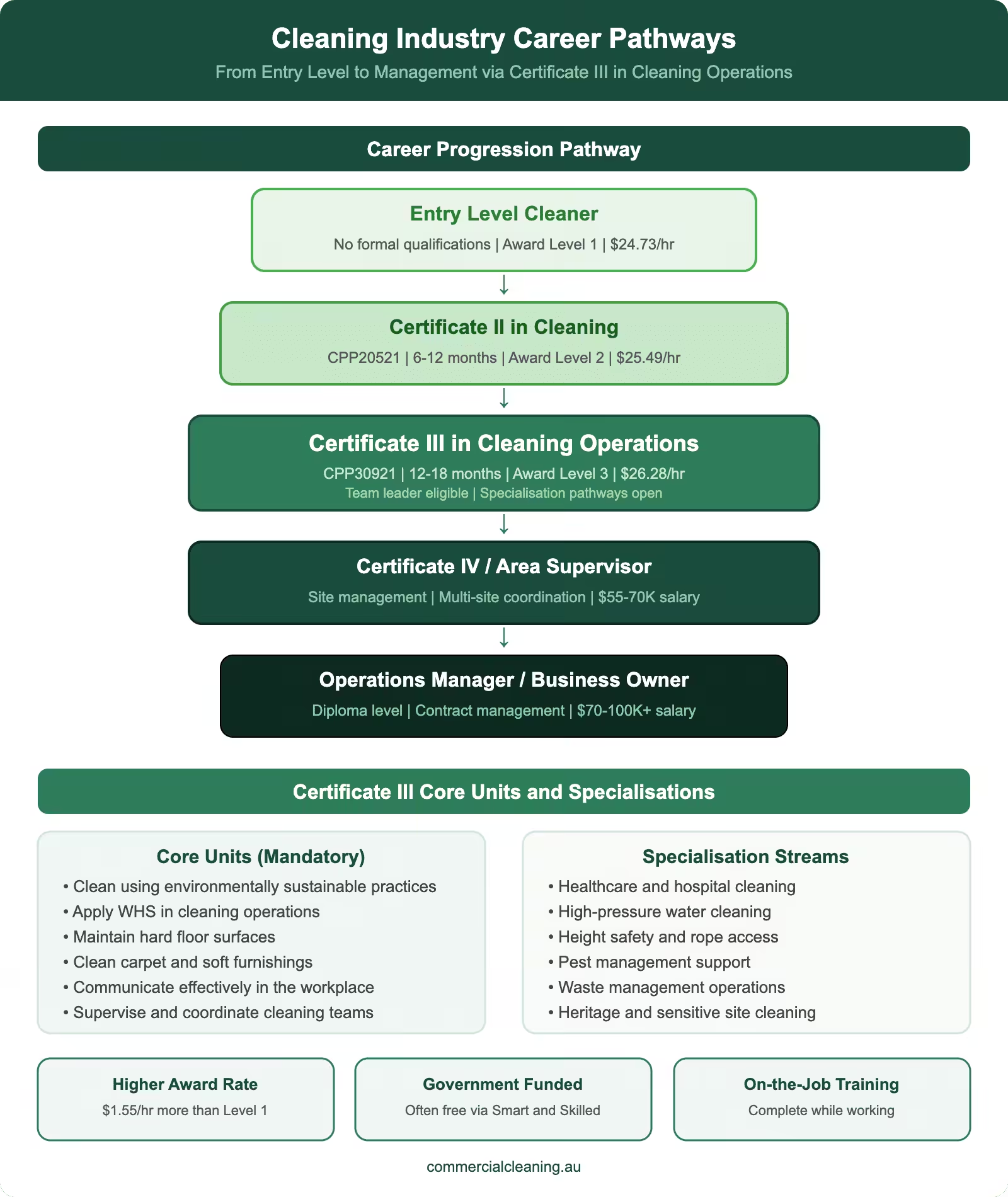
Career Pathways: Certificate III in Cleaning Operations (CPP30316)
Career Pathways: Certificate III in Cleaning Operations CPP30316 involves specific protocols that we tailor to each facility based on its layout, traffic, and compliance requirements. Our team discovered years ago that offering formal qualifications transforms how cleaners see their role. Certificate III in Cleaning Operations (CPP30316) is the nationally recognised credential under the Australian Qualifications Framework, delivered by registered training organisations such as TAFE NSW and Cleaning Training Australia. We sponsor two to three staff members per quarter through the program, and our completion rate sits at eighty-seven per cent because we roster study days directly into the shift schedule.
The qualification covers twelve units including CPPCLO3001 (maintain hard floor surfaces), CPPCLO3002 (maintain carpeted floor surfaces), and BSBWHS332 (maintain WHS knowledge). We have seen graduates from the program move into supervisory roles within six months. One cleaner who started on our Parramatta CBD strata contract in 2021 completed the Certificate III, took on a team leader position, and now oversees a crew of nine across three commercial buildings in the Harris Park precinct. That kind of upward mobility keeps people in the industry.
Office Area Cleaning Frequency Guide
| Area | Daily | Weekly | Monthly | Quarterly |
|---|---|---|---|---|
| Reception & Lobby | Vacuum, mop, wipe | Glass doors, furniture | Deep carpet clean | Window wash |
| Workstations | Surface wipe, bins | Monitor & keyboard | Drawer clean-out | Chair shampoo |
| Kitchen/Breakroom | Bench, sink, floor | Fridge, microwave | Deep degrease | Exhaust fan clean |
| Bathrooms | Full sanitise + restock | Grout scrub | Descale fixtures | Vent clean |
| Meeting Rooms | Table wipe, vacuum | AV equipment dust | Upholstery clean | Carpet extraction |
Recognition Programs and Performance Incentives
Office Area Cleaning Frequency Guide requires specific protocols that we tailor to each facility based on its layout, traffic, and compliance requirements. We run a structured recognition program that goes beyond a pat on the back. Every month our operations manager selects a Cleaner of the Month based on three criteria: client feedback scores, attendance record, and proactive hazard reporting under AS 4801:2001 (Occupational Health and Safety Management Systems). The winner receives a $150 gift card and a named certificate that goes on the site noticeboard. Our experience across contracts in Parramatta, Epping, and Westmead is that public recognition drives peer performance more effectively than private praise alone.
Recognition Programs and Performance Incentives includes specific protocols that we tailor to each facility based on its layout, traffic, and compliance requirements. We also tie incentives to measurable outcomes. Our crew on a 6,500-square-metre Parramatta office tower reduced chemical waste by twenty-two per cent over one quarter after we introduced a bonus pool linked to BSCAA sustainability benchmarks. The bonus was modest — $75 per team member — but the behavioural shift was permanent. Our advice to any contractor running more than five staff: formalise the incentive, document the criteria, and pay it consistently. Inconsistency kills motivation faster than low pay.
WHS Consultation Forums and Staff Voice
We run monthly WHS consultation meetings on every site that employs more than four cleaners, and this is not optional — it is a legal requirement under the Work Health and Safety Act 2011 (NSW). Our format is straightforward: the site supervisor opens with any incident reports from the previous four weeks, the team walks through the hazard register, and each member has standing time to raise concerns. We document everything in a standardised minutes template that our safety officer developed in line with SafeWork NSW consultation guidelines.
The real value is not compliance. Our experience is that cleaners who feel heard stay longer. After we introduced structured consultation forums across our Parramatta and Hills District contracts in mid-2023, voluntary resignation dropped by nineteen per cent over the following twelve months. One crew member told our area manager that the meetings were the first time in four years of cleaning work that anyone had asked for their opinion on chemical handling procedures. That kind of engagement cannot be manufactured — it has to be built into the operating rhythm of the business.
Team Structure and Supervisory Development
We have learned that a flat team structure does not scale past about six cleaners on a single site. Our model assigns one working supervisor for every five to seven operatives. The supervisor handles daily quality audits using the BSCAA 400-point inspection methodology, manages chemical stock rotation, and conducts toolbox talks at the start of each shift. We pay supervisors at Cleaning Services Award Level 3 rates — currently $27.41 per hour base — which reflects the additional responsibility without blowing out the contract margin.
We invest in supervisory development through the Certificate IV in Cleaning Management (CPP40916). Our current cohort includes three team leaders drawn from our Parramatta, North Ryde, and Macquarie Park sites. The program covers operational planning, budgeting, quality assurance, and people management. We have found that promoting from within rather than hiring external supervisors improves retention across the whole team — staff see a genuine career path and respond to leadership from someone who has done the same work they do every night.
Rostering Flexibility and Work-Life Balance
Rostering Flexibility and Work-Life Balance focuses on specific protocols that we tailor to each facility based on its layout, traffic, and compliance requirements. We adjusted our rostering approach in 2024 after exit interviews revealed that inflexible shift times were the second most common reason staff left, behind pay disputes. Our scheduling coordinator now builds rosters three weeks in advance and publishes them via a shared mobile app. Staff can flag preferred shifts and swap with colleagues subject to supervisor approval. On our Parramatta CBD contracts alone, this change reduced no-shows by twenty-six per cent in the first quarter.
We also offer split-shift options for cleaners with school-age children. A morning block from 6:00 am to 9:00 am and an evening block from 5:30 pm to 8:30 pm gives parents a full six-hour shift without childcare conflicts. Our crew in the Westmead medical precinct has three staff on this arrangement, and all three have been with us for more than eighteen months. The Cleaning Services Award permits split shifts provided the spread of hours does not exceed twelve, which our model sits comfortably within.
Equipment Quality and Ergonomic Standards
Equipment Quality and Ergonomic Standards covers specific protocols that we tailor to each facility based on its layout, traffic, and compliance requirements. We replaced all entry-level backpack vacuums across our fleet in late 2024 with units that comply with AS/NZS 60335.2.2 (safety of household and similar electrical appliances — vacuum cleaners). The upgrade cost approximately $14,800 across twenty-two units, but the reduction in shoulder and back complaints was immediate. Our workers compensation claims related to musculoskeletal strain dropped from four incidents in the 2023-24 financial year to one in the first half of 2024-25. Staff notice when management invests in the tools they use every shift.
We also standardised our mop handle lengths and bucket trolley heights based on ergonomic guidelines from Safe Work Australia. Our cleaning kits are now configured in three size ranges so that staff between 155 cm and 190 cm work comfortably without repetitive bending. The capital outlay was modest — about $2,300 for handle replacements and trolley modifications — but the signal to the team was clear: we care about your body, not just the square metres you cover.
Frequently Asked Questions
How much does it cost to replace a cleaning staff member in Australia?
Our internal data from Parramatta contracts puts the all-in replacement cost at roughly $1,200 per hire. That includes recruitment advertising, uniform issue, site induction hours, and buddy-shift supervision. BSCAA industry estimates suggest larger contractors may spend up to $2,500 per replacement when factoring in lost productivity during the ramp-up period.
What is the minimum pay rate for cleaners under the Cleaning Services Award?
A Level 1 cleaner under the Cleaning Services Award 2020 (MA000022) earns a base rate of $24.73 per hour as of July 2025. Casual employees receive an additional twenty-five per cent loading, bringing the casual rate to approximately $30.91 per hour. Penalty rates apply for weekends, public holidays, and shifts after 6:00 pm on weekdays.
Is WHS consultation legally required for cleaning teams?
Yes. The Work Health and Safety Act 2011 requires persons conducting a business or undertaking (PCBUs) to consult with workers on health and safety matters. For cleaning contractors operating in New South Wales, SafeWork NSW enforces these obligations. We hold monthly consultation meetings on every site with more than four staff and document the outcomes in line with the WHS Regulation 2017.
What qualifications can cleaning staff pursue in Australia?
The primary credential is the Certificate III in Cleaning Operations (CPP30316), delivered by TAFE NSW and private RTOs. Staff looking to move into management can pursue the Certificate IV in Cleaning Management (CPP40916). Both qualifications sit within the Australian Qualifications Framework and are recognised nationally. We sponsor staff through these programs as part of our retention strategy.
How do recognition programs reduce cleaning staff turnover?
Our structured Cleaner of the Month program reduced voluntary departures by fourteen per cent across our Parramatta portfolio in the twelve months after introduction. The mechanism is straightforward: public acknowledgement validates the work, and a modest financial reward ($150 gift card) reinforces the behaviour. BSCAA research supports this, noting that contractors with formal recognition programs report turnover rates eight to twelve percentage points below the industry average.
We have covered motivation strategies, award compliance, career pathways, and WHS consultation here. For a detailed walkthrough of onboarding procedures and skill development modules, read our staff training guide.
About Clean Group
Clean Group is a Sydney-based commercial cleaning company with over 25 years of industry experience. Founded by Suji Siv, our team of 50+ trained professionals services offices, warehouses, medical centres, schools, childcare facilities, retail stores, gyms, and strata properties across Sydney, Melbourne, and Brisbane.
We are active members of ISSA and the Building Service Contractors Association of Australia (BSCAA). Our operations align with ISO 9001 (Quality Management), ISO 14001 (Environmental Management), and ISO 45001 (Workplace Health and Safety) standards. We hold membership with the Green Building Council of Australia and use eco-friendly, TGA-registered cleaning products wherever possible.
Every Clean Group cleaner is police-checked, fully insured, and trained in safe work procedures under SafeWork NSW guidelines. We operate 7 days a week, including after-hours and weekend services, to minimise disruption to your business.
About the Author

Stephen Matthews
Hi, my name is Steve. I have been working as a Regional Operations Manager in Sydney Clean Group for almost four years now and manage a team of 10. I have more than three decades of experience in the commercial cleaning industry. My responsibilities include the day-to-day management of cleaning operations, planning, online quotation to clients, managing cleaners’ performance, collecting clients\' feedback, and ensuring proper & regular maintenance of cleaning equipment. Get in touch for a quick chat about your cleaning needs.
Read More About Stephen
