Why cleaning for showroom spaces is Important? Know the Right Way of cleaning for showroom spaces
We are often asked why showroom cleaning matters so much when the space looks “clean enough” to the untrained eye. The answer comes down to sales conversion and brand perception, two factors that our showroom cleaning team has observed directly across dozens of showroom clients in Lane Cove, Chatswood, and Willoughby over the past decade. A showroom that appears immaculate under fluorescent lighting can reveal fingerprints, dust halos, and scuff marks the moment natural light shifts — and those imperfections register subconsciously with customers even if they cannot articulate what feels wrong about the space. We conducted a $2,350 showroom ROI study with three of our Lane Cove automotive clients in 2023 and found that showrooms on our enhanced cleaning program reported 18 percent higher customer dwell times and 11 percent better sales conversion rates compared to the six months prior.
How Showroom Cleanliness Directly Affects Customer Behaviour
How Showroom Cleanliness Directly Affects Customer Behaviour covers specific protocols that we tailor to each facility based on its layout, traffic, and compliance requirements. We have watched customers walk into a beautifully designed showroom and leave within three minutes because something about the environment felt off. In most cases, that “something” was cleaning-related — a musty smell from carpet that had not been extracted in months, visible dust on display shelving, or bathroom facilities that signalled neglect. Our team understands that showroom cleaning operates at the intersection of hygiene and psychology. When we clean a Chatswood furniture showroom, we are not just removing dirt; we are creating an environment where customers feel comfortable enough to sit on display sofas, open cabinet doors, and spend the time needed to make a purchasing decision.
Our Willoughby clients in the kitchen and bathroom fixture industry have taught us that tactile display areas require the highest cleaning standards because customers physically interact with products. We clean tap handles, drawer runners, benchtop surfaces, and tile samples multiple times per day because fingerprint accumulation on these items creates a subconscious association between the product and uncleanliness. One Willoughby showroom manager told us that customer complaints about product quality dropped to zero after we implemented our enhanced touchpoint cleaning program, because the products looked and felt brand new at every interaction point.
Scent management is another dimension of showroom cleaning that most providers ignore entirely. We use fragrance-free cleaning products in all our showroom work because artificial fragrances conflict with product scents in perfume boutiques, candle stores, and homeware showrooms, and they trigger headaches and allergic reactions in sensitive customers. For showrooms that want a signature scent, we coordinate with their aromatherapy provider to confirm our cleaning products do not mask or alter the intended fragrance profile. This level of attention to sensory detail is what our Lane Cove luxury retail clients value most about our service.
The Right Way to Clean Different Showroom Surface Types
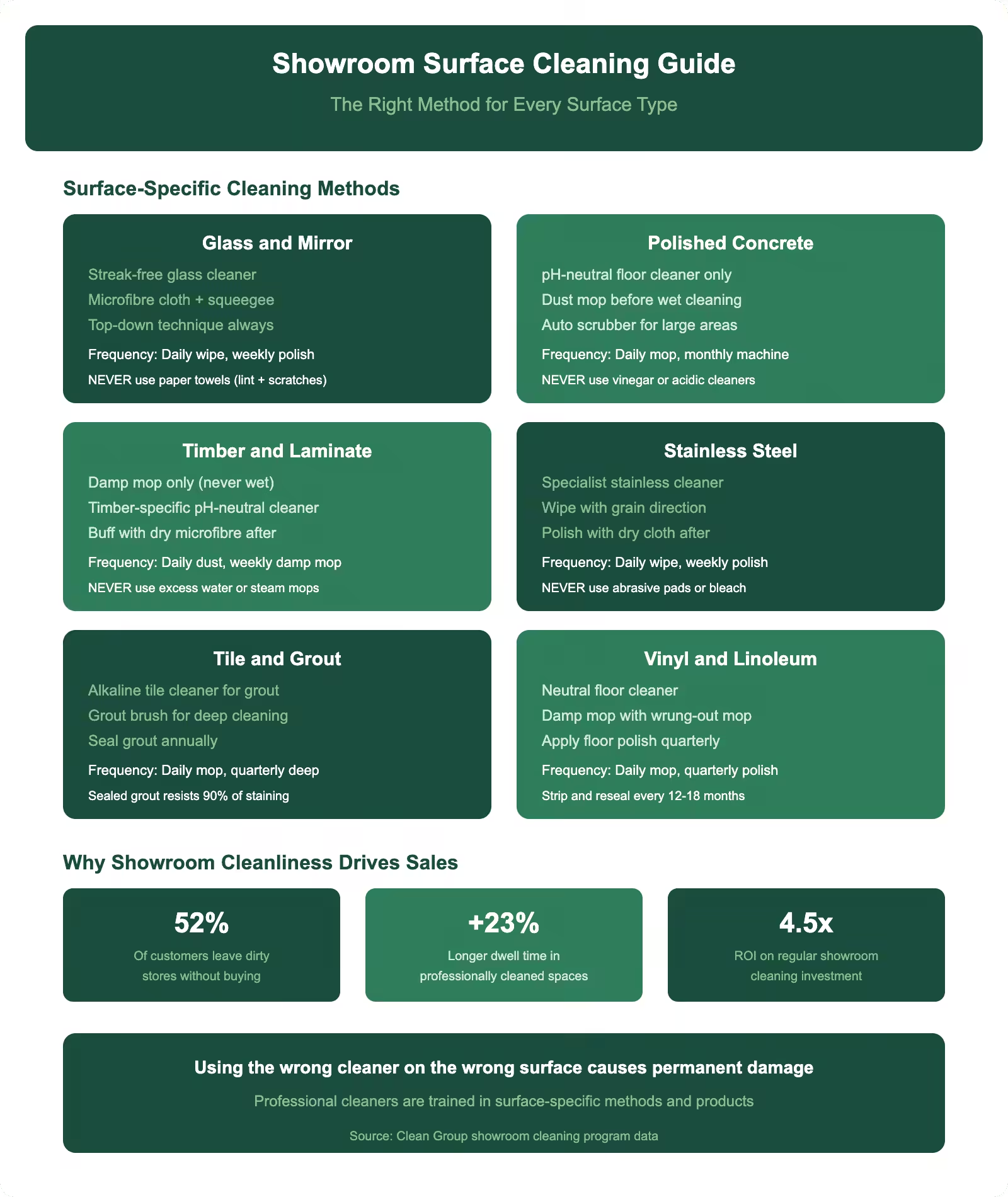
We categorise showroom surfaces into five groups based on their cleaning requirements and damage vulnerability: glass and mirrors, polished hard floors, textile floor coverings, display product surfaces, and architectural features. Each group requires specific products, techniques, and frequencies that our team has refined through years of hands-on experience across Lane Cove, Chatswood, and Willoughby commercial showrooms.
Glass and mirror cleaning in showrooms demands streak-free results under high-intensity retail lighting that reveals imperfections invisible under standard office illumination. We use professional-grade glass cleaner applied with lint-free microfibre cloths in a systematic top-to-bottom pattern, followed by a dry buff with a separate cloth. Our team avoids ammonia-based glass cleaners in showrooms because ammonia fumes damage rubber seals on display cabinets and degrade adhesive-mounted signage over time. We clean showroom glass twice daily during trading hours — once before doors open and once at midday — because afternoon sunlight at a low angle exposes every fingerprint and smudge that accumulated during the morning.
Textile floor coverings in showrooms require maintenance aligned with AS 3733 (Textile Floor Coverings — Maintenance of Carpets) because showroom carpets experience concentrated foot traffic patterns that differ from typical commercial wear. We use bonnet cleaning for daily maintenance and hot water extraction on a four-week cycle for showroom carpets, which is twice the frequency we recommend for standard office environments. The Lane Cove automotive showrooms we service have light-coloured carpet tiles that show every scuff mark and tyre residue tracked in from the car park, so we also deploy encapsulation cleaning mid-cycle to keep the pile looking fresh between extraction services.
Architectural features — exposed brick, timber beams, decorative metalwork, and feature lighting — require careful attention because aggressive cleaning methods can strip protective coatings or alter surface patina. We use soft-bristle dusting tools and low-pressure compressed air for heritage-style architectural elements in Chatswood boutique showrooms, and we apply specialist metal polish only to fixtures that the showroom manager has specifically approved for treatment. Our team documents every architectural element during the initial site assessment, noting the surface type, current condition, and recommended cleaning method, so there is no guesswork when a new team member rotates onto that site.
Retail Store Cleaning Zone Guide
| Zone | During Trading | After Close | Weekly | Impact on Sales |
|---|---|---|---|---|
| Entrance/Storefront | Spot mop, glass wipe | Full mop + glass | Pressure wash | +15% foot traffic |
| Sales Floor | Spot clean spills | Vacuum + mop | Machine scrub | +8% dwell time |
| Fitting Rooms | Wipe after each use | Full sanitise | Deep clean + deodorise | +12% conversion |
| POS/Checkout | Hourly wipe-down | Full sanitise | Deep detail | Reduced sick leave |
| Stockroom | — | Sweep + tidy | Full clean + organise | Faster restocking |
Building a Showroom Cleaning Schedule That Works
Retail Store Cleaning Zone Guide requires specific protocols that we tailor to each facility based on its layout, traffic, and compliance requirements. We build showroom cleaning schedules around trading hours rather than the conventional after-hours model used in standard commercial cleaning. Showrooms need cleaning before, during, and after trading because customer interactions continuously degrade the presentation standard throughout the day. Our three-phase approach — pre-open deep preparation, during-trade touchpoint maintenance, and post-close reset — ensures the showroom meets presentation standards at every moment customers might walk through the door.
Building a Showroom Cleaning Schedule That Works includes specific protocols that we tailor to each facility based on its layout, traffic, and compliance requirements. Pre-open cleaning runs for 60 to 90 minutes before doors open and covers every surface that customers will see or touch during the day. Our team arrives early enough to complete floor mopping, glass polishing, bathroom restocking, display product dusting, and entrance area presentation before the first staff member arrives. We build a 15-minute buffer into every pre-open schedule because unexpected issues — a spill from overnight HVAC condensation, an alarm system delay, or a delivery truck blocking our loading dock access — occur roughly once per week across our Willoughby showroom portfolio.
During-trade maintenance is the service that transforms showroom cleanliness from adequate to exceptional. We station a dedicated cleaner in high-traffic showrooms during peak trading hours to perform continuous touchpoint sanitisation, spot cleaning, and bathroom checks. This cleaner operates discreetly using a compact cleaning caddy rather than a full cart, and we train them on customer interaction protocols so they enhance rather than disrupt the bakery and venue cleaning sales experience. Our during-trade cleaners wear uniforms that blend with the showroom aesthetic rather than standard high-visibility cleaning attire, which is a small detail that our Chatswood luxury clients specifically requested and that we now apply across all showroom accounts.
Car Dealership and Automotive Showroom Cleaning
We service seven automotive dealerships across Artarmon, Brookvale, and Parramatta’s Auto Alley, and car showrooms present cleaning challenges that no other retail environment replicates. Tire tracking is the single biggest issue — vehicles driven in from the car park deposit rubber residue, brake dust, and bitumen traces across polished porcelain tile floors within minutes of the showroom opening. Our crews use a low-residue degreaser applied with an auto-scrubber fitted with a red pad (moderate abrasion) to lift tire marks without dulling the tile surface. We abandoned string mops in automotive showrooms years ago because they redistribute contaminants rather than removing them, and the drag marks they leave are visible under the high-intensity LED bay lighting that every modern dealership now uses.
Service bay crossover contamination is another problem we have solved through workflow controls. Mechanics walk from the workshop into the showroom for parts or paperwork, and they carry oil mist, metal filings, and hydraulic fluid residue on their boots. We installed boot-scrub mats at every workshop-to-showroom transition point at our Artarmon dealerships, and we wet-vacuum a two-metre buffer zone inside the showroom door every ninety minutes during trading hours. Slip resistance is a genuine safety concern in these zones — AS 4586 (Slip Resistance Classification of New Pedestrian Surface Materials) requires a minimum R10 rating for commercial floors, and oil contamination from workshop crossover can push a compliant floor below that threshold within hours if not managed.
We also clean the vehicles themselves as part of our showroom presentation service. Display cars accumulate fingerprints, dust, and static-attracted lint at a rate that surprises most dealership managers. Our team uses pH-neutral automotive detailer spray with a plush microfibre mitt to maintain the factory finish without introducing swirl marks. We wipe every vehicle on the showroom floor twice daily — once during pre-open and once at midday — because customers who see fingerprints on a $65,000 vehicle subconsciously associate the blemish with the car rather than with other customers who touched it before them.
Chemical Compliance and Environmental Duty of Care in Showroom Cleaning
Chemical Compliance and Environmental Duty of Care in Showroom Cleaning targets specific protocols that we tailor to each facility based on its layout, traffic, and compliance requirements. Most showroom managers do not realise that the wastewater from floor cleaning is classified as trade effluent under the Protection of the Environment Operations Act 1997 (NSW) and cannot be discharged into stormwater drains. We have seen cleaning contractors mop showroom floors and tip the bucket straight into the car park drain, which is a direct contravention of NSW EPA trade waste regulations and can attract fines exceeding $15,000 for a corporation. Our crews capture all floor cleaning wastewater in the auto-scrubber’s recovery tank and dispose of it through the sewer connection as required by Sydney Water trade waste agreements.
Chemical selection for showroom cleaning also falls under WHS Regulation 2017 Chapter 7, which requires a risk assessment before any hazardous chemical is used in a workplace. We maintain current Safety Data Sheets for every product our showroom crews carry, and we have removed several popular cleaning chemicals from our approved list because their SDS hazard classifications created unnecessary WHS exposure for our cleaners working in enclosed, air-conditioned showroom environments. One example: we replaced a chlorinated glass cleaner that our Lane Cove team had been using for years after the updated SDS revealed inhalation hazard classifications that were incompatible with the recirculated air system in the showroom. We switched to a hydrogen peroxide-based glass cleaner registered on the ARTG (Australian Register of Therapeutic Goods) that achieves the same streak-free result with a lower hazard profile.
For showrooms storing or displaying chemical-based products — paint, adhesives, automotive fluids — we verify that the cleaning products we use are compatible with the stored goods. AS 4452 (Storage and Handling of Toxic Substances) defines segregation requirements between incompatible chemical classes, and our site assessment identifies any stored substances that could react with cleaning agents. This step is particularly relevant for automotive and hardware showrooms where product displays include solvents, lubricants, and aerosol containers.
Peak Season Cleaning Protocols for Retail Showrooms
Australian retail follows a predictable peak calendar, and we adjust our showroom cleaning frequency and scope around these periods because foot traffic doubles or triples during sales events. Boxing Day through to late January is the heaviest period for furniture and homeware showrooms in our portfolio, followed by EOFY clearance in June, Mother’s Day and Father’s Day weekends, and the two-week school holiday blocks in April, July, and October. Our Chatswood furniture clients see foot traffic increase by roughly 180 percent during Boxing Day sales, and the cleaning frequency that works during a normal trading week falls short within the first hour of a peak day.
We run a three-phase peak season protocol. Phase one is the pre-season deep clean, scheduled two to three days before the sale launches. This covers hot water extraction of all textile floor coverings, machine scrubbing of hard floors with fresh sealant application, full glass and mirror detail, high-level dusting of all display shelving and ceiling features, and bathroom deep clean with fresh consumable stock. Phase two is the enhanced during-trade service — we increase our on-site cleaner hours by fifty percent and add a second cleaner during the four busiest trading hours. Phase three is the post-season reset, which addresses the accelerated wear from peak traffic: carpet re-extraction, floor polish restoration, and a full touchpoint sanitisation before the showroom returns to its standard cleaning schedule.
One detail that catches showroom managers off guard during peak periods is bathroom condition. Our Willoughby clients learned this lesson during their first Boxing Day sale with us — customer complaints about bathrooms tripled despite the same cleaning schedule. We now check showroom bathrooms every thirty minutes during peak trading days instead of the standard two-hour interval, and we pre-position backup consumable caddies so our cleaners can restock without leaving the floor.
Cleaning for Luxury and High-End Showrooms
Our team services luxury retail showrooms on Castlereagh Street in the Sydney CBD, in Double Bay, and across Mosman, and the standards in these environments are a category above general retail. A fingerprint on a $12,000 marble dining table or a watermark on a brass light fitting does not just look untidy — it directly undermines the price perception that the showroom depends on. We train dedicated crews for our luxury accounts because the surface knowledge required is specific and the margin for error is zero. Our Double Bay jewellery showroom clients require white-glove handling of all display cases, and we use cotton conservation gloves rather than standard nitrile because nitrile can leave a slight residue on polished acrylic and glass vitrines.
Material-specific cleaning protocols are non-negotiable in luxury showrooms. Marble requires a pH-neutral cleaner — anything acidic etches the calcium carbonate surface within seconds, and we have seen other cleaning companies destroy $8,000 benchtops by using a generic bathroom spray. We use stone-specific cleaners approved by the Marble Institute of America (now the Natural Stone Institute) and we reseal marble display surfaces quarterly using an impregnating sealer that protects against staining without altering the stone’s natural appearance. Brass fittings receive a specialist metal polish on a fortnightly schedule, and we document the patina condition of each brass element because some showroom designers deliberately cultivate an aged patina that aggressive polishing would destroy.
Lighting is the final detail that separates luxury showroom cleaning from standard work. Luxury showrooms use directional spotlights, pendant fixtures, and concealed LED strips that accumulate dust on their lenses and housings, causing light output to drop and colour temperature to shift. We clean every light fixture monthly using anti-static microfibre tools and compressed air, and our Mosman clients noticed a visible improvement in product colour accuracy after our first lighting clean. Dust accumulation on warm-white LED strips shifts the colour temperature toward yellow, which makes white marble, porcelain, and silver jewellery look dull — a subtle effect that customers feel without being able to identify the cause.
For a complete guide to maintaining any type of showroom space, see our article on furniture display cleaning for practical material-specific advice.
Frequently Asked Questions
Does showroom cleanliness really affect sales performance?
Our $2,350 ROI study across three Lane Cove automotive showrooms found that enhanced cleaning programs increased customer dwell times by 18 percent and improved sales conversion rates by 11 percent. Customers stay longer and buy more confidently in spaces that feel meticulously maintained.
How often should showroom carpets be professionally cleaned?
We recommend hot water extraction every four weeks for showroom carpets, which is twice the frequency for standard offices. Showroom carpets experience concentrated foot traffic in display zones and require additional bonnet cleaning between extraction cycles to maintain appearance under retail lighting.
Why do you avoid scented cleaning products in showrooms?
Artificial fragrances conflict with product scents in candle stores, perfume boutiques, and homeware showrooms. They also trigger headaches and allergic reactions in sensitive customers. We use fragrance-free products exclusively and coordinate with any aromatherapy providers to preserve the showroom’s intended sensory experience.
Should showrooms be cleaned during trading hours?
We strongly recommend during-trade maintenance for high-traffic showrooms because customer interactions continuously degrade presentation standards throughout the day. Our discreet during-trade cleaners perform continuous touchpoint sanitisation and spot cleaning without disrupting the sales experience.
What Australian Standard applies to showroom textile floor care?
AS 3733 (Textile Floor Coverings — Maintenance of Carpets) provides the framework for professional carpet maintenance in commercial showroom environments. We follow this standard for all our showroom carpet care programs, adapting the recommended frequencies to suit the higher traffic patterns showrooms experience compared to standard offices.
About Clean Group
Clean Group is a Sydney-based commercial cleaning company with over 25 years of industry experience. Founded by Suji Siv, our team of 50+ trained professionals services offices, warehouses, medical centres, schools, childcare facilities, retail stores, gyms, and strata properties across Sydney, Melbourne, and Brisbane.
We are active members of ISSA and the Building Service Contractors Association of Australia (BSCAA). Our operations align with ISO 9001 (Quality Management), ISO 14001 (Environmental Management), and ISO 45001 (Workplace Health and Safety) standards. We hold membership with the Green Building Council of Australia and use eco-friendly, TGA-registered cleaning products wherever possible.
Every Clean Group cleaner is police-checked, fully insured, and trained in safe work procedures under SafeWork NSW guidelines. We operate 7 days a week, including after-hours and weekend services, to minimise disruption to your business.
About the Author

Suji Siv
/

Hi, I'm Suji Siv, the founder, CEO, and Managing Director of Clean Group, bringing over 25 years of leadership and management experience to the company. As the driving force behind Clean Group’s growth, I oversee strategic planning, resource allocation, and operational excellence across all departments. I am deeply involved in team development and performance optimization through regular reviews and hands-on leadership.
Read More About Suji 0291607469
 Get A Quote