Education Facility Hygiene Checklist for Australian Schools and Childcare Centres
We have developed our education facility hygiene checklist based on nearly two decades of hands-on experience cleaning schools, universities, and training centres across Sydney. Our team has maintained facilities in Bondi, serviced campuses in Bronte, and managed hygiene programs for educational institutions in Waverley, and we know from direct experience that a documented checklist is the most effective tool for ensuring consistent cleaning standards across every area of a school. When you implement a professional school cleaning program backed by a detailed checklist, you create accountability and transparency that benefits students, staff, and administrators alike.
For more insights, see our guide on effective school cleaning techniques.
Why Every School Needs a Documented Hygiene Checklist
Why Every School Needs a Documented Hygiene Checklist covers specific protocols that we tailor to each facility based on its layout, traffic, and compliance requirements. We have worked with schools that had no formal cleaning documentation and relied entirely on verbal instructions passed between cleaning staff. Our experience has shown us that this approach leads to inconsistent results, missed areas, and a gradual decline in standards over time because there is no objective benchmark against which to measure performance. We developed our checklist specifically to address these problems, and we have seen it transform the cleaning outcomes in every school where it has been implemented.
We structure our checklist around the principle that every task must be specific, measurable, and verifiable. Our document breaks down each area of the school into individual cleaning tasks with defined frequency, method, and quality standards. We have found that this level of detail eliminates ambiguity and gives cleaning staff clear guidance on exactly what is expected. Our supervisors use the checklist during quality audits, and our clients use it to verify that the service they are paying for is being delivered to the agreed standard.
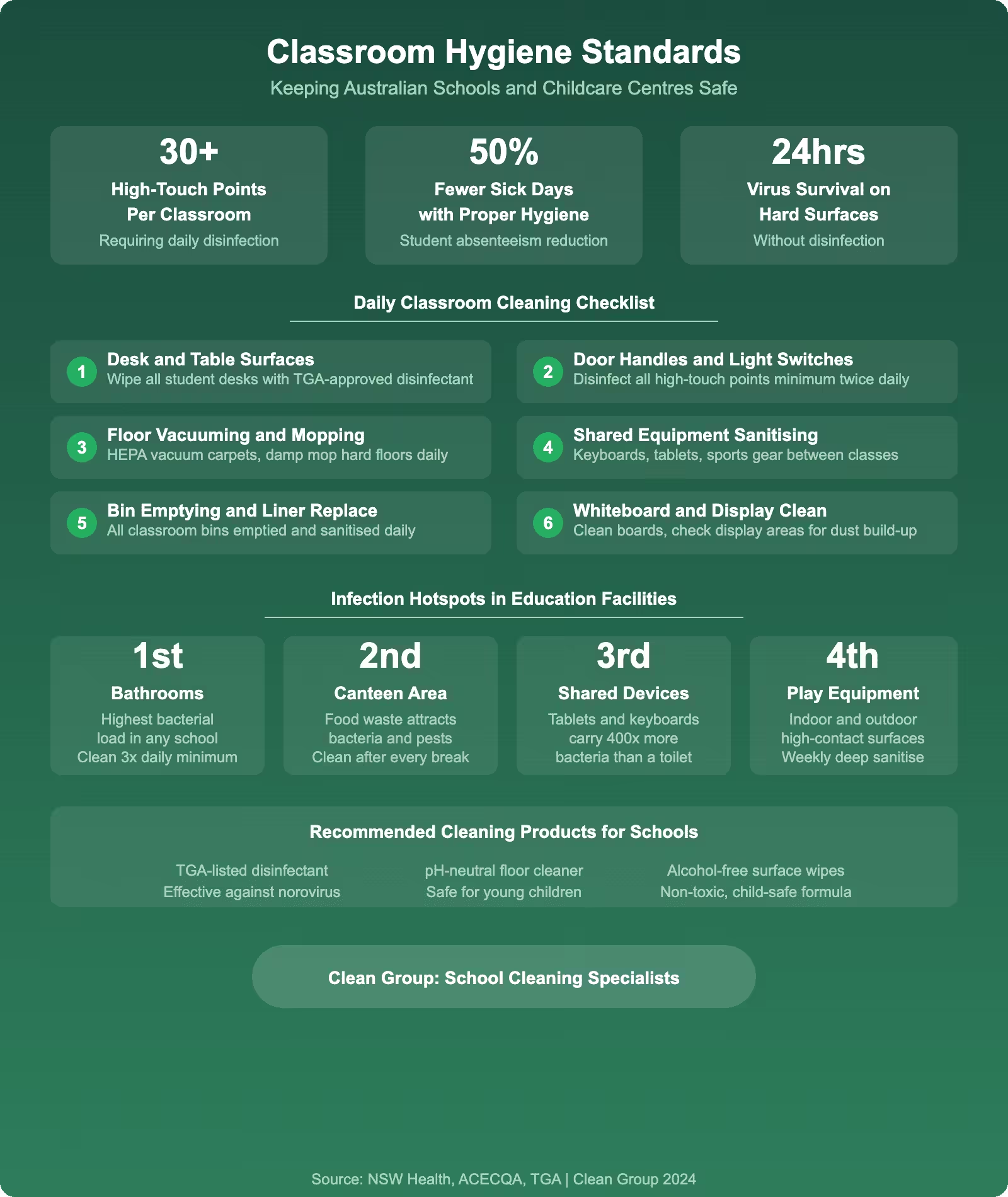
A printable checklist covering classrooms, bathrooms, kitchens, canteens, and outdoor areas — built for Australian schools and childcare centres.
Download PDF Checklist
Classroom Hygiene Standards
We have identified classroom hygiene as the single most important element of any school cleaning program because students spend the majority of their school day in these spaces. Our classroom checklist includes daily vacuuming or mopping of all floor surfaces, wiping and disinfecting all desk and table surfaces, cleaning whiteboards and interactive display screens, emptying bins and replacing liners, and cleaning internal glass panels and door handles. We have found that consistent execution of these daily tasks maintains a baseline level of hygiene that significantly reduces the risk of illness transmission.
We also include weekly and term-based tasks in our classroom checklist because some cleaning activities do not need to occur daily but are necessary for maintaining overall hygiene standards. Our weekly tasks include detailed cleaning of shelving, ledges, and display areas, while our term-based tasks cover items such as carpet deep extraction, window cleaning, and high-level dusting of ceiling vents and light fittings. We reference AS 4187.12, the Australian Standard for cleaning and disinfecting reusable medical devices, when developing our disinfection protocols for school sick bays and first aid rooms because these spaces require a clinical standard of hygiene that exceeds what is needed in general classrooms.
School Cleaning Area Priority Matrix
| Area | Risk Level | Frequency | Method | Key Concern |
|---|---|---|---|---|
| Classrooms | Medium | Daily after hours | Vacuum, wipe desks, sanitise | Cross-contamination |
| Bathrooms | High | 3× daily | Hospital-grade disinfect | Gastro outbreaks |
| Canteen/Kitchen | High | After each service | Degrease + food-safe sanitise | Food safety compliance |
| Playground | Medium | Daily check + weekly wash | Pressure wash, inspect | Needle stick, hazards |
| Library/Hall | Low–Medium | Daily vacuum + weekly detail | Dust, vacuum, mop | Dust & allergens |
Bathroom and Amenities Checklist
Bathroom and Amenities Checklist includes specific protocols that we tailor to each facility based on its layout, traffic, and compliance requirements. We treat school bathrooms as the highest-priority area in our cleaning program because we have learned that bathroom hygiene has a disproportionate impact on both student health and parent perception. Our bathroom checklist requires cleaning and disinfecting all toilet bowls, urinals, and cisterns, wiping and sanitising all hand basins and tapware, replenishing soap dispensers and paper towel holders, mopping floors with hospital-grade disinfectant, and checking that all fixtures are functional and reporting any maintenance issues. We have found that performing these tasks at least twice daily on high-traffic campuses is required for maintaining acceptable hygiene standards.
We use colour-coded cleaning equipment in bathrooms to prevent cross-contamination with other areas of the school. Our red-coded cloths, mops, and buckets are used exclusively in bathroom environments and are never taken into classrooms, kitchens, or other spaces. We have implemented this system across every school we service because we know from our experience in Bondi and Bronte that cross-contamination from bathroom cleaning equipment is one of the most common vectors for spreading pathogens through a school building.
Kitchen, Canteen, and Food Preparation Areas
We apply food-safety-grade cleaning standards to all kitchen and canteen areas in schools because we know that children are particularly vulnerable to foodborne illness. Our kitchen checklist includes sanitising all food preparation surfaces, cleaning and degreasing cooking equipment and extraction hoods, mopping floors with food-safe disinfectant, cleaning and sanitising dishwashing areas, and verifying that food storage areas are clean and pest-free. We conduct these tasks daily and add intensive deep cleaning activities on a weekly and term-based schedule.
We have found that canteen areas in schools present unique challenges because they combine food service with high-volume student traffic in a short time window. Our crews clean canteen seating, serving areas, and bin stations immediately after each meal service to prevent the accumulation of food waste that attracts pests and creates hygiene risks. Our experience across schools in Waverley has confirmed that prompt post-service cleaning is the most effective way to maintain acceptable hygiene in these high-use spaces.
Outdoor and Sporting Facilities
We extend our hygiene checklist to cover outdoor areas and sporting facilities because we know these spaces are integral to the school experience and can become sources of contamination if neglected. Our outdoor checklist includes cleaning and disinfecting playground equipment, maintaining outdoor seating and eating areas, clearing debris from walkways and entry points, and cleaning sporting equipment storage areas. We have found that outdoor cleaning is frequently deprioritised in school cleaning programs, and we always recommend including it as a standard component rather than an optional extra.
We have found that the average monthly cost for a detailed hygiene program covering all areas of a mid-sized school in the Bondi, Bronte, and Waverley area sits around $1,530. Our experience tells us that a well-documented checklist-driven approach actually reduces overall costs by preventing the reactive deep cleaning that becomes necessary when standards are allowed to slip. We always provide our school clients with access to our digital checklist system so they can monitor cleaning completion and quality in real time.
We welcome the opportunity to discuss how our hygiene checklist system can improve the cleaning outcomes at your school. Our team services educational facilities across the eastern suburbs including Bondi, Bronte, and Waverley. For insight into the broader role that professional cleaners play in keeping schools safe, we recommend reading our guide on the role of professional cleaners in ensuring school safety which covers the safety dimension of school cleaning in detail.
Frequently Asked Questions
What should a school hygiene checklist include?
We structure our checklist to cover classrooms, bathrooms, kitchens and canteens, common areas, outdoor spaces, and sporting facilities. Each area has specific daily, weekly, and term-based tasks with defined methods, frequencies, and quality standards that eliminate ambiguity and confirm consistent results.
How often should school bathrooms be cleaned?
We recommend a minimum of twice daily on high-traffic campuses. Our bathroom protocol includes disinfecting all fixtures, sanitising hand basins, replenishing consumables, mopping with hospital-grade disinfectant, and checking fixture functionality at each visit.
What is AS 4187.12 and how does it apply to schools?
We reference AS 4187.12, the standard for cleaning and disinfecting reusable medical devices, when developing protocols for school sick bays and first aid rooms. These spaces require a clinical standard of hygiene that exceeds general classroom requirements.
Why is colour-coded equipment important in school cleaning?
We use colour-coded cloths, mops, and buckets to prevent cross-contamination between bathrooms and other school areas. Red-coded equipment is used exclusively in bathrooms and never enters classrooms or kitchens, which is needed for preventing pathogen spread.
How much does a checklist-based school cleaning program cost?
We have found that a detailed program for a mid-sized school in the Bondi, Bronte, and Waverley area typically costs around $1,530 per month. The checklist approach actually reduces costs by preventing reactive deep cleaning when standards slip.
How do you handle school canteen and kitchen cleaning?
We apply food-safety-grade standards including sanitising preparation surfaces, degreasing cooking equipment, and cleaning immediately after each meal service. Daily, weekly, and term-based deep cleaning tasks are all documented in our canteen-specific checklist.
Can schools monitor cleaning completion in real time?
We provide our school clients with access to our digital checklist system that allows administrators to monitor task completion and quality scores in real time. This transparency creates accountability and gives schools confidence that agreed standards are being maintained.
Do you service schools in the Bondi and Waverley area?
We cover all educational facilities across the eastern suburbs including Bondi, Bronte, and Waverley. Our team has extensive experience with primary schools, high schools, early learning centres, and tertiary training facilities throughout the region.
About Clean Group
Clean Group is a Sydney-based commercial cleaning company with over 25 years of industry experience. Founded by Suji Siv, our team of 50+ trained professionals services offices, warehouses, medical centres, schools, childcare facilities, retail stores, gyms, and strata properties across Sydney, Melbourne, and Brisbane.
We are active members of ISSA and the Building Service Contractors Association of Australia (BSCAA). Our operations align with ISO 9001 (Quality Management), ISO 14001 (Environmental Management), and ISO 45001 (Workplace Health and Safety) standards. We hold membership with the Green Building Council of Australia and use eco-friendly, TGA-registered cleaning products wherever possible.
Every Clean Group cleaner is police-checked, fully insured, and trained in safe work procedures under SafeWork NSW guidelines. We operate 7 days a week, including after-hours and weekend services, to minimise disruption to your business.
About the Author

Suji Siv
/

Hi, I'm Suji Siv, the founder, CEO, and Managing Director of Clean Group, bringing over 25 years of leadership and management experience to the company. As the driving force behind Clean Group’s growth, I oversee strategic planning, resource allocation, and operational excellence across all departments. I am deeply involved in team development and performance optimization through regular reviews and hands-on leadership.
Read More About Suji 0291607469
 Get A Quote