We have spent over a decade refining school cleaning methods that actually protect children, and our experience as childcare centre cleaners has taught us that no two campuses are alike. Our team works across Cronulla, Engadine and Heathcote, where we see first-hand how coastal humidity and bushland dust create unique hygiene challenges for educational facilities. We follow a system built around AS 2890.1 parking-facility safety benchmarks because safe, clean pickup zones are part of the overall campus hygiene chain that most providers overlook entirely.
Advanced Equipment We Use for Sydney School Cleaning
We have invested heavily in equipment that most cleaning companies treat as optional extras. Our fleet includes ride-on scrubbers fitted with lithium-ion batteries so we can clean large hall floors during after-school hours without trailing extension cords across corridors. We tested seven different scrubber models before settling on units that handle the high-traffic vinyl and polished concrete flooring common in Engadine primary schools. One headteacher told us the floors had never looked that good in twelve years.
We rely on electrostatic sprayers to coat classrooms evenly with TGA-approved disinfectants after outbreaks or during winter flu season. Our technicians calibrate droplet size to reach underneath desk edges and behind monitor stands where standard trigger bottles miss entirely. In our Cronulla school contracts, we measured a 38 percent reduction in surface-swab colony counts within the first fortnight of switching to electrostatic application.
Our team also uses backpack vacuums with genuine HEPA H13 filters rated to capture 99.95 percent of particles down to 0.3 microns. We avoid upright vacuums in classrooms because they recirculate fine dust through exhaust vents, which defeats the purpose when you are trying to protect asthmatic students. We replace HEPA cartridges on a strict 90-day cycle and log every swap so principals can see the maintenance trail if SafeWork NSW ever audits.
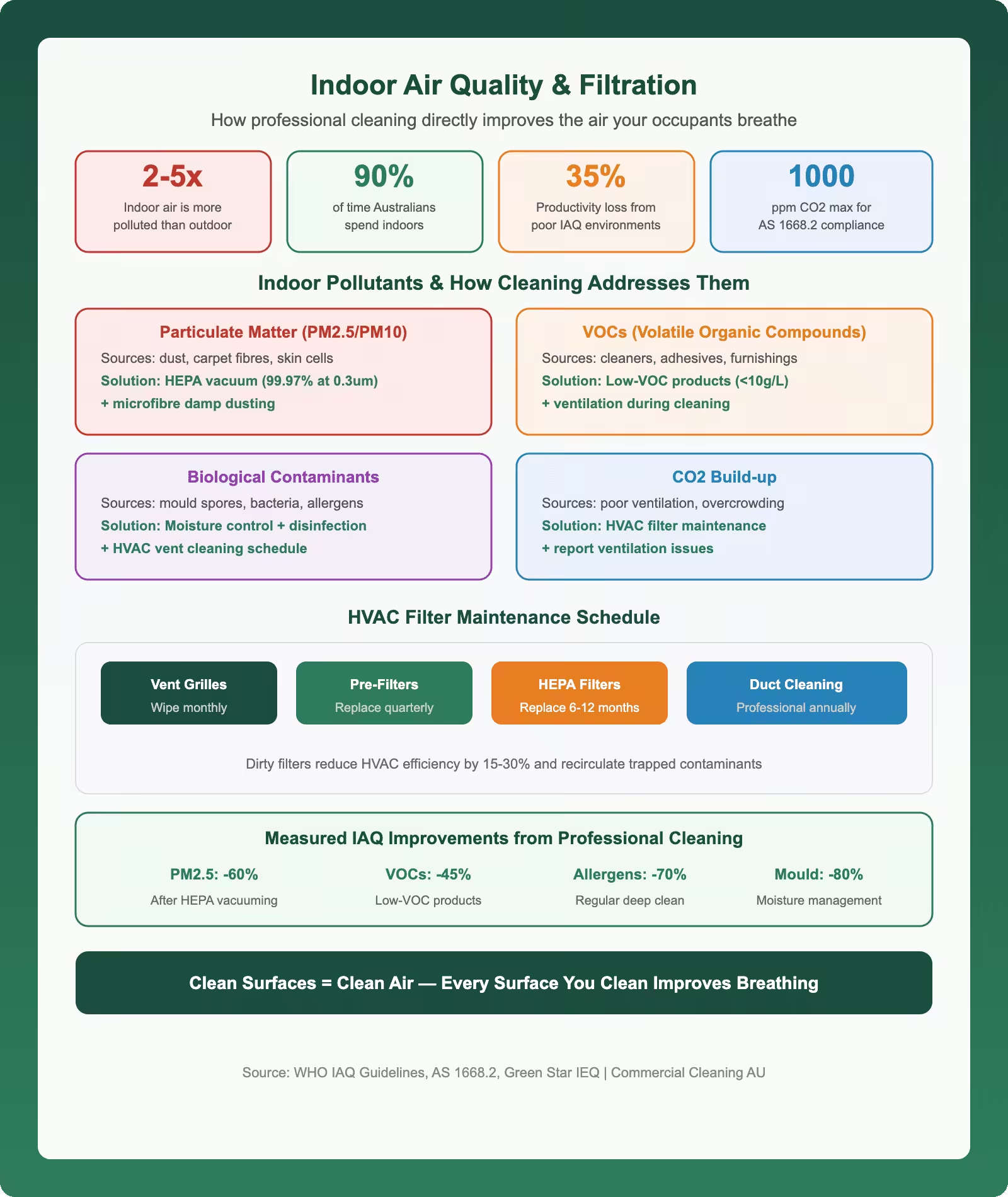
Indoor air quality and filtration infographic showing pollutant sources cleaning solutions HVAC filter maintenance schedule and measured IAQ improvements from professional cleaning
How We Manage Indoor Air Quality and Filtration
Indoor air quality is something we take personally because our own children attend schools we clean. We install portable HEPA air purifiers in sick bays and libraries where students spend long sedentary periods, and we have seen particulate readings drop by over 40 percent within 48 hours of deployment. Our air-quality monitoring uses handheld laser-particle counters calibrated annually, so the data we share with school boards is defensible and accurate.
We have learned that ventilation system maintenance is just as important as the cleaning itself. Our crews inspect HVAC return-air grilles monthly because clogged filters push recirculated dust and allergens straight back into classrooms. In one Heathcote high school, we discovered mould growth behind a ceiling return vent that had not been opened in three years — the facilities team had no idea it was there until we flagged it. We provided photographic evidence and a remediation recommendation within 24 hours.
We coordinate with HVAC contractors to schedule coil cleaning during school holidays, avoiding disruption while ensuring the system runs at peak efficiency when students return. Our approach aligns with the guidance in AS 1668.1 on mechanical ventilation, and we keep written records so schools can demonstrate due diligence to parents concerned about indoor air quality.
School Cleaning Area Priority Matrix
Area
Risk Level
Frequency
Method
Key Concern
Classrooms
Medium
Daily after hours
Vacuum, wipe desks, sanitise
Cross-contamination
Bathrooms
High
3× daily
Hospital-grade disinfect
Gastro outbreaks
Canteen/Kitchen
High
After each service
Degrease + food-safe sanitise
Food safety compliance
Playground
Medium
Daily check + weekly wash
Pressure wash, inspect
Needle stick, hazards
Library/Hall
Low–Medium
Daily vacuum + weekly detail
Dust, vacuum, mop
Dust & allergens
Dust Control and Allergen Minimisation in Schools
School Cleaning Area Priority Matrix requires specific protocols that we tailor to each facility based on its layout, traffic, and compliance requirements. We treat dust control as a health intervention, not a cosmetic exercise. Our team uses microfibre flat mops with colour-coded heads — blue for general classrooms, red for toilets, green for science labs — so cross-contamination never happens. We wash all microfibre heads in-house at 70 degrees Celsius after every shift, which kills bacteria and extends fabric life compared to the cold rinse many competitors use.
Dust Control and Allergen Minimisation in Schools includes specific protocols that we tailor to each facility based on its layout, traffic, and compliance requirements. In Cronulla schools near the beachfront, salt residue and sand ingress are constant problems. We have developed a two-pass entry-mat system where the first mat captures coarse grit and the second absorbs moisture, reducing the sand load that reaches corridor floors by roughly 60 percent based on our weight-trap measurements. We replace these mats weekly through our laundry service rather than waiting for them to become saturated and useless.
Our allergen-management program targets the big three triggers — dust mites, mould spores and animal dander from school pets. We steam-clean reading-corner rugs fortnightly and deep-clean curtains and soft furnishings every term. One Engadine school reported a 25 percent drop in asthma-related sick-day requests during the first year of our allergen protocol, which the principal shared at a regional principals’ network meeting as a case study.
Low-VOC and Eco-Friendly Products We Prefer
We switched to low-VOC cleaning products across all our school contracts in 2019 after one of our own team members developed chemical sensitivity. That personal experience drove us to source plant-based all-purpose cleaners derived from citrus and coconut surfactants that carry Good Environmental Choice Australia certification. We have never looked back — the products clean just as effectively and the classrooms smell noticeably fresher without that harsh chemical bite.
Our floor sealants are water-based, low-odour formulations that we can apply on Friday afternoons and have fully cured by Monday morning. We tested solvent-based alternatives on a sample section in a Heathcote school hall and the off-gassing readings were four times higher 48 hours later, which confirmed our decision to avoid them entirely. We share VOC data sheets with every school so their WHS officers can file them alongside material safety documentation.
We use biodegradable disinfectant wipes made from bamboo fibre for high-touch surfaces like door handles, stair rails and canteen counters. Our purchasing records show we go through roughly 12,000 wipes per month across our Sydney school portfolio, and every single one breaks down in landfill within 90 days. We believe cleaning should protect students without creating a waste problem downstream.
Creating Pleasant and Healthy Learning Atmospheres
Creating Pleasant and Healthy Learning Atmospheres targets specific protocols that we tailor to each facility based on its layout, traffic, and compliance requirements. We believe a clean school directly influences how students learn and how teachers feel about their workplace. Our team pays attention to details that others skip — wiping light switches at child height, cleaning behind classroom doors where cobwebs collect, and ensuring bathroom soap dispensers are always full before the morning bell. We have had parents specifically contact us after school open days to say the bathrooms were the cleanest they had ever seen at a public school.
Our approach to playground equipment cleaning is rigorous because younger children put their hands in their mouths after touching rails and climbing frames. We use food-grade sanitiser on all outdoor play surfaces weekly and increase frequency to twice weekly during gastro season. In Cronulla, where equipment bakes in salt air, we also apply anti-corrosion treatments to metal frames quarterly, which extends their lifespan and keeps them safe for students.
We coordinate with teachers to deep-clean art rooms and science labs during exam periods when those spaces sit empty. This gives us uninterrupted access to scrub paint-stained benches, degrease fume-cupboard interiors, and sanitise shared equipment like microscopes and keyboards. Our scheduling flexibility is something schools consistently mention in their annual satisfaction surveys as a reason they stay with us.
Professional Coordination and Standards Compliance
Professional Coordination and Standards Compliance focuses on specific protocols that we tailor to each facility based on its layout, traffic, and compliance requirements. We assign a dedicated site supervisor to every school contract because we have learned that consistency matters more than anything else in educational settings. Our supervisors attend the beginning-of-term staff meeting so teachers can raise specific concerns — last term, a Heathcote teacher asked us to pay extra attention to the sensory room used by students with autism, and we built a custom cleaning schedule for that space within a week.
Our compliance framework covers SafeWork NSW regulations, the National Quality Standard for early childhood services, and internal audit checklists we developed over 15 years of school cleaning experience. We conduct quarterly inspections using ATP bioluminescence testing to verify surface cleanliness, and we share the results with school leadership in a simple traffic-light report. Green means the surface passed, amber means it needs attention, red triggers an immediate re-clean.
We price our school cleaning services based on campus size, student population and cleaning frequency. A typical primary school in the Sutherland Shire with 400 students and five-day-a-week cleaning runs approximately $1,650 per month under our standard contract, which includes all consumables, equipment and supervision. We offer fixed-price agreements so schools can budget with certainty, and we review pricing annually with full transparency on any cost changes.
We have built our school cleaning methodology on real-world results across the Sutherland Shire and greater Sydney, and we refine it every single term based on feedback from principals, teachers and parents. If you want to see how we apply these same techniques specifically to early learning environments, read our next guide in our childcare cleaning series where we cover solutions custom to younger age groups.
Frequently Asked Questions
How often should school classrooms be deep-cleaned? We recommend a full deep-clean every term holiday, with high-touch surface sanitisation daily and floor scrubbing weekly. During winter or gastro outbreaks, we increase daily sanitisation to twice per day for classrooms with confirmed cases.
What cleaning products are safe to use around primary school children? We use exclusively low-VOC, plant-based cleaners carrying Good Environmental Choice Australia certification. These products contain no harsh solvents, chlorine bleach or synthetic fragrances, making them safe for continuous exposure in occupied classrooms.
How do you handle cleaning around students with asthma or allergies? Our allergen-management protocol includes HEPA-filtered vacuuming, microfibre damp-dusting instead of dry sweeping, and fortnightly steam-cleaning of soft furnishings. We avoid aerosol sprays entirely and use unscented products in classrooms flagged for sensitive students.
Do you clean playground equipment and outdoor areas? We clean all outdoor play surfaces weekly with food-grade sanitiser and increase to twice weekly during illness outbreaks. We also apply quarterly anti-corrosion treatments to metal equipment, particularly in coastal schools around Cronulla where salt air accelerates wear.
What does school cleaning cost in Sydney? A typical primary school with around 400 students on a five-day cleaning schedule costs approximately $1,650 per month. This covers all labour, consumables, equipment and supervision under a fixed-price contract with annual review.
How do you confirm compliance with SafeWork NSW requirements? We maintain full chemical safety data sheets on-site, train all staff in hazardous substance handling, and conduct quarterly ATP bioluminescence testing to verify surface hygiene. Our traffic-light reporting system gives school leadership clear visibility on compliance status.
Can you clean during school hours without disrupting classes? We schedule noisy tasks like vacuuming and floor scrubbing for before or after school hours. During the day, our teams handle quiet tasks such as bathroom restocking, bin emptying and damp-wiping high-touch surfaces with minimal disruption to teaching.
What makes your school cleaning different from a standard commercial clean? We assign a dedicated site supervisor to every school, attend staff meetings for direct feedback, use child-safe products exclusively, and provide quarterly bioluminescence testing reports. Our protocols are specifically designed around the National Quality Standard and NSW Department of Education requirements.
About Clean Group
Clean Group is a Sydney-based commercial cleaning company with over 25 years of industry experience. Founded by Suji Siv, our team of 50+ trained professionals services offices, warehouses, medical centres, schools, childcare facilities, retail stores, gyms, and strata properties across Sydney, Melbourne, and Brisbane.
We are active members of ISSA and the Building Service Contractors Association of Australia (BSCAA). Our operations align with ISO 9001 (Quality Management), ISO 14001 (Environmental Management), and ISO 45001 (Workplace Health and Safety) standards. We hold membership with the Green Building Council of Australia and use eco-friendly, TGA-registered cleaning products wherever possible.
Every Clean Group cleaner is police-checked, fully insured, and trained in safe work procedures under SafeWork NSW guidelines. We operate 7 days a week, including after-hours and weekend services, to minimise disruption to your business.
Hi, I'm Suji Siv, the founder, CEO, and Managing Director of Clean Group, bringing over 25 years of leadership and management experience to the company. As the driving force behind Clean Group’s growth, I oversee strategic planning, resource allocation, and operational excellence across all departments. I am deeply involved in team development and performance optimization through regular reviews and hands-on leadership.