Cleaning Guide for Fitness Centres: Complete Gym Hygiene Manual
Gym cleaners Sydney professionals need to understand this. Putting together a proper cleaning guide for a fitness centre means understanding that every surface in the facility serves a different purpose and faces different contamination risks. We have developed our gym cleaning guides from real-world experience across dozens of fitness facilities in Liverpool, Casula, and Moorebank — not from theoretical checklists. Our team writes internal cleaning manuals for each gym we service because we have learned that generic cleaning instructions fail to account for the specific layout, equipment mix, and member traffic patterns that make every facility unique.
We designed this guide based on the protocols our crews follow daily in commercial gyms, 24-hour fitness centres, and boutique studios. Our approach draws on principles from AS 4187.6 for cleaning and disinfecting in health-adjacent facilities, adapted specifically for the fitness industry context. We have found that gyms which follow structured cleaning guides rather than ad-hoc routines see measurably better hygiene outcomes and fewer member complaints about facility cleanliness.
For more insights, see our guide on basketball court cleaning standards.
Zone-Based Cleaning Framework for Fitness Centres
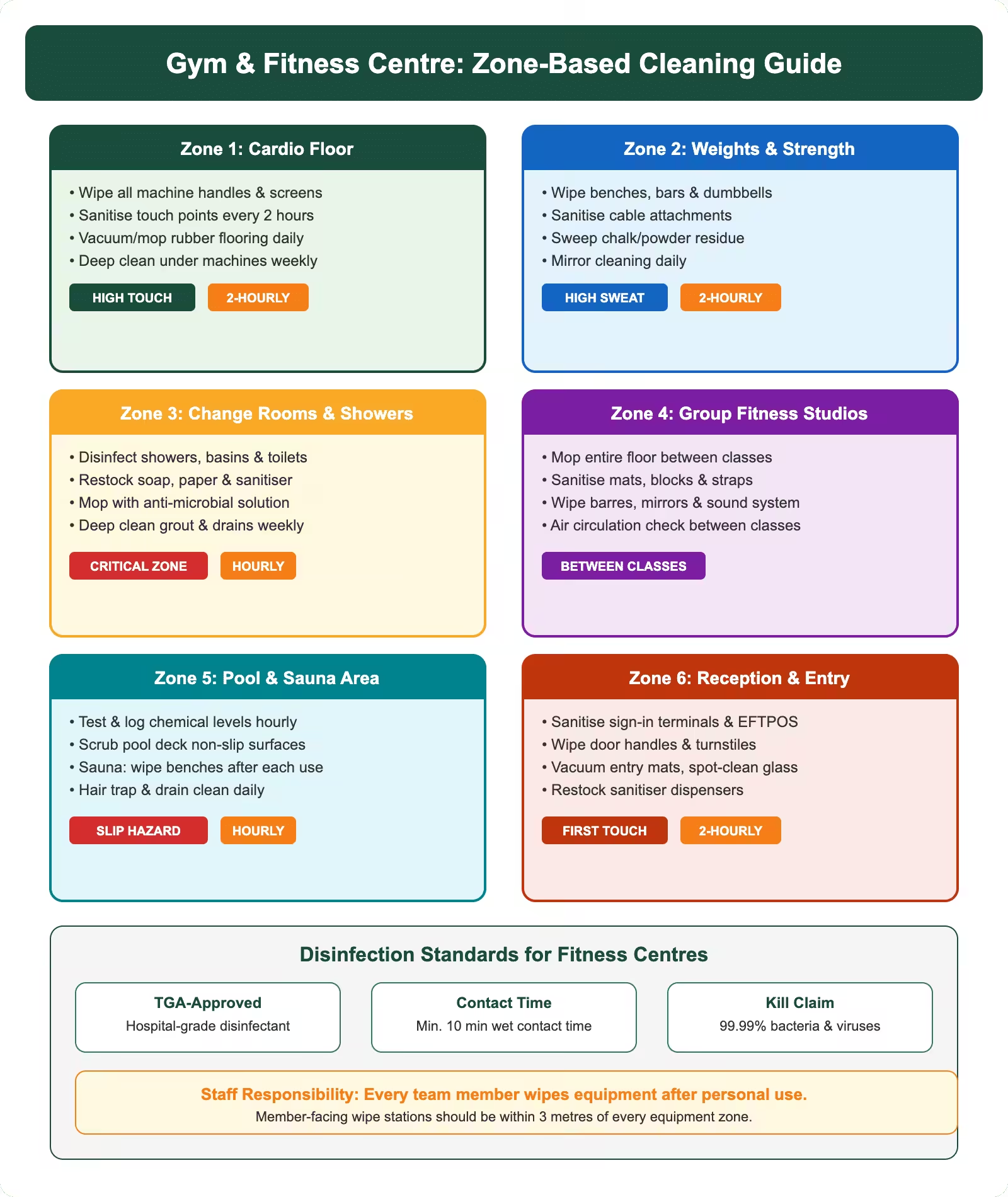
We divide every fitness centre into distinct cleaning zones because each area has different contamination profiles and cleaning requirements. Our standard framework uses five zones: cardio floor, weights and resistance area, group fitness studios, change rooms and amenities, and reception and common areas. We assign dedicated crew members to each zone during our cleaning shifts because we have found that zone specialisation produces more thorough results than rotating cleaners through the entire facility. Our Liverpool gym clients noticed an immediate improvement in cleaning consistency after we implemented zone-based assignments.
Each zone has its own cleaning frequency schedule, product list, and quality benchmarks. Our cardio zone crews clean equipment surfaces every two hours during peak periods and perform full disinfection after hours. Our weights area crews focus on grip surfaces, adjustment pins, and bench pads with hospital-grade disinfectant. We have documented the contamination patterns in each zone type across our Casula and Moorebank contracts, and this data directly informs our cleaning frequencies and product selections. We update these guides quarterly based on crew feedback and any emerging hygiene concerns.
Disinfection Standards and Product Selection
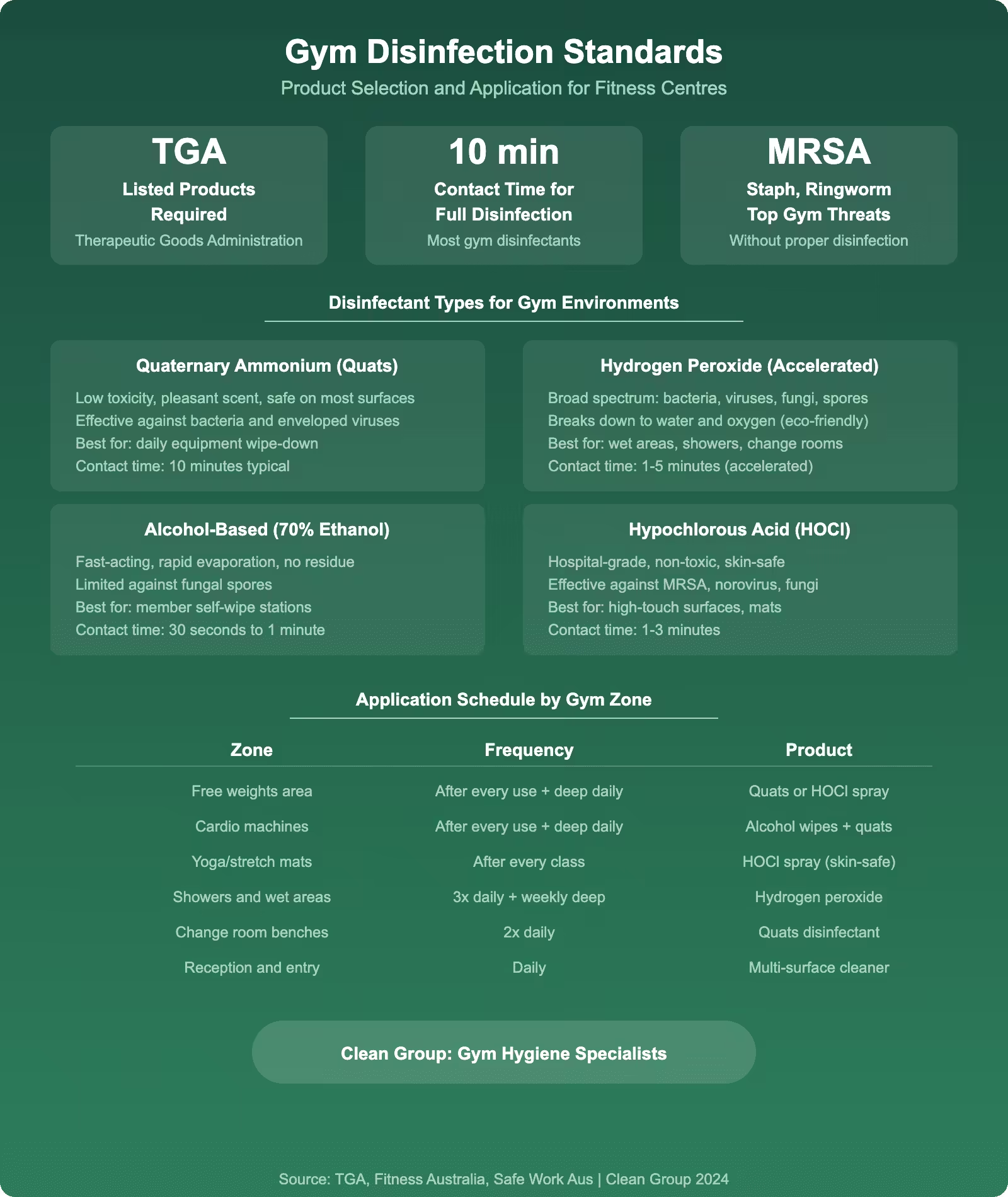
We select cleaning and disinfection products based on efficacy testing against the specific pathogens found in fitness environments. Our product selection process follows guidance from AS 4187.6 regarding cleaning and disinfecting protocols, which we have adapted for the gym setting where surfaces face constant recontamination from sweat and skin contact. We use TGA-registered hospital-grade disinfectants on all high-touch surfaces because standard commercial cleaners do not provide adequate kill rates for the bacterial loads we encounter in busy gyms.
Our team in Liverpool discovered through surface testing that certain popular gym-specific cleaning products left residues that actually promoted bacterial regrowth on rubber surfaces. We switched to a quaternary ammonium compound formulation that provides residual antimicrobial protection for up to four hours after application. We have tracked surface contamination levels before and after this product change across our Moorebank facilities and measured a 40 percent reduction in post-cleaning bacterial counts. We spend approximately $1,490 per quarter on specialised disinfection products for a typical mid-sized gym — a figure that reflects the higher-grade products we have found necessary for genuine hygiene rather than just the appearance of cleanliness.
Gym Equipment Cleaning Protocol
| Equipment Type | Between Users | Daily Close | Weekly | Infection Risk |
|---|---|---|---|---|
| Cardio Machines | Antibacterial wipe | Full sanitise handles | Deep clean internals | MRSA, Staph |
| Free Weights | User wipe + spray | Full rack sanitise | Soak small items | Ringworm, E. coli |
| Mats/Flooring | Spray after class | Machine mop | Deep scrub + disinfect | Athletes foot, HPV |
| Bathrooms/Showers | — | 3× daily sanitise | Full tile + grout | Legionella, mould |
| Stretching Zone | Spray after use | Vacuum + wipe | Steam clean | Dermatitis, fungal |
Staff Training and Quality Assurance Protocols
Staff Training and Quality Assurance Protocols includes specific protocols that we tailor to each facility based on its layout, traffic, and compliance requirements. We train every crew member assigned to gym cleaning through a dedicated fitness facility induction program that covers pathogen awareness, equipment-specific cleaning techniques, and chemical safety. Our training goes beyond generic commercial cleaning because we have seen what happens when untrained cleaners use incorrect products on gym equipment — damaged upholstery, corroded metal frames, and slip hazards from residue buildup on floors. We refresh training quarterly and introduce new protocols whenever we identify emerging risks across our contract portfolio.
Our quality assurance system uses digital checklists completed on tablets at each cleaning station, photographic evidence of completed work, and random ATP swab testing to verify surface cleanliness. We have implemented this system across all our Casula gym contracts and the data gives facility managers objective evidence of cleaning performance. Our supervisors conduct unannounced site audits at least fortnightly, and we share audit results with gym owners in our monthly performance reports. We believe accountability drives quality, and our transparent reporting has been a major factor in maintaining long-term contracts with fitness centre operators across southwest Sydney.
We encourage facility managers looking for practical implementation tools to review the next guide in our gym cleaning series where we break down our cleaning protocols into actionable daily, weekly, and monthly checklists that any fitness centre can adopt.
Frequently Asked Questions About Fitness Centre Cleaning Guides
What should a fitness centre cleaning guide include?
We build our guides around zone-based cleaning frameworks, product specifications, frequency schedules, and quality benchmarks. Our team includes staff training requirements and safety protocols in every guide we produce. We have found that the most effective guides are facility-specific rather than generic templates.
How do you determine cleaning frequencies for different gym zones?
We base frequencies on contamination data collected from surface testing across our contracts in Liverpool, Casula, and Moorebank. Our team measures bacterial loads at different intervals after cleaning to establish the best re-cleaning schedule for each zone type. We adjust frequencies seasonally based on membership usage patterns.
What disinfection standard do you follow for gym cleaning?
We adapt protocols from AS 4187.6 for cleaning and disinfecting in health-adjacent settings. Our team uses TGA-registered hospital-grade disinfectants on all high-touch surfaces. We have found that standard commercial cleaners are insufficient for the bacterial loads present in busy fitness centres.
How much do specialised gym cleaning products cost?
We spend approximately $1,490 per quarter on specialised disinfection products for a typical mid-sized gym. Our team selects products based on efficacy testing rather than price alone. We have demonstrated that higher-grade products reduce bacterial counts by 40 percent compared to standard alternatives.
Can a gym use its own staff instead of professional cleaners?
We have seen gyms attempt in-house cleaning with mixed results. Our experience across dozens of facilities shows that dedicated professional crews with proper training and equipment consistently deliver better hygiene outcomes. We recommend at minimum engaging professionals for deep cleaning and disinfection even if daily tidying is handled internally.
How do you train cleaners for fitness centre work?
We run a dedicated fitness facility induction covering pathogen awareness, equipment-specific techniques, and chemical safety. Our training program addresses the unique challenges of gym environments that general commercial cleaning courses do not cover. We refresh training quarterly across all our crews.
How do you measure cleaning quality in a gym?
We use digital checklists, photographic evidence, and ATP swab testing to verify surface cleanliness objectively. Our supervisors conduct unannounced site audits fortnightly. We share all results with facility managers in monthly performance reports.
Should gym cleaning guides be updated regularly?
We update our cleaning guides quarterly based on crew feedback, surface testing data, and any emerging hygiene concerns. Our team in Liverpool reviews every guide against current best practice and adjusts product selections and frequencies as needed. We have found that static guides quickly become outdated as facilities evolve.
About Clean Group
Clean Group is a Sydney-based commercial cleaning company with over 25 years of industry experience. Founded by Suji Siv, our team of 50+ trained professionals services offices, warehouses, medical centres, schools, childcare facilities, retail stores, gyms, and strata properties across Sydney, Melbourne, and Brisbane.
We are active members of ISSA and the Building Service Contractors Association of Australia (BSCAA). Our operations align with ISO 9001 (Quality Management), ISO 14001 (Environmental Management), and ISO 45001 (Workplace Health and Safety) standards. We hold membership with the Green Building Council of Australia and use eco-friendly, TGA-registered cleaning products wherever possible.
Every Clean Group cleaner is police-checked, fully insured, and trained in safe work procedures under SafeWork NSW guidelines. We operate 7 days a week, including after-hours and weekend services, to minimise disruption to your business.
About the Author

Suji Siv
/

Hi, I'm Suji Siv, the founder, CEO, and Managing Director of Clean Group, bringing over 25 years of leadership and management experience to the company. As the driving force behind Clean Group’s growth, I oversee strategic planning, resource allocation, and operational excellence across all departments. I am deeply involved in team development and performance optimization through regular reviews and hands-on leadership.
Read More About Suji 0291607469
 Get A Quote