We provide specialist restaurant cleaning and food industry sanitation services across Sydney, and the requirements for food manufacturing and processing facilities go well beyond what standard commercial kitchens demand. Food industry operations handle raw ingredients at scale, maintain cold chain integrity across multiple temperature zones, and face audit scrutiny from bodies including the NSW Food Authority, FSANZ, and third-party certification auditors. Our team has cleaned food processing plants from Bankstown to Parramatta, and the common thread is that contamination risks multiply with production volume—a single hygiene failure can compromise thousands of units of product simultaneously.
The regulatory framework governing food industry cleaning is more complex than hospitality cleaning because it intersects food safety legislation, workplace health and safety obligations, environmental discharge requirements, and industry-specific codes of practice. We have seen operators invest $50,000 or more in production equipment only to have that investment undermined by inadequate cleaning protocols that lead to product recalls, regulatory sanctions, or loss of major supply contracts.
Why Food Industry Cleaning Is Distinctly Different
Food industry cleaning differs fundamentally from standard commercial cleaning in scale, chemical requirements, documentation standards, and regulatory exposure. Our team has worked across bakeries, meat processing plants, dairy operations, and packaged food facilities in western Sydney, and each category presents unique contamination pathways that require matched cleaning approaches.
Production equipment in food manufacturing is designed for throughput, not ease of cleaning. Conveyor systems, mixing vessels, filling lines, and packaging machinery all contain hard-to-reach areas where product residue accumulates and bacterial biofilm develops. We use CIP (clean-in-place) protocols for enclosed systems and COP (clean-out-of-place) procedures for removable components, applying food-grade alkaline detergents at 60 to 70 degrees Celsius followed by acid rinse cycles to remove mineral scale and protein deposits.
Cross-contamination between production runs is a primary concern that does not exist in the same way in hospitality kitchens. When a facility processes multiple allergen-containing ingredients on shared equipment, the cleaning between changeovers must be verified through swab testing before the next run begins. We provide allergen-specific ATP and lateral flow testing after every changeover clean, documenting results that satisfy both FSANZ 3.2.2 and retailer audit requirements.
Environmental monitoring distinguishes food industry cleaning from all other commercial cleaning sectors. Our teams collect zone-based environmental swabs from floors, drains, walls, and non-food-contact surfaces surrounding production areas. These results track Listeria and Salmonella indicator organisms over time, building trend data that demonstrates environmental control—a requirement for SQF, BRC, and HACCP-certified facilities.
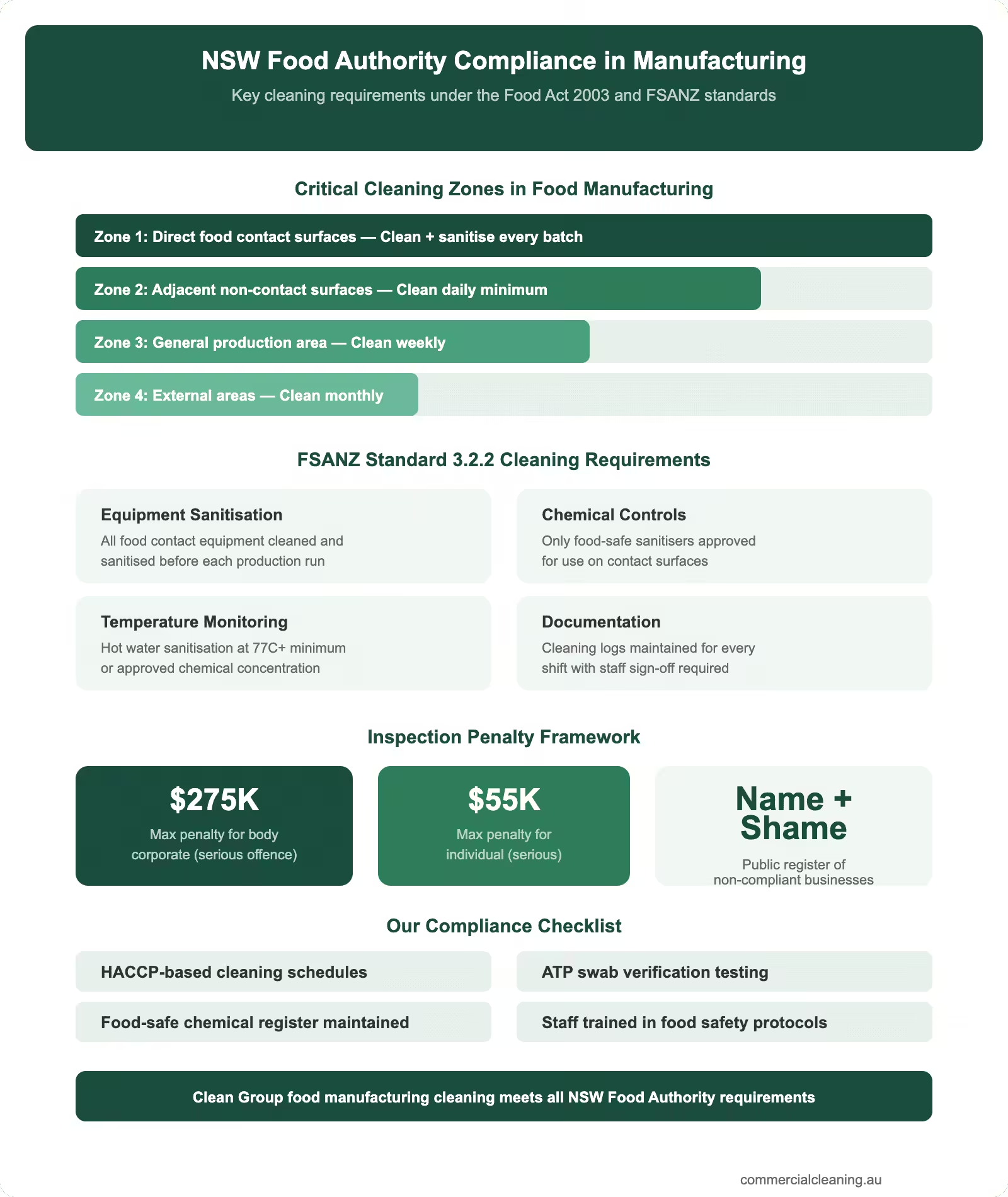
NSW Food Authority compliance infographic for food manufacturing showing four cleaning zones FSANZ requirements penalty framework and compliance checklist
NSW Food Authority Compliance in Food Manufacturing
The NSW Food Authority regulates food manufacturing and processing under the Food Act 2003 with enforcement powers including improvement notices, penalty infringement notices at $880 per offence, prohibition orders, and licence conditions that can restrict operations until compliance is demonstrated.
Inspectors assess manufacturing facilities differently from hospitality kitchens. They examine production floor condition including coving integrity and drainage gradient, equipment sanitation records with quantified verification results, cold chain documentation showing temperature compliance through cleaning cycles, pest control evidence including environmental monitoring data, and allergen management protocols with validated cleaning procedures.
We provide every food manufacturing client with detailed cleaning documentation that satisfies NSW Food Authority requirements: timestamped service certificates, pre-clean and post-clean photographs, ATP bioluminescence results from food contact and environmental surfaces, and chemical concentration verification records. These records integrate directly with your facility’s food safety management system without requiring separate documentation workflows.
Commercial Kitchen Cleaning Zone Guide
Zone
Clean Frequency
Method
Compliance
Penalty Risk
Cooking Line
After each service
Degrease + sanitise
Food Standards 3.2.2
Up to $275,000
Cold Storage
Weekly deep clean
Strip, clean, temp log
Food Standards 3.2.2
Closure risk
Exhaust Hood & Filters
Monthly
Chemical soak + pressure
AS 1851 (fire safety)
Insurance void
Dining Floor
After each service
Sweep, mop, spot treat
WHS Reg 2017
Slip injury claim
Grease Trap
Quarterly pump-out
Licensed contractor
EPA Protection Act
Up to $1M fine
Integrating HACCP into Food Industry Cleaning
Commercial Kitchen Cleaning Zone Guide requires specific protocols that we tailor to each facility based on its layout, traffic, and compliance requirements. HACCP implementation in food manufacturing requires cleaning protocols that are embedded within the hazard analysis, not bolted on afterward. Every critical control point in a production line depends on verified equipment sanitation as a prerequisite programme—if cleaning fails, CCP verification becomes meaningless because the baseline environmental conditions are compromised.
We have mapped cleaning protocols to HACCP plans for food manufacturers across Surry Hills, Haymarket, and the CBD. The integration points include pre-operational sanitation verification before each production run, in-process cleaning of shared contact surfaces during allergen changeovers, post-production cleaning with documented ATP results below 10 RLU on all food contact surfaces, and environmental monitoring that tracks indicator organisms across production zones.
Our ATP testing programme generates trend data that feeds directly into HACCP verification records. When your food safety auditor reviews the extraction system maintenance, production equipment sanitation, or environmental monitoring results, the documentation from our service visits provides the evidence trail your HACCP plan requires. We have seen this documentation become decisive during third-party certification audits at SQF and BRC-certified facilities.
AS 3660 Pest Control Standards in Food Industry
AS 3660 pest management requirements are particularly stringent in food manufacturing because production environments provide ideal conditions for pest establishment—consistent warmth, moisture, and abundant food sources in areas that are difficult to inspect visually.
We have found pest harbourage in food manufacturing facilities that would never occur in a hospitality kitchen. Conveyor support structures, equipment leg cavities, false ceiling spaces above production areas, and drainage systems all provide protected environments where cockroach and rodent colonies establish themselves out of sight. Our cleaning protocols specifically target these harbourage points—equipment legs and support frames are degreased and inspected during every deep clean, false ceiling panels above production areas are lifted and checked quarterly, and drain systems are enzymatically treated weekly to prevent biofilm that attracts drain flies.
We have cleaned food processing facilities in Bankstown and Liverpool where pest monitoring data improved from multiple monthly detections to zero detections within 60 days of implementing our integrated cleaning and pest exclusion programme. The key was eliminating food residue from harbourage points that standard cleaning crews had been missing for months.
Key Areas Requiring Specialised Food Industry Cleaning
Key Areas Requiring Specialised Food Industry Cleaning targets specific protocols that we tailor to each facility based on its layout, traffic, and compliance requirements. Production Equipment: Conveyor belts, mixing vessels, slicers, and filling machines accumulate product residue in joints, seals, bearings, and transfer points. We disassemble removable components for COP cleaning in dedicated wash-down areas, using food-grade detergents at controlled temperatures and concentrations. Non-removable sections are cleaned using CIP circuits with automated chemical dosing verified by conductivity measurement.
Cold Storage and Blast Chillers: Temperature-controlled environments develop condensation during door openings and defrost cycles. That moisture mixes with product residue to create bacterial growth on shelving, walls, evaporator coils, and drain pans. We clean cold storage areas using low-temperature-rated sanitisers that remain effective at 2 to 4 degrees Celsius, and descale evaporator coils quarterly to maintain cooling efficiency and prevent contamination from scale particles entering the airstream.
Processing Floors and Drains: Food manufacturing floors must maintain a drainage gradient of at least 1:80 to prevent standing water. Coving must be intact and sealed. We steam-clean floor surfaces at 150 degrees Celsius and treat drainage systems with enzymatic cleaners that break down organic buildup without corroding stainless steel grating or PVC pipework. Floor drain biofilm is the primary environmental reservoir for Listeria in food manufacturing—weekly enzymatic treatment is the most effective control measure.
Ventilation and Air Handling: AS 1668.1 applies to food manufacturing ventilation with additional requirements for positive pressure in production areas relative to raw material storage and waste handling zones. We clean supply air diffusers, return air grilles, and accessible ductwork on a quarterly cycle, with HEPA filter replacement in critical production areas every six months. Airborne contamination monitoring using settle plates or active air samplers provides verification data that our cleaning programme maintains air quality within acceptable limits.
Developing Effective Food Industry Cleaning Schedules
Food manufacturing cleaning schedules must account for production cycles, product changeovers, regulatory audit windows, and seasonal demand variations. A bakery running 16-hour production days six days a week generates fundamentally different cleaning requirements from a cold-press juice facility operating eight hours five days a week.
Daily protocols include post-production equipment strip-down and COP cleaning, production floor wash-down with chemical sanitisation, drain treatment, waste removal, and pre-operational verification swabbing before the next shift begins. Weekly tasks add deep cleaning of cold storage areas, wall and ceiling degreasing in production zones, and equipment bearing and seal inspection. Monthly deep cleans cover ventilation systems, overhead structures, and external equipment surfaces. Quarterly services address ductwork cleaning for AS 1668.1 compliance, detailed environmental monitoring swab programmes, and pest control structural audits under AS 3660.
We build cleaning schedules around each facility’s production calendar. A Newtown artisan food producer running small batches with frequent product changes needs intensive changeover cleaning but lighter end-of-day protocols. A high-volume processing plant in Parramatta running continuous production needs automated CIP systems cleaned and verified between shifts without interrupting output. Generic schedules do not work in food manufacturing—every programme must be engineered to match the specific operation.
Documentation and Food Industry Compliance
Documentation in food manufacturing cleaning is not administrative overhead—it is the primary evidence of compliance during regulatory inspections and certification audits. Our documentation package for food manufacturers includes chemical concentration records verified by conductivity or titration testing, ATP bioluminescence results from food contact and environmental surfaces with trend analysis, allergen verification results from changeover cleaning using lateral flow devices, environmental monitoring data mapped to facility zones with organism identification, temperature records for hot water and chemical solution verification, and photographic evidence of pre-clean and post-clean condition for critical equipment.
We have seen this documentation package become the deciding factor during SQF surveillance audits at facilities across western Sydney. When auditors can review 12 months of quantified cleaning verification data showing consistent compliance, the cleaning programme passes without non-conformance. Facilities relying on tick-box checklists without quantified verification consistently receive minor or major non-conformances that require corrective action and re-audit at additional cost.
Cost-Benefit Analysis of Professional Food Industry Cleaning
Professional food industry cleaning represents a critical investment that protects against risks far exceeding the cost of the service itself.
Product Recall Prevention: A single product recall in Australian food manufacturing costs an average of $50,000 to $500,000 in direct costs including product retrieval, laboratory testing, regulatory notification, and disposal, plus $200,000 to $2,000,000 in brand damage, lost retail shelf space, and customer compensation. Professional cleaning with verified sanitation reduces recall risk by eliminating the contamination events that trigger recalls.
Certification Maintenance: Loss of SQF, BRC, or HACCP certification due to cleaning-related non-conformances costs $15,000 to $30,000 in re-audit fees plus the commercial impact of lost retail and export market access. Our cleaning documentation satisfies certification audit requirements across all major food safety schemes.
Equipment Life Extension: Food manufacturing equipment represents capital investment of $100,000 to $1,000,000 or more per production line. Proper cleaning prevents corrosion, biofilm damage to seals and gaskets, and chemical attack from product residue. We have documented equipment lasting 15 to 25 years with professional maintenance versus 8 to 12 years without—representing savings that dwarf the annual cleaning investment.
Regulatory Penalty Avoidance: NSW Food Authority penalties for food manufacturing non-compliance range from $880 per offence for minor breaches to prosecution carrying fines of $275,000 for individuals and $1,375,000 for corporations under the Food Act 2003. Professional cleaning with detailed documentation is the most cost-effective compliance assurance available.
For more on maintaining hygiene standards across extraction and ventilation systems, read our guide on hood cleaning.
Frequently Asked Questions About Food Industry Cleaning
About Clean Group
Clean Group is a Sydney-based commercial cleaning company with over 25 years of industry experience. Founded by Suji Siv, our team of 50+ trained professionals services offices, warehouses, medical centres, schools, childcare facilities, retail stores, gyms, and strata properties across Sydney, Melbourne, and Brisbane.
We are active members of ISSA and the Building Service Contractors Association of Australia (BSCAA). Our operations align with ISO 9001 (Quality Management), ISO 14001 (Environmental Management), and ISO 45001 (Workplace Health and Safety) standards. We hold membership with the Green Building Council of Australia and use eco-friendly, TGA-registered cleaning products wherever possible.
Every Clean Group cleaner is police-checked, fully insured, and trained in safe work procedures under SafeWork NSW guidelines. We operate 7 days a week, including after-hours and weekend services, to minimise disruption to your business.
Conclusion
Conclusion addresses specific protocols that we tailor to each facility based on its layout, traffic, and compliance requirements. Food industry cleaning is a regulated obligation that directly determines your facility’s ability to operate, maintain certification, supply major retailers, and protect consumers. The standards are higher than hospitality cleaning, the documentation requirements are more demanding, and the consequences of failure are more severe.
We have built food industry cleaning programmes for manufacturers across Sydney—from artisan producers in Surry Hills and Newtown to large-scale processing plants in Bankstown and Parramatta. The operators who invest in structured, professionally verified cleaning programmes consistently maintain their certifications, avoid regulatory penalties, protect their brand value, and achieve longer equipment lifespans. The cost of professional food industry cleaning is a fraction of the cost of any single compliance failure it prevents.
Hi, I'm Suji Siv, the founder, CEO, and Managing Director of Clean Group, bringing over 25 years of leadership and management experience to the company. As the driving force behind Clean Group’s growth, I oversee strategic planning, resource allocation, and operational excellence across all departments. I am deeply involved in team development and performance optimization through regular reviews and hands-on leadership.