We have worked inside facility management structures for over fifteen years, and the one insight we keep returning to is that our office cleaning company delivers the most visible service in any building — yet it remains the most undervalued line item in most FM budgets. Our commercial cleaning teams operate across Chatswood, Roseville, Willoughby and Artarmon as embedded service partners within broader FM frameworks, and we have seen firsthand how integrating cleaning into strategic facility management transforms building performance. We hold a $7,800-per-month FM-integrated contract at a Chatswood commercial tower where our scope extends beyond cleaning into asset condition reporting, consumable inventory management, and occupant satisfaction surveying — services that a traditional cleaning company would never touch.
Where Cleaning Sits Within the Facility Management Framework
We position cleaning as a core operational service within the FM framework, not an afterthought bolted onto maintenance schedules. The International Facility Management Association (IFMA) defines FM across 11 core competencies, and cleaning intersects directly with at least five: operations and maintenance, occupancy and human factors, quality assessment and innovation, sustainability, and health safety and security. Our Chatswood operations demonstrate this integration daily — when our cleaning crews report a ceiling tile stain during their evening shift, that observation feeds into the building’s preventive maintenance system and triggers an HVAC inspection before a minor leak becomes a major water damage event. Our Roseville team identified 23 building defects in the past 12 months through our cleaning-as-surveillance approach.
We structure our FM-integrated cleaning contracts around service level agreements that align cleaning outcomes with broader building performance metrics. This means our Chatswood KPIs do not just measure whether floors are mopped — they measure occupant satisfaction scores, indoor air quality contributions, asset preservation outcomes, and environmental compliance. We report monthly to the building’s FM director using a dashboard that sits alongside HVAC performance, energy consumption, and security data. Our cleaning data has equal visibility to every other FM service stream, which is exactly where it belongs. AS 4234, the standard for cleaning and maintenance of heating, ventilation, and air conditioning duct systems, illustrates this integration perfectly — our duct cleaning program contributes simultaneously to cleaning service delivery, HVAC maintenance, indoor air quality, and occupant health outcomes.
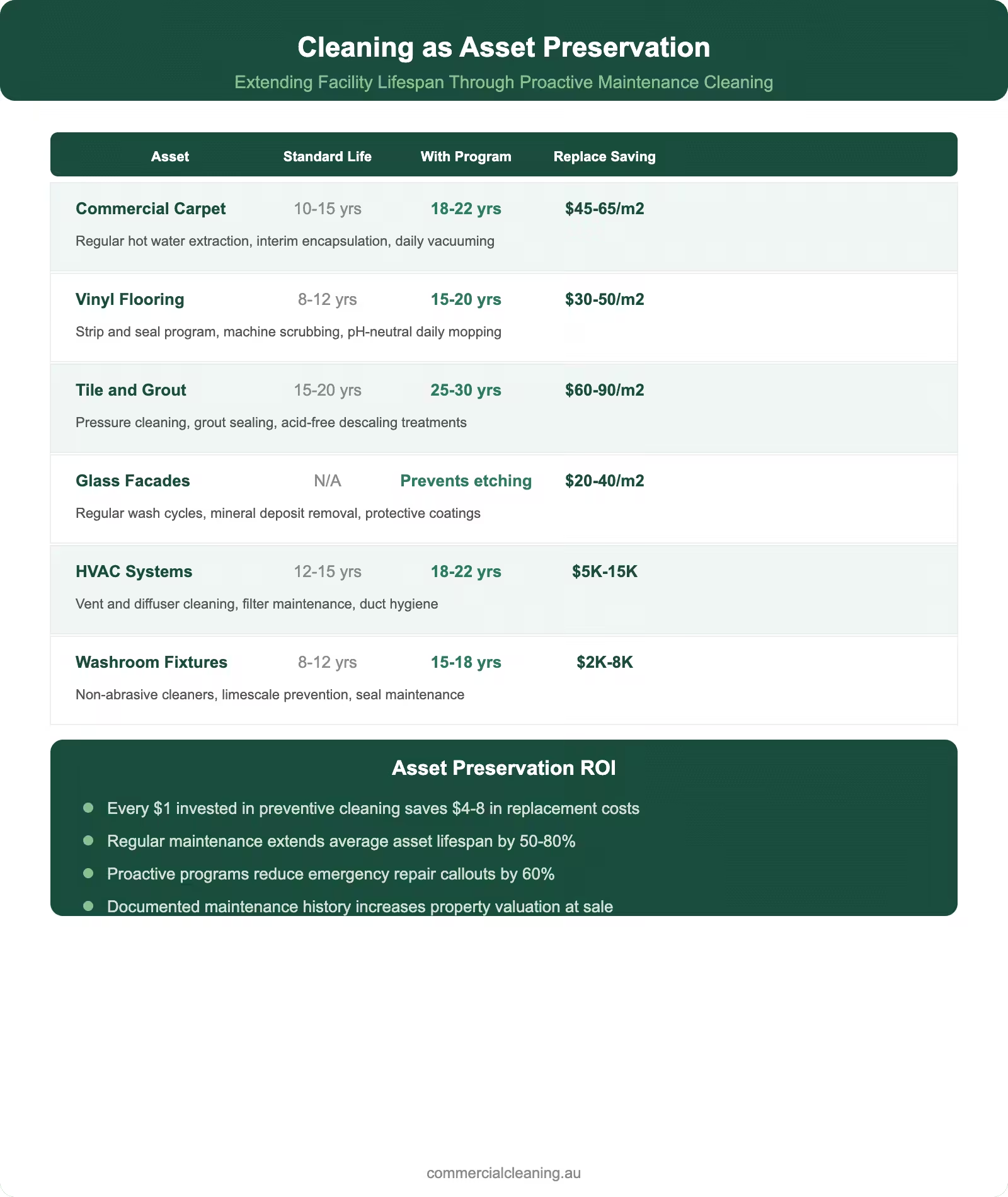
Cleaning as asset preservation strategy infographic showing lifespan extension and cost savings for six facility asset types
Cleaning as an Asset Preservation Strategy
We approach every cleaning task as an asset preservation activity because building surfaces, fixtures, and finishes represent significant capital investment. Our Chatswood commercial tower contract includes a carpet care program aligned with the manufacturer’s warranty requirements — hot-water extraction every six months using AS 3733-compliant methods, interim maintenance cleaning monthly, and spot treatment within 24 hours of any reported spill. This program extends the carpet’s useful life from an estimated seven years to twelve years, saving the building owner approximately $180,000 in replacement costs over a 15-year lifecycle. Our Artarmon team applies the same asset preservation philosophy to polished concrete floors, natural stone surfaces, and timber joinery, with maintenance schedules custom to each material’s specific requirements.
We document the condition of every managed asset quarterly using a standardised assessment scale and photographic evidence. Our Roseville building condition reports track surface deterioration, stain persistence, protective coating integrity, and grout condition across all managed areas. This data feeds into the building’s capital expenditure planning process, giving the FM director evidence-based projections of when surfaces will need replacement rather than relying on subjective visual assessment. We have found that buildings with structured cleaning-based asset preservation programs defer capital floor replacement by an average of 4.5 years compared to buildings with basic maintenance-only cleaning contracts.
Office Area Cleaning Frequency Guide
Area
Daily
Weekly
Monthly
Quarterly
Reception & Lobby
Vacuum, mop, wipe
Glass doors, furniture
Deep carpet clean
Window wash
Workstations
Surface wipe, bins
Monitor & keyboard
Drawer clean-out
Chair shampoo
Kitchen/Breakroom
Bench, sink, floor
Fridge, microwave
Deep degrease
Exhaust fan clean
Bathrooms
Full sanitise + restock
Grout scrub
Descale fixtures
Vent clean
Meeting Rooms
Table wipe, vacuum
AV equipment dust
Upholstery clean
Carpet extraction
Indoor Air Quality and Cleaning’s Contribution to Occupant Health
Office Area Cleaning Frequency Guide requires specific protocols that we tailor to each facility based on its layout, traffic, and compliance requirements. We measure our contribution to indoor air quality across every Chatswood site because IAQ directly affects occupant productivity, health, and satisfaction. Our cleaning program uses HEPA-filtered vacuum systems that capture particles down to 0.3 microns, low-VOC chemical products that produce no detectable volatile organic compound emissions during or after application, and microfibre systems that trap rather than redistribute dust. Our Willoughby portfolio includes two buildings with real-time IAQ monitoring systems, and our cleaning activities consistently correlate with measurable improvements in particulate matter levels within 30 minutes of vacuuming completion.
Indoor Air Quality and Cleaning’s Contribution to Occupant Health includes specific protocols that we tailor to each facility based on its layout, traffic, and compliance requirements. We align our IAQ contribution with AS 4234 for duct cleaning and AS 1668.2 for mechanical ventilation. Our Chatswood HVAC-adjacent cleaning activities include supply and return air diffuser cleaning on a quarterly cycle, filter condition reporting during ceiling access, and condensate tray inspection during high-level cleaning tasks. These activities fall within our cleaning scope but deliver HVAC maintenance outcomes that the building’s mechanical services contractor would otherwise need to schedule separately. Our Artarmon FM client estimates that our integrated approach saves approximately $4,200 annually in avoided mechanical services call-outs for items that our cleaning crew identifies and addresses as part of their regular scope.
Sustainability Integration in FM Cleaning Programs
We embed sustainability into every FM-integrated cleaning contract because building sustainability performance has become a competitive differentiator for Chatswood commercial landlords seeking premium tenants. Our environmental management practices include GECA-certified product usage across all sites, water-reduction cleaning methods that use 70% less water than traditional approaches, waste stream segregation with recycling rate reporting, and energy-efficient equipment selection including battery-operated units charged during off-peak periods. Our Roseville sustainability data shows that our cleaning operations generate 34% less waste per square metre than the industry benchmark published by the Green Building Council of Australia.
We report environmental performance metrics alongside cleaning quality metrics in every monthly FM dashboard. Our Chatswood clients receive data on chemical consumption per square metre, water usage per cleaning cycle, waste diversion rates, and carbon-equivalent calculations for our equipment energy consumption. This data contributes to the building’s NABERS rating assessment and Green Star performance verification. Our Willoughby team services a building targeting a 5-star NABERS Indoor Environment rating, and our cleaning program’s low-VOC product usage and HEPA filtration contribute directly to the indoor air quality component of that rating.
Technology and Data in FM Cleaning Integration
We use technology to integrate our cleaning operations into broader FM data ecosystems. Our digital platform captures cleaning completion timestamps, quality inspection scores, ATP test results, consumable usage, and incident reports in real time. This data feeds into our Chatswood clients’ FM management systems via API integration, giving building managers a single-pane view of all operational services including cleaning. Our Artarmon team uses IoT-connected dispensers that monitor soap, paper towel, and sanitiser levels, triggering automatic restocking notifications that our crews action during their regular cleaning rounds rather than requiring separate inspection visits.
We have found that data integration transforms the relationship between cleaning providers and facility managers from a transactional vendor arrangement into a strategic partnership. Our Chatswood FM director told us that our data contribution is the primary reason they have not tendered the cleaning contract in six years — our performance is transparent, our improvement trajectory is documented, and our operational insights contribute to building management decisions that extend well beyond the cleaning scope, including how after-hours cleaning ties into broader FM continuity.
Frequently Asked Questions
What is the difference between facility management and facilities maintenance?
We explain facility management as the strategic discipline that coordinates all building services, assets, and occupant needs — including cleaning, security, HVAC, landscaping, and space planning. Facilities maintenance focuses specifically on equipment repair and asset upkeep. Our Chatswood FM-integrated contracts demonstrate this distinction: we contribute to strategic outcomes like occupant satisfaction, asset preservation, and sustainability performance, not just surface-level cleaning tasks.
How does cleaning contribute to building sustainability ratings?
We contribute to NABERS and Green Star ratings through GECA-certified product usage, low-VOC chemical selection, water-reduction cleaning methods, waste stream segregation, and energy-efficient equipment. Our Roseville data shows 34% less waste per square metre than industry benchmarks. We report environmental metrics monthly alongside quality data, and our Willoughby team’s cleaning program contributes directly to a building’s NABERS Indoor Environment rating assessment.
What should an FM-integrated cleaning contract include?
We structure our FM-integrated contracts around five elements: service level agreements aligned with building performance metrics, asset condition reporting and preservation programs, environmental performance measurement and reporting, technology integration with the building’s FM management system, and occupant satisfaction surveying. Our Chatswood $7,800-per-month contract demonstrates the full scope, including consumable inventory management and building defect identification alongside detailed cleaning services.
How does cleaning data integrate with FM management systems?
We feed cleaning completion timestamps, quality scores, ATP results, consumable usage, and incident data into client FM platforms via API integration. Our Artarmon operations use IoT-connected dispensers for automatic restocking notifications. This data integration gives building managers a single-pane view of all operational services, and our Chatswood FM director cites data transparency as the primary reason for six consecutive years of contract retention without competitive tender.
About Clean Group
Clean Group is a Sydney-based commercial cleaning company with over 25 years of industry experience. Founded by Suji Siv, our team of 50+ trained professionals services offices, warehouses, medical centres, schools, childcare facilities, retail stores, gyms, and strata properties across Sydney, Melbourne, and Brisbane.
We are active members of ISSA and the Building Service Contractors Association of Australia (BSCAA). Our operations align with ISO 9001 (Quality Management), ISO 14001 (Environmental Management), and ISO 45001 (Workplace Health and Safety) standards. We hold membership with the Green Building Council of Australia and use eco-friendly, TGA-registered cleaning products wherever possible.
Every Clean Group cleaner is police-checked, fully insured, and trained in safe work procedures under SafeWork NSW guidelines. We operate 7 days a week, including after-hours and weekend services, to minimise disruption to your business.
Hi, I'm Suji Siv, the founder, CEO, and Managing Director of Clean Group, bringing over 25 years of leadership and management experience to the company. As the driving force behind Clean Group’s growth, I oversee strategic planning, resource allocation, and operational excellence across all departments. I am deeply involved in team development and performance optimization through regular reviews and hands-on leadership.