After-hours cleaning isn’t just about aesthetic preference—it’s a strategic decision that addresses compliance, security, operational efficiency, and workplace safety. We’ve built our business on understanding why many Australian organisations, particularly in Sydney’s CBD and suburban office parks, have switched from daytime cleaning to evening and night-time schedules. As experienced office cleaning services sydney managing programmes across multiple industries, we can outline the compliance frameworks, safety benefits, and practical advantages that make after-hours cleaning necessary for modern workplaces.
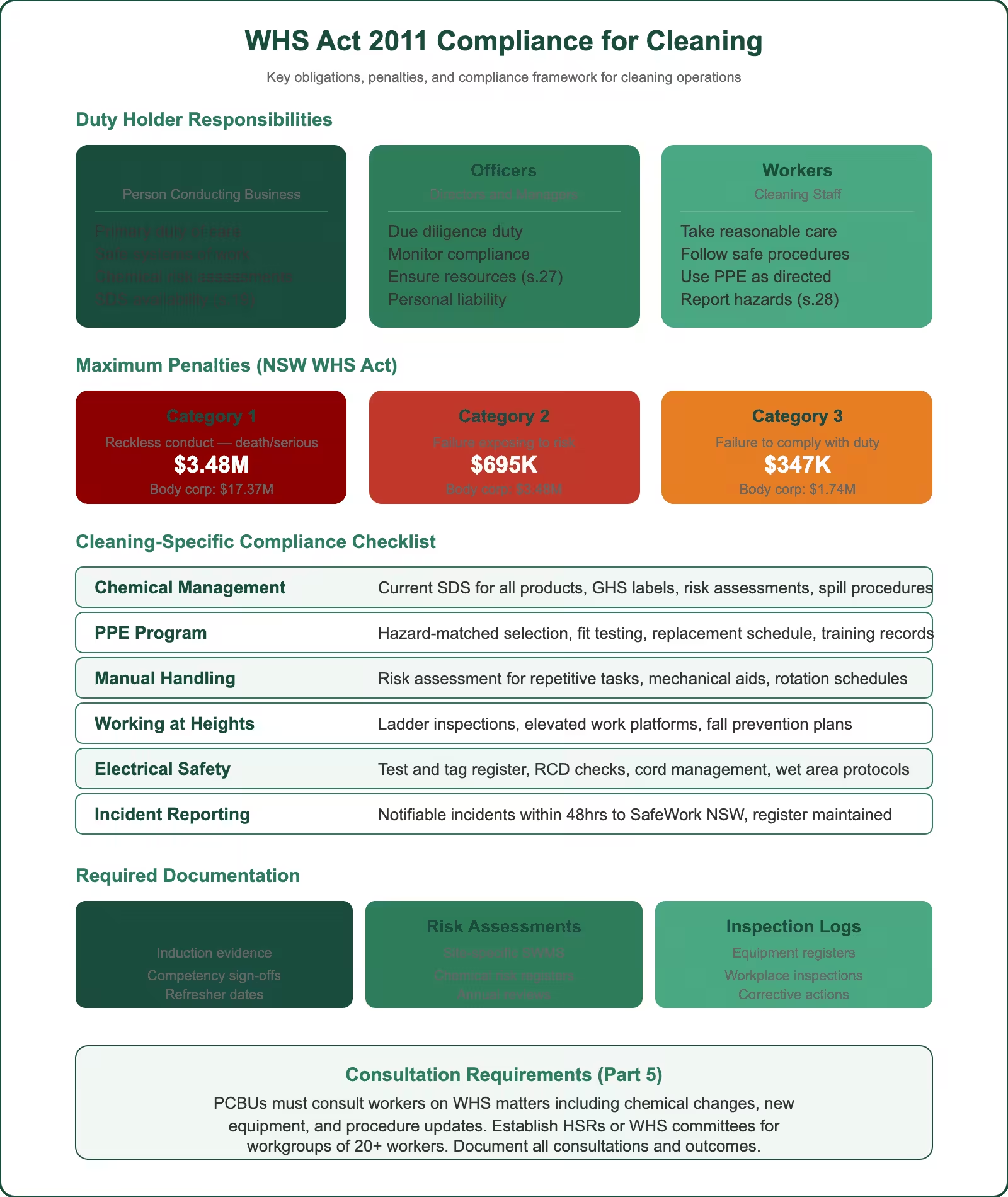
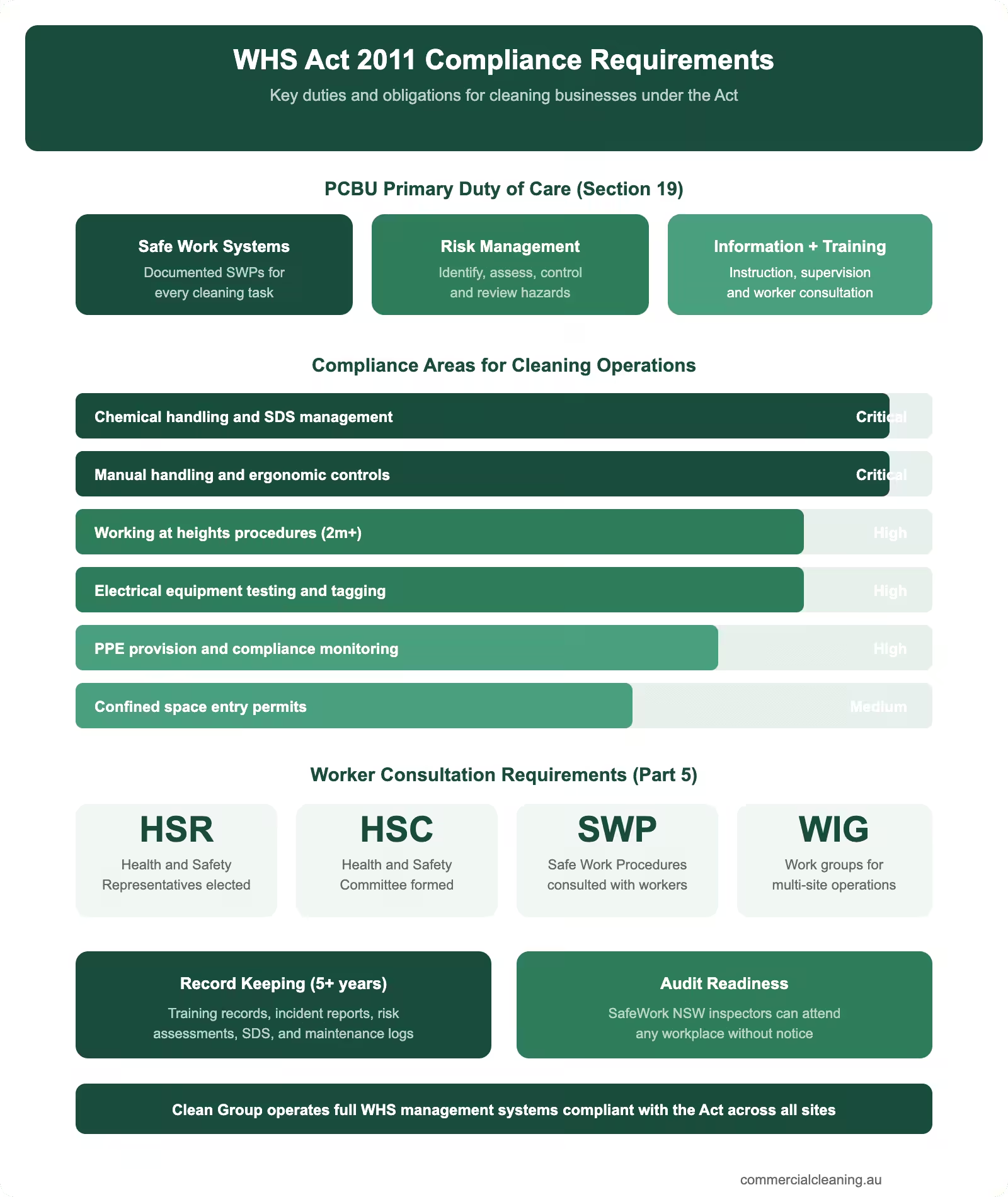
WHS Act 2011 compliance guide for cleaning operations showing duty holder responsibilities, penalty categories, compliance checklist, and documentation requirementsWHS Act 2011 compliance infographic showing PCBU duties risk categories worker consultation requirements and record keeping obligations for cleaning businesses
Why After-Hours Cleaning Matters
After-hours cleaning services run outside standard office hours—typically early morning (before 6:00 am), evening (after 5:30 pm), or overnight. This approach eliminates disruption to operations, reduces noise and chemical exposure to staff, and improves workplace safety and security.
From our experience managing cleaning teams across Parramatta, Chatswood, North Sydney, and throughout greater Sydney, we’ve observed that after-hours schedules deliver measurable benefits: fewer sick days due to chemical sensitivity, better staff morale (no cleaning disruption during work), enhanced security protocols, and superior cleaning quality because our team can work methodically without time pressure.
WHS Act 2011 Compliance Requirements
The WHS Act 2011 places specific obligations on employers regarding workplace safety. While cleaning isn’t explicitly called out in the legislation, the broader duty of care applies: employers must confirm the health and safety of workers, which includes minimising exposure to cleaning chemicals and ensuring safe working conditions.
After-hours cleaning supports WHS compliance in several ways. First, it removes daytime staff from exposure to cleaning chemicals and fumes. Many commercial cleaning products contain volatile organic compounds (VOCs) that can trigger respiratory issues, headaches, or skin irritation, particularly in staff with sensitivities. By scheduling cleaning outside working hours, exposure is eliminated.
Second, after-hours cleaning reduces trip and slip hazards. Wet floors during the working day are a significant injury risk. Evening or early-morning cleaning means floors are dry and safe when staff arrives.
SafeWork NSW Recommendations
SafeWork NSW, the state regulator, endorses after-hours cleaning arrangements as a best-practice approach to managing chemical safety. Their guidance specifically notes that scheduling cleaning during non-work periods minimises inhalation exposure and reduces the risk of slips, trips, and falls.
SafeWork NSW also emphasises that any cleaning contractor must be properly trained in chemical handling, hold current CPR and First Aid certification, and understand the specific hazards of your workplace. Our team meets and exceeds these requirements, with all staff trained in chemical safety, manual handling, and incident response.
Insurance and Liability Protection
Insurance and Liability Protection includes specific protocols that we tailor to each facility based on its layout, traffic, and compliance requirements. Most commercial general liability (CGL) policies include specific clauses regarding cleaning operations. Some insurers actually reduce premiums for after-hours cleaning, viewing it as lower-risk than daytime operations.
After-hours cleaning reduces liability exposure in several ways. Fewer people on premises means lower probability of chemical exposure claims or slip-and-fall injuries. Documentation of after-hours cleaning (time-stamped logs, photographic evidence, chemical safety data sheets) provides clear evidence that the workplace was maintained to safe standards, which is important if disputes arise.
We provide detailed cleaning records for every site, including time-in and time-out logs, which chemicals were used, what areas were cleaned, and any incidents or issues identified. This documentation is invaluable for insurance and WHS purposes.
Security Considerations
Allowing cleaning staff access to offices outside working hours requires strong security protocols. Here’s what best practice looks like:
Clear procedures for fire, medical, or security incidents
WHS Act 2011, building codes
Our team handles all of these elements as standard. Every cleaner is police-checked and can provide references. We maintain access logs for every site, and our supervisory protocols verify that cleaning is conducted to high standards with full accountability.
Operational Benefits Beyond Compliance
Beyond regulatory compliance, after-hours cleaning delivers significant operational advantages. Staff can work uninterrupted, which improves productivity and reduces distraction. We’ve found that uninterrupted work periods increase task completion and reduce errors compared to environments with daytime cleaning disruptions.
After-hours cleaning also allows for more thorough, methodical work. Our team can move at a sensible pace, focus on detail areas that might be rushed during office hours, and address deep-cleaning tasks that would be disruptive if performed during business hours. High-touch surfaces, dusting, and floor work can all be completed without time pressure or distraction.
Environmental Health and Indoor Air Quality
Cleaning chemicals contribute to indoor air quality issues, and daytime cleaning can be particularly problematic in enclosed office environments with limited ventilation. After-hours cleaning allows the building’s HVAC system to clear chemical residues overnight, ensuring that staff arrive to fresh, well-ventilated spaces the next morning.
Staff with asthma, allergies, or chemical sensitivities often report significant improvement when organisations switch to after-hours cleaning. We’ve managed sites where staff illness rates dropped measurably following the transition to evening cleaning—a benefit that extends beyond individual comfort to reduce sick leave and maintain productivity.
Cost-Effectiveness and Budget Considerations
Cost-Effectiveness and Budget Considerations covers specific protocols that we tailor to each facility based on its layout, traffic, and compliance requirements. Some organisations assume after-hours cleaning costs more, but the reality is more detailed. While evening labour rates are typically higher than standard hours, the benefits often justify the cost. Fewer disruptions mean staff work more productively, reducing lost time. Reduced sick leave means fewer replacement worker costs. Liability reduction and better insurance terms offset the labour premium.
In our experience across Sydney’s professional services, medical, and corporate sectors, most organisations find that after-hours cleaning represents excellent value when the full cost-benefit analysis is completed.
Scheduling Models: Early Morning vs. Evening vs. Overnight
Scheduling Models: Early Morning vs. Evening vs. Overnight involves specific protocols that we tailor to each facility based on its layout, traffic, and compliance requirements. Different after-hours models suit different organisations. Early morning cleaning (4:00-6:00 am) is ideal for organisations that want daily cleaning completed before staff arrival, without evening access requirements. Evening cleaning (5:30-8:00 pm) suits organisations where staff leave by 5:30 pm and cleaning can proceed immediately after departure. Overnight cleaning (8:00 pm-6:00 am) is typically reserved for larger facilities or those requiring very thorough deep cleaning.
We tailor our scheduling to your specific requirements, facility layout, and operational needs. Most Sydney offices use early morning or early evening models because they’re simple to manage and provide a clear demarcation between office time and cleaning time.
Technology and Monitoring
Modern after-hours cleaning operations use technology to enhance accountability and quality. Time-tracking apps log when cleaners arrive and depart. GPS tracking ensures staff are where they should be. Photographic check-ins document that cleaning has been completed to standard. CCTV systems can verify activity and provide security reassurance.
We employ all these tools as standard, providing clients with real-time visibility into cleaning operations and thorough documentation suitable for insurance, audit, and compliance purposes.
Common Concerns Addressed
Common Concerns Addressed includes specific protocols that we tailor to each facility based on its layout, traffic, and compliance requirements. Organisations transitioning to after-hours cleaning often worry about access, communication, and quality control. In our experience, these concerns are quickly addressed once protocols are established. Access via key card is simple and auditable. Communication happens via daily logs, email summaries, and weekly or monthly meetings. Quality is maintained through supervision, client spot-checks, and our own audit systems.
We’ve successfully implemented after-hours cleaning for offices ranging from 200 to 5,000 square metres, across all industries from legal and accounting to medical and corporate. The transition is typically smooth and results in tangible improvements within the first month.
Frequently Asked Questions
Is after-hours cleaning a legal requirement?
No, after-hours cleaning is not a legal requirement, but the WHS Act 2011 requires employers to maintain safe workplaces, which includes managing chemical exposure and trip/slip hazards. After-hours cleaning supports these obligations by removing staff exposure to cleaning chemicals and wet floors. SafeWork NSW lists after-hours cleaning as a best-practice approach to managing these risks.
What security protocols do you implement?
All our staff are police-checked and can provide references. We maintain access logs for every site, employ time-tracking systems, and provide clients with documentation of all cleaning activities. Many of our contracts include CCTV monitoring and supervisor attendance during cleaning shifts. We follow strict protocols for handling confidential documents and maintain equipment inventory logs.
Does after-hours cleaning cost more than daytime cleaning?
Labour rates for after-hours cleaning are typically higher (20-30% premium), but the overall cost-benefit often favours after-hours. Reduced disruption increases staff productivity, reduced sick leave lowers replacement costs, and better insurance terms may offset the labour premium. We work with clients to develop budgets that reflect the full value proposition.
What happens if an emergency or incident occurs during after-hours cleaning?
All our staff are trained in First Aid and emergency response. We maintain 24/7 contact protocols so that site supervisors can be reached immediately in case of emergency. We carry incident response insurance and follow all WHS Act 2011 reporting requirements. In medical or security emergencies, we contact emergency services (000) and notify your site contact immediately.
How do we make sure quality standards are maintained in after-hours cleaning?
Quality is maintained through multiple methods: regular supervisor spot-checks, client walk-throughs, photographic documentation, time-tracking verification, and our own quality audit system (ATP testing for high-touch surfaces, visual inspections of key areas). We provide weekly or monthly quality reports showing what was cleaned, when, and to what standard. Client feedback is actively encouraged and addressed immediately.
After-hours cleaning delivers measurable compliance and operational benefits for Sydney organisations. If you’re considering switching from daytime to after-hours cleaning, or managing multiple locations with scheduling complexity, we can conduct a site assessment and develop a tailored programme that meets your safety, security, and operational requirements. For a companion resource on day-to-day standards, see our office checklist.
About Clean Group
Clean Group is a leading commercial cleaning company in Sydney, serving offices, strata properties, medical centres, schools, and industrial facilities across the greater Sydney region. With over 25 years of experience and a team of fully trained, insured cleaners, we deliver consistent results backed by a 100% satisfaction guarantee. Our services are tailored to your schedule, your budget, and your industry’s compliance requirements.
Hi, I'm Suji Siv, the founder, CEO, and Managing Director of Clean Group, bringing over 25 years of leadership and management experience to the company. As the driving force behind Clean Group’s growth, I oversee strategic planning, resource allocation, and operational excellence across all departments. I am deeply involved in team development and performance optimization through regular reviews and hands-on leadership.